ICD-10 code S61.201A: Open wound of left index finger without nail damage
ICD-10 code S61.201A covers a left index finger wound of unstated type ICD-10 co...

Last Updated: Oct 16, 2026
Billable Code Specific Code
H22 is the billable ICD-10-CM code for disorders of iris and ciliary body in diseases classified elsewhere.
The same block also covers corneal and sclera codes such as H17.9 (unspecified corneal scar and opacity) and H18.10 (bullous keratopathy, unspecified eye).
According to the WHO ICD-10 browser, H22 captures ocular manifestations that arise secondary to a systemic disease already coded elsewhere in the classification.
The iris and ciliary body together form the anterior uveal tract. When an underlying systemic condition (infectious, inflammatory, or metabolic) triggers inflammation or structural disruption in this region, the resulting iridocyclitis is coded as a manifestation rather than a primary diagnosis. That distinction drives the entire coding workflow for H22.
Let Pabau's smart automation suggest the right codes, reduce claim denials, and keep your practice compliant—effortlessly.
Automate repetitive tasks and focus on what matters most—your patients.
Reduce coding errors and ensure compliance with the latest regulations.
Clean claims, fewer denials, and faster reimbursements.
Powerful insights and reporting to help your practice thrive.
HIPAA compliant SOC 2 certified GDPR-compliant Trusted by 4,000+ clinics worldwide

H22 is a non-billable ICD-10-CM header code for disorders of the iris and ciliary body caused by a separately classified underlying disease.
A mandatory ‘Code First’ instruction applies: the underlying etiology (e.g. sarcoidosis, syphilis) must be sequenced before H22.0 or H22.1 on every claim.
H22 itself cannot be submitted for reimbursement; use H22.0 for infectious/parasitic etiologies or H22.1 for all other underlying conditions.
Pabau’s claims management software supports multi-code sequencing and documentation workflows for ophthalmology and general practices managing secondary eye diagnoses.
Iridocyclitis is inflammation of both the iris and the ciliary body simultaneously. Clinically, it presents as anterior uveitis: pain, photophobia, reduced visual acuity, ciliary flush, and anterior chamber exudates (cells and flare on slit-lamp). Iridocyclitis ICD-10 coding splits on cause: primary cases with no identifiable systemic disease fall under H20, while cases driven by an identifiable systemic condition are coded under H22.
The diagnostic workup in these cases focuses on identifying the underlying condition. That underlying condition is what drives code selection before H22.0 or H22.1 ever appears on the claim. For a deeper look at how Pabau supports claims management software for multi-diagnosis ophthalmology encounters, the feature page walks through the sequencing workflow in detail.

ICD-10 Code H22 is a non-billable header. You cannot submit H22 alone for reimbursement. The two billable subcodes beneath it are H22.0 and H22.1, and the distinction between them turns entirely on the nature of the underlying disease.
| Subcode | Full description | Underlying disease category | Billable? |
|---|---|---|---|
| H22 | Disorders of iris and ciliary body in diseases classified elsewhere | Header only | No |
| H22.0 | Iridocyclitis in infectious and parasitic diseases classified elsewhere | Infectious/parasitic (e.g. syphilis, herpes zoster, TB) | Yes |
| H22.1 | Iridocyclitis in other diseases classified elsewhere | Non-infectious systemic (e.g. sarcoidosis, ankylosing spondylitis, Behcet disease) | Yes |
H22.0 applies when the underlying cause is an infectious or parasitic disease. Common etiologies include:
The infectious disease code is always sequenced first. H22.0 follows as the manifestation.
H22.1 covers iridocyclitis arising from non-infectious systemic conditions. The etiology is still classified elsewhere in ICD-10-CM, but it falls outside the infectious disease chapters. Common examples include:
For practices managing these patients. A vague note referencing “underlying rheumatologic condition” will not satisfy payer medical necessity review.
The tabular note for ICD-10 Code H22 carries a mandatory “Code First” instruction. This Code First ICD-10 rule is not advisory: it is a binding sequencing rule enforced by CMS and documented in the CMS ICD-10-CM coding guidelines.
Under the etiology-manifestation convention, certain conditions have both an underlying cause and a body-system manifestation resulting from that cause. When this applies, ICD-10-CM instructs coders to sequence the etiology code first and the manifestation code second. H22.0 and H22.1 are both manifestation codes. They cannot appear as the principal diagnosis.
Sequencing conventions like this one have no counterpart on the equipment side of HCPCS. Durable medical equipment codes fall into payment categories such as capped rental or inexpensive and routinely purchased. A support surface billed as E0199 is priced by its category, not by diagnosis order.
A rheumatology practice sees a patient with established ankylosing spondylitis who presents with acute anterior uveitis. The correct code sequence is:
Reversing this sequence (H22.1 first, M45 second) will result in a claim edit or denial from most payers. The M45 code should reflect the documented spinal region.
An ophthalmologist documents herpes zoster ophthalmicus with iridocyclitis. The correct sequence is:
Some encoders and payer systems will accept B02.32 as a standalone billable code without requiring H22.0. Verify your encoder’s logic and payer-specific guidance before submission.
Before submitting any claim with H22.0 or H22.1, run a code pair check in your encoder to confirm the pairing is valid and in the correct sequence. Many denial management workflows miss this step because the manifestation code alone looks syntactically correct. A claim edit tool that flags missing etiology codes saves significant rework downstream.
Inside software built for GPs, eye and ear diagnoses route to the right specialist with history attached.
Payer audits for H22 claims almost always focus on one thing: does the medical record support both the manifestation diagnosis and the underlying systemic disease? Missing documentation at either level creates recoupment risk.
For H22.0 or H22.1 to withstand audit, the clinical note must include:
Using digital intake forms to capture systemic disease history at the point of check-in helps ensure this background is consistently recorded before the encounter note is written. Missing systemic history is one of the most preventable causes of H22 claim denials.
The exam itself should reflect a billable encounter such as CPT 92002 (intermediate eye exam for new patients).
Documentation duties split by claim type. Equipment claims rest on a supplier’s written order and, for certain categories, a certificate of medical necessity. A diagnosis listed beside an item such as E0157 does not replace that separate record.


Pabau helps ophthalmology and general practices document etiology-manifestation pairs, manage structured clinical notes, and submit accurate multi-code claims from a single workflow.

Understanding where H22 sits within the broader iridocyclitis coding landscape helps coders choose the right code on first pass. The primary distinction is between iridocyclitis that arises on its own (coded under H20) and iridocyclitis that arises as a manifestation of a classified systemic disease (coded under H22).
| Code | Description | Use when… |
|---|---|---|
| H20.00 | Unspecified acute and subacute iridocyclitis | Iridocyclitis without an identified systemic etiology; no Code First instruction |
| H20.011 | Primary iridocyclitis, right eye | Acute iridocyclitis (anterior uveitis) with no identifiable underlying cause, right eye |
| H20.012 | Primary iridocyclitis, left eye | Acute iridocyclitis (anterior uveitis) with no identifiable underlying cause, left eye |
| H20.013 | Primary iridocyclitis, bilateral | Acute iridocyclitis (anterior uveitis) with no identifiable underlying cause, both eyes |
| H20.1 | Chronic iridocyclitis | Persistent iridocyclitis without a classified systemic disease driving it |
| H20.9 | Unspecified iridocyclitis | Iridocyclitis with insufficient documentation to differentiate type |
| H22.0 | Iridocyclitis in infectious/parasitic diseases classified elsewhere | Iridocyclitis secondary to syphilis, herpes zoster, TB, toxoplasmosis, etc. |
| H22.1 | Iridocyclitis in other diseases classified elsewhere | Iridocyclitis secondary to sarcoidosis, ankylosing spondylitis, Behcet disease, RA, etc. |
When the underlying systemic condition is known and documented, always prefer H22.0 or H22.1 over the unspecified H20 codes. Specificity directly supports medical necessity documentation and reduces the likelihood of a payer downgrading or denying the encounter. When laterality isn’t documented, H20.019 (primary iridocyclitis, unspecified eye) is the fallback rather than guessing a side.
The same “in diseases classified elsewhere” pattern appears elsewhere in the H00-H59 chapter, such as H42 (glaucoma in diseases classified elsewhere), which follows an identical Code First sequencing rule. That differs from disorders confined to a single structure with no etiology-manifestation requirement, such as H02.9 (unspecified disorder of eyelid) or H25.9 (unspecified age-related cataract).
Coders working across the broader eye chapter also encounter standalone codes such as H35.9 (unspecified retinal disorder), H01.9 (unspecified inflammation of eyelid), and H16.8 (other keratitis) — none of which carry the Code First requirement that defines H22.
For practices that need to cross-reference procedure codes alongside these diagnostic codes, the AAPC Codify ICD-10-CM lookup provides a searchable crosswalk. For EHR integration workflows that map diagnostic codes to procedure codes at the point of documentation, a structured EHR reduces manual crosswalk errors. See also Pabau’s EHR integration workflows for how diagnostic code data flows into billing records automatically.
Crosswalk tools cover diagnosis-to-procedure mapping, but device categories sit outside that scope. A lead adaptor reported as C1883 belongs on a hospital outpatient facility claim, and no eye diagnosis drives its selection.
The same anatomy is coded differently outside the US. In UK private practice, procedures on the ciliary body are billed from the CCSD schedule, where ciliary body ablation is C6610. That schedule has no bearing on a US claim built around H22.
If a patient’s chart mentions ‘uveitis’ without specifying the relationship to a systemic disease, query the clinician before coding. Upgrading from H20.9 (unspecified iridocyclitis) to H22.1 (iridocyclitis in other diseases classified elsewhere) when the systemic diagnosis is documented can prevent a medical necessity denial at a later audit.
H22 claims typically appear in two practice settings: ophthalmology (where the eye findings are the presenting complaint) and internal medicine or rheumatology (where the systemic disease is the primary focus and the eye is a monitored organ system). Each setting has a slightly different workflow risk.
In ophthalmology, the risk is submitting H22.0 or H22.1 without the etiology code because the referring note from another specialty confirmed the systemic diagnosis but the ophthalmology EHR only captured the eye finding.
In rheumatology or infectious disease, the risk is the opposite: the systemic code is submitted correctly but the eye manifestation code is omitted, losing the documentation of disease-related organ involvement.
A third billing party sits outside both settings. Durable medical equipment suppliers bill a DME MAC directly. Heating items such as E0210 and E0221 therefore sit on a separate claim from H22.
Based on the ICD-10-CM coding convention requirements, these are the most frequent reasons H22-related claims are rejected or denied:
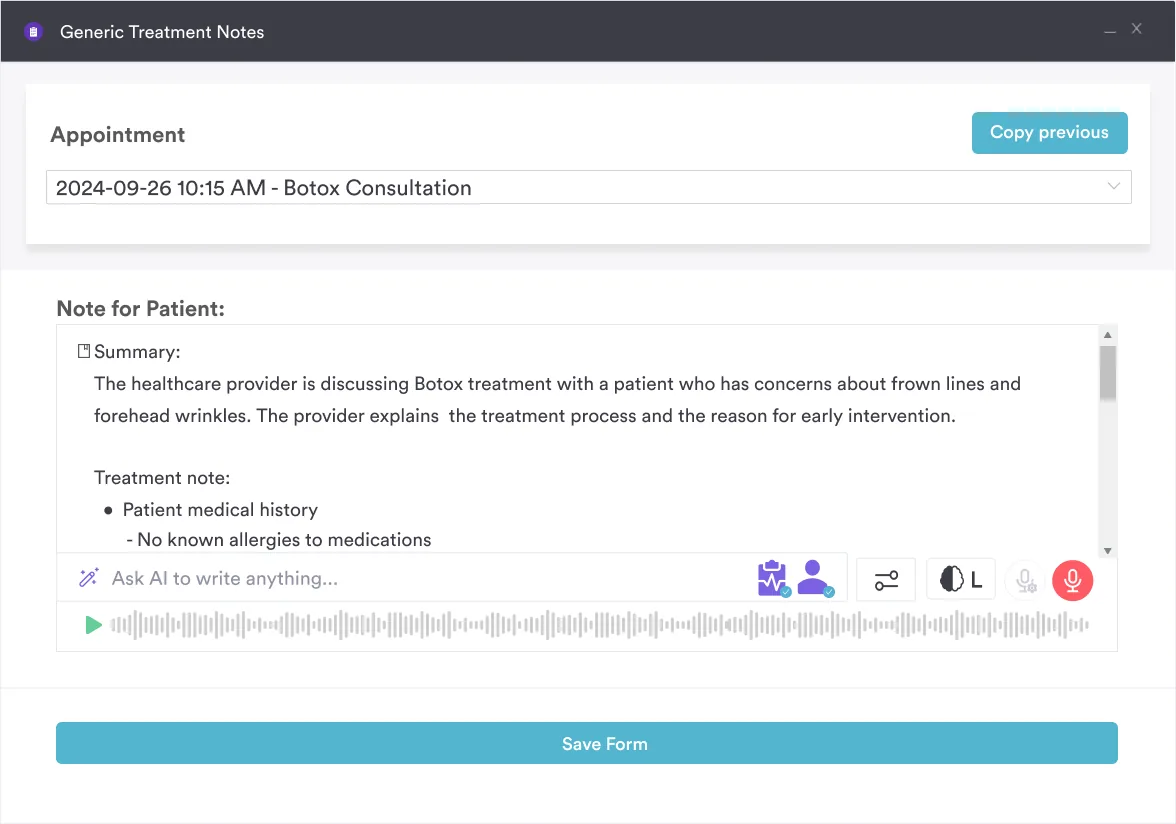
Using AI-powered clinical documentation to auto-structure encounter notes helps flag when a systemic diagnosis mentioned in the note has not been mapped to the corresponding manifestation code. This reduces the mismatch between what the clinician documented and what the coder sees.
For practices building out HIPAA-compliant practice documentation workflows, structured note templates also make the etiology-manifestation relationship explicit in the record.
Medicare processes H22.x claims through its standard ICD-10-CM claim adjudication logic. The CDC/NCHS ICD-10-CM coding tool confirms the current valid status of H22.0 and H22.1 for each fiscal year.
Commercial payers generally follow the same sequencing rules as CMS but may have local coverage determinations (LCDs) that specify additional documentation for specific underlying conditions (particularly sarcoidosis and Behcet disease, both of which require specialist-confirmed diagnoses in many plans).
Coverage rules attach to the item itself. Wound-warming supplies such as E0232 are judged against national and local coverage policy for that device, however well the underlying systemic disease is documented.
Using practice management software that integrates diagnostic coding with billing workflows ensures the Code First pairing is enforced before a claim leaves the practice, not after a denial forces a rework cycle.
The best medical practice management tools track specialist referrals, so these diagnoses don’t stall between providers.
The most expensive mistake with ICD-10 Code H22 is a sequencing error that turns a clean claim into a denial. The Code First rule is unambiguous: the etiology goes first, the manifestation follows. H22.0 belongs with infectious etiologies, H22.1 with non-infectious systemic conditions, and the parent H22 code is never submitted alone.
Pabau’s skin clinic software and broader practice management platform support structured documentation that captures the systemic diagnosis and the ocular manifestation in a single linked workflow, reducing coding errors at the source. If your practice manages patients with complex systemic conditions that affect the eye, book a demo and see how Pabau handles this.

Coding low serum albumin levels? Hypoalbuminemia coding guide covers E88.09, filed under other disorders of plasma-protein metabolism not elsewhere classified.
Coding dementia from another disease? Secondary dementia coding guide covers F02.80, dementia arising from another disease without complicating behavioral or mood features.
ICD-10 Code H22 is the ICD-10-CM header code for Disorders of iris and ciliary body in diseases classified elsewhere. It is a non-billable code that identifies iridocyclitis and related anterior uveal tract disorders arising as manifestations of a separately classified systemic disease. The two billable subcodes beneath it are H22.0 (infectious and parasitic etiologies) and H22.1 (other systemic etiologies).
Primary iridocyclitis is iridocyclitis with no identifiable systemic cause, coded under H20 rather than H22. Acute cases use H20.01x, with H20.011, H20.012, and H20.013 distinguishing right eye, left eye, and bilateral involvement; chronic cases use H20.1; unspecified presentations use H20.9. H22 only applies once a systemic disease coded elsewhere in ICD-10-CM is identified as the cause.
No. H22 is a non-billable header code and cannot be submitted for reimbursement. Only its subcodes, H22.0 and H22.1, are billable, and both must be sequenced after the underlying etiology code per the Code First instruction.
H22.0 applies when the underlying etiology is an infectious or parasitic disease (such as syphilis, herpes zoster, or tuberculosis). H22.1 applies when the underlying cause is a non-infectious systemic condition (such as sarcoidosis, ankylosing spondylitis, or Behcet disease). Selecting the wrong subcode for the etiology category is a common coding error that results in claim edits.
Any systemic disease that causes iridocyclitis as a manifestation requires the Code First instruction. For H22.0, this includes syphilis (A51-A52), herpes zoster (B02), tuberculosis (A18.54), and toxoplasmosis (B58). For H22.1, this includes sarcoidosis (D86), ankylosing spondylitis (M45), Behcet disease (M35.2), and rheumatoid arthritis (M05-M06). The systemic code always appears first on the claim.
Iridocyclitis in diseases classified elsewhere means the anterior uveal inflammation (iris and ciliary body) is a manifestation of a systemic disease that has its own code in a different part of ICD-10-CM, rather than arising as a primary eye condition. The phrase “classified elsewhere” signals to coders that the root cause is coded outside the H15-H22 block and must be sequenced first.