ICD-10 Code Z74.8: Other problems related to care provider dependency
ICD-10 Code Z74.8: Definition and code details ICD-10 Code Z74.8 is the billable...

Last Updated: Oct 19, 2026
Billable Code Specific Code
H32 is the billable ICD-10-CM code for chorioretinal disorders in diseases classified elsewhere.
Let Pabau's smart automation suggest the right codes, reduce claim denials, and keep your practice compliant—effortlessly.
Automate repetitive tasks and focus on what matters most—your patients.
Reduce coding errors and ensure compliance with the latest regulations.
Clean claims, fewer denials, and faster reimbursements.
Powerful insights and reporting to help your practice thrive.
HIPAA compliant SOC 2 certified GDPR-compliant Trusted by 4,000+ clinics worldwide

ICD-10 Code H32 is a billable diagnosis code for chorioretinal disorders caused by an underlying systemic disease classified elsewhere
H32 is a manifestation code: the underlying disease (such as histoplasmosis B39.-, congenital toxoplasmosis P37.1, or leprosy A30.-) must always be sequenced first
Excludes1 notes mean H32 cannot be reported alongside B58.01 (acquired toxoplasmosis chorioretinitis) or A18.53 (tuberculous chorioretinitis)
Pabau’s claims management software helps ophthalmology practices enforce Code First sequencing rules and reduce denials from incorrect diagnosis ordering
Ophthalmology practices and coding teams run into ICD-10 Code H32 whenever a systemic disease produces chorioretinal complications. The code is billable, current for 2026, and classified under CMS ICD-10-CM block H30-H36 (Disorders of choroid and retina) as defined by the World Health Organization.
The full official description is: Chorioretinal disorders in diseases classified elsewhere. That phrase tells coders the most important thing about H32 before they touch a chart: the chorioretinal pathology exists because of a disease that is coded somewhere else in the ICD-10-CM tabular list. H32 is a manifestation code. It never stands alone.
The choroid is the vascular layer sitting between the retina and the sclera. The retina converts light into neural signals. When a systemic infection, inflammatory disease, or parasitic condition reaches the eye and disrupts either structure, the resulting chorioretinal disorder is documented with ICD-10 Code H32 after the causative disease code.
Eyelid conditions fall under a different part of the same chapter and should not be confused with chorioretinal disorders.
H32 sits within the eye and adnexa chapter (H00-H59) of CDC/NCHS ICD-10-CM classification. Its immediate neighbors in the H30-H36 block are worth knowing for accurate differential coding:
H32 and H36 are both manifestation codes in the H30-H36 block, which is a common source of confusion. H32 captures disorders affecting the choroid and retina together. H36 is reserved for retinal-only disorders arising from underlying systemic disease, but an Excludes1 note means H36 can never be reported for diabetic retinopathy or hypertensive retinopathy.
Diabetic retinopathy is coded entirely within the diabetes combination codes (E08.3-/E09.3-/E10.3-/E11.3-/E13.3-). H36’s actual Code First examples cover conditions such as sickle-cell disorders (D57.-) and lipid storage disorders (E75.-). If the disorder involves the choroid alongside the retina and stems from infections like histoplasmosis or leprosy, H32 is the correct code.
The Code First instruction is non-negotiable for ICD-10 Code H32. Sequencing the manifestation before the etiology violates the etiology-manifestation convention and will trigger claim edits or denials from Medicare and most commercial payers.
The ICD-10-CM tabular list specifies three disease categories as Code First examples, though the instruction applies to any underlying systemic condition that produces chorioretinal pathology:
The etiology-manifestation convention means these two codes travel as a pair. The underlying disease explains why the chorioretinal disorder exists. H32 describes the eye manifestation. Neither code communicates the full clinical picture without the other, which is why the CDC/NCHS ICD-10-CM coding tool flags manifestation codes with a “Code First” instruction visible in the tabular display.
Most modern EHR systems allow coders to sequence diagnosis codes manually. The risk is that when a physician documents the eye finding first in the encounter note, billing staff may inadvertently submit H32 as the principal diagnosis.
Practices using claims management software that validates diagnosis ordering before submission catch these sequencing errors before they reach the payer. A claim submitted with H32 in the first position will either edit out or deny at adjudication with most payers, since the code’s own tabular instructions mandate that the underlying disease precede it. A resubmission does not restart the clock, so the original filing limit still governs.
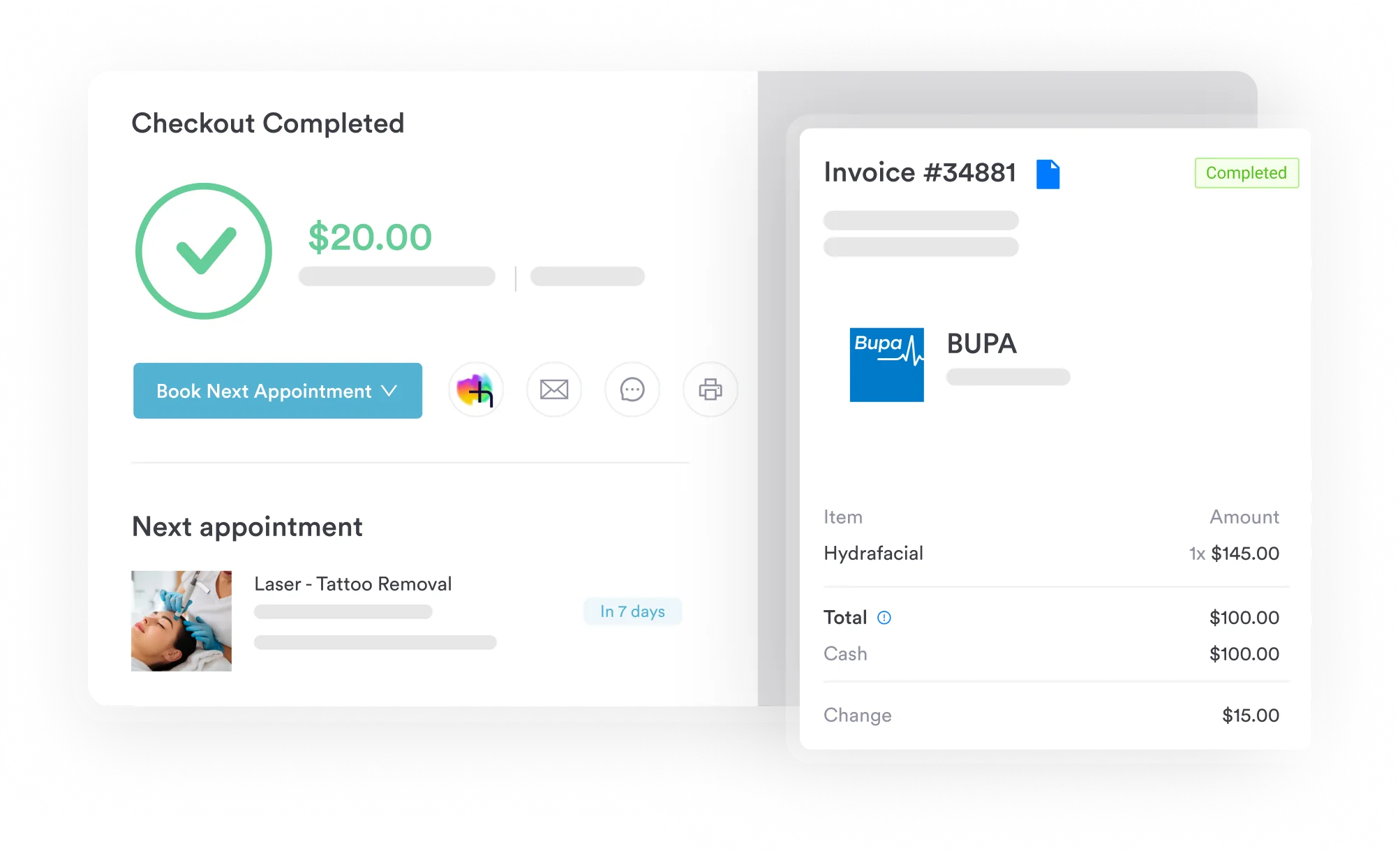
Always confirm the specific subcode when assigning histoplasmosis (B39.-) or leprosy (A30.-). These are category-level codes with required specificity. B39.4 (Reticuloendothelial histoplasmosis) and A30.9 (Leprosy, unspecified) are valid but carriers may request the most specific code available. Use the CDC/NCHS ICD-10-CM tool to confirm the current year’s available subcodes for each etiology before submitting.
The Excludes1 note for ICD-10 Code H32 lists two specific chorioretinitis conditions that must never be reported alongside H32. An Excludes1 note means the two codes are mutually exclusive: by definition, they cannot coexist in the same encounter.
The clinical reasoning behind these exclusions is precise. Acquired toxoplasmosis and tuberculosis each have their own dedicated ICD-10-CM codes that already capture both the systemic infection and the ocular manifestation in a single code. Using H32 alongside these would constitute double-coding of the same clinical event, which the Excludes1 framework is designed to prevent.
B58.01 is the ICD-10-CM code for Toxoplasma chorioretinitis in acquired toxoplasmosis. It is a combination code that captures both the parasitic infection and the chorioretinal inflammation in one entry, which is exactly why it carries an Excludes1 against H32 — reporting both would double-code a single clinical event. Use B58.01 when the toxoplasmosis was acquired after birth. Reserve the H32 pairing, with congenital toxoplasmosis P37.1 sequenced first, for the congenital form.
H32 and H36 are the two manifestation codes in the H30-H36 block, and they confuse even experienced coders. The distinction comes down to anatomy and etiology:
If your patient has diabetic macular edema or diabetic retinopathy, code entirely within the diabetes combination codes, such as E11.3-. These conditions never pair with an H36 code. If your patient has chorioretinitis secondary to histoplasmosis, code B39.- followed by H32. The anatomy and etiology documented in the encounter note determine which block applies.
The manifestation-code convention is not unique to ophthalmology. F54 and N37 follow the identical etiology-first logic in the behavioral health and genitourinary chapters, respectively. The ear chapter follows the same pattern, where ICD-10 code H82.3 reports bilateral vertiginous syndromes with the underlying disease sequenced first.
The genitourinary chapter repeats the convention beyond N37. N22 reports urinary tract stones in diseases classified elsewhere, with gout or schistosomiasis coded first.
Most of these presentations arrive in general practice first, where GP software handles triage, coding, and referral in one flow.
Claim audits and medical necessity reviews for H32 focus almost entirely on documentation quality. Payers want evidence that the underlying disease was confirmed and that the chorioretinal disorder is clinically linked to it, not coincidental.
Four documentation elements reduce audit risk for H32 encounters:
Practices managing patient records with structured digital forms can build ophthalmology-specific intake and encounter templates. This prevents the most common H32 documentation issues before they become claim problems.
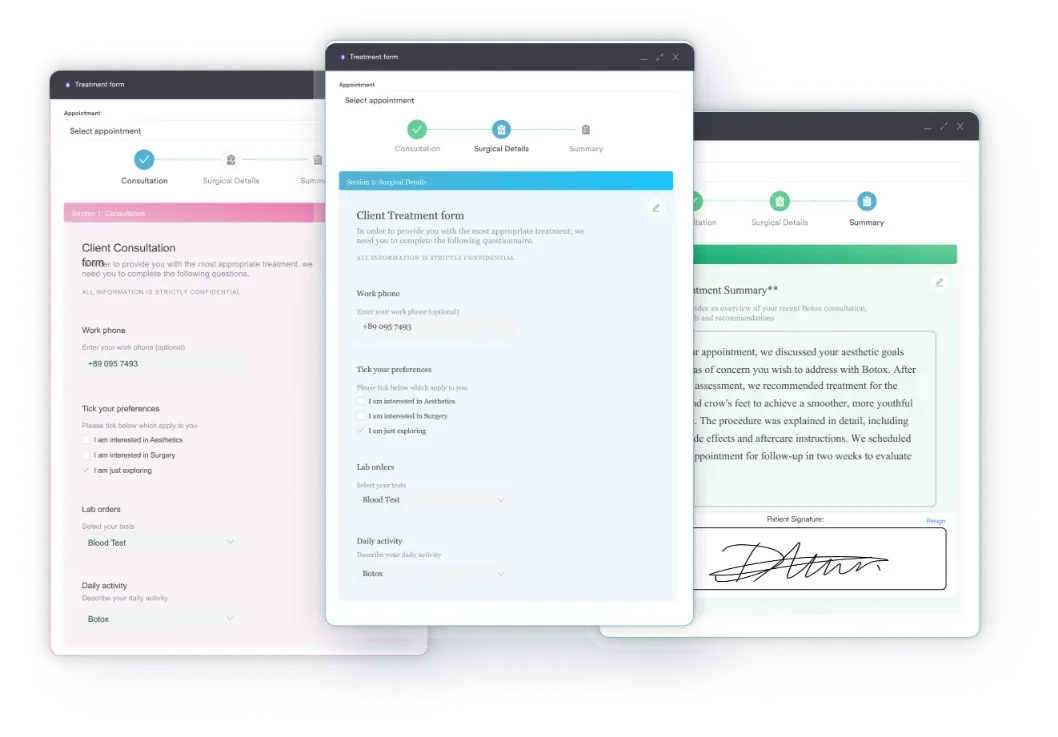
Practices with compliance obligations around coding accuracy and audit readiness will find that maintaining structured patient record management reduces the time spent reconstructing documentation when payers request medical records. Meeting HIPAA compliance standards also requires that these records be stored and retrievable in a timely, organized format.
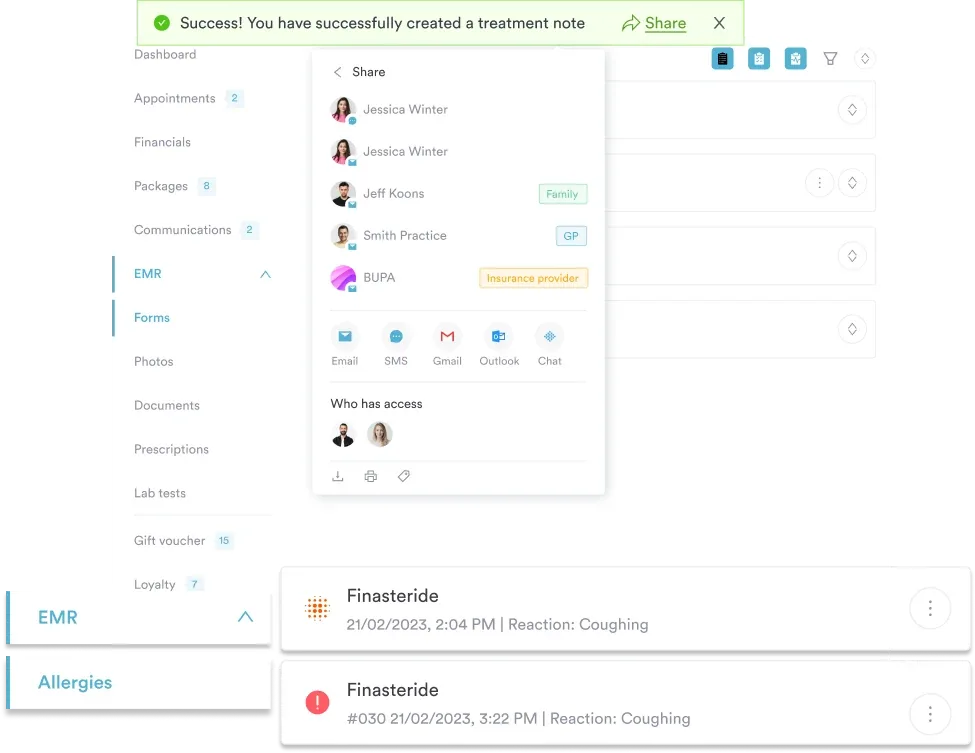
Run a quarterly internal audit of H32 claims. Pull all encounters coded with H32 and verify: (1) an underlying etiology code appears in position 1, (2) the etiology is not B58.01 or A18.53, and (3) physician documentation explicitly connects the chorioretinal finding to the systemic disease. This three-step check catches sequencing errors and Excludes1 violations before they become payer audits.

Pabau’s claims management tools help ophthalmology and specialty practices validate diagnosis sequencing, catch Excludes1 conflicts, and submit cleaner claims. See how it works.

H32 is a valid billable code for reimbursement purposes. It can support claims for evaluation and management visits such as 92002.
The code does not in itself restrict coverage, but the payer’s policy on the underlying condition and on eye disease monitoring will determine whether the encounter is reimbursable.
A few billing realities practices should factor into their H32 claims workflow:
The AAPC Codify ICD-10-CM lookup provides crosswalk data that can help coders confirm which procedure codes are commonly reported alongside H32 and the appropriate underlying disease codes.
Practices reviewing other manifestation-code patterns for systemic diseases may also find it useful to see how D77 sequencing works, since the same etiology-first convention governs both code sets. Coders working across several specialties keep a coding reference to hand rather than searching the full manual.
H32 itself does not carry procedure-level modifiers. Modifiers attach to the CPT procedure codes billed on the claim, not to the ICD-10 diagnosis code. However, laterality modifiers on the procedure side (RT/LT or -E1 through -E4 for eyelid procedures) should reflect the affected eye documented in the encounter note.
If bilateral chorioretinal involvement is documented, both eyes should be reflected in procedure code modifiers where applicable. Coders managing multi-payer ophthalmology billing will find that supporting specialty compliance requirements through systematic documentation templates reduces modifier-related rejections.
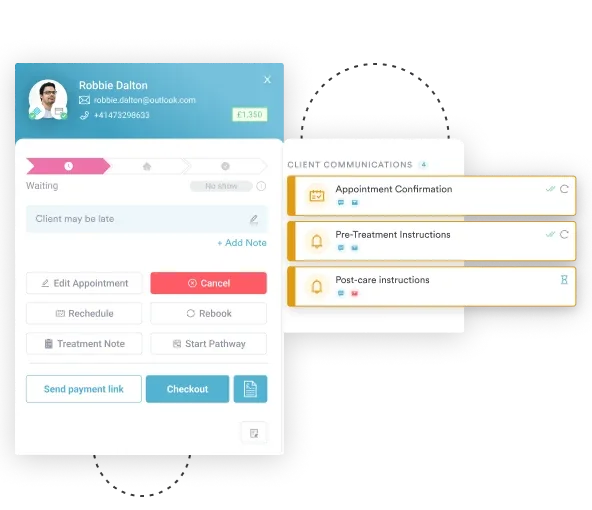
Practices using automated workflows can link procedure codes to diagnosis codes in their billing module to reduce manual pairing errors. The automated workflows in practice management platforms that enforce coding rules at the time of claim creation consistently outperform manual review in preventing sequencing and pairing errors at scale.
ICD-10 Code H32 is straightforward once coders understand its role as a manifestation code. The underlying disease always comes first. Excludes1 conditions (acquired toxoplasmosis B58.01, tuberculous chorioretinitis A18.53) never pair with it. Documentation must establish both the systemic etiology and its causal link to the chorioretinal finding.
For ophthalmology practices processing high volumes of manifestation code claims, having a practice management system that validates diagnosis order before submission removes the most common failure point. Pabau’s compliance management tools and claims workflow help specialty practices maintain coding accuracy across complex multi-code encounters. To see how it handles H32 and other manifestation code workflows, book a demo.

Coding schizoaffective disorder without a specified type? ICD-10 code F25.9 guide This guide explains when to use F25.9 as a fallback and how documentation should justify the code selected.
Managing coding accuracy across a multi-specialty practice? Pabau’s automated workflows enforce diagnosis sequencing rules automatically before claims reach the payer.
Coding a psychotic disorder outside the named categories? ICD-10 code F28 guide This guide covers F28 for a distinct psychotic symptom pattern that does not fit a named diagnosis.
ICD-10 Code H32 is a billable ICD-10-CM diagnosis code for chorioretinal disorders in diseases classified elsewhere, used when a systemic disease (such as histoplasmosis, congenital toxoplasmosis, or leprosy) produces chorioretinal pathology. It is a manifestation code that requires the underlying disease code to be listed first on the claim.
Yes, H32 is a valid billable ICD-10-CM diagnosis code for 2026. It can be used on claims for ophthalmology evaluation and management visits, diagnostic imaging, and follow-up encounters, provided the underlying disease code is sequenced first.
The ICD-10-CM tabular list identifies histoplasmosis (B39.-), congenital toxoplasmosis (P37.1), and leprosy (A30.-) as examples, but any confirmed systemic disease producing chorioretinal pathology requires its code in position 1 before H32. The rule applies to all etiologies, not only those explicitly listed.
The two Excludes1 conditions for H32 are chorioretinitis in acquired toxoplasmosis (B58.01) and tuberculous chorioretinitis (A18.53). These codes are mutually exclusive with H32 and cannot be reported in the same encounter because they each fully capture both the systemic infection and the ocular manifestation.
H32 covers chorioretinal disorders (choroid plus retina) from infectious or inflammatory systemic diseases like histoplasmosis and leprosy. H36 covers retinal-only disorders in systemic disease, such as sickle-cell disorders (D57.-) and lipid storage disorders (E75.-). An Excludes1 note means H36 can never be used for diabetic retinopathy or hypertensive retinopathy: diabetic retinopathy is coded within the diabetes combination codes (E08.3-/E09.3-/E10.3-/E11.3-/E13.3-), and hypertensive retinopathy is coded H35.03. The key differentiator is anatomy and etiology: if the choroid is involved alongside the retina in an infectious context, use H32; if the condition is retinal-only and linked to one of H36’s actual Code First conditions, use H36.
The etiology-manifestation convention requires the underlying disease code in position 1, followed by the manifestation code (H32) in position 2 or later. Submitting H32 as the principal diagnosis violates ICD-10-CM coding guidelines and will typically trigger a claim edit or denial at payer adjudication.