

HCPCS code E0198: Water pressure pad billing guide
HCPCS code E0198 is a water pad for a standard mattress HCPCS code E0198 is the ...

Last Updated: Oct 13, 2026
Billable Code Specific Code
H25.9 is the billable ICD-10-CM code for unspecified age-related cataract.
Let Pabau's smart automation suggest the right codes, reduce claim denials, and keep your practice compliant—effortlessly.
Automate repetitive tasks and focus on what matters most—your patients.
Reduce coding errors and ensure compliance with the latest regulations.
Clean claims, fewer denials, and faster reimbursements.
Powerful insights and reporting to help your practice thrive.
HIPAA compliant SOC 2 certified GDPR-compliant Trusted by 4,000+ clinics worldwide

H25.9 is a billable ICD-10-CM code for unspecified age-related cataract, valid for 2026 and restricted to adult patients aged 15-124 years.
Use H25.9 only when the cataract type and laterality cannot be documented – more specific H25 subcodes are preferred when clinical details are available.
H25.9 differs from H26.9: H25.9 is age-related (senile) etiology; H26.9 covers other or non-age-related cataracts.
Pabau’s claims management software helps ophthalmology practices reduce H25.9-related claim denials by flagging missing laterality documentation before submission.
H25.9 is confirmed billable and specific for fiscal year 2026. Per the WHO ICD-10 classification and the CMS/NCHS tabular list, it sits within the H25 category (Age-related cataract), which is distinct from H26 (Other cataract) and H28 (Cataract in diseases classified elsewhere).
| Field | Value |
|---|---|
| Code | H25.9 |
| Full description | Unspecified age-related cataract |
| Billable/specific | Yes (2026) |
| Age restriction | Adult Dx: 15-124 years |
| ICD-10-CM chapter | Chapter 7: Diseases of the eye and adnexa (H00-H59) |
| Code block | H25-H28: Disorders of lens |
| Parent category | H25: Age-related cataract |
| ICD-9-CM predecessor | 366.1 (senile cataract) |
The adult-only age restriction (15-124 years) reflects the CMS age edit applied to age-related (senile) conditions. Claims submitted with H25.9 for pediatric patients will fail CMS age edits and trigger an automatic denial. Cataracts in children are coded under H26.0 (Infantile and juvenile cataract), not H25.
Ophthalmology practices running eye and skin clinic software like Pabau, a practice management system with integrated ICD-10 validation, can catch these age-edit violations before submission. A routine senile cataract claim then goes out clean instead of bouncing back on a preventable rejection.
The most common coding confusion in cataract billing involves H25.9 and H26.9. They look similar on a superbill but represent clinically distinct conditions with different documentation implications.
| Feature | H25.9 | H26.9 |
|---|---|---|
| Full description | Unspecified age-related cataract | Unspecified cataract |
| Etiology | Age-related (senile) | Other or unspecified etiology |
| Parent category | H25 (Age-related cataract) | H26 (Other cataract) |
| Age restriction | Adults 15-124 years | No specific age restriction |
| When to use | Patient’s cataract is age-related; type/laterality not documented | Cataract is non-age-related or etiology is genuinely unclear |
| Preferred alternative | H25.011-H25.89 (more specific subcodes) | H26.0-H26.49 (more specific subcodes) |
H26.9 is not a fallback for age-related cataracts. Using H26.9 on a Medicare claim for a 72-year-old with senile cataract is a coding error. The payer will cross-reference the patient’s age and diagnosis, and the claim may be flagged for audit. Always confirm the etiology before selecting between these two codes.
For a broader review of how ICD-10 diagnostic code framework organizes distinct conditions under shared chapter structures, that context applies across all ophthalmic, cardiac, and neurological diagnoses.
H25.9 is an unspecified code, meaning it deliberately omits both laterality and cataract type. That makes it valid in a narrow set of circumstances and the wrong choice in most others.
Most cataract encounters in an ophthalmology office will have sufficient documentation for a more specific code. The H25 category includes laterality-specific subcodes for cortical, nuclear, posterior subcapsular, and combined forms. Choosing the more specific code reduces denial risk and supports medical necessity documentation for surgery authorization.
The American Academy of Ophthalmology advises using H25.9 only when the specific cataract type is not documented in the clinical record. In practice, any examination that includes slit-lamp biomicroscopy will typically yield enough detail to code at a higher level of specificity.
Practices that have moved to digital intake forms and structured encounter notes find that laterality is captured consistently at the point of care, reducing post-visit coding queries significantly.

Review the slit-lamp findings in every cataract encounter note before defaulting to H25.9. If the ophthalmologist documented the affected eye and cataract morphology – even informally – that information supports a more specific H25 subcode. Flag incomplete notes for physician query before the claim goes out.
Most of these presentations arrive in general practice first, where GP software handles triage, coding, and referral in one flow.
Claim denials for unspecified cataract codes fall into two categories: missing laterality and insufficient medical necessity. Strong documentation addresses both.
Maintaining structured patient records with mandatory laterality fields prevents the most common documentation omission that pushes coders toward H25.9 unnecessarily. For context on diagnostic code documentation best practices that apply across specialties, the same principle holds: specificity at the point of care is always cheaper than a denial appeal.
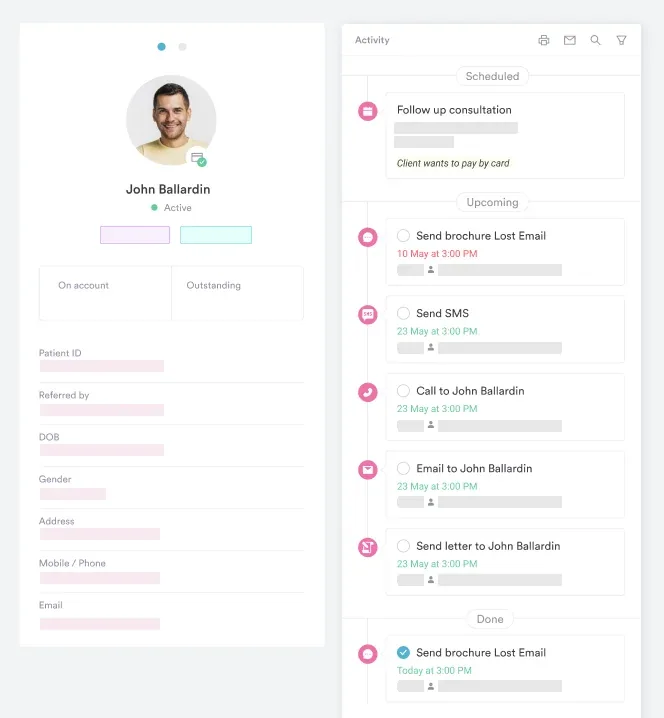
Good patient data security in clinical records also supports audit defense. If a payer requests records to validate a cataract claim, the clinical documentation needs to be retrievable and complete – not stored in disconnected paper files.
H25.9 is most commonly submitted alongside CPT codes for cataract surgery and pre-operative evaluation. Understanding which pairings trigger medical necessity review helps practices prepare claims correctly from the first submission.
| CPT Code | Description | Paired with H25.9? | Notes |
|---|---|---|---|
| 66984 | Extracapsular cataract removal with IOL insertion, routine | Yes | Most common pairing; payers may require laterality-specific code for surgery auth |
| 66982 | Complex cataract surgery (e.g. small pupil, mature cataract, IOL complications) | Yes (less common) | Requires additional documentation of complexity; H25.9 may invite additional scrutiny |
| 92004 | Comprehensive ophthalmological exam, new patient | Yes | Pre-surgical evaluation; H25.9 acceptable pending surgical planning |
| 92014 | Comprehensive ophthalmological exam, established patient | Yes | Follow-up cataract evaluation |
| 76516 | Ophthalmic biometry (A-scan) | Yes | IOL power calculation; often submitted with surgical claim |
For cataract surgery pre-authorization (CPT 66984 or 66982), many Medicare Administrative Contractors and private payers require a laterality-specific diagnosis code on the authorization request. Submitting H25.9 on a pre-auth for a planned right-eye phacoemulsification may trigger a payer request for additional documentation.
Coding teams should coordinate with clinical staff to confirm the operative eye before submitting the authorization, then update the claim code to the laterality-specific H25 subcode before billing.
Practices looking to reduce manual coordination between clinical staff and billing teams benefit from ophthalmology claims management tools that flag missing laterality during the pre-submission workflow rather than after a denial is received.
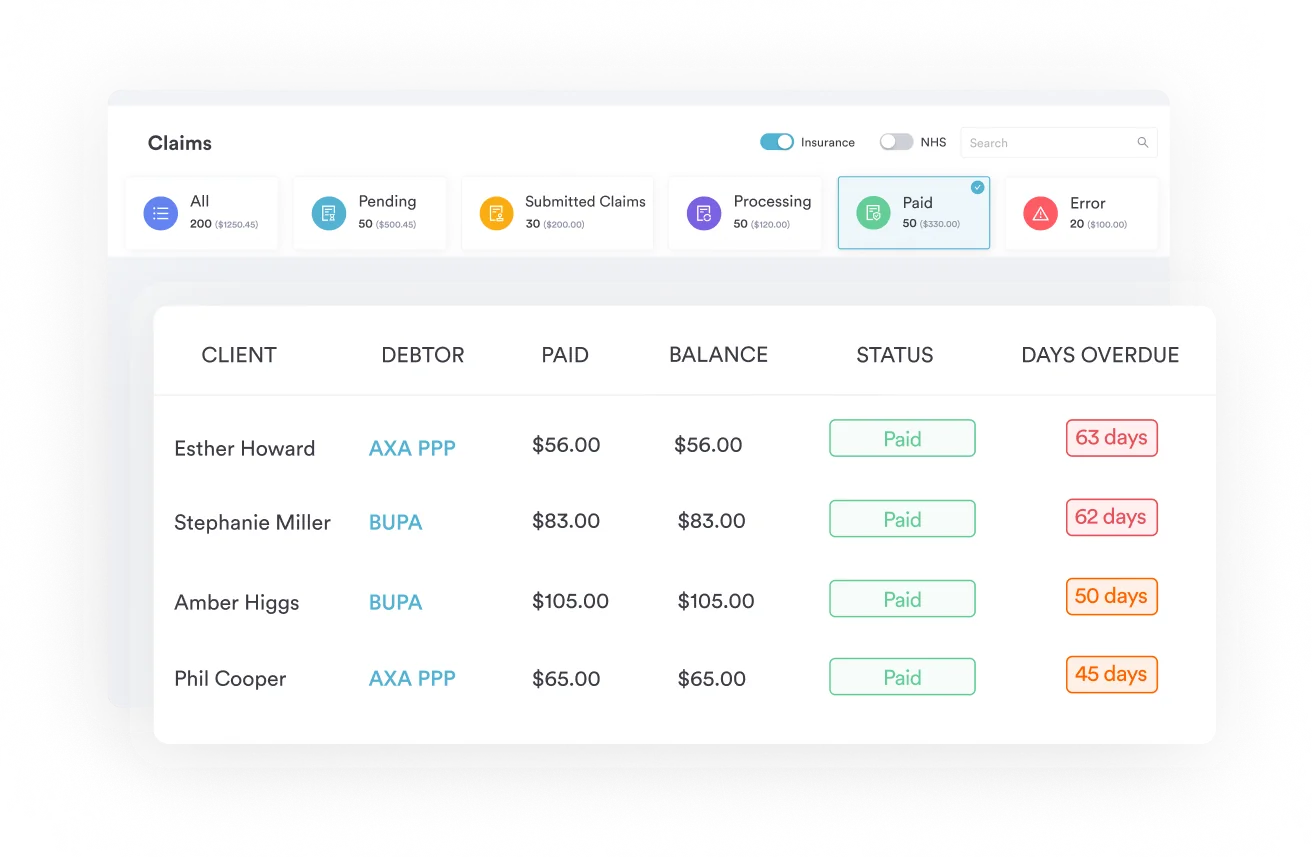

Pabau’s claims management workflow helps ophthalmology practices catch missing laterality and incomplete documentation before submission – so H25.9 claims go out right the first time.

The age-related cataract ICD-10 codes all sit in the H25 category, the age-related (senile) cataract family. It spans incipient, cortical, nuclear, morgagnian mature, and combined forms across both eyes. Coders working in ophthalmology should be familiar with the full code set to avoid defaulting to H25.9 when a more specific option exists.
ICD-10-CM ICD-10 coding guidelines for acute conditions consistently emphasize using the highest level of specificity supported by the clinical record. For cataract coding, that means laterality (right, left, bilateral) and morphology (cortical, nuclear, posterior subcapsular, combined) should be coded whenever documented.
Per the CDC/NCHS ICD-10-CM official coding tool, the unspecified code H25.9 should only be used when no further detail is available in the record. This aligns with the broader ICD-10-CM guideline that unspecified codes are acceptable only when information is truly unknown, not as a convenience default.
The digestive chapter applies the same test, where ICD-10 code K37 covers appendicitis that the record never classifies as acute, chronic, or complicated.
H25 (age-related cataract) carries an Excludes2 note for H28 (cataract in diseases classified elsewhere). This means cataracts caused by systemic disease (diabetic cataract, cataract in myotonic dystrophy) should be coded under H28 with the underlying condition listed first – not under H25. Using H25.9 on a diabetic patient’s cataract claim without first coding the diabetes is a sequencing error that payers can identify through claim-level edits. Benefit verification tells the practice what the plan covers, which is a separate question from whether the patient is active.
The AAPC Codify ICD-10-CM lookup provides sequencing guidance and Excludes notes for the full H25 category, which is useful for coders handling complex cataract cases with comorbidities. Practices that also handle mental health or other comorbid conditions may find broader context on ICD-10 coding guidelines for acute conditions instructive for understanding sequencing rules across chapters.
Before submitting H25.9 on a surgical claim, check whether the patient has diabetes, myotonic dystrophy, or another systemic condition linked to cataract formation. If yes, the cataract may need coding under H28 with the systemic condition sequenced first – not under H25 at all.
An effective billing workflow for cataract claims reduces H25.9 usage to genuinely unspecified cases and maximizes specificity across the rest. Here is how high-performing ophthalmology practices structure the process.
H25.9 is a valid, billable code for unspecified age-related cataract – but it should be the exception, not the default. Most ophthalmology encounters generate enough clinical detail to support a laterality-specific H25 subcode, and using that specificity reduces denial risk, simplifies pre-authorization, and supports medical necessity documentation for cataract surgery.
Practices that standardize laterality capture at the point of care, review claims before submission for unspecified-code flags. Book a demo to see how Pabau’s claims management and digital documentation tools support ophthalmology billing workflows.

Coding memory loss from a known medical cause? ICD-10 code F04 guide This guide explains when to use F04 instead of R41.3 for amnestic disorder from TBI, hypoxia, or Korsakoff syndrome.
Coding delirium in an inpatient setting? ICD-10 code F05 guide This guide explains why delirium is often undercoded and how it differs from dementia codes like F02.80.
Coding a mood disorder with a medical cause? ICD-10 code F06.31 guide This guide explains why documentation must link depressive features to a specific medical condition to avoid denial.
There is no single cataract code – the right one depends on the cause. For an age-related (senile) cataract, H25.9 is the unspecified option, with more specific H25 subcodes for cortical, nuclear, and posterior subcapsular types by eye. When the cataract is not age-related, H26.9 or a more specific H26 subcode applies, and cataracts linked to a systemic disease such as diabetes are coded under H28 with the underlying condition sequenced first. Code to the highest specificity the record supports rather than reaching for an unspecified code by default.
ICD-10 Code H25.9 is the clinical classification for unspecified age-related cataract, assigned when a patient’s cataract is confirmed to be age-related (senile) in etiology but the specific type (cortical, nuclear, posterior subcapsular) and affected eye (laterality) are not documented. It is valid for the 2026 ICD-10-CM code year and applies to adult patients aged 15-124 years.
Yes. H25.9 is a billable and specific ICD-10-CM code for fiscal year 2026, confirmed by the CMS/NCHS tabular list. It can be used as the primary diagnosis code on ophthalmology claims. However, more specific H25 subcodes with laterality (right, left, bilateral) are preferred and reduce denial risk when clinical documentation supports greater specificity.
H25.9 is for unspecified age-related (senile) cataract; H26.9 is for unspecified cataract where the etiology is other than age-related or is genuinely unknown. Using H26.9 on a Medicare claim for an elderly patient with a clearly age-related cataract is a coding error that can trigger claim edits or audit flags. Always select based on documented etiology, not convenience.
Yes. Senile cataract and age-related cataract are the same diagnosis, so the senile cataract ICD-10 code is H25.9 when the type and laterality are not documented. The WHO ICD-10 wording for the code is “senile cataract, unspecified,” while the US ICD-10-CM tabular list phrases it as “unspecified age-related cataract.” Both point to the same billable code and the same H25 age-related family, which is why a search for senile cataract ICD 10 and one for age-related cataract ICD 10 land on H25.
H25.9 does not include a laterality modifier by definition – that is what makes it the unspecified code. However, if laterality is known from the clinical record, coders should use a laterality-specific H25 subcode (such as H25.011 for right eye or H25.012 for left eye) instead. For surgical pre-authorization, most payers require a laterality-specific code even if H25.9 would technically be acceptable for the diagnostic encounter.
CPT 66984 (extracapsular cataract removal with IOL insertion) is the most common procedure code paired with H25.9. CPT 66982 applies to complex cataract surgery. Pre-operative evaluation codes 92004 and 92014 are also commonly submitted with H25.9 during the diagnostic phase. For surgical claims, payers frequently require a laterality-specific H25 subcode rather than H25.9, so the diagnosis should be updated before the surgical claim is submitted.
Use H25.9 only when the clinical record genuinely does not specify the cataract type or the affected eye at the time of coding, such as in an initial urgent-care encounter before a full ophthalmic workup or when a physician query cannot be completed before the claim deadline. In a standard ophthalmology office visit with a slit-lamp examination on record, there is almost always sufficient detail to code a more specific H25 subcode.



