ICD-10 Code Z74.8: Other problems related to care provider dependency
ICD-10 Code Z74.8: Definition and code details ICD-10 Code Z74.8 is the billable...

Last Updated: Oct 19, 2026
Billable Code Specific Code
H44.9 is the billable ICD-10-CM code for unspecified disorder of globe.
According to the CDC/NCHS ICD-10-CM web tool, H44.9 is valid when a globe disorder is present. The specific type simply hasn't been identified or documented yet. The code sits at the end of the H44 block, acting as the catch-all for globe conditions that don't fit a named subcategory.
Clinical scenarios where H44.9 might legitimately apply include:
H44.9 is not appropriate when the clinical record contains enough information to assign a more specific code. The CMS ICD-10-CM coding guidelines are clear on this. Unspecified codes are for cases where the record lacks the detail needed for a specific code. They aren't for cases where the coder simply skips looking up the more precise option.
Let Pabau's smart automation suggest the right codes, reduce claim denials, and keep your practice compliant—effortlessly.
Automate repetitive tasks and focus on what matters most—your patients.
Reduce coding errors and ensure compliance with the latest regulations.
Clean claims, fewer denials, and faster reimbursements.
Powerful insights and reporting to help your practice thrive.
HIPAA compliant SOC 2 certified GDPR-compliant Trusted by 4,000+ clinics worldwide

ICD-10 Code H44.9 is a valid, billable diagnosis code for Unspecified disorder of globe, effective for the 2026 code year.
Use H44.9 only when the clinical record can’t support a more specific H44 subcode — payers may ask for documentation justifying the unspecified designation.
The ICD-9-CM predecessor is code 360.9, also described as Unspecified disorder of globe. This makes it a one-to-one crosswalk in most scenarios.
Practice management software like Pabau can flag unspecified codes at the point of claim submission, helping ophthalmology practices avoid preventable denials.
Understanding where H44.9 sits within the broader classification helps coders navigate to the right level of specificity. The code hierarchy runs from the chapter level down to the individual code.
The H44 block ranges from purulent endophthalmitis (H44.0) and degenerative myopia (H44.2) to retained intraocular foreign bodies (H44.6 and H44.7). H44.9 is the last code in the block, placed there by design as the catch-all. The H00-H59 chapter follows the same pattern used across ICD-10-CM: specific codes first, unspecified last.
Within H44, some subcodes break down further. H44.2 (Degenerative myopia) specifies the complication at the 6th-character level (H44.2A through H44.2E). Laterality is specified by the 7th-character extension (1 = right, 2 = left, 3 = bilateral, 9 = unspecified). H44.6 and H44.7 (retained foreign bodies) also carry eye-specific extensions. Before defaulting to H44.9, coders should confirm the record doesn’t support one of these more specific entries.
Neuro-ophthalmic codes like H47.49 (Disorders of optic chiasm in other disorders) sit in a different block. They describe nerve pathway problems, not globe structure, so it’s worth keeping the two separate when coding.
H44.9 is a billable, valid ICD-10-CM code for fiscal year 2026. It is a terminal code, meaning it has no further subcategories and can be used directly on claim submissions. The AAPC Codify ICD-10-CM lookup confirms the code is active with no exclusion notes at the H44.9 level itself.
Key billable status facts:
That said, billable status and payer acceptance aren’t the same thing. Several Medicare Local Coverage Determinations (LCDs) covering ophthalmology procedures list the specific ICD-10-CM codes they’ll accept as proof of medical necessity. If an LCD lists H44.0-H44.8 but skips H44.9, a claim using H44.9 may get denied. This happens even though the code itself is valid. The same LCD scrutiny applies to other unspecified eye codes, including H40.9 (unspecified glaucoma) and H57.9 (unspecified disorder of eye and adnexa). Coders working with claims management software that checks diagnosis codes against payer-specific LCDs can catch these mismatches before submission, not after. An eligibility check at booking and again at arrival catches mid-month plan changes.
For HIPAA-covered entities, correct use of ICD-10-CM codes on electronic transactions is also a compliance requirement. Using H44.9 where a more specific code exists and is documented creates an inaccurate clinical picture in the claim record. Both the HIPAA compliance framework and the ICD-10-CM Official Guidelines apply here. Each requires the assigned code to reflect the clinical information on hand at coding time.
Run a quarterly audit of H44.9 claims and pull the corresponding clinical notes. If more than 20% of those encounters show findings that support a specific H44 subcode, your team needs a coding refresh. The fix is almost always a documentation template update, not a coder retraining session.
Payers and CMS check unspecified codes more closely than specific codes. When H44.9 appears on a claim, the documentation should clearly show why a more specific code wasn’t possible.
For example.
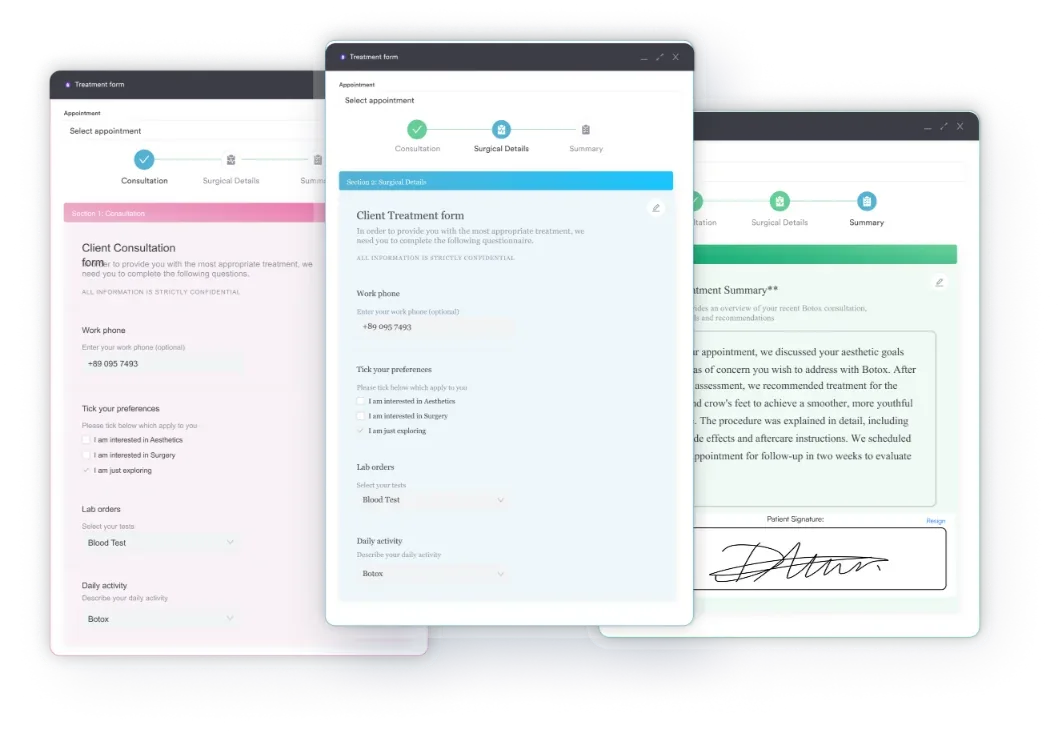
Ophthalmology practices that use structured digital intake forms capture this detail consistently. That beats relying on free-text notes, which can miss key coding elements. A general practice intake template, adapted for eye care, works well for this. Prompting clinicians to record symptom onset, prior eye conditions, and diagnostic status gives coders what they need to pick the right code without guesswork.
AHIMA (the American Health Information Management Association) and AAPC (the American Association of Professional Coders) are two leading coding bodies. Both recommend that practices track unspecified-code use as a quality metric. A rising H44.9 rate across a practice’s ophthalmology encounters usually points to a documentation shortfall upstream, not a genuine rise in unspecified presentations.
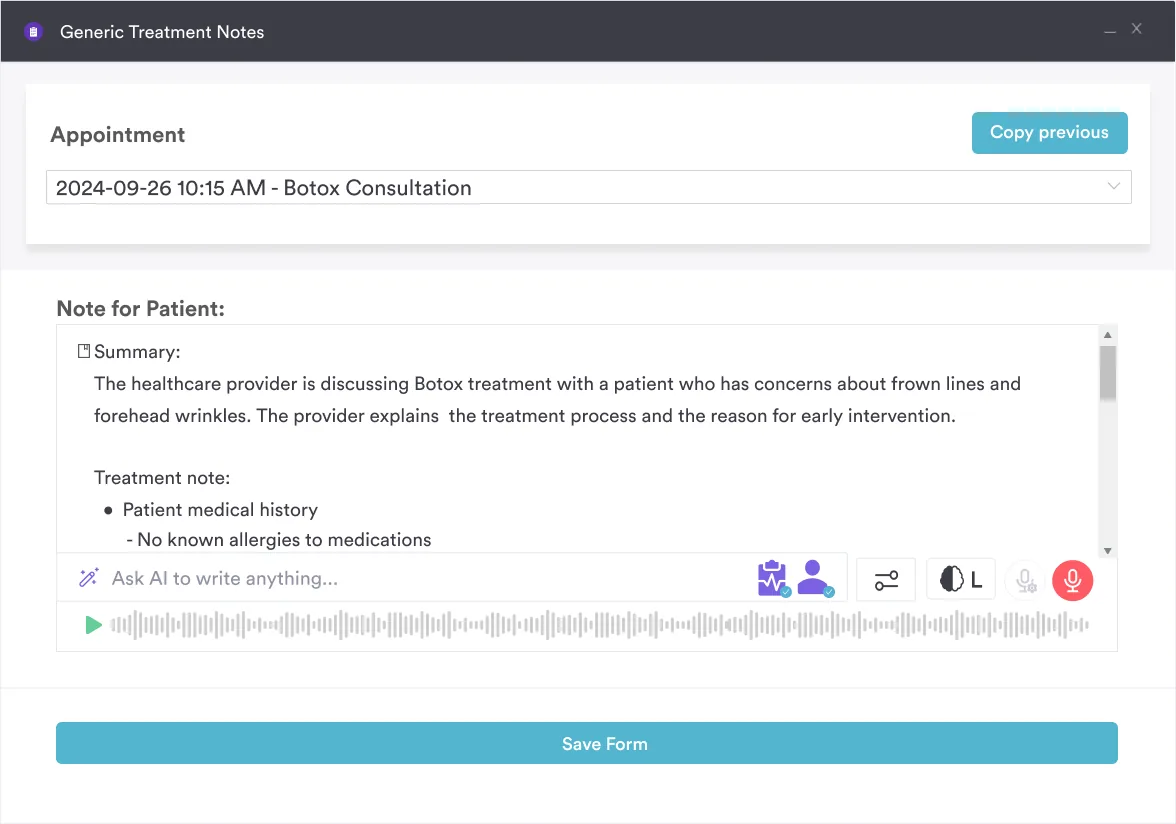
Practices that use AI-assisted clinical documentation capture more accurate records of what the clinician observes. That makes it easier for coders to pick the right ICD-10-CM code at each encounter. When the clinical note captures the full picture of a globe disorder, H44.9 should be the exception, not the default.

Pabau’s claims management tools flag unspecified diagnosis codes before submission and connect your clinical documentation workflow to your billing queue. See how ophthalmology and eye care practices use Pabau to reduce denials and improve coding accuracy.

Inside software built for GPs, eye and ear diagnoses route to the right specialist with history attached.
Practices that transitioned from ICD-9-CM to ICD-10-CM will encounter the predecessor code 360.9 (Unspecified disorder of globe). The same applies to those reviewing historical claims data. The CMS General Equivalence Mappings (GEM) crosswalk maps 360.9 directly to H44.9 as a one-to-one forward translation in most contexts.
This is a straightforward crosswalk because both codes describe the same clinical concept at the same level of detail. However, the GEM crosswalk is a translation aid, not a replacement for proper code assignment. A historical claim coded 360.9 doesn’t automatically justify coding today’s encounter H44.9. Check whether the current record has more diagnostic detail than the old one did.
For practices migrating historical data into a new EHR integration, the 360.9 to H44.9 crosswalk helps with continuity. Even so, the clinical team should treat any re-coded encounter as a chance to check whether a more specific code is now possible.
The ResDAC ICD codes in Medicare files resource explains how Medicare claims data handles the ICD-9 to ICD-10 switch. It’s a useful reference for practices reviewing older billing records.
When reviewing pre-2015 claims data coded with ICD-9-CM 360.9, don’t auto-populate H44.9 into current encounter templates. Check first whether a newer, more specific diagnosis is documented in the patient record. Crosswalks tell you what code the old one becomes. They don’t tell you whether that code is still the right one today.
The most common coding error with H44.9 is using it when a documented finding clearly maps to a more specific subcode. The table below summarizes the H44 block to help coders identify the right alternative before defaulting to unspecified.
Coders should also verify laterality when working with H44 subcodes. Several H44 subcategories require an eye-specific extension (1 = right eye, 2 = left eye, 3 = bilateral, 9 = unspecified eye). H44.9 itself carries no laterality requirement, which is one reason it sometimes gets used by default. That shortcut can hide clinically important detail, though. Other lens and globe findings. Use the specific code whenever the record supports it.
The ICD List free lookup tool displays the full extension requirements for each H44 subcode. It’s useful for laterality verification during the coding workflow.
Practices that handle CPT billing alongside ICD-10-CM diagnosis coding should note one thing. Procedure and diagnosis codes together affect medical necessity checks at the payer level. A claim pairing a procedure code with H44.9 faces more scrutiny than the same procedure paired with a specific H44 subcode. That’s because H44.9 gives less clinical justification for the procedure performed.
The ICD-10-CM specificity principle applies across every chapter. When documentation supports a more precise code, that code must be used. This applies whether the diagnosis is I24.1 (Dressler’s syndrome) after a heart attack, or a routine eye visit. H44.9 works as a temporary code during workup, with the expectation it gets updated once a firm diagnosis is reached.
Eye care practices seeing patients with complex, multi-system conditions should also watch for systemic disease producing secondary effects on the eye. H22 (Disorders of iris and ciliary body in diseases classified elsewhere) and H32 (Chorioretinal disorders in diseases classified elsewhere) are good examples. Both show how a systemic illness generates a secondary eye code that must be documented alongside the primary diagnosis.
Unspecified codes exist for a reason, and H44.9 has a legitimate place in ophthalmology billing when the documentation genuinely can’t support more detail. The risk is coding H44.9 when the record already has enough information for a more precise H44 subcode.
Pabau’s claims management software connects diagnosis code selection to real-time payer LCD validation, reducing H44.9 claims that reach the denial queue. Practices running intravitreal injection billing workflows benefit especially from accurate globe disorder coding. Book a demo to see how the workflow applies to your team’s setup.

Coding a standalone insomnia diagnosis? Primary insomnia coding guide defines F51.01 for persistent insomnia that occurs independently of other medical or psychiatric conditions.
Looking for structured clinical documentation tools for your ophthalmology practice? Medical records management covers how Pabau captures and organizes patient encounter data to support accurate code assignment.
Want to see the same specificity principle play out in a different chapter? ICD-10 code M08.1 for juvenile ankylosing spondylitis follows the same coding logic covered here. It’s a systemic rheumatologic condition rather than an eye disorder, but the same specificity principle applies.
ICD-10 Code H44.9 is a valid, billable diagnosis code for Unspecified disorder of globe. It sits in the H44 block (Disorders of globe) under chapter H00-H59 (Diseases of the eye and adnexa) of ICD-10-CM. Use it when a globe disorder is present but the documentation doesn’t support a more specific H44 subcode.
Yes, H44.9 is a billable terminal code for the 2026 ICD-10-CM code year. It requires no laterality extension and no 7th character. However, payers may deny an H44.9 claim if their Local Coverage Determination calls for a more detailed H44 subcode for the procedure billed. Check LCD requirements before submitting.
Use H44.9 only when the documentation doesn’t support a more specific H44 subcode. Examples include an initial evaluation before workup is complete, or a referral note that lacks detail. If the record names a condition like degenerative myopia (H44.2) or endophthalmitis (H44.0), use that specific code instead.
The ICD-9-CM predecessor to H44.9 is code 360.9, also described as Unspecified disorder of globe. The CMS General Equivalence Mappings (GEM) crosswalk maps 360.9 directly to H44.9 as a one-to-one forward translation. This crosswalk is relevant for practices reviewing historical claims data predating the October 1, 2015 ICD-10-CM transition.
The H44 block includes H44.0 (Purulent endophthalmitis), H44.1 (Other endophthalmitis), and H44.2 (Degenerative myopia). It also includes H44.3 (Other degenerative disorders of globe), H44.4 (Hypotony of eye), and H44.5 (Degenerated conditions of globe). Rounding out the block are H44.6 and H44.7 (retained intraocular foreign bodies, magnetic and nonmagnetic). Then come H44.8/H44.89 (Other disorders of globe) and H44.9 (Unspecified disorder of globe). Many H44 subcodes require laterality extensions.