ICD-10 Code Z74.8: Other problems related to care provider dependency
ICD-10 Code Z74.8: Definition and code details ICD-10 Code Z74.8 is the billable...

Last Updated: Oct 19, 2026
Billable Code Specific Code
H47.49 is the billable ICD-10-CM code for disorders of optic chiasm in (due to) other disorders.
Full description: Disorders of optic chiasm in (due to) other disorders. Code status: Billable (valid for claims with a date of service on or after October 1, 2015). ICD-10-CM chapter: Chapter 7, Diseases of the eye and adnexa (H00-H59). Code range: H46-H47, Disorders of optic nerve and visual pathways.
The parent code H47 (Other disorders of optic [2nd] nerve and visual pathways) is non-billable. Payers require a fully specified subcategory. H47.49 sits at the end of the H47.4x chiasm block, functioning as the residual "other" category after H47.41 (inflammatory), H47.42 (neoplasm), and H47.43 (vascular) have all been considered.
Let Pabau's smart automation suggest the right codes, reduce claim denials, and keep your practice compliant—effortlessly.
Automate repetitive tasks and focus on what matters most—your patients.
Reduce coding errors and ensure compliance with the latest regulations.
Clean claims, fewer denials, and faster reimbursements.
Powerful insights and reporting to help your practice thrive.
HIPAA compliant SOC 2 certified GDPR-compliant Trusted by 4,000+ clinics worldwide

ICD-10 code H47.49 is a billable 2026 diagnosis code for disorders of the optic chiasm caused by conditions not covered by H47.41, H47.42, or H47.43.
Use H47.49 only after ruling out inflammatory (H47.41), neoplastic (H47.42), and vascular (H47.43) causes – it is a true residual category, not a default code.
Documentation must explicitly state the underlying condition and why it does not fit any more specific subcategory, or payers will likely deny the claim.
Pabau’s claims management software and digital intake forms support accurate ICD-10 documentation and streamlined neuro-ophthalmology billing workflows.
The CDC/NCHS ICD-10-CM tool and standard tabular references list the following inclusion terms for H47.49:
These terms appear in coding lookups and clinical documentation. When a provider writes “optic chiasm compression” and the underlying cause is neither inflammatory, neoplastic, nor vascular (for example, a post-traumatic structural compression or a congenital anomaly), H47.49 is the correct code.
The optic chiasm is the X-shaped crossing point where fibers from both optic nerves partially decussate. Lesions here produce characteristic bitemporal hemianopia, a field defect that should prompt neuro-ophthalmology referral and careful etiology workup. Coexisting findings such as an afferent pupillary defect or a palsy of conjugate gaze can help localize the lesion within the broader visual pathway.
The ICD-10-CM H47.4x block organizes chiasm disorders by cause. H47.49 applies when none of the three named causes (inflammatory, neoplasm, vascular) explains the pathology. Conditions that can fall under H47.49 include:
Clinicians should document the specific underlying condition in the encounter note, even when using H47.49. This documentation is what supports the “other” designation and protects the claim from denial as insufficiently specified.
Choosing correctly within the H47.4x block requires a clear understanding of each subcategory’s etiology scope. The same specificity principle applies across ICD-10-CM: always assign the most specific code the documentation supports before defaulting to a residual “other” category.
The CMS ICD-10-CM update files confirm all four subcategories as valid for the 2026 coding year. Coding with the parent H47.4 is not acceptable for claim submission regardless of payer. The adjacent H46 optic neuritis block is organized by etiology too. Optic nerve damage attributed to a nutritional deficiency takes ICD-10 code H46.2, not a chiasm code.
Before assigning H47.49, document a clear exclusion rationale in the encounter note. A one-line statement such as ‘Chiasm compression secondary to post-irradiation injury; inflammatory, neoplastic, and vascular causes excluded’ gives your biller and any auditor a clear justification trail without requiring a second query to the provider.
A GP practice platform keeps recurring ear infections and vision changes visible across a patient’s timeline.
Payers treat residual “other” codes with skepticism. A claim carrying H47.49 without supporting documentation reads the same as an under-coded claim. Ophthalmology and neuro-ophthalmology practices need documentation that establishes three things:
When documentation is incomplete, digital intake forms and structured clinical notes reduce the risk of a coding query holding up the claim. As with other specialty diagnostic codes, the documentation must support both the code and the level of service billed on the same encounter.
H47.49 is almost always accompanied by a secondary code identifying the underlying cause. CMS guidelines require coding the underlying condition when the code description includes the phrase “in (due to).” A separately documented, unrelated finding may also need its own code. Common companion codes for the chiasm etiology itself include:
The sequencing rule is straightforward: H47.49 as the principal diagnosis, followed by the code for the underlying condition. When the underlying condition is a congenital reduction deformity of the brain rather than septo-optic dysplasia, the companion code is ICD-10 code Q04.3. Sequencing errors are among the most common reasons for claim edits in ophthalmology billing.

Pabau’s claims management tools help neuro-ophthalmology and ophthalmology practices document ICD-10 diagnoses accurately, reduce claim errors, and keep coding workflows running smoothly across your team.

H47.49 does not carry its own CPT reimbursement value. The diagnosis code supports the medical necessity of a separately billed evaluation and management (E&M) or diagnostic procedure code. Three billing considerations are worth flagging for practices regularly coding chiasm disorders:
For payer-specific coverage lookups, the AAPC Codify ICD-10-CM lookup tool provides crosswalk data and payer policy notes alongside the official code description.
Run a quarterly audit of H47.49 claims against your practice’s documentation standards. Pull claims from the previous 90 days, check that each has a named underlying cause in the encounter note, and verify the companion code was included. A 15-minute audit catches the patterns that lead to payer-specific denials before they compound.
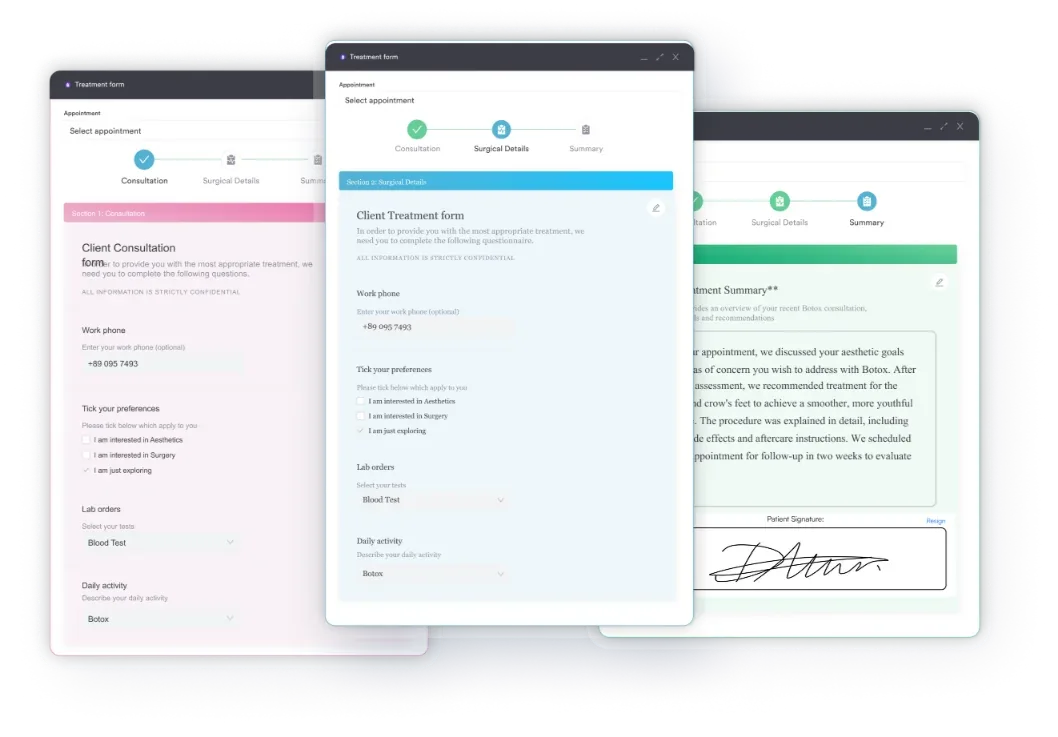
Most H47.49 encounters follow a similar documentation and coding sequence.
Using compliance management tools alongside your coding workflow helps practices track denial patterns and build internal benchmarks for code-specific documentation quality.

Prior to October 1, 2015, chiasm disorders were coded under the ICD-9-CM 377.5x range, which covered four etiologies: 377.51 (associated with pituitary neoplasms), 377.52 (associated with other neoplasms), 377.53 (associated with vascular disorders), and 377.54 (associated with inflammatory disorders). There was no residual “other” code for a chiasm disorder that did not fit one of those four categories. Where a practice does not bill the payer directly, the patient needs an itemized statement carrying this code and its charge. Practices that bill a narrow set of services keep a coding guide covering that set rather than the whole schedule.
The transition to ICD-10-CM introduced etiology-based specificity, splitting the chiasm block into the named-cause codes H47.41-H47.43 plus H47.49, a true residual “other” category that ICD-9-CM never had.
Practices that migrated billing history from ICD-9-CM will find that older claims coded to 377.5x map broadly to the H47.4x block.
For research or retrospective audit purposes, the ResDAC ICD codes in Medicare files guide explains how ICD-9 to ICD-10 transitions are handled in Medicare claims data. Current claims (date of service October 1, 2015 or later) require ICD-10-CM codes only.
The WHO ICD-10 browser provides the international classification framework from which the US ICD-10-CM is adapted. The US clinical modification (CM) adds specificity beyond the WHO base classification, which is why some international payers may use different code structures for chiasm disorders.
Practices billing under a different national system often need software built for those claims workflows, covered in guides to UK billing software and Australian billing software.
Practices managing HIPAA-compliant electronic health records should ensure their EHR system uses only ICD-10-CM codes for all current claims and that any legacy ICD-9 codes are clearly segregated in historical records. Reviewing your EHR security practices alongside this migration helps keep historical and current coding data properly separated.
Chiasm disorders rarely show up in isolation. Coders working up bitemporal hemianopia, planning neuroimaging, or documenting a broader neuro-ophthalmic exam often need a companion or differential code from elsewhere in the H40-H57 range. These come up regularly alongside H47.49:
H47.49 is a legitimate, billable diagnosis code for optic chiasm disorders caused by conditions outside the three named etiologies in the H47.4x block. Using it correctly requires documented exclusion of inflammatory, neoplastic, and vascular causes, plus a named underlying condition that supports the “other” designation.
Pabau’s claims management software helps ophthalmology and neuro-ophthalmology practices link ICD-10 documentation directly to claim submission workflows, reducing the documentation errors that lead to denials. To see how Pabau supports accurate diagnostic coding and billing compliance, book a demo.

Need a structured approach to ICD-10 documentation for another etiology-driven condition? ICD-10 code H81.4: Vertigo of central origin walks through the same central-vs-peripheral coding logic for a different neuro-ophthalmic symptom.
ICD-10 code H47.49 is a billable diagnosis code for disorders of the optic chiasm caused by conditions other than inflammatory disease (H47.41), neoplasm (H47.42), or vascular disorders (H47.43). It falls under ICD-10-CM Chapter 7 (Diseases of the eye and adnexa) and is valid for the 2026 coding year. Inclusion terms include compression of optic chiasm and disorder of optic chiasm.
Optic chiasm disorders are conditions affecting the X-shaped crossing point where fibers from both optic nerves partially cross. They typically produce bitemporal hemianopia (loss of peripheral vision in both eyes) and can result from tumors, vascular events, inflammation, trauma, congenital anomalies, or radiation injury. The underlying cause determines which H47.4x code applies.
Select the code that matches the confirmed underlying cause: H47.41 for inflammatory disorders (optic neuritis, sarcoidosis), H47.42 for neoplasm (pituitary adenoma, meningioma), H47.43 for vascular disorders (giant cell arteritis, aneurysm). Use H47.49 only when the underlying cause is confirmed but does not fit any of those three categories. Always document the specific etiology and why the more specific codes were excluded.
Yes, H47.49 is a billable ICD-10-CM code valid for claims with a date of service on or after October 1, 2015, including the 2026 coding year. The parent code H47.4 is not billable and should never appear on a claim. H47.49 requires a companion code identifying the underlying condition causing the chiasm disorder.
The encounter note must document confirmed chiasm involvement (visual field testing or neuroimaging findings), the specific underlying cause (e.g. post-traumatic injury, congenital anomaly), and a clear indication that inflammatory, neoplastic, and vascular causes were considered and excluded. Claims without this documentation are at high risk of payer denial for insufficient specificity.
No ICD-10 code names empty sella syndrome directly. The syndrome itself is coded E23.6 (other disorders of pituitary gland), or E23.0 (hypopituitarism) when a hormone deficiency is confirmed. When an empty or partially empty sella turcica compresses the optic chiasm and produces a visual field defect such as bitemporal hemianopia, H47.49 codes the resulting chiasm disorder, with E23.6 or E23.0 recorded as the companion cause code.