Pabau GO app

The new Pabau GO is heredownload on the App Store

Download on the App Store
Book a demo Book a demo
Medspa

How to streamline acne face mapping: A simple guide + free template

Avatar photo Katy Piper
November 22, 2024
Reviewed by: Avatar photo Lucy Galloway

Key Takeaways

Acne face mapping links breakouts in different facial zones to their most likely triggers, from hormones and oil production to friction and hair products, turning a breakout pattern into a treatment plan.

Work zone by zone: the forehead and temples run oily and react to hair products, the nose and cheeks pick up friction and phone bacteria, and the jawline and chin lean hormonal, so each area calls for a different fix.

There’s little scientific evidence for the traditional organ-based theory of face mapping, but oil gland density, hormones, and skin contact do genuinely vary by zone, so location is still a useful clue.

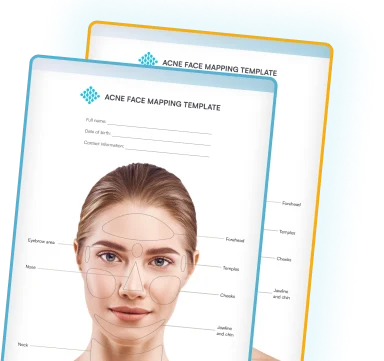
A free, downloadable acne face mapping template further down this page helps you document each zone, the likely cause, and the treatment plan for every client.

Storing mapped photos, treatment notes, and consultation history in practice management software like Pabau keeps every client’s acne map tied to their record, so you can track progress at a glance.

Can’t wait? Jump right to the template!

Acne can significantly impact people’s confidence, especially if it appears at a later age. So, for many clients, finding an effective solution for their skin problem is crucial for their aesthetic goals and boosting their self-esteem. 

Acne face mapping is a powerful technique in acne treatment that helps skin care professionals, aestheticians, and dermatologists deliver efficient, personalized treatment plans.

However, a busy med spa that sees many clients daily needs an efficient and accurate tool to streamline consultations without compromising on quality.

This blog will show you how to simplify and speed up the acne face mapping process. Plus, we’ve included a free template to help med spa professionals easily implement acne face mapping in their practice.

Read on as we break down the data on common causes of acne in different parts of the face so you deliver more effective treatments for your clients.

What is acne face mapping?

Acne face mapping, also called face mapping of acne, is a technique that links acne breakouts in different areas of the face to potential causes.

You may see the same idea called pimple maps or a breakout map, but the goal is always the same: connect each breakout to a likely trigger so you can treat it at the source.

It draws its roots from traditional Chinese medicine and Ayurvedic medicine, which used face mapping to interpret skin issues as the body’s signals for an underlying health problem.

For example, it links blemishes and pimples on the forehead with the small intestine, bladder, and digestive system.

As popular as this theory is, there is little or no solid scientific evidence that acne is tied to a specific internal organ.

What is well supported is that acne occurs when hair follicles get clogged with oil from the oil glands (sebum) and dead skin cells, leading to pimples, blackheads, and whiteheads, as the Mayo Clinic explains.

Each area of the face is more or less prone to acne based on oil gland activity, contact with objects (phones, pillowcases, glasses, hair products), and hormones. That is why location still gives you useful clues, even without the traditional organ links.

Other factors that trigger or worsen acne include:

  • Excessive oil production
  • Clogged pores
  • Bacteria build-up
  • Hormonal changes (high levels of the hormone androgen)
  • Medications
  • Certain diets, including carbohydrate-rich foods
  • Stress

With acne face mapping, you can track a client’s skin condition, zero in on the real causes, and offer better-targeted treatments.

It’s worth noting that acne face mapping should be performed by a licensed medical spa professional or dermatologist.

Below, we break down each zone using the scientifically supported causes of acne, and the solutions that tend to work for each one.


Acne face map and solutions by zone

To get the most out of acne face mapping, break the face down into zones and examine each one. This helps you spot patterns and connect every breakout to a likely root cause.

For each zone below, we cover what a breakout there usually means and the solutions that tend to work, so the map turns into a treatment plan instead of a guessing game.

1. Forehead

The forehead is part of the T-zone, where blackheads and whiteheads typically appear. This area is more prone to breakouts because it has more pores and sebaceous glands than most other parts of the body.

The acne found on the forehead and hairline is usually comedonal acne, typically caused by hormonal shifts, hair and hair products, touching the forehead, and makeup irritation.

People with oily skin, a family history of comedones, or hormone fluctuations tend to be more acne-prone here.

Forehead acne can also be pomade acne, caused by pomades, oils, gel, and wax found in hair care products such as dry shampoo or mousse.

Solutions: Forehead breakouts usually respond to a salicylic acid or benzoyl peroxide routine, plus swapping heavy pomades for non-comedogenic hair products and keeping hair off the face.

2. Temples

The temples, like the hairline, are prone to breakouts caused by pomade in hair and skincare products.

Additional factors include shifts in hormone levels (often tied to the menstrual cycle), sweating, hygiene habits, and genetics.

Tight or rubbing hats, helmets, and headbands can also clog the pores here.

Solutions: Switching to non-comedogenic hair and skincare products, and regularly cleaning hats, helmets, and headbands, clears most temple breakouts.

3. Eyebrow area

This zone covers the area between the eyebrows. Dirt, oil, or makeup that builds up here can clog pores and lead to blemishes or pimples.

Acne in this area is also caused by:

  • An unsuitable skincare routine (a cleanser or moisturizer that doesn’t agree with the client’s skin type)
  • Pore-clogging makeup and skincare products
  • Hair removal with wax, tweezers, or threading
  • Bangs or face-framing layers that touch the area
  • Glasses or face masks that let oil or bacteria build up

Solutions: A gentle, non-comedogenic cleanser with light exfoliation, plus clean glasses and brow-grooming tools, usually settles this area.

4. Nose

The nose covers two types of breakout: acne vulgaris and rosacea.

Acne vulgaris is the typical clogged-pore acne — whiteheads, blackheads, cysts, and pimples.

Rosacea isn’t acne, but it produces acne-like bumps, redness, and swelling from inflamed blood vessels near the skin’s surface.

The nose is part of the T-zone, so it carries more oil glands and breaks out more easily. In fact, a 2023 study on the role of sebum in acne vulgaris found a clear link between higher sebum production and the condition.

Solutions: Because the nose runs oily, a salicylic acid (BHA) cleanser and gentle weekly exfoliation help keep pores clear. Redness that looks like rosacea needs a calming approach rather than standard acne actives.

5. Cheeks

The cheeks are usually affected by acne mechanica — acne caused by touching or rubbing the skin against objects or hands.

The most common acne on cheeks cause is transferred bacteria and oil. Dirty pillowcases or bed sheets, and holding a phone to the face, both move bacteria onto the skin. A recent study found 100% of the phone screens tested carried E. coli and fecal streptococci.

Shaving cream can be a contributor for men, while foundation and sunscreen may clog pores for women.

Solutions: Since the cause is largely external, the fix is behavioral as much as topical. Wipe the phone screen, wash pillowcases and makeup brushes regularly, keep hands off the face, and pair that with a non-comedogenic routine and benzoyl peroxide where needed.

6. Jawline and chin

The jawline and chin zone records blemishes and breakouts on the lower third of the face.

On an acne face map, women more often break out along the jawline and chin. The chin sits within the T-zone, so higher sebum plays a part too.

Jawline and chin acne was long assumed to be purely hormonal. Some studies now link it in female clients to mildly to moderately raised levels of the androgen DHEA-S.

Research suggests around 60–70% of adult women experience worse acne in the days before menstruation.

Solutions: Because the drivers here are hormonal, retinoids and, where appropriate, a referral for hormonal management tend to work better than surface actives alone.

7. Neck

Acne and pimples can appear on the neck as well, so acne face mapping should include this area.

Neck acne is generally caused by the same factors as facial acne, plus a few specific triggers:

  • Clothing that rubs or presses on the skin, like collars, ties, and chin straps
  • Scratchy or synthetic fabrics, such as wool
  • Shaving with a dull razor or too little lubrication
  • Skipping exfoliation after shaving
  • Necklaces or jewelry, especially cheap metal and plastic

Solutions: Treat neck breakouts like facial acne, reduce friction from collars, straps, and synthetic fabrics, and shave with a sharp razor and enough lubrication.

Download our free template for acne face mapping

📔 Download our free acne face mapping template to get a jump start on simplifying your consultations and ongoing care with your clientele.

Acne face mapping

Template for download

How med spas can streamline acne face mapping

Acne face mapping is a powerful tool for med spas, but it may seem like too much effort with little or no payoff if not done correctly.

By following a few key strategies, and using the right aesthetic clinic software, you can make the process faster, more accurate, and easier to incorporate into your routine client consultations.

Leverage software with integrated digital mapping

Streamlined and efficient acne face mapping is simply impossible without the right software to support you.

Using software with built-in digital mapping features allows you to:

  • Effortlessly document acne and skin conditions
  • Easily track changes over multiple visits
  • Analyze patterns directly into digital client profiles
  • Create a visual record that’s easy to update

And if your practice also offers injectables, the same digital mapping approach works brilliantly for a filler face map, helping you document injection points, dosages, and before-and-after progress in one place.

You can create more interactive consultations for clients too – show them mapped areas, which zones are being treated, and their progress in seconds.

Sounds like something you’d like to have in your med spa or skin clinic? Then, Pabau is a great match for you! Here’s why—

  • The integrated digital face mapping allows you to document treated areas and mark them on clients’ photos or diagrams right onto the client profiles.
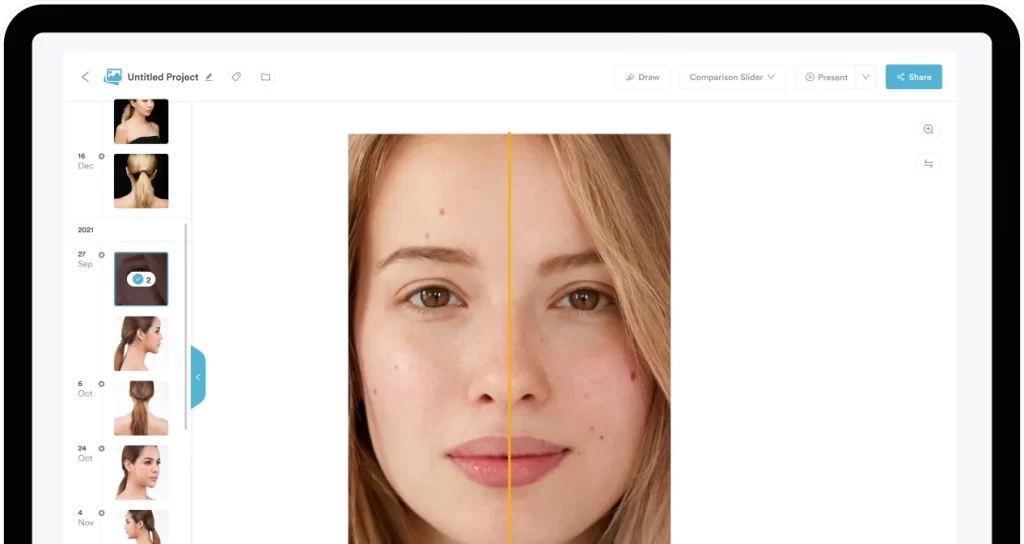
  • Create before-and-after images with just a few clicks on the iPad and save them in the client’s record.
  • Showcase a timeline of progress and create comparison sliders to show transformations from the first to the latest visit.
  • Zoom into the tiniest acne or pimple and capture them in high resolution to check the client’s skin condition with absolute clarity.
  • Create AI-generated treatment notes and consultation summaries in seconds with Pabau Scribe, our AI scribe.
  • Secure and easy access from anywhere – whether you’re in the practice, at home, or traveling, the acne face maps are at your fingertips.
before and after photos and digital mapping

Use standardized mapping templates

Standardized mapping templates provide you with a clear structure for identifying and documenting acne-prone areas.

If several team members are doing acne mapping, templates make it easy for them to provide the same high-quality service and consistent experience for clients each time they visit.

Pabau offers efficient acne face mapping that seamlessly integrates into your workflow with:

  • Customizable templates that can be tailored to your med spa needs
  • Easy-to-use drag-and-drop feature for building templates
  • Efficient drawing feature that allows to quickly map out acne zones

Offer virtual consultations to enhance accessibility

Virtual consultations allow your med spa to provide professional acne mapping services that clients can access from the comfort of their own homes.

By offering remote consultations, med spas can service clients who may not be able to visit in person for various reasons, such as living in a remote area, busy schedules, or other limitations.

Your clients receive personalized acne treatment without needing to travel, take time off work and fit the appointment around their schedule.

Integrate with Electronic Health Records (EHRs)

Integrating acne mapping with EHRs gives you a more holistic view of each client’s health history.

A system with integrated EHRs allows med spas to keep all relevant information – from acne mapping and skin problems to health factors, lifestyle factors and previous treatments – accessible in one place, so no details are overlooked.

Best of all, using a single platform that integrates both EHRs and acne face mapping offers one major advantage: it eliminates the need to juggle multiple tools, saving you valuable time and minimizing the hassle of switching back and forth between systems. One system, one log in – easy! 

Provide educational resources

Visits to the dermatologist or med spa are not enough for healthy skin. What clients do in between visits matters a lot, too.

When clients understand how to care for their skin between visits, they’re more likely to see better, longer-lasting results and develop trust in your med spa.

Offering clients valuable educational resources, like skincare tips and acne management guidance, empowers them to take control of their skin health beyond the treatments.

💡 Tip: The easiest way to provide educational material is to include it in your post-care emails. Include post-treatment instructions, personalized tips, and skin care routines between appointments. If you use a software solution, you can fully automate this process so your team don’t have to lift a finger! 

Transform your acne face mapping with Pabau

Acne face mapping is a valuable tool for med spas. It allows professionals to create treatment plans that address each client’s unique skin type and needs.

By streamlining the mapping process with practice management software like Pabau, you can save time, ensure consistency, and provide a higher standard of care. As a solution purpose designed for med spas, Pabau provides: 

  • Integrated digital face mapping
  • Before and after photo tools – all fully built in
  • Secure access to client EHRs from wherever you are
  • Customizable intake form templates you can send automatically

Plus, you’ll get appointment booking and scheduling, marketing tools, and more. In other words, Pabau helps make acne consultations more efficient and impactful.

👉 To see how Pabau can streamline your med spa’s acne face mapping and consultations, book a demo today!

Continue your research

Continue your research

Mapping injectables as well as acne? Filler face mapping applies the same zone-by-zone approach to plotting injection points, doses, and progress.

Want to track skin changes visually? Before-and-after photos show how to capture and compare client results across visits.

Choosing software to run your skin practice? Skin clinic software brings mapping, client records, and consultations into one place.

Frequently asked questions

What do breakouts on the cheek mean?

Cheek breakouts are usually a sign of contact and friction rather than an internal problem. The most common acne on cheeks cause is transferred bacteria and oil — from phone screens, pillowcases, unwashed makeup brushes, or resting the face on the hands. Foundation and heavy sunscreen can clog pores too. Cleaning what touches the face, plus a non-comedogenic routine, usually clears them.

Is acne face mapping scientifically accurate?

There is little solid evidence for the traditional idea that a breakout in one zone points to a specific organ. What is well supported is that oil gland density, hormones, and contact with the skin differ by area — so mapping is a useful starting point for finding triggers, not a diagnostic tool.

Does the location of your acne mean anything?

Location gives useful clues. The T-zone runs oilier and clogs more easily, the jawline and chin are more hormone-driven, and the cheeks are more about contact and friction. Reading those patterns helps you tailor treatment to each client.

×