ICD-10 Code S42.444P: Medial epicondyle fracture, right humerus
ICD-10 Code S42.444P: full descriptor and code validity ICD-10 Code S42.444P car...

Last Updated: Oct 13, 2026
Billable Code Specific Code
H47.43 is the billable ICD-10-CM code for disorders of optic chiasm in (due to) vascular disorders.
Ophthalmology and optometry coders assign it when vascular disease is the documented cause of an optic chiasm disorder. The code carries a “Code Also” note directing coders to also report the underlying vascular condition. However, ICD-10-CM does not mandate a fixed sequencing order between the two — instead, that depends on the circumstances of the encounter.
Let Pabau's smart automation suggest the right codes, reduce claim denials, and keep your practice compliant—effortlessly.
Automate repetitive tasks and focus on what matters most—your patients.
Reduce coding errors and ensure compliance with the latest regulations.
Clean claims, fewer denials, and faster reimbursements.
Powerful insights and reporting to help your practice thrive.
HIPAA compliant SOC 2 certified GDPR-compliant Trusted by 4,000+ clinics worldwide

H47.43 is a billable ICD-10-CM code for Disorders of optic chiasm in (due to) vascular disorders, valid for the current fiscal year.
The code sits under parent category H47.4 (Disorders of optic chiasm), within block H46-H47 and Chapter 7 (H00-H59, Diseases of the eye and adnexa).
H47.43 carries a Code Also note for the underlying vascular condition, but ICD-10-CM doesn’t mandate a fixed sequencing order between the two codes.
Pabau’s claims management software supports accurate ICD-10-CM code linkage and documentation workflows for ophthalmology and optometry practices.
Coding optic pathway disorders correctly depends on identifying both the anatomical site and the underlying cause. ICD-10 Code H47.43 captures a specific intersection of both. Specifically, it describes a disorder of the optic chiasm that is directly caused by, or occurring in the setting of, a vascular condition.
Full official description: Disorders of optic chiasm in (due to) vascular disorders. ICD-10 Code H47.43 is a billable, specific ICD-10-CM diagnosis code. It is valid for submission on claims and is applicable to the current fiscal year coding cycle. In practice, the CDC/NCHS ICD-10-CM tool lists this code as active with no pending retirements for the current FY2026 update cycle.
Understanding where H47.43 sits within the ICD-10-CM diagnostic code structure helps coders navigate related codes quickly. In addition, it helps them confirm they have selected the most specific billable option. The full parent-child path from chapter to code is below.
The parent code H47.4 covers all optic chiasm disorders. ICD-10-CM then breaks this into four billable child codes, each specifying a different underlying etiology. Coders assign H47.43 when clinicians document vascular disease as the cause. Because H47.43 is the most specific code in this path, no further subdivision is available.
The optic chiasm is the X-shaped crossing point where fibers from both optic nerves meet. Specifically, they partially decussate there before continuing to the visual cortex. Vascular disease affecting this structure disrupts the visual field in characteristic patterns, most commonly bitemporal hemianopia.
A vascular lesion or compression at the optic chiasm typically produces bitemporal hemianopia, the loss of both outer visual fields. On MRI, optic chiasm compression or ischemic change in the suprasellar region confirms chiasm-level involvement. As a result, it separates H47.43 from an optic nerve code such as H47.01.
According to the CMS ICD-10-CM coding guidelines, coders use H47.43 when the clinical record documents vascular pathology as the cause. Specifically, this pathology must be the underlying or causal mechanism for the optic chiasm disorder. In addition, the vascular etiology should be identifiable from imaging, history, or clinical assessment documented by the treating clinician.
Specifically, vascular conditions that can produce optic chiasm disorders and support use of this code include:
In practice, when clinicians suspect vascular etiology but haven’t confirmed it, they should document the basis for the diagnosis clearly. ICD-10-CM’s condition-coding conventions require the clinical record to establish the linkage between the chiasm disorder and its vascular cause. Coders should not infer that link on their own.
Four billable codes share the H47.4 parent. Selecting the correct one requires knowing the documented etiology. Choosing H47.43 versus a sibling code comes down to one question: what is the underlying cause? Instead, it is not about which visual field defect is present.
H47.49 is a residual code. Use it only when the record confirms the cause but that cause does not fit the inflammatory, neoplastic, or vascular categories. Therefore, if the clinical record identifies a vascular cause, H47.43 is always preferred over H47.49.
The H46-H47 block covers disorders of the optic nerve and visual pathways more broadly. When coding optic chiasm disorders, coders often need to cross-reference adjacent codes. Doing so confirms that H47.43 is the right choice over a related optic nerve code.
Coders code visual outcomes from chiasm-level vascular events separately from the chiasm disorder itself. For example. Key codes in the H46-H47 range that may be considered alongside H47.43:
Key distinction: H47.01 and H47.43 both involve vascular etiology but code different anatomy. H47.01 is used when ischemia affects the optic nerve. By contrast, H47.43 applies when the chiasm itself is the affected structure. Confirm anatomical involvement from imaging or clinical documentation before selecting between them.
Not every adjacent code in this range has a vascular cause. H46.2 covers deficiency-driven damage to the optic nerve rather than the chiasm, and unlike H47.01 it takes no laterality character.
When reviewing records for H47.43, look for MRI findings that specifically implicate the suprasellar or parasellar region and document vascular involvement. A note reading ‘visual field defect’ alone does not support this code. The record needs to identify both the chiasm as the affected structure and a vascular cause.
The official ICD-10-CM tabular list includes Excludes notes that restrict or guide the use of certain codes. For H47.43, coders should verify the current Excludes notes against the AAPC ICD-10-CM lookup or the CDC/NCHS official tabular tool. These notes are reproduced verbatim from the CMS source, so they are subject to annual revision.
General ICD-10-CM sequencing guidance applicable to H47.43:
Confusing the Code Also note with a mandatory manifestation-code sequence is a common mistake in ophthalmology billing. Submitting a claim with H47.43 but no underlying vascular condition anywhere on it often triggers medical necessity denials. That’s why documentation matters, even though ICD-10-CM does not dictate which code comes first. See the HIPAA-compliant documentation practices that support accurate code pairing for claims submission.
Most denials involving H47.43 stem from one of three problems. Specifically, these are a missing etiology code, insufficient documentation of vascular cause, or confusion with H47.01. The guidance below reflects standard ICD-10-CM conventions for etiology-manifestation coding in ocular conditions.
The clinical record must contain the following:
In practice, radiologic or neuro-ophthalmologic reports that confirm chiasm involvement in the context of a known vascular event satisfy this requirement.
Practices using structured clinical records and digital intake forms find it easier to capture the specific etiology at the point of care. As a result, they reduce the need for addenda and pre-submission documentation reviews.

One structured record should capture three things: the optic chiasm as the affected site, the vascular cause, and the clinician’s link between the two. Doing so is what makes an H47.43 diagnosis defensible on review. When those details sit in the patient chart, rather than scattered across referral letters, coders can confirm the etiology quickly. They don’t need to chase down addenda.
On a CMS-1500 or electronic claim, both the underlying vascular condition and H47.43 typically need to appear. ICD-10-CM’s Code Also note does not dictate which one comes first. Instead, sequencing depends on the circumstances of the encounter, such as which condition is driving the visit. The specific vascular code depends on what the clinician documents. For example, aneurysm, atherosclerosis, pituitary apoplexy, and similar conditions each have their own ICD-10-CM codes.
Practices with integrated claims management software can flag Code Also pairings and prompt coders to confirm both codes are present before submission. As a result, this reduces denials tied to a missing etiology code. Using EMR software that supports ICD-10-CM code pairing at the encounter level helps catch this before a claim goes out.
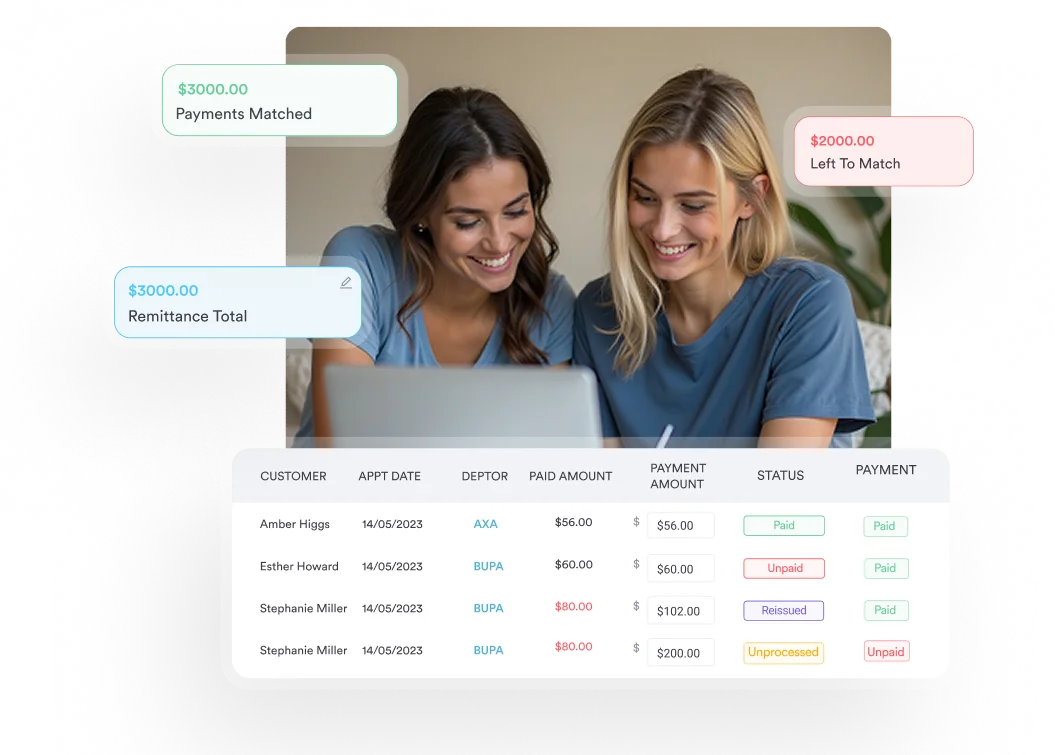
Keeping the underlying vascular condition and H47.43 together on the same claim is the practical safeguard against medical necessity denials. The diagnosis that drove the visit should be sequenced first. Confirming both codes are present at the point of entry matters: doing so means a missing etiology code is far less likely to surface only after the claim comes back rejected.
Optometry practices rarely generate this code. That’s because the workup required to confirm chiasm-level vascular disease typically falls within ophthalmology or neuro-ophthalmology. When optometrists identify visual field patterns consistent with a chiasm lesion, the standard workflow is referral for imaging. If the optometrist documents a confirmed vascular chiasm disorder based on specialist correspondence, H47.43 may be appropriate. The same referral-documentation discipline applies when GP practices route patients with visual field changes to ophthalmology for a definitive diagnosis. The authorization requirement sits with the plan, not the code, so it varies between patients. The billing process starts at registration, not at the point the coder opens the note.
The specialty EMR workflows used by ophthalmic practices benefit from having ICD-10-CM code reference guides built into the documentation workflow. As a result, this reduces coder dependency on manual lookups and improves code accuracy at the point of entry. Referencing structured medical forms for each encounter type supports consistent documentation standards.

Pabau’s integrated claims management and clinical records tools help ophthalmology and optometry practices capture the documentation needed to support specific diagnosis codes like H47.43. See how structured workflows reduce denials.

ICD-10-CM H47.43 has been a valid, billable code since the transition from ICD-9-CM in October 2015. It has not been revised, retitled, or retired in subsequent annual updates. The CMS annual ICD-10-CM update files are the authoritative source for confirming current-year validity. Coders should verify billable status against the FY2026 tabular list before submission. That’s because annual updates take effect on October 1 of each calendar year.
The WHO ICD-10 browser classifies the international equivalent under block H47. However, the specific fifth-character granularity of the ICD-10-CM system (H47.43) exceeds the detail level of the WHO ICD-10 international edition. Practices billing under ICD-10-CM (United States) should always use the CMS tabular as the binding reference.
Check the CMS FY2026 ICD-10-CM Tabular List addenda file each October to confirm H47.43 remains valid. CMS publishes code additions, revisions, and deletions in a separate addenda document alongside the full tabular update. A code marked ‘D’ in the addenda has been deleted and cannot be used for encounters on or after October 1 of that year.
Optic chiasm disorders caused by vascular disease are a specific, anatomically distinct category that ICD-10-CM captures precisely through H47.43. Getting it right requires identifying both the chiasm as the affected structure and vascular disease as the documented cause. Finally, coders report the Code Also-linked vascular condition alongside H47.43 as the encounter warrants.
For ophthalmology and optometry practices, the documentation workflow matters as much as the code itself. Practice management software like Pabau supports ICD-10-CM code pairing and structured clinical note capture. So, specific codes like H47.43 have the right documentation behind them at the point of care. To see how it works in practice.

Coding a common anterior segment finding alongside a chiasm workup? H10.9 is the code for unspecified conjunctivitis, a frequent incidental finding during neuro-ophthalmic exams.
Documenting eye misalignment in the same encounter? H50.30 covers unspecified intermittent heterotropia, sometimes seen alongside chiasm-level visual pathway disorders.
Need a code for age-related conjunctival changes? H11.10 is the billable code for unspecified conjunctival degenerations.
ICD-10 Code H47.43 is a billable ICD-10-CM diagnosis code for Disorders of optic chiasm in (due to) vascular disorders. It is used to document optic chiasm dysfunction where vascular disease is the established underlying cause. The code sits under parent category H47.4 within block H46-H47 (Disorders of optic nerve and visual pathways) in Chapter 7 of ICD-10-CM.
Yes, H47.43 is a billable, specific ICD-10-CM code valid for claim submission. It has been active since the ICD-10-CM implementation in October 2015 and remains valid for the current FY2026 coding cycle. Verify against the current CMS tabular list each October, as annual updates take effect on October 1.
The parent code is H47.4 (Disorders of optic chiasm). H47.4 is itself a non-billable header code, which is why the more specific child codes (H47.41 through H47.49) must be used for claims. H47.43 is one of four billable codes under this parent, each specifying a different etiology.
Documented vascular causes supporting H47.43 include ischemic events affecting chiasm-supplying perforators, pituitary apoplexy, cavernous sinus thrombosis, internal carotid or anterior communicating artery aneurysms, and arteriovenous malformations in the suprasellar region. The clinical record must establish the vascular cause explicitly.
H47.43 is used when vascular disease affects the optic chiasm specifically. H47.01 (Ischemic optic neuropathy) is used when ischemia affects the optic nerve itself, proximal to the chiasm. Both involve vascular etiology, but the anatomical target is different. Note that H47.01 is a non-billable parent code — it needs a fifth-digit laterality code (H47.011 right, H47.012 left, H47.013 bilateral, H47.019 unspecified) before it can be billed. Neuro-imaging and clinical documentation confirming the site of involvement distinguish the two.
H47.43 carries a Code Also note for the underlying vascular condition, but ICD-10-CM does not mandate a fixed sequencing order between the two — unlike a true manifestation code with a Code First instruction. Coders should report both the vascular condition and H47.43 on the claim. Which one is listed first depends on the circumstances of the encounter, such as which condition prompted the visit. Omitting the vascular condition entirely, rather than a particular sequencing order, is what typically triggers medical necessity denials.
Bitemporal hemianopia is a visual field defect rather than a diagnosis on its own, so it is coded separately under the H53.4- visual field defect codes. When a vascular disorder of the optic chiasm is the documented cause, H47.43 captures the chiasm disorder itself, with the visual field defect reported as an additional code if documented. Confirm the optic chiasm as the affected site before assigning H47.43.