ICD-10 code S61.201A: Open wound of left index finger without nail damage
ICD-10 code S61.201A covers a left index finger wound of unstated type ICD-10 co...

Last Updated: Oct 16, 2026
Billable Code Specific Code
H35.9 is the billable ICD-10-CM code for unspecified retinal disorder.
The "unspecified" designation means the available clinical information at the time of coding does not support assignment to a more granular code within the H35 category. This may reflect an early-stage workup, a referral without a finalized diagnosis, or a condition with atypical features that does not cleanly map to a defined subcategory. Synonyms reported in ICD-10-CM indexing include advanced retinal disease and bilateral disorder of macula of eyes, though the official descriptor remains "unspecified retinal disorder." The clearinghouse validates structure before the payer validates content, which is why an electronic claim can fail twice.
Let Pabau's smart automation suggest the right codes, reduce claim denials, and keep your practice compliant—effortlessly.
Automate repetitive tasks and focus on what matters most—your patients.
Reduce coding errors and ensure compliance with the latest regulations.
Clean claims, fewer denials, and faster reimbursements.
Powerful insights and reporting to help your practice thrive.
HIPAA compliant SOC 2 certified GDPR-compliant Trusted by 4,000+ clinics worldwide

ICD-10 Code H35.9 is a billable 2026 diagnosis code for unspecified retinal disorder, classified under H30-H36 (Disorders of choroid and retina) within Chapter H00-H59.
Use H35.9 only when the clinical workup is incomplete or the retinal condition cannot be classified under a more specific H35.x code.
Many payers apply medical necessity scrutiny to unspecified codes: robust documentation of the diagnostic reasoning is required to support claims.
Pabau’s claims management software and digital intake forms help ophthalmology practices attach supporting documentation and reduce claim denials on unspecified retinal disorder codes.
| Level | Code | Description |
|---|---|---|
| Chapter | H00-H59 | Diseases of the eye and adnexa |
| Block | H30-H36 | Disorders of choroid and retina |
| Category | H35 | Other retinal disorders |
| Code | H35.9 | Unspecified retinal disorder (billable) |
The WHO classification places H35.9 as the catchall code within the H35 category, appearing after H35.8 (Other specified retinal disorders). Per ICD-10-CM Official Guidelines for Coding and Reporting, coders should use the most specific code available. H35.9 is appropriate only when specificity is genuinely unavailable from the documentation.
H35.9 is a valid, billable ICD-10-CM code confirmed active for FY 2026. The AAPC Codify ICD-10-CM lookup lists it under the H35 category without any non-billable flag, meaning it can be submitted on a claim as a principal or secondary diagnosis.
That said, billable does not mean automatically payable. Several payers apply heightened scrutiny to unspecified codes because CMS guidance prioritizes specificity. Knowing exactly when this code is appropriate protects practices from audit exposure.
H35.9 is not appropriate when a more specific diagnosis is already supported by the clinical record. If documentation clearly describes macular degeneration, use H35.3x. If imaging confirms retinal hemorrhage, use H35.6. Assigning H35.9 when a specific code is available wastes the specificity that payers and quality registries depend on. For ophthalmology practices managing these decisions across a high volume of encounters.

The single most common coding question around H35.9 is how it differs from H35.8. Both sit at the tail of the H35 category, but they serve distinct purposes.
| Code | Description | When to use |
|---|---|---|
| H35.8 (billable code: H35.89) | Other specified retinal disorders | The condition is identified and documented, but it does not match any named subcategory (H35.0-H35.7). The “other specified” label means: we know what it is, there is just no dedicated code for it. H35.8 is a category header; the billable subcode is H35.89. |
| H35.9 | Unspecified retinal disorder | The condition is not yet identified or cannot be specified from the available documentation. The “unspecified” label means: the diagnosis is incomplete or the information needed to assign a more specific code is not available. |
A useful rule: if a clinician could describe what the disorder is (even if it is rare and has no dedicated code), use H35.8. If the clinician cannot yet say what the disorder is, use H35.9. Documentation that includes phrases such as “etiology undetermined pending imaging” or “retinal findings, nature unclear” supports the H35.9 assignment. Documentation that states a specific condition name, even an uncommon one, points toward H35.8 or a more granular code.
Acute zonal occult outer retinopathy (AZOOR) is a clean example of the H35.8 side of that line. It is a named condition with no dedicated ICD-10 code, so it is reported under H35.89 (other specified retinal disorders), not H35.9. The diagnosis is known; there simply is no more granular code for it.
For practices handling ICD-10 diagnostic coding across multiple specialties, maintaining a coding policy document that defines these local use guidelines prevents inconsistent assignment across coders. Structured digital intake forms that prompt clinicians to document diagnostic certainty at the point of care can eliminate much of this ambiguity before it reaches the coding desk.

Coders working with H35.9 need a working knowledge of the specific H35.x subcategories, both to confirm when H35.9 is genuinely appropriate and to identify what code the patient should transition to after a confirmed diagnosis.
Practices that treat patients with diabetes or hypertension will frequently encounter the H35.0x-I10 pairing. ICD-10 codes for hemorrhagic conditions in other body systems follow similar sequencing logic, making cross-specialty familiarity with these conventions valuable for coders who work across practice types.
Before assigning H35.9 at claim submission, run a secondary review: check whether imaging results, specialist notes, or operative reports received after the encounter have been filed to the patient record. If new documentation specifies the retinal condition, recode to the appropriate H35.x code before the claim goes out. This simple pre-submission check can prevent a denial that would otherwise require a full appeal.
An unspecified code on a clean claim is not a red flag by itself. The problem arises when the medical record does not explain why a more specific code could not be assigned. Payers conducting medical necessity reviews look for documentation that supports both the service provided and the diagnostic code used to justify it.
Maintaining structured patient record management that links encounter notes, imaging reports, and follow-up orders in a single timeline makes this documentation audit-ready. When a MAC requests records for a retinal disorder claim, coders need to pull a coherent chronological record, not disparate notes from disconnected systems.
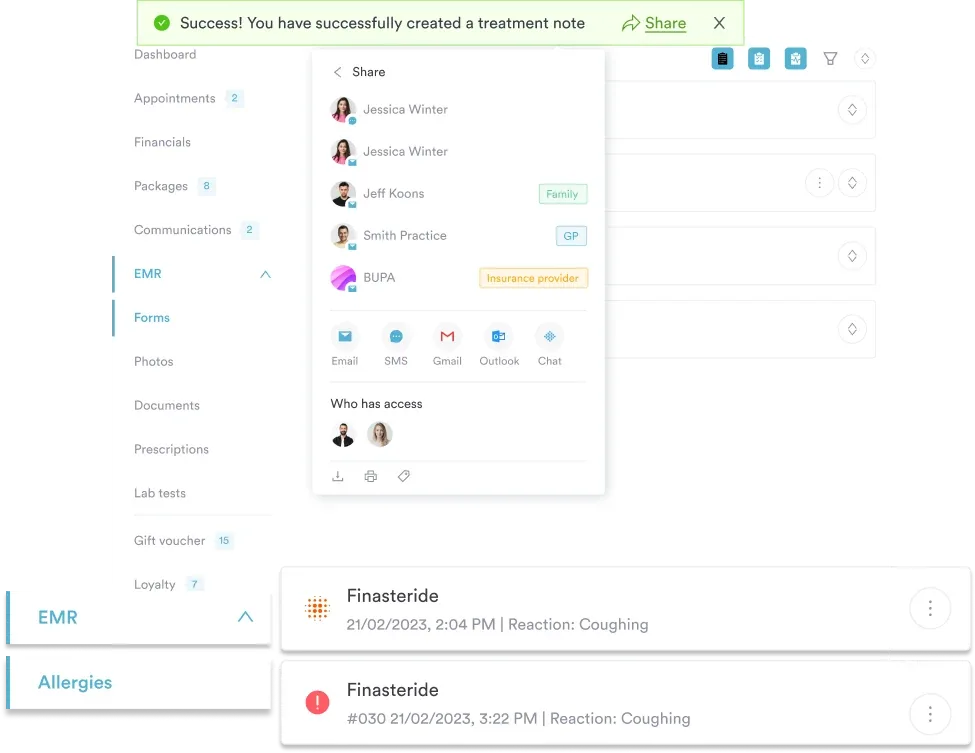
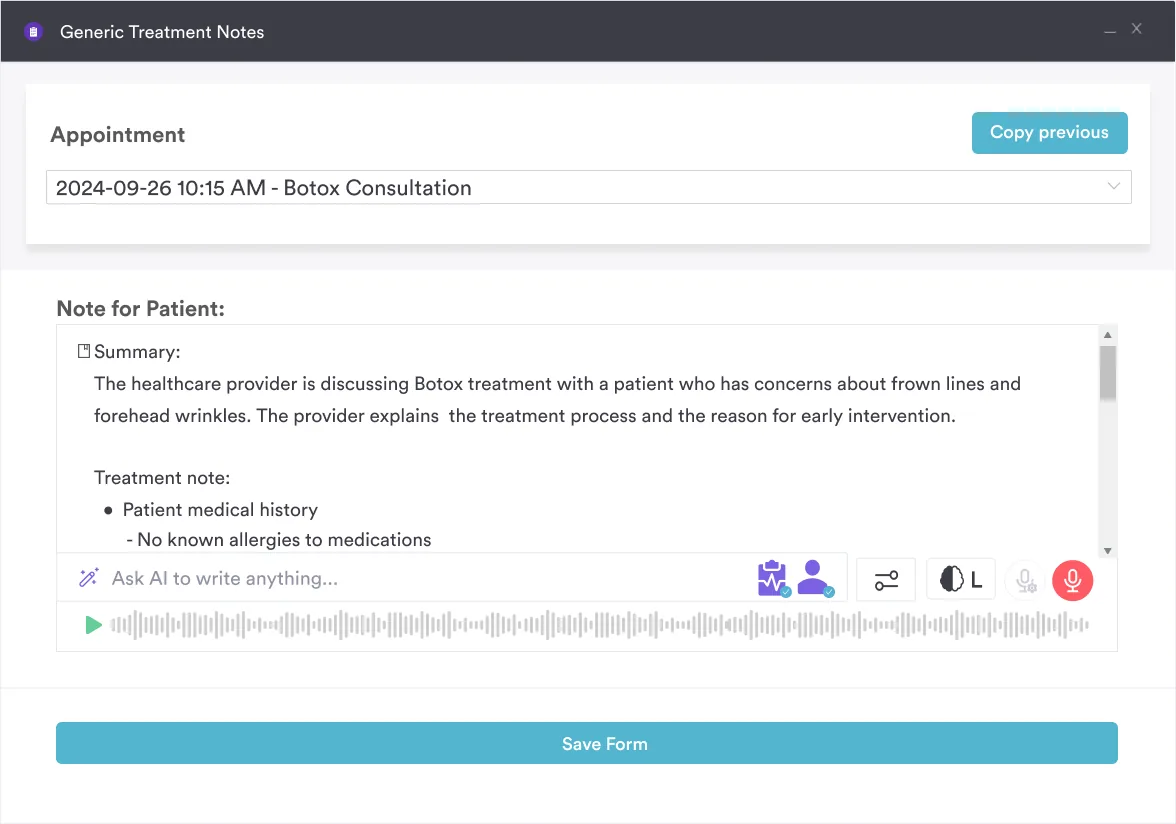
Practices can also reference HIPAA-compliant documentation practices to ensure that the records produced for payer review meet both clinical and privacy standards. Ophthalmology offices that have adopted AI-assisted clinical documentation report faster completion of post-encounter notes, which reduces the gap between the service date and the point at which the record is complete enough to code accurately.
An ICD-10 diagnosis code never travels alone on a claim. Coders submitting H35.9 will typically pair it with one or more procedure codes that describe the services rendered during the encounter. The most common CPT codes that appear alongside retinal disorder diagnoses in ophthalmology include:
Selecting the correct CPT procedure codes for clinical services alongside H35.9 is part of a clean claim strategy. The procedure code and the diagnosis code must share a logical medical necessity relationship. A claim pairing H35.9 with a procedure unrelated to retinal evaluation will trigger an edit.
Practices that want visibility into their denial patterns by CPT-ICD-10 combination can use claims management software to identify high-denial pairings and adjust coding practices accordingly.
When submitting CPT 92250 (fundus photography) with ICD-10 Code H35.9, include the image report in the medical record and note in the provider documentation that the findings were reviewed and influenced the diagnostic reasoning. Payers can deny fundus photography claims when the documentation does not reflect that the physician interpreted the images and connected them to the patient’s diagnosis.
Assigning H35.9 should be a temporary state, not a permanent home for a patient’s retinal condition. Once the diagnostic workup yields a confirmed diagnosis, the coder must update the code used for subsequent encounters.
The transition is driven by clinical confirmation, not calendar time. If a patient has three follow-up visits and imaging is inconclusive at each, H35.9 remains appropriate. The moment the provider documents a confirmed diagnosis, the next encounter code changes. Common transitions:
Tracking these transitions across a patient population requires a coding workflow that connects the diagnosis at each visit to the patient’s longitudinal record. Practices with structured ICD-10 documentation workflows across multiple condition types report fewer instances of codes becoming “stuck” at the unspecified level past the point at which the diagnosis was resolved.
Procedure codes used alongside diagnostic codes in other specialty areas follow the same principle: the ICD-10 code at each encounter should reflect what is documented in that encounter’s clinical record. ICD-10 code M85.2 behaves the same way, because assignment waits on a physician-confirmed diagnosis even when imaging already shows thickened cranial bone.

Pabau connects patient records, imaging documentation, and claims management in one platform. See how ophthalmology and specialist clinics reduce retinal disorder claim denials with structured coding workflows.

The AHA Coding Clinic and CMS ICD-10-CM Official Guidelines do not include a specific guideline targeting H35.9, but the general rule governing all unspecified codes applies: coders should use the most specific code supported by the clinical documentation. Assigning an unspecified code when a specific one is supported by the documentation is a coding error, not merely a suboptimal choice.
Medicare coverage for retinal procedures is governed by Local Coverage Determinations (LCDs) issued by MACs. Some LCDs for fundus photography and OCT imaging specify that the diagnosis codes submitted must meet a minimum specificity threshold. H35.9 may be accepted during an initial evaluation period but questioned on subsequent claims when the payer expects a more specific diagnosis to have been established by that point.
Private payers vary significantly. Some follow Medicare LCD logic closely. Others apply national coverage determination (NCD) frameworks or their own clinical criteria. Before relying on H35.9 for multiple consecutive encounters, practices should check the relevant LCD for their MAC and the specific coverage policies of their major contracted payers.
Practices that review their ICD-10-CM coding patterns regularly using practice analytics are better positioned to catch these patterns before a payer review does. The ICD List code reference is useful for checking code edit relationships between H35.9 and associated procedure codes before submission.
Checking a code lookup tool for crosswalk detail on the related and excluded codes within the H35 category can also confirm which pairings are likely to survive payer edits.
For practices building compliant ophthalmology coding workflows, ophthalmology practice management systems that integrate directly with the claim submission process reduce the steps between documentation and billing, closing the window in which coding errors typically occur. Multi-specialty practices managing both dermatology and ophthalmology conditions benefit from unified record systems that apply the same coding workflow logic across specialties.
ICD-10 Code H35.9 fills a specific and legitimate coding role: it captures retinal disorder encounters where the diagnostic workup is genuinely incomplete. The risk is not in using the code; it is in using it incorrectly or holding it past the point where the diagnosis has been clinically resolved.
Practices that maintain thorough encounter documentation, perform pre-submission coding reviews, and track ICD-10 code transitions across visits protect themselves from the audit exposure that unspecified codes can generate. Pabau’s claims management tools help ophthalmology and specialist clinics build exactly this kind of structured billing workflow. To see how it works in practice, book a demo with the team.

Need the correct autism diagnosis code? Autism diagnosis coding guide covers the correct code for autistic disorder, related autism spectrum codes, and documentation tips.
Interested in how ICD-10 codes pair with CPT procedure codes in specialist billing? Procedure codes used alongside diagnostic codes walks through CPT-ICD-10 pairing logic across specialty settings.
ICD-10 Code H35.9 is a billable diagnosis code used to document an unspecified retinal disorder when the clinical workup is incomplete or the retinal condition cannot be classified under a more specific H35.x code. It applies during initial evaluations, referral intakes, or encounters where imaging results are still pending.
Yes. H35.9 is a valid, billable ICD-10-CM code for the 2026 code year, confirmed by the CDC/NCHS ICD-10-CM web tool and CMS ICD-10 resources. It can be submitted as a principal or secondary diagnosis on a claim, though payers may apply medical necessity scrutiny to unspecified codes on repeated encounters without documented diagnostic progression.
An unspecified retinal disorder is a retinal condition that has been identified clinically but cannot be categorized under a specific diagnostic label based on available information at the time of the encounter. It is not a permanent diagnosis but rather a temporary coding placeholder used while a definitive diagnosis is pursued through imaging or further clinical evaluation.
Key specific codes within the H35 category include H35.0x (background retinopathy and retinal vascular changes, including hypertensive and diabetic retinopathy), H35.3x (degeneration of macula and posterior pole, including age-related macular degeneration), H35.5x (hereditary retinal dystrophy including retinitis pigmentosa), H35.6 (retinal hemorrhage), and H35.8 (other specified retinal disorders). Each requires supporting documentation of the specific condition and, where applicable, laterality.
Use H35.8 when the retinal condition is identified and documented but does not match any named subcategory within H35.0-H35.7. Use H35.9 when the condition is not yet identified or the available documentation does not allow a specific diagnosis to be assigned. In practice: H35.8 means “I know what it is, there is no dedicated code for it.” H35.9 means “I do not yet know what it is.”
Retinitis pigmentosa is coded to H35.52 (pigmentary retinal dystrophy) within the H35.5x hereditary retinal dystrophy series, not to H35.9. H35.9 only holds the encounter before the inherited dystrophy is confirmed. Once genetic or clinical testing establishes the diagnosis, move to the specific H35.5x code with any required laterality.
Acute zonal occult outer retinopathy is reported under H35.89 (other specified retinal disorders), not H35.9. Because it is a named condition with no dedicated code of its own, it belongs on the “other specified” side rather than the unspecified one.