CPT code 93503: Swan-Ganz catheter billing and modifiers
CPT code 93503: Official descriptor and procedure overview In the AMA CPT code s...

Last Updated: Oct 23, 2026

CPT code 99211 is the lowest-level established patient E/M office visit, commonly called the nurse visit code, and does not require physician presence.
Billing 99211 on the same date as a drug administration service (injection or infusion) is prohibited under CMS transmittal R731CP, effective January 1, 2004.
Incident-to billing under Medicare requires appropriate physician supervision; understand your MAC’s specific rules before submitting claims.
Pabau’s claims management software and digital forms help practice teams document and submit 99211 visits accurately, reducing denials.
CPT code 99211 is the lowest level of office or outpatient visit for the evaluation and management of an established patient. It’s the one code in the 99211–99215 family that may not require a physician’s presence.
Often called the nurse visit code, it covers brief, staff-led encounters such as a blood pressure or vital-signs check tied to a management plan, a medication review, or a suture removal.
This guide covers what CPT code 99211 is, who can bill it, the documentation requirements payers actually audit, 2026 Medicare reimbursement rates, and the incident-to, modifier, and same-day rules that most often cost practices the claim.
According to the American Medical Association (AMA), CPT code 99211 is an office or other outpatient visit for the evaluation and management of an established patient that may not require the presence of a physician or other qualified health care professional.
The descriptor historically added that the presenting problem is usually minimal, but the AMA removed that phrase in 2022 to bring 99211 in line with the rest of the 99202–99215 family.
CPT code 99211 sits at the base of the established patient E/M ladder, below 99212 through 99215. It represents a minimal-complexity encounter, typically conducted by a registered nurse (RN), licensed practical nurse (LPN/LVN), or medical assistant (MA) within a physician office setting.
The code’s intent, as the American Academy of Family Physicians (AAFP) has clarified, is to give practices a billing mechanism for services rendered by clinical staff when a physician is not present and not needed. Blood pressure checks for a hypertension patient, suture removal, medication refill confirmations, and routine test result reviews are classic examples.
CPT code 99211 is still a valid, active code in 2026. The confusion traces back to 2021, when the AMA deleted 99201 — the level-1 code for new patients — while keeping 99211 for established patients. So 99211 itself was never deleted.
Verify current status directly through the AMA’s CPT coding resources if you need confirmation for audit purposes.
Any clinical staff member working within a physician’s office can perform the service, and the claim goes out under the supervising physician’s National Provider Identifier (NPI). The key distinction is that the visit does not require the physician to be physically present in the room.
Eligible clinical staff typically include registered nurses, licensed practical nurses, licensed vocational nurses, and medical assistants. The physician must provide direct supervision, either in the facility or via real-time audio-video, for incident-to billing under Medicare, but their direct involvement in the encounter is not required.
HIPAA compliance requirements for medical offices still govern how those visit records are created and stored, regardless of who conducts the encounter:
Place of Service Code 11 (physician office) is the standard setting. The code is not appropriate for telephone encounters, portal messages, or asynchronous communications. The visit must be face-to-face.
Medicaid draws its own line on who may bill a completed pediatric screening visit. A nurse practitioner reporting S0302 can face different supervision or independent practice rules from one state to the next.
Incomplete documentation is the single most common reason 99211 claims get denied or flagged on audit. The 99211 nurse visit guidelines below are less about how much you write and more about proving medical necessity: the visit note does not need to mirror a physician E/M note, but it must reflect the service provided.
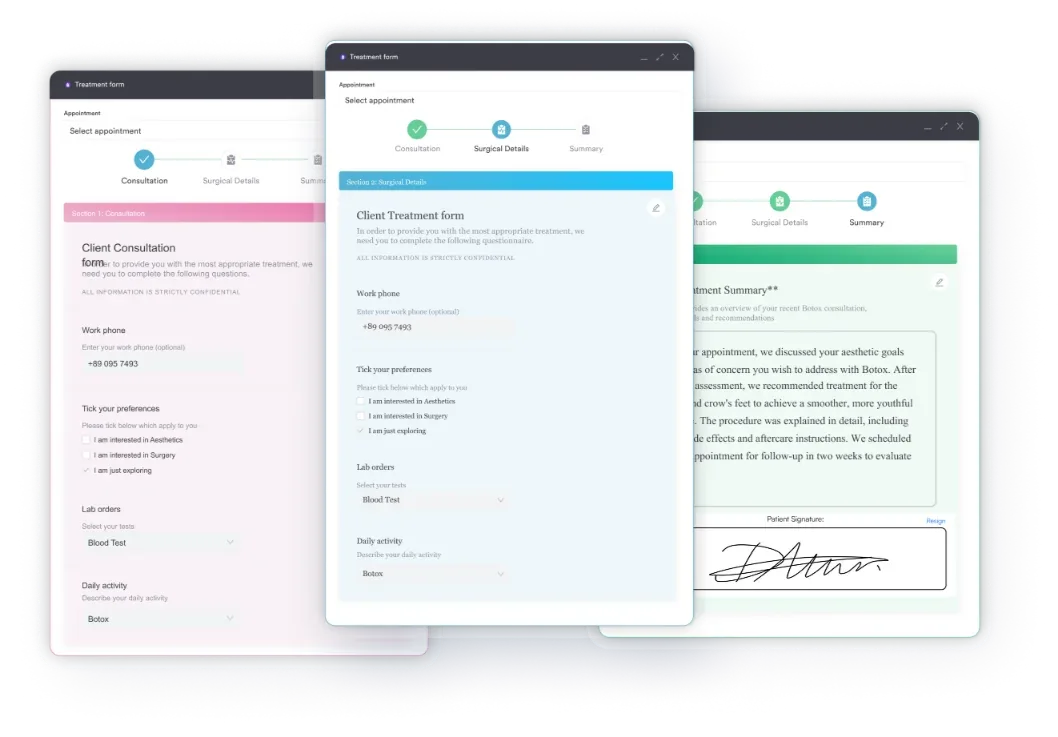
Practices that use digital intake forms for their nursing visits capture structured data at the point of care, making it easier to pull documentation that satisfies payer requests. Unstructured paper notes frequently fail audits simply because they are illegible or incomplete, not because the visit itself was inappropriate.
An intake assessment template gives nursing staff a consistent starting point for capturing this information at every visit.
Avoid vague entries like “nurse visit” with no further detail. Payers conducting Comparative Billing Report (CBR) reviews look specifically for minimal or absent documentation paired with routine billing of this code.
The 99211 CPT code time rules differ from the rest of the family. There is no minimum time threshold attached to 99211, and since the 2021 E/M overhaul you cannot select the code based on total time the way you can for 99212 through 99215.
Higher-complexity codes.
Documenting the approximate time spent, usually under 10 minutes, is still good practice. Unusually long entries paired with this code can raise questions during review.
CPT code 99211 reimbursement runs through Medicare’s Physician Fee Schedule (PFS), which applies geographic multipliers called Geographic Practice Cost Indices (GPCIs). This means the dollar amount for the 99211 billing code varies by locality.
For 2026, the national non-facility rate for 99211 is approximately $23 to $28 per visit at the national average. Practices in high-cost localities such as Manhattan or San Francisco will receive higher amounts, while rural areas may receive less. Patients paying out of pocket and billing their own insurer still need the code and charge on one patient receipt template.
Use the CMS Physician Fee Schedule lookup tool to obtain the exact rate for your specific locality and MAC jurisdiction before quoting reimbursement figures to your billing team.
RVU values above are approximate and subject to the annual CMS conversion factor update. For exact 2026 figures including the locality-adjusted payment rate, consult the FastRVU lookup tool or download the CMS PFS final rule file directly. RVU-based estimates help practices benchmark whether their 99211 volume is generating appropriate revenue relative to staffing cost.
Private payer rates for this code vary significantly. Many commercial insurers pay closer to the Medicare rate, while others apply their own fee schedules that may be higher or lower. Always check your specific payer contracts. Practices managing multi-payer claims management workflows benefit from a system that stores payer-specific fee schedule data alongside the visit record. Box-by-box requirements on the professional claim form change by payer, so one filled sample is not a universal template.
Run a CPT code 99211 volume report filtered by payer quarterly. If any single payer shows a sudden spike or drop in 99211 claims, investigate before your next billing cycle. Unusual patterns often signal documentation drift, a staff workflow change, or an upcoming payer audit flag.
Incident-to billing allows services performed by clinical staff to be billed under the supervising physician’s NPI at the full Medicare Part B rate. When correctly structured, this means the practice receives 100% of the physician fee schedule amount rather than the reduced rate that would apply to a mid-level provider billing independently.
For CPT code 99211 to qualify as incident-to under Medicare, the following conditions must all be met at the time of the visit.
Practices that rely on medical billing software to track supervision and plan-of-care documentation have an easier time proving these conditions were met:
A single violation of any of these conditions means the claim should not be billed incident-to. Some Medicare Administrative Contractors (MACs) have issued local coverage determinations with additional specificity — Noridian, Palmetto GBA, CGS, and First Coast Service Options (FCSO) have each published guidance on 99211 and incident-to. Check your MAC’s current articles before implementing your billing policy.
Some private payers add their own condition on top of Medicare’s: the physician has to see the patient at least every third visit for the service to stay incident-to. Your practice management approach for supervision documentation needs to match both sets of rules.
The Office of Inspector General (OIG) has historically flagged 99211 for overutilization. Comparative Billing Reports distributed by MACs show practices their 99211 billing frequency relative to regional peers. Being a significant outlier in either direction can trigger a request for records review.
For private practices. It’s practices billing 99211 habitually for visits that were never documented at all, or where the documentation does not support even minimal complexity.
Two other staff-performed services carry their own codes in the same way. An instrument-based vision screen is reported as CPT 99177. A nurse-run therapeutic phlebotomy session belongs under 99195, not under a nurse visit.
Practices that maintain structured patient scheduling and appointment management records have an advantage during audits: appointment logs can corroborate that the visit actually happened on the billed date and in the billed setting.
Document the supervising physician’s name and supervision method — in the office suite or via real-time audio-video — in every 99211 note you bill incident-to. A single EHR template field noting ‘Dr. [Name], in-office’ or ‘Dr. [Name], audio-video supervision’ takes seconds to complete and immediately satisfies the most common MAC audit request for these claims.
Modifier 25 does not apply to CPT code 99211. That modifier flags a significant, separately identifiable E/M service on the same day as a procedure, and it has to be appended to a higher-level E/M code than 99211 to be correct.
Billing CPT code 99211 with modifier 25 is a common coder error that triggers claim review without adding any reimbursement benefit.
Some practices ask whether 99211 can be billed on the same day as a procedure. The answer depends on the procedure and payer: National Correct Coding Initiative (NCCI) edits bundle many procedure codes with E/M services on the same date.
If an NCCI edit exists between 99211 and the procedure code, the 99211 will be denied unless an appropriate modifier overrides the edit and the documentation supports a truly separate service. Check NCCI edits before billing.
During the COVID-19 Public Health Emergency, CMS allowed the supervising physician to satisfy 99211’s incident-to supervision requirement virtually instead of in person. Far from expiring, that flexibility was made permanent under the CY2025 and CY2026 Medicare Physician Fee Schedule final rules: direct supervision can now be met through real-time, two-way audio-video technology (audio-only does not qualify), with no in-person requirement.
Separately, broader Medicare telehealth billing for 99211 itself — reporting the visit via synchronous audio-video telehealth with modifier 95 — is currently extended through December 31, 2027 under the Consolidated Appropriations Act, 2026. Both flexibilities are tied to appropriations and continuing-resolution cycles, so verify current-year status with your MAC before billing any telehealth 99211 claims.
Telehealth software documentation should clearly distinguish between synchronous video visits and in-person encounters for coding purposes.

Pabau’s claims management tools and digital documentation features help practice teams capture the clinical detail needed for clean 99211 claims, reducing denials and saving time on audit requests.

The code is most associated with nurse visits in primary care practices, such as family medicine and internal medicine offices, but it appears across a range of specialties, each with its own documentation nuances.
Gynecology practices often bill G0101 alongside a 99211 nurse visit, though the two require separate documentation.
Many anticoagulation management programs use 99211 when a nurse reviews INR results and adjusts warfarin dosing per a standing protocol. The billing hinges on a change: 99211 is appropriate when the nurse actually adjusts the regimen. A routine INR draw with no dosage change is not separately billable, because the protime test (85610) already includes its evaluation.
The key documentation requirement is that the nurse is acting within a physician-established protocol and that the supervising physician is providing direct supervision, whether in the office suite or via real-time audio-video. The patient care management record must reflect the INR value, the dosage decision, and the basis for it.
Behavioral health practices bill 99211 for nurse check-ins between psychiatric appointments, such as a brief medication review or vital sign assessment. The same incident-to rules apply.
ABA therapy practices have used 99211 for brief nursing assessments, though payer acceptance varies — always verify with the specific payer before billing in this context.
Wound care programs must be careful with 99211. When a nurse performs a wound check between physician visits, the visit may qualify, and a nurse dressing change in the office can also support 99211 as an assessment.
But 99211 is not appropriate when a more specific procedure code fits: negative pressure wound therapy (97605 or 97606) or a compression system such as an Unna boot (29580 or 29581) should be reported instead, and billing 99211 alongside a wound procedure code is generally blocked by NCCI bundling edits.
Distinguish clearly between assessment-only nurse visits and procedure-accompanied encounters in your documentation. The administrative burden on clinical staff in wound care programs makes accurate billing templates particularly important.
Incorrect billing of CPT code 99211 typically comes down to three failures: missing documentation, ignored NCCI edits, and incident-to supervision lapses. None of them are complicated to fix once the rules are clear and the documentation workflow is set up correctly.
Pabau’s digital forms and client record management give practice teams the structured templates and audit-ready documentation they need to keep 99211 claims clean. To see how Pabau handles billing documentation workflows across your practice, book a demo and we’ll show you exactly how it works.

Want to compare 99211 against a higher-level established-patient visit? 99214 breaks down the medical decision-making and documentation thresholds that separate it from a nurse visit.
Billing for an emergency department encounter instead of an office visit? 99284 covers the documentation and billing rules for a level 4 ED visit.
Need a dialysis supply code instead? Dialysate concentrate billing guide is the supply code for dialysate concentrate powder, billed per packet and usually bundled rather than a standalone claim.
CPT code 99211 is used for brief, minimal-complexity office or outpatient visits with an established patient that do not require a physician. Common examples include blood pressure checks, suture removal, medication refill confirmations, and INR reviews conducted by a nurse or medical assistant within a physician practice.
Yes, 99211 can be billed incident-to Medicare when the supervising physician provides direct supervision — either physically present in the office suite or connected via real-time, two-way audio-video technology under the CY2025 and CY2026 Medicare Physician Fee Schedule rules — the service follows the physician’s established plan of care, and all other CMS incident-to conditions are met. The physician must have previously seen the patient for the condition being managed.
The visit note must include the date of service, the performing clinical staff member’s name, the supervising physician’s name, a specific chief complaint or reason for the visit, a brief clinical assessment, patient instructions or next steps, and a signature. Generic entries like “nurse visit” without further clinical detail typically fail payer documentation audits.
The 2026 Medicare national average non-facility rate for 99211 is approximately $23 to $28 per visit, depending on geographic locality. Use the CMS Physician Fee Schedule lookup tool to obtain the precise rate for your MAC jurisdiction, as geographic cost indices apply locality-specific multipliers.
In a 99211 vs 99212 comparison, 99211 is the lowest E/M level, requires only minimal complexity, and does not need a physician present. 99212 requires straightforward medical decision-making or 10-19 minutes of physician or qualified health care professional time and must be performed or directly overseen by a QHP. If the encounter involves any meaningful clinical judgment by a physician, 99212 is the appropriate starting point.
No. CMS transmittal R731CP, effective January 1, 2004, explicitly prohibits billing CPT code 99211 with a drug administration service such as an injection or infusion on the same date of service. This is one of the most common denial triggers for this code.
Yes. CPT code 99211 is a valid, active code in 2026. The confusion traces back to 2021, when the AMA deleted 99201 (the level-1 new-patient code) while keeping 99211 for established patients. The AMA also revised the 99211 descriptor in 2022, removing the old “presenting problem is minimal” phrase, but the code itself was never deleted.