CPT code 93503: Swan-Ganz catheter billing and modifiers
CPT code 93503: Official descriptor and procedure overview In the AMA CPT code s...

Last Updated: Oct 23, 2026
T4523 is the HCPCS Level II code for adult sized disposable incontinence product, brief/diaper, large, each.
Original Medicare doesn't pay for it. Adult briefs sit outside every Medicare benefit category. That means no Part B fee schedule amount, no Local Coverage Determination, and no KX modifier to attest to.
T4523 gets paid by state Medicaid programs, and sometimes by a Medicare Advantage plan's supplemental allowance.
Let Pabau's smart automation suggest the right codes, reduce claim denials, and keep your practice compliant—effortlessly.
Automate repetitive tasks and focus on what matters most—your patients.
Reduce coding errors and ensure compliance with the latest regulations.
Clean claims, fewer denials, and faster reimbursements.
Powerful insights and reporting to help your practice thrive.
HIPAA compliant SOC 2 certified GDPR-compliant Trusted by 4,000+ clinics worldwide

HCPCS code T4523 describes one adult sized disposable incontinence brief or diaper in size large.
Original Medicare doesn’t cover T4523. Adult briefs are statutorily excluded personal hygiene items, so no Part B claim can be paid.
CMS lists T4523 with coverage code M, meaning non-covered, and the code appears on no DMEPOS fee schedule.
State Medicaid programs are the main payer, and some Medicare Advantage plans reimburse briefs through a supplemental allowance.
The KX modifier has no role on T4523. GY, with an optional GX, is how you bill Medicare for the denial a state program may want to see.
Official long description: Adult sized disposable incontinence product, brief/diaper, large, each.
Short description: Adult size brief/diaper lg.
T4523 is a permanent national HCPCS Level II code maintained by the Centers for Medicare and Medicaid Services (CMS). It sits in the T4521-T4545 incontinence supplies range. That range lives inside the wider T1000-T5999 block, which CMS describes as national codes established for state Medicaid agencies.
That origin matters more than it looks. The T codes exist so state Medicaid programs and other non-Medicare payers have a shared way to describe supplies Medicare does not buy. Suppliers use T4523 to bill for large adult disposable briefs supplied to patients with urinary or fecal incontinence.
The unit of service is “each”, meaning one brief or diaper per unit billed. Bill the number of individual items supplied, not the number of packs. A case of 72 briefs is 72 units, not one.
Original Medicare does not cover T4523, and it never has. Medicare’s own coverage page says it doesn’t cover incontinence supplies or adult diapers. The item is flagged “not covered”, and the patient pays 100% of the cost.
The same holds for every adult brief, diaper and pull-on code in the T4521-T4528 range. CMS assigns T4523 coverage code M, which means non-covered by Medicare. Its pricing indicator is 00, so Part B does not price the item separately at all.
The basis is National Coverage Determination 280.1, the Durable Medical Equipment Reference List. It denies incontinence garments and pads as nonreusable supplies and hygienic items under section 1861(n) of the Social Security Act.
Personal hygiene items are excluded by statute, whatever the patient’s clinical picture. Hearing aids carry the same kind of exclusion.
This is a benefit category exclusion, not a medical necessity question. That distinction decides how you bill. Medical necessity rules only come into play once an item falls inside a Medicare benefit, and adult briefs never do.
So there is nothing for a Local Coverage Determination to govern. LCD L33803, Urological Supplies, is the DME MAC policy suppliers often reach for here. It covers catheters and external urinary collection devices. It does not list T4521 through T4528, and its utilization limits and KX instructions apply to catheter codes only.
A KX modifier attests that a policy’s coverage criteria have been met. With no policy and no benefit category, there is nothing to attest to. Appending KX to a T4523 line does not rehabilitate the claim, and no amount of physician documentation will either.
Some beneficiaries do get briefs paid for through Medicare, though not under the Part B benefit. Many Medicare Advantage plans add supplemental benefits, often as an over-the-counter or incontinence supply allowance. Those dollars sit outside the Part B benefit, so the plan sets its own rules.
Check the plan’s evidence of coverage before you supply anything. Allowances are usually capped per quarter or per year, and many plans route the purchase through a contracted catalog vendor rather than a DMEPOS claim. None of it runs through an LCD, and none of it needs a KX modifier.
State Medicaid programs are the real coverage path for T4523. Most cover adult disposable briefs for beneficiaries with documented incontinence, and many publish an approved product list keyed to HCPCS codes. Programs in states such as North Carolina, Minnesota, Connecticut and South Dakota all do exactly that.
Beyond that, the detail varies a lot. Monthly quantity caps, prior authorization thresholds and age rules are all set state by state. Confirm the current policy and the fee schedule on your state’s Medicaid provider portal before you dispense, not after the claim is denied.
The note only has to say who pays and what the cap is.
There is no Medicare reimbursement rate for T4523. The code carries no fee schedule amount, because Part B does not price it. So any “Medicare rate” you find on an aggregator site is not a CMS figure. Payment amounts come from the payer that actually covers the product.
For most claims that means your state Medicaid fee schedule, and those rates vary widely between states. Treat the state schedule as the authoritative number, and re-check it at each program update. Margins on briefs are thin enough that a stale rate shows up quickly in the accounts.
The contrast with covered equipment is what trips suppliers up. A bed pan billed as E0275 does have a published Medicare allowable, because that item sits inside a benefit category.
Don’t price T4523 off the CMS DMEPOS fee schedule file. Search it for T4523 and you get no rows at all, because Part B doesn’t price adult briefs. Build your pricing from your state Medicaid fee schedule and your own acquisition cost instead. Note the monthly quantity cap next to the rate, so the two are never checked separately.
Start by confirming who the payer is, because that decides everything downstream. For a Medicaid beneficiary you bill the state program under its own enrollment rules. For a Medicare Advantage member you follow the plan’s supplemental benefit process.
T4523 is billed on the CMS-1500 claim form. Place of service is usually the patient’s home (POS 12) or a nursing facility (POS 31 or 32). The unit count must reflect individual briefs supplied, and billing per box is a common and expensive error.
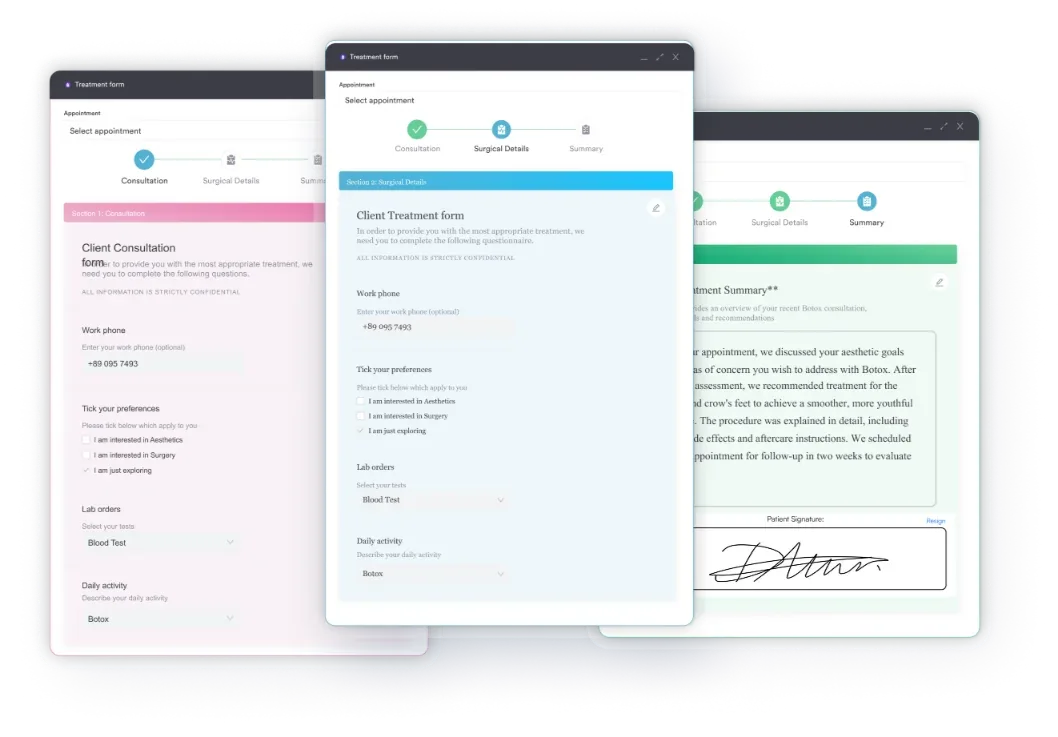
Using standardized medical forms for order intake keeps the size, quantity and diagnosis in the same place on every order. That is what makes a batch of supply claims quick to check before submission.
The modifiers that matter on T4523 are the liability ones, not the medical necessity ones. You are usually billing Medicare for a formal denial rather than for payment, because a state program asked to see it.
Your state Medicaid program may also require its own modifiers or product-specific codes. Those instructions live in the program’s supply policy, so read it once and build the rules into your order template.
Incomplete documentation is a common reason a Medicaid brief claim is denied or recouped on audit. Build the file before the product ships, not after the denial arrives. Most state programs expect the same core set of records.
Maintaining HIPAA-compliant documentation practices protects the supplier and the patient.
Most T4523 denials trace back to a payer assumption rather than a coding slip. Treat Medicare as the payer and everything downstream goes wrong, from the modifier choice to the write-off. A coding error surfaces as a cash flow problem weeks later, which is why the healthcare revenue cycle is measured end to end.
The T4521-T4545 range covers adult and pediatric incontinence supplies, both disposable and reusable. Two things separate the codes. One is the product form, and the other is the size. Mixing up either one is the usual source of denials in this range.
Adult briefs and diapers run T4521 to T4524, small through extra large. Adult protective underwear and pull-ons run T4525 to T4528 over the same four sizes. Liners, shields, guards and pads are a separate code entirely. For the full range, the AAPC listing for T4521-T4545 gives every current descriptor.
The large pull-on in that run is T4527. Supply a pull-on rather than a brief and the claim line takes that code instead, even though the size is the same.
Code to the product you actually dispensed. If a patient moves from a large brief to an extra large mid-month, bill large mid-month, bill T4524 for the units supplied at the new size. A move down to a medium is T4522, on the same logic. Don’t recode units you already billed correctly as T4523.
Keeping a mapped reference to the range where staff can see it prevents most size errors.
Ask your state Medicaid program for its incontinence product list before you order stock, then store the monthly cap on each patient’s record. Two numbers do most of the work: the units allowed per month, and the threshold above which prior authorization is required. Staff who can see both at order entry stop writing off supplies they already shipped.
Billing briefs is an administrative job more than a coding one. The size, the order, the monthly cap, the prior authorization and the payer rules all have to line up before a clean claim goes out. Practice management software like Pabau keeps those pieces on one record instead of four.
Pabau’s claims management software handles HCPCS code entry and modifier selection in the same workflow as the patient’s documentation. So the person submitting the claim can see whether the order, the authorization and the delivery note are all on file, without opening another system.
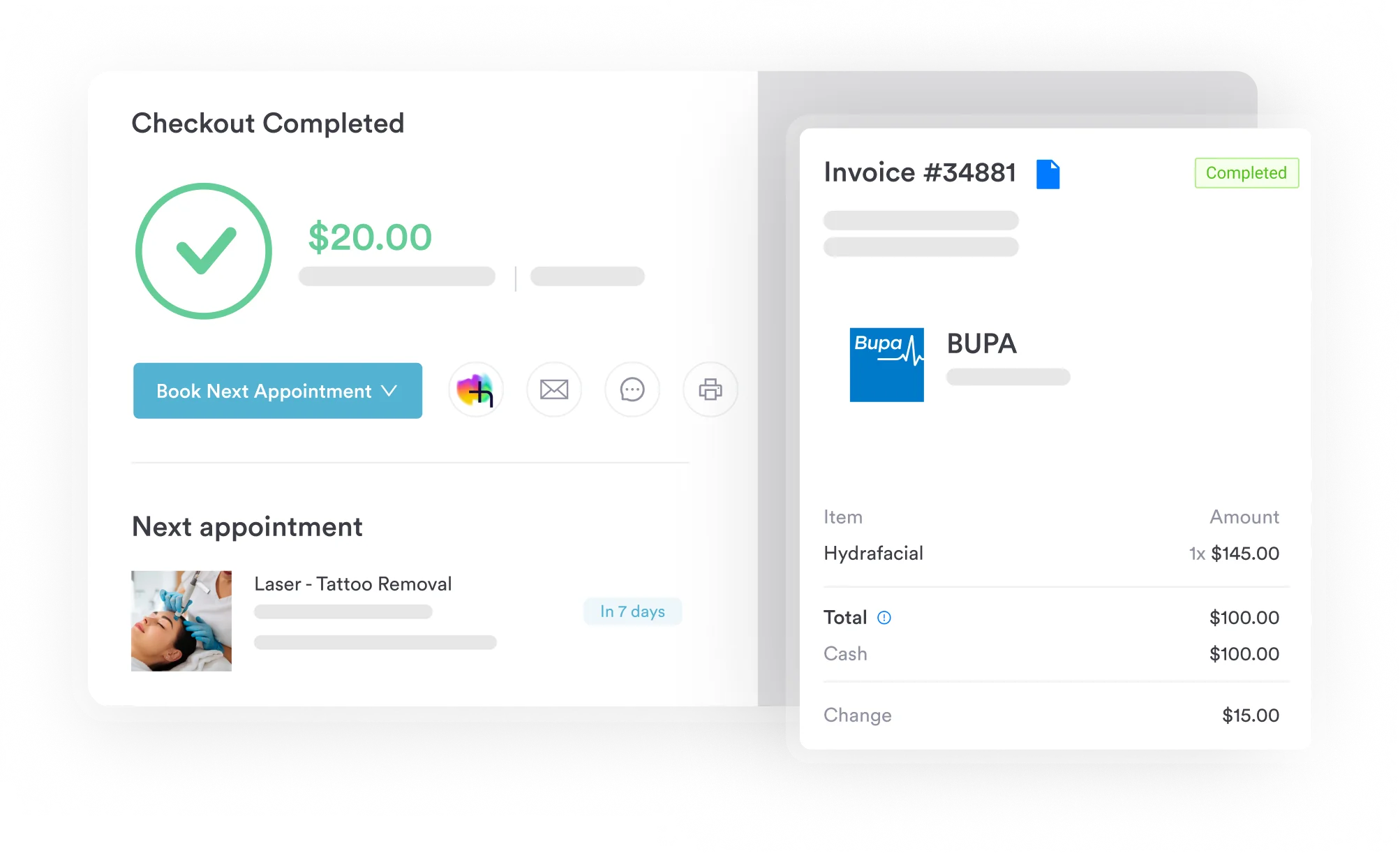
Reorder reminders, expiring authorizations and missing delivery confirmations all get flagged before the claim goes out, so your team spends its time on the exceptions.
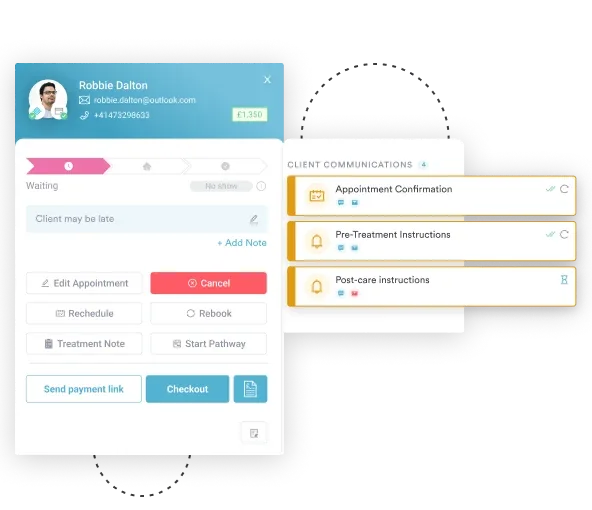
Supply billing rarely sits on its own. A pelvic health practice dispensing briefs.
For teams in that position, practice management software keeps billing, documentation and patient records in step. That is what stops a denial backlog building while everyone is busy with patients.

Pabau’s claims management tools keep HCPCS codes, modifiers and documentation on one record. Your team can see what’s missing before a claim goes out, not after the denial arrives.

The hard part of T4523 is knowing that Original Medicare will never pay it, and billing the payer that will. Once you accept the exclusion, the work gets simpler. Identify the payer first, then meet that payer’s quantity and authorization rules.
So drop the Part B habits. No KX, no LCD lookup, no fee schedule search. Use GY when you need a Medicare denial for the state. Keep the order and delivery record tight, and check your state’s cap before you ship.
Get that right and briefs stop being a write-off line in your accounts. Book a demo to see how Pabau keeps supply orders, documentation and claims together on one patient record.

Dispensing a smaller size? HCPCS code T4521 covers the small adult brief, from payer routing to the state quantity caps.
Seeing a generic garment code on a payer list? HCPCS code A4520 explains how the any-type incontinence garment code differs from the sized T-codes.
Need the catch-all supply code? HCPCS code A4335 sets out when a payer expects the miscellaneous incontinence supply code instead.
Billing catheters alongside briefs? HCPCS code A4351 covers the intermittent urinary catheter, which does sit under a Medicare coverage policy.
Supplying external urinary collection devices? HCPCS code A4326 covers the male external catheter and the documentation each claim has to hold.
HCPCS code T4523 covers one adult sized disposable incontinence product, brief/diaper, large, each. Enrolled suppliers use it to bill state Medicaid programs and other non-Medicare payers. It covers large adult disposable briefs supplied to patients with urinary or fecal incontinence. It does not cover pull-on style products, liners, or any size other than large.
No. Original Medicare does not cover T4523 or any adult brief, diaper or pull-on code in the T4521-T4528 range. Adult incontinence garments are statutorily excluded as personal hygiene items under National Coverage Determination 280.1, so the patient pays 100% of the cost. CMS lists T4523 with coverage code M, meaning non-covered by Medicare. Some Medicare Advantage plans do cover briefs through a supplemental or over-the-counter allowance, which is separate from the Part B benefit.
There is no Medicare reimbursement rate for T4523. Part B does not price the code, and it does not appear in the CMS DMEPOS fee schedule. So any Medicare rate published for it by a third-party aggregator is not a CMS figure. Payment amounts come from the payer that covers the product, and for most claims that is a state Medicaid program. Those rates vary by state, so check your state Medicaid fee schedule for the current amount and the monthly quantity cap.
The useful modifiers on T4523 are liability modifiers. GY reports an item that is statutorily excluded from Medicare. It produces the formal denial many state Medicaid programs want on file before they pay. GX records that a voluntary Advance Beneficiary Notice of Noncoverage was issued, and it is reported alongside GY. The KX modifier has no role, because there is no Local Coverage Determination for adult briefs to attest to. GA is also the wrong choice, since it applies to covered items denied as not medically necessary.
All four describe adult sized disposable incontinence briefs or diapers, and they differ only by size. T4521 is small, T4522 is medium, T4523 is large, and T4524 is extra large. The code must match the size actually dispensed to the patient. The matching pull-on codes are separate: T4525 is small, T4526 is medium, T4527 is large, and T4528 is extra large.
Most state Medicaid programs expect a written physician order naming the product, size, monthly quantity and diagnosis, plus ICD-10-CM documentation of urinary or fecal incontinence. Add the prior authorization number where the state requires one, a delivery confirmation showing what was supplied and when, and any signed patient acknowledgment. All of it should be on file before the product is dispensed, not after the claim is submitted.
Start by confirming the payer, because Original Medicare does not cover these supplies. Select the correct code from the T4521-T4545 range by product form and size. Then bill the state Medicaid program on the CMS-1500 form, with the patient’s diagnosis and a unit count reflecting individual items supplied. Follow the state’s quantity cap and prior authorization rules. Where a Medicare denial is required first, submit the claim with a GY modifier to obtain it.