CPT code 93503: Swan-Ganz catheter billing and modifiers
CPT code 93503: Official descriptor and procedure overview In the AMA CPT code s...

Last Updated: Oct 23, 2026
H0020 is the HCPCS Level II code for alcohol and/or drug services; methadone administration and/or service (provision of the drug by a licensed program).
Medicare does not use the code. CMS pays for methadone treatment at an OTP through a set of bundled G-codes, starting with G2067. An H0020 claim sent to Medicare goes nowhere. The code belongs to state Medicaid programs and commercial payers instead.
The unit catches billing teams out even more often. The official HCPCS descriptor for H0020 sets no unit of service. Some state Medicaid programs pay one unit per day. Others fold a week of care into one bundled payment. How many units you submit is a payer question, never a code question.
H0020 sits in HCPCS Level II. That code set is maintained by the Centers for Medicare and Medicaid Services, or CMS, for services CPT does not describe well. It sits within the H-code behavioral health series, which covers substance use disorder treatment, mental health services, and medication-assisted treatment (MAT) programs. That series was reserved for state Medicaid billing, which is why the code carries no federal price.
Let Pabau's smart automation suggest the right codes, reduce claim denials, and keep your practice compliant—effortlessly.
Automate repetitive tasks and focus on what matters most—your patients.
Reduce coding errors and ensure compliance with the latest regulations.
Clean claims, fewer denials, and faster reimbursements.
Powerful insights and reporting to help your practice thrive.
HIPAA compliant SOC 2 certified GDPR-compliant Trusted by 4,000+ clinics worldwide

HCPCS Code H0020 covers alcohol and/or drug services; methadone administration and/or service provided by a licensed opioid treatment program (OTP).
Medicare does not use H0020. CMS pays for methadone treatment at an OTP through its G-code bundles, starting with G2067 for a week of care.
H0020 belongs to state Medicaid programs and commercial payers, and each payer sets the unit of service.
The HCPCS descriptor sets no unit at all. Colorado pays one unit per day, while other payers bundle a whole week into one payment.
Missing required modifiers (such as HF or HH) and incorrect place-of-service codes are the two most common causes of H0020 claim denials.
Practice management software like Pabau supports behavioral health billing with code validation, modifier prompts, and clearinghouse submission.
Not every provider offering addiction treatment can submit H0020. The code is restricted to facilities that meet a strict dual-certification requirement under both federal drug enforcement and public health frameworks. Individual practitioners billing independently cannot use this code.
Eligible billers, including addiction treatment programs running psychiatry EMR software, must meet all of the following criteria:
Individual physicians, nurse practitioners, and other licensed clinicians who are not billing on behalf of a certified OTP cannot submit HCPCS Code H0020. The code is facility-level, not practitioner-level.
Medicare does not use HCPCS Code H0020. The code appears nowhere in the Medicare OTP benefit. CMS lists only G-codes in its OTP payment rate tables and in its OTP billing and payment guidance.
There is no Medicare rate for H0020. Any figure quoted as one came from somewhere other than CMS, so keep it away from your claim.
Medicare does cover methadone treatment at an OTP. The Substance Use-Disorder Prevention That Promotes Opioid Recovery and Treatment for Patients and Communities Act (SUPPORT Act) created that benefit. It has been governed by 42 CFR 410.67 since January 1, 2020. CMS simply pays for it with a different code set, and tells programs to bill only the codes that describe its bundled payments.
Medicare pays those bundles by the week rather than by the day. The codes that matter most to a methadone program are these:
The two families never overlap. G2067 and H0020 cannot both cover the same week of care, so the code you choose follows the payer rather than the service.
If you need a Medicare figure for methadone treatment, use G2067 and cite the year. CMS priced the G2067 bundle at $207.49 for CY2020 and $212.00 for CY2021. Rates are reset annually, so bill against the current table. The CMS OTP payment rates page carries it, and it lists every G-code and no H-codes at all.
Medicaid is the primary payer for most patients receiving OTP services nationally, and it is the main payer for H0020. The HCPCS H-series exists for state Medicaid behavioral health billing, and H0020 was added in 2001 for that purpose. Coverage still varies considerably from state to state.
Always check your state Medicaid agency’s current billing manual before submitting H0020. Which payers require prior authorization? Which accept H0020 under standard fee-for-service rules? And what does each one count as a unit?
Solid practice management software for medical teams means every miscellaneous code carries the notes a payer will ask for.
H0020 has no federal fee. Because Medicare does not use the code, every H0020 rate comes from a state Medicaid agency, a managed care contract, or a commercial payer agreement. Treat any single national dollar figure quoted for H0020 as unreliable.
The table below shows where each rate comes from.
A rate only means something once you know what one unit buys. Two states show how far that varies.
Same code, different quantity on the claim, and a moving target in at least one state. Other H-codes settle the question in their own descriptor.
Confirm two things in the payer’s own fee schedule before you submit. Check the unit definition, then check the maximum units allowed per period. Copy both into your billing rules per payer, not per code.
For code lookup and cross-referencing, the AAPC HCPCS lookup is a useful starting point. It does not set your rate. The figure you bill against is the one in your payer’s current fee schedule or contract.
Modifiers clarify the clinical circumstances of a service and are often required by specific payers. Missing or incorrect modifiers on an H0020 claim are one of the most common reasons for denials. Modifier requirements vary by payer, so confirm with each payer’s billing manual before submitting.
None of these modifiers apply to Medicare, because Medicare does not use H0020 in the first place. Modifier requirements are set by state Medicaid programs and commercial payers, so they differ from state to state. Always verify modifier acceptance with each payer before submitting.
Every H0020 claim requires at least one supporting ICD-10-CM diagnosis code. The diagnosis must reflect the substance use disorder being treated. Opioid dependence codes also carry specificity requirements. Coders must select the correct fifth character to reflect the patient’s current clinical status.
Select the most specific code the clinical documentation supports. Defaulting to F11.20 without checking the record for co-occurring disorders or remission status is a documentation error that can trigger audits.
The place-of-service (POS) code on an H0020 claim must reflect where the methadone service was delivered. Using the wrong POS code is a frequent source of claim rejections, particularly when OTPs move patients to telehealth services.
POS 58 (non-residential opioid treatment facility) is the code CMS requires on Medicare OTP claims, including services delivered by audio-video or audio-only technology. It belongs on G-code claims, not on H0020.
Insufficient documentation is a leading cause of both initial claim denials and retrospective audit recoupments for HCPCS Code H0020. Methadone dispensing carries controlled substance rules on top of billing rules, so OTPs face a dual documentation burden. A well-structured digital medical forms workflow cuts the risk of incomplete records.
They are a HIPAA requirement and a DEA compliance requirement for Schedule II narcotic programs.
Run a weekly pre-submission audit of your dispensing logs against your billing queue. Flag any date of service where a log entry exists but no claim was generated. On a per diem contract, every missed day is a lost unit. Where the payer bundles a week, one missing log entry can weaken the whole week’s claim.
The most expensive billing errors for HCPCS Code H0020 are the ones that go undetected for months. Each of the patterns below has a specific corrective action.
HCPCS Code H0020 does not operate in isolation. Which family you reach for depends on the payer. H-codes cover Medicaid and commercial plans, and G-codes cover Medicare. The table below maps the most commonly used related codes.
The S-series was created for billing outside Medicare. S0800, the LASIK code, goes to commercial and vision plans because Medicare excludes elective refractive surgery.
H0020 billing is high-volume and low-margin. An OTP with 200 patients on a per diem Medicaid contract files up to 200 claim units a day. Move the same patients to a payer that bundles the week, and identical care becomes a different claim on a different schedule.
Every unit still needs a matching dispensing log entry, a valid ICD-10 code, the right modifier, and the place-of-service code that payer expects. Multiply that by a mixed payer roster and the rules stop fitting in anyone’s head.
Add the Medicare patients whose care has to go out as G-codes, and manual tracking starts leaking revenue. Purpose-built software closes that leak by automating the steps nobody should have to remember:
Practice management software like Pabau brings that workflow into one system. Pabau’s claims management software supports behavioral health and addiction treatment billing. Denial tracking shows a billing lead when the same payer keeps rejecting the same code, so a rule gets fixed once instead of every month.
Claims sit in the same system as the patient record, the treatment note, and the invoice. Billers stop exporting data between tools to close a claim. Claims management is included in every Pabau subscription, so a two-site program gets the same validation and tracking as a national one.
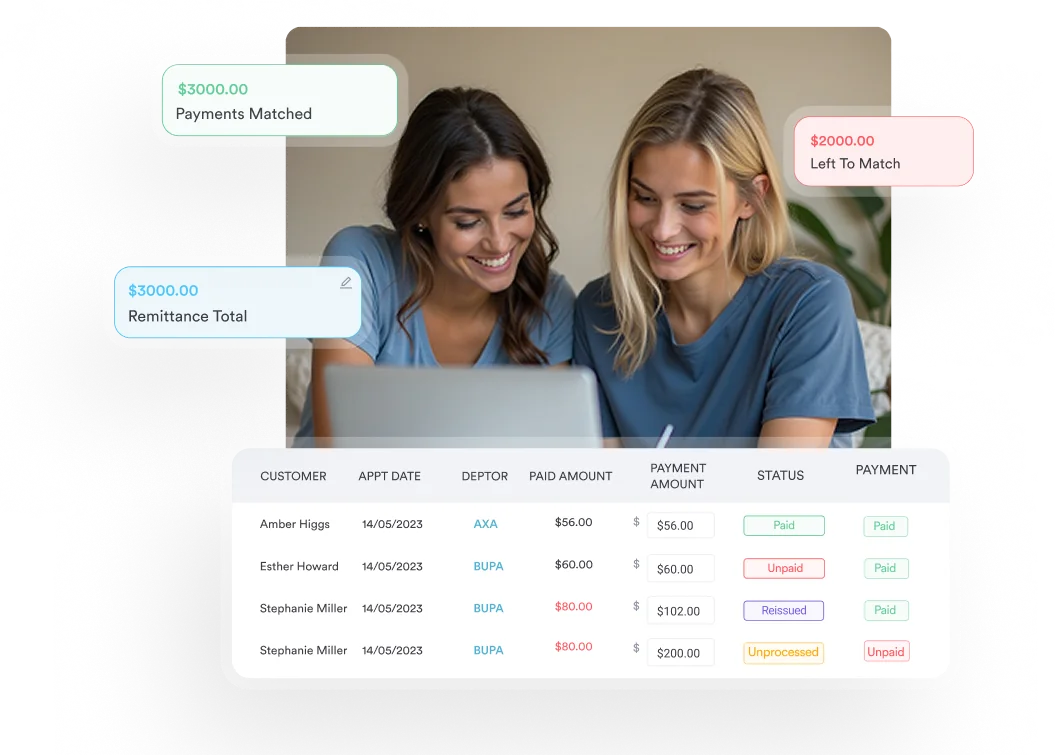
OTPs that keep digital intake forms, consent records, and dispensing documentation in one system carry a lighter documentation load. That is where claims usually go missing. The documentation exists, but it never reaches the billing queue.
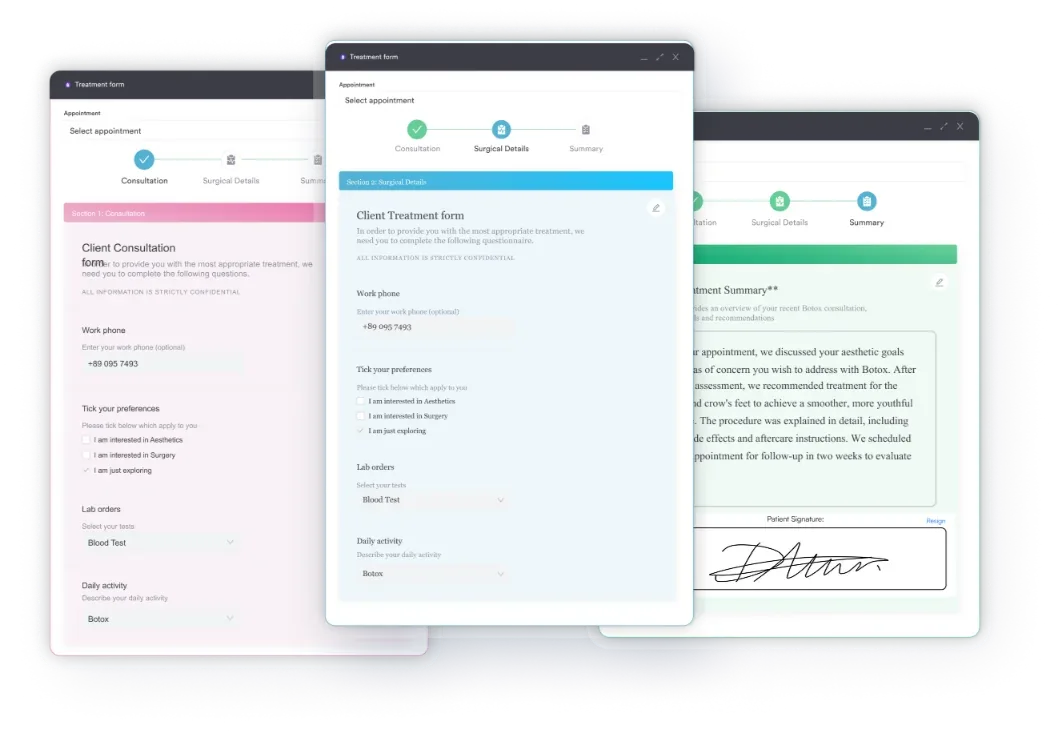

Pabau’s claims management software helps OTPs and behavioral health practices send each claim to the right payer with the right code. Built-in validation, modifier prompts, and denial tracking keep that work off your billing team.

H0020 is a payer-specific code, and the payer is the first thing to get right. Send it to Medicaid or a commercial plan on that payer’s terms, and route Medicare care to G2067 and its add-on codes. Programs that get this wrong lose the claim twice. Once on the rejection, and again on the week nobody re-bills.
The unit question comes next. Check whether your payer counts a day or a week before you set a quantity. Re-check it whenever that payer publishes a new fee schedule.
After that, the preventable losses are ordinary ones. Missing modifiers, the wrong POS code, and dispensing records that never reach the billing queue. Treat each as a workflow design problem rather than a training problem, and the fix holds after the person who learned it moves on.
Pabau brings H0020 billing, documentation capture, and denial tracking into one platform. Book a demo to see how it handles OTP claims across Medicaid, Medicare, and commercial payers.

Billing acute detox alongside methadone care? H0013 sets out how payers reimburse acute detoxification and where each one defines the unit.
Want a code with the unit already settled? H2020 shows what changes when the descriptor names a per diem unit instead of leaving it to the payer.
Paying peer workers around methadone treatment? H0038 covers how state Medicaid programs reimburse self-help and peer support services.
Unsure which support services need their own code? H0036 explains how community psychiatric supportive treatment is billed and documented.
Coding a related blood disorder instead? Polycythemia vera coding guide This guide covers the billable code for polycythemia vera, and why secondary polycythemia uses a separate code instead.
HCPCS Code H0020 covers alcohol and/or drug services; methadone administration and/or service provided by a licensed opioid treatment program (OTP). That includes the methadone itself, its dispensing, and the clinical services delivered around it. The descriptor sets no unit of service, so check whether your payer pays H0020 by the day or as a bundled week.
No. H0020 is not part of the Medicare OTP benefit, and CMS lists only G-codes in its OTP payment rate tables. Medicare pays methadone treatment through G2067, the weekly bundle, plus its add-on codes. H0020 belongs on Medicaid and commercial claims, and it cannot cover the same week as G2067.
Modifier requirements depend on the payer. Medicaid programs commonly require modifier HF (substance abuse program) and sometimes HH (integrated mental health and substance use disorder program). Medicare sits outside this question, since it does not use H0020 at all. Always verify modifier requirements with each payer’s billing manual before submitting.
The standard place-of-service code for in-person H0020 claims is POS 57 (non-residential substance abuse treatment facility). Some commercial payers accept POS 11 (office) for OTP-affiliated physician groups. Medicare OTP claims work differently. They carry POS 58 (non-residential opioid treatment facility) with the G-codes, not H0020.
No. Medicaid coverage for HCPCS Code H0020 varies by state. Most states cover methadone OTP services, but the details differ. Rates, prior authorization rules, and whether H0020 is standalone or folded into a broader SUD treatment rate are all state decisions. Check your state Medicaid agency’s current billing manual before submitting H0020 claims.
They serve different payers. H0020 reports methadone administration and/or service to state Medicaid and commercial payers, on whatever unit that payer sets. G2067 is Medicare’s weekly methadone bundle, billable once per patient per seven-day period. Medicare pays only the G-codes, so H0020 and G2067 never cover the same week of care.
That depends on the payer. The official HCPCS descriptor for H0020 sets no unit of service. Colorado’s Medicaid fee schedule defines it as one unit per day, while other payers bundle a week of care into a single payment. Check the unit in your payer’s current fee schedule before you set the quantity on a claim.