



CCSD code G5100: Bypass of duodenum billing guide
CCSD code G5100 bills a bypass that leaves the duodenum in place CCSD code G5100...

Last Updated: Oct 16, 2026

CPT code 99214 is an established patient office or outpatient visit requiring moderate-complexity MDM or 30-39 minutes of total time on the date of service.
Since the 2021 AMA E/M revisions, you no longer need all three key components (history, exam, MDM): time alone is sufficient to select the code level.
Modifier 25 applies when a significant, separately identifiable E/M service is performed on the same day as a procedure. It is one of the most audited modifier combinations in outpatient billing.
EMR and documentation software like Pabau helps outpatient practices structure 99214 encounter notes consistently, building the documentation habits that support accurate coding and hold up under payer review.
CPT code 99214 is a Level 4 established patient office or outpatient visit. As defined by the American Medical Association (AMA), it covers encounters requiring either moderate complexity medical decision making (MDM) or 30-39 minutes of total provider time on the date of service.
It is part of the 99202-99215 outpatient evaluation and management (E/M) series, sitting one step below CPT code 99215 (high complexity) and one step above CPT code 99213 (low complexity).
The 2021 AMA E/M guideline revisions changed how this code is selected. Before 2021, providers had to demonstrate at least two of three key components: detailed history, detailed examination, and MDM.
Since January 2021, code selection is based on either MDM complexity alone or total time on the date of service alone. History and physical exam remain clinically important but no longer drive code level selection.
MDM is the most common pathway for 99214 selection in primary care and specialist settings. To qualify, the encounter must meet moderate complexity across at least two of the three MDM elements.
Two of these three elements must be met at the moderate complexity level. Meeting only one is insufficient for 99214 under MDM. A patient with two stable chronic conditions who requires prescription drug management meets elements one and three, for example, qualifying the visit without any time documentation.
Primary care: A patient with Type 2 diabetes and hypertension, both stable, returns for medication review. The provider reviews prior lab values, adjusts metformin dosing, and counsels on dietary changes. Two stable chronic conditions plus prescription drug management satisfies the moderate MDM threshold.
For patients with multiple stable chronic conditions.
Internal medicine: A patient presents with new-onset shortness of breath. The provider orders a chest X-ray and reviews prior spirometry results from an outside facility. One undiagnosed new problem with uncertain prognosis combined with review of external records meets the 99214 bar.
Psychiatry: A patient with generalized anxiety disorder (GAD) and major depressive disorder (MDD) returns for medication management. The provider reviews a prior treatment summary from a previous therapist and adjusts SSRI dosing. This satisfies two chronic illnesses with exacerbation risk plus prescription drug management.
For practices using specialty EMR software, structured MDM templates can pre-populate the relevant elements from the encounter record.
Imaging orders feed the MDM data element. A cervical spine radiograph of two or three views, reported as 72040, counts as one unique test ordered. Pairing it with an independent interpretation requires that the practice not bill the professional component.
When MDM is difficult to document at moderate complexity, time provides an alternative pathway. The 2021 AMA revisions define “total time” as all time spent by the billing provider on the date of service related to the encounter, not just face-to-face time.
A common documentation error is recording “30 minutes” in the note without specifying that this represents the billing provider’s total time on that date. Payers auditing time-based claims look for this language explicitly. Notes that simply record the appointment duration rather than the provider’s total date-of-service time are a leading cause of 99214 downcoding during audits.
Time spent on an imaging result belongs to whoever spent it. Reviewing a two-view thoracic spine film reported as 72070 counts toward the 30-39 minutes when the billing provider does it on the encounter date. The radiologist’s interpretation time never transfers.
Other codes rely on similarly precise time thresholds.
Document your total time at the end of every note using a consistent phrase: ‘Total provider time on date of service: 32 minutes, including pre-visit chart review, examination, counseling, and note documentation.’ This single sentence addresses the most common time-based audit trigger for CPT code 99214.
The 99213 vs 99214 distinction is the most consequential code selection decision in outpatient E/M billing. Selecting 99213 when the encounter supports 99214 leaves revenue on the table. Selecting 99214 without adequate documentation creates audit exposure.
The reimbursement figures above are approximate ranges based on Medicare Physician Fee Schedule data. Rates vary by geographic practice cost index (GPCI) and payer contract. Always verify current rates using the CMS Physician Fee Schedule lookup tool for your specific locality.
The clearest clinical distinguisher between 99213 and 99214 is prescription drug management. Any encounter where the provider adjusts, initiates, or discontinues a prescription medication satisfies one of the three moderate MDM risk elements. Combine that with a patient who has two or more chronic conditions, and you have CPT code 99214 without needing time documentation at all.
Similar logic applies to ADHD screening CPT code encounters where medication initiation is considered alongside diagnostic evaluation.

Pabau helps outpatient practices structure encounter notes and capture consistent clinical documentation for E/M codes like CPT code 99214. See how it works for your practice.

Choosing software for a primary care practice around your visit mix makes E/M documentation faster and cleaner.
Reimbursement for CPT code 99214 is calculated using the Resource-Based Relative Value Scale (RBRVS). The code carries a Work RVU value of approximately 1.92, with a non-facility total RVU of approximately 4.05, though these figures are subject to annual CMS updates.
Total reimbursement is determined by multiplying the total RVUs by the Medicare conversion factor and adjusting for the Geographic Practice Cost Index (GPCI) of the practice location.
For a primary care practice billing 99214 twenty times per week, the difference between correct 99214 selection and systematic downcoding to 99213 represents approximately $700-$1,000 in weekly revenue. That difference compounds significantly over a year. Practices that invest in accurate documentation workflows typically see measurable RVU recovery without changing how they practice clinically.
Many practices formalize revenue cycle management processes specifically around high-frequency E/M codes like 99214, since small coding errors compound quickly at that volume.
Site of service moves the money in radiology far more than it does for an office visit. Head MRA reported as 70546 carries roughly 84% of its value in practice expense, so the technical component follows whoever owns the scanner. A 99214 moves by a much smaller facility adjustment.
Medicare Administrative Contractors (MACs) apply locality-specific GPCI adjustments to all E/M reimbursements. A 99214 billed in a high-cost urban area may reimburse 15-20% higher than the same code billed in a rural setting. Commercial payers (Aetna, Cigna, UnitedHealthcare, BlueCross BlueShield) negotiate rates independently and often reference the Medicare fee schedule as a benchmark multiplier.
Practices with a high commercial payer mix should audit their contracted rates annually against updated Medicare baselines. Contracted rates that were set at 120% of Medicare five years ago may now be below market if the conversion factor has shifted.
Structured reporting tools make it easier to segment revenue by payer and identify where renegotiation is warranted.
Two modifiers appear frequently with 99214 and both carry audit risk when applied incorrectly.
Modifier 25 signals that a significant, separately identifiable E/M service was performed on the same day as a procedure. CMS and AMA guidance confirms that modifier 25 allows 99214 to be billed alongside a minor procedure when the E/M service was substantial and went beyond the pre-procedure assessment.
Common examples include billing 99214-25 alongside a joint injection, laceration repair, or lesion removal. The documentation must support that the E/M service addressed a separate clinical issue or involved independent decision making beyond the procedure itself. Notes that simply describe the procedure and nothing else will not sustain a modifier 25 claim in audit.
The Recovery Audit Contractor (RAC) program specifically targets modifier 25 combinations as a high-frequency billing pattern. For practices managing a broad range of procedure types.
Global surgical periods bring a different modifier into play. A four-view lumbar spine X-ray reported as 72110 carries no global period of its own, so it stays separately payable after surgery. An unrelated 99214 in that same window needs modifier 24.
Modifier 95 indicates that an otherwise in-person service was delivered via telehealth. Following post-pandemic CMS policy updates, CPT code 99214 remains billable for telehealth encounters in most Medicare and Medicaid programs when modifier 95 is appended and the visit meets the standard MDM or time criteria.
Telehealth billing rules remain subject to ongoing policy changes. The total time calculation for telehealth 99214 follows the same 30-39 minute framework as in-person visits. Audio-only encounters may face additional payer restrictions depending on state Medicaid policy and commercial contract terms. Practices offering telehealth services should verify current coverage rules with each payer annually. A clean claim rate below the practice benchmark usually points at one recurring coding or eligibility error. A paid claim can still be underpaid, and the electronic remittance file is where that shows up.
Modifier 95 alone does not complete a telehealth claim. Pair it with the place-of-service code that matches where the patient was located: POS 02 for a patient at home, POS 10 for other originating sites. POS 11 (office) no longer applies once the visit shifts to telehealth.
Modifier GT, once the standard telehealth modifier for commercial payers, has been retired by most plans in favor of modifier 95. Confirm which modifier a specific payer still requires before submitting the claim, since a handful of legacy contracts still reference GT.
Before billing 99214-25, ask one question: ‘If the procedure had not occurred today, would I still have performed a 99214-level E/M visit?’ If yes, modifier 25 is defensible. If the E/M only relates to the procedure, it is bundled and modifier 25 does not apply. Document using digital intake forms that capture the separate presenting problem to create a contemporaneous record.
Post-2021, the documentation burden for 99214 is more flexible than it was under the three-key-component framework, but it remains specific. The note must unambiguously support the pathway chosen: MDM or time.
Practices using digital intake forms to capture presenting complaints and medication lists before the visit create a contemporaneous record that naturally supports MDM complexity documentation. The pre-visit data entry by the patient or staff anchors the “number and complexity of problems” element without requiring the provider to reconstruct it in the note after the fact.
Medical necessity for an ordered study rests on the diagnosis attached to the order. Medicare pays a non-contrast MRI of the orbit, face, and neck under 70540 only when a covered ICD-10-CM code is linked. Naming that indication in the 99214 note keeps the two records consistent.
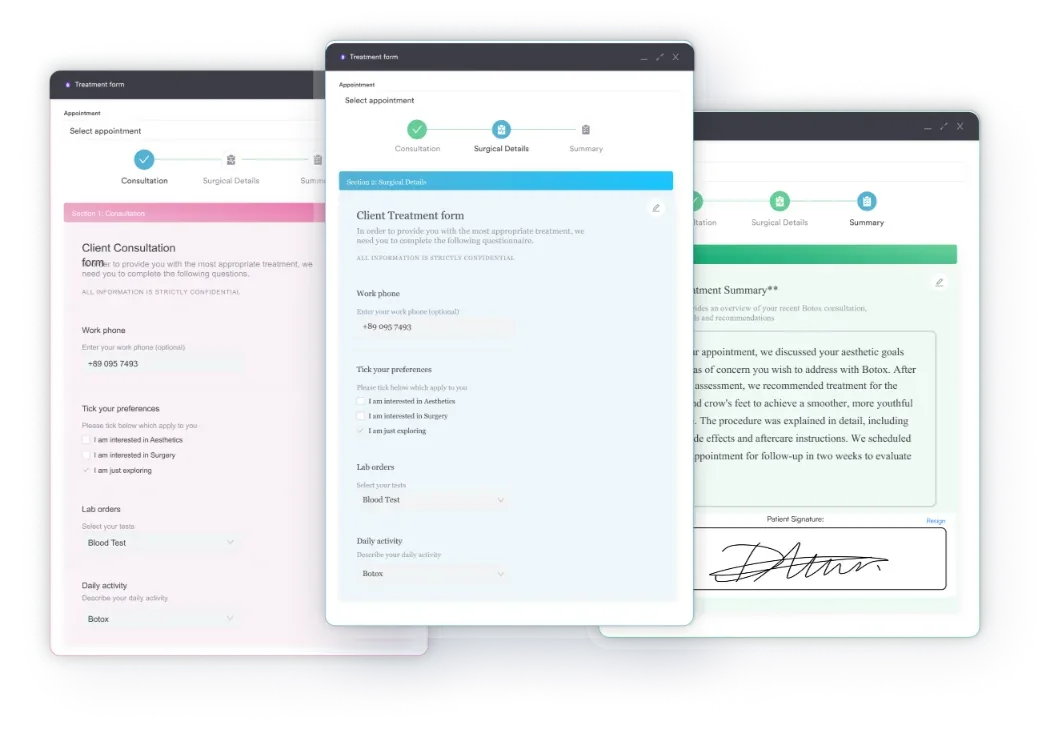
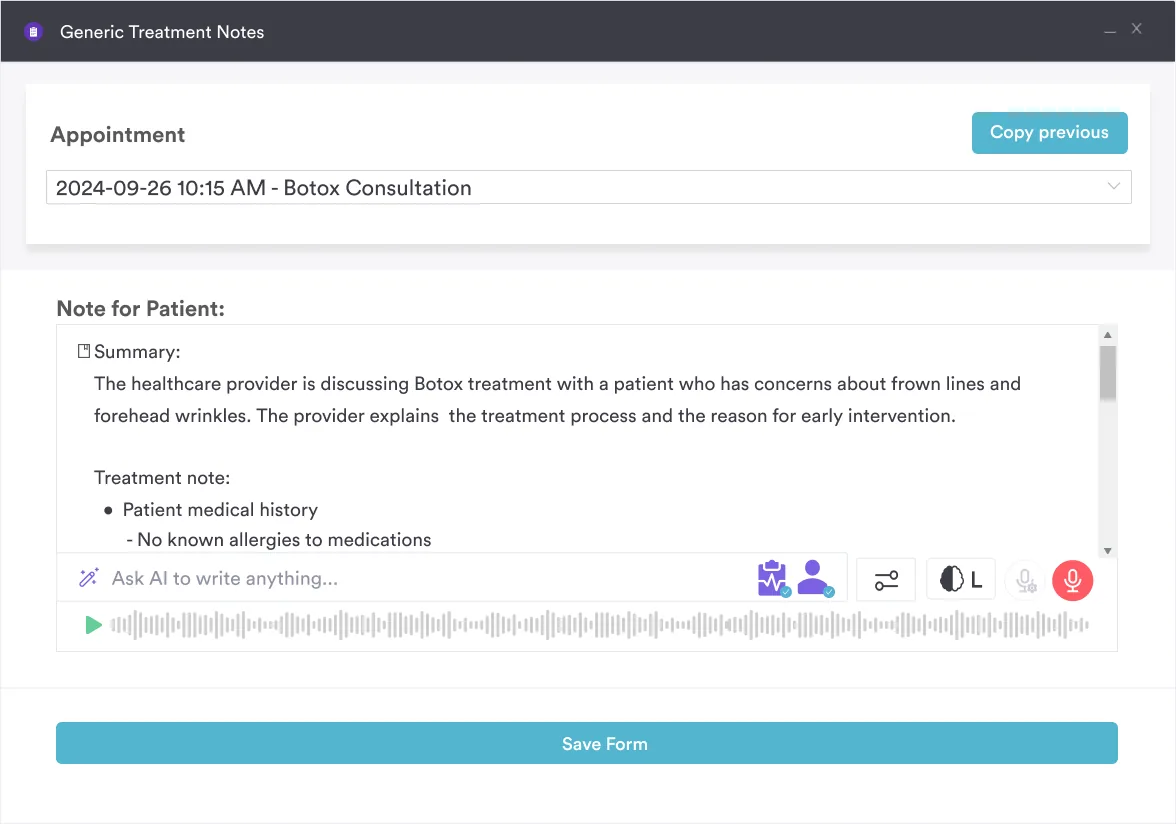
AI-assisted documentation tools can support the note-writing process, though any claim that such tools “ensure compliance” should be qualified. For practices focused on managing documentation burden more broadly.
CPT code 99214 is consistently flagged by the Office of Inspector General (OIG) and Recovery Audit Contractors as a high-volume code subject to upcoding scrutiny. The OIG Work Plan has historically targeted E/M codes in the 99213-99215 range because they represent a large share of Medicare outpatient expenditure.
Practices that want to reduce audit exposure without restricting legitimate 99214 billing should focus on documentation quality and consistency, not code avoidance. The HIPAA compliance framework for medical offices provides a useful foundation for building the audit trail documentation that protects accurate claims.
Using the CMS list of CPT/HCPCS codes alongside MAC-specific Local Coverage Determinations (LCDs) ensures the practice is applying the current payer rules for each code combination.
View counts drive their own audit pattern. A lumbosacral series of two or three views bills as 72100, and a four-view study does not. Auditors compare the radiology report’s view count against the code submitted, the same way they compare 99214 time statements against the note.
For practices looking to reduce administrative overhead across all E/M coding.
CPT code 99214 is one of the most clinically appropriate and financially significant codes in outpatient medicine. The documentation challenge lies in consistency, not complexity.
Practices that experience 99214 downcoding or audit findings often document correctly in the clinical sense but fail on the structural elements payers look for: explicit MDM element identification, provider-only time statements, and modifier justification.
Pabau’s documentation tools help outpatient practices build those structured habits directly into the encounter workflow, so the note matches the care delivered. To see how it works in practice, book a demo and walk through a 99214 encounter from intake to note completion.

Coding a reusable oral thermometer next? Reusable oral thermometer billing explains why CMS places this supply in the dialysis equipment section rather than general DME.
Need the full picture on adjacent E/M levels? CPT code 99212 covers the straightforward, low-complexity established patient visit one level below 99213.
Billing a procedure alongside an E/M visit? CPT code 96374 walks through IV push billing and modifier rules that follow similar audit logic.
Need the code for ostomy skin barriers? Ostomy skin barrier wipes covers the required AU modifier and the roughly $0.28 per-unit fee ceiling under Medicare DMEPOS.
CPT code 99214 is a Level 4 established patient office or outpatient visit requiring either moderate complexity medical decision making (MDM) or 30-39 minutes of total provider time on the date of service. It is used to bill E/M encounters for patients previously seen in the practice where the clinical situation meets the AMA’s moderate complexity threshold.
CPT code 99213 is a Level 3 established patient visit requiring low complexity MDM or 20-29 minutes of time. CPT code 99214 is a Level 4 visit requiring moderate complexity MDM or 30-39 minutes. The clearest differentiator is prescription drug management: any encounter involving a prescribing decision elevates the risk element to moderate, supporting 99214 when combined with two or more chronic conditions.
Yes. Modifier 25 may be appended to 99214 when a significant, separately identifiable E/M service is performed on the same day as a procedure. The documentation must support that the E/M visit addressed a distinct clinical issue beyond the pre-procedure assessment. Modifier 25 combinations are one of the most frequently audited billing patterns in outpatient care.
CPT 99214 requires 30-39 minutes of total provider time on the date of service when billing by time. This includes all time spent by the billing provider on activities related to that encounter on the same calendar date: pre-visit chart review, the visit itself, documentation, and care coordination. Clinical staff time and time on a different date do not count.
The encounter must meet moderate complexity in at least two of three MDM elements: (1) number and complexity of problems addressed, (2) amount and complexity of data reviewed, and (3) risk of complications or morbidity. Prescription drug management satisfies the risk element. Two or more stable chronic conditions or one chronic condition with exacerbation satisfies the problem element.
Medicare reimbursement for CPT 99214 is approximately $126-$148 nationally, varying by Geographic Practice Cost Index (GPCI). Commercial payer rates are typically 10-30% above Medicare. Verify current rates using the CMS Physician Fee Schedule lookup for your specific locality and payer contracts, as rates change with annual CMS updates.
Not for a standalone office visit. A modifier is only required when a separate factor applies: modifier 25 when a procedure is billed the same day, or modifier 95 when the visit is delivered by telehealth. Billed alone, 99214 needs no modifier.
Yes, when both services are documented separately. CPT code 90833 is an add-on code for 30 minutes of psychotherapy performed alongside an E/M visit, so the note needs distinct time and content for the medication management (99214) and the psychotherapy (90833), not a single combined narrative.
No. CPT code 99214 is a problem-oriented E/M visit for an established patient with an active complaint or chronic condition, not a preventive service. Preventive visits use separate codes (99396, 99397, or Medicare’s Annual Wellness Visit G0439), which typically carry no patient cost-sharing, unlike 99214.
No. Unlike preventive-service codes, CMS does not cap how often 99214 can be billed per patient. Frequency is governed by medical necessity: a payer’s utilization review may flag a provider whose 99214 rate is unusually high against the specialty average, even without a hard limit.
Modifier 25 flags a significant, separately identifiable E/M service, like 99214, billed alongside a procedure on the same day. Modifier 59 flags a distinct procedural service performed separately from another procedure. The two are not interchangeable: 25 pairs an E/M code with a procedure, 59 separates two procedures from each other.



