HIPAA compliant texting: What you can send patients & how to communicate securely
HIPAA compliant texting is possible when a text holds no protected health inform...

Last Updated: Oct 16, 2026

Patient relationship management (PRM) covers every strategy, process, and tool a clinic uses to manage patient interactions from first contact through long-term follow-up.
PRM differs from CRM: it accounts for care continuity, clinical context, and patient safety, not just commercial interactions.
Common failure points include inconsistent follow-up, reactive-only communication, and no structured recall process after treatment.
Pabau’s automated workflows, recall campaigns, and loyalty features handle PRM without adding staff workload.
Most clinics lose patients not because of poor clinical outcomes, but because communication breaks down between visits. A missed follow-up, a recall that never went out, a booking experience that felt like admin rather than care. That’s a patient relationship management problem, and it costs practices more than most owners realize.
According to a peer-reviewed study published in PMC, patient relationship management increases patient loyalty and creates a satisfactory environment for both the patient and the service provider, while also reducing operational costs. The evidence is clear: structured PRM isn’t a nice-to-have, it’s a competitive necessity. This guide covers what patient relationship management actually means, how it differs from CRM, its core components, and how to implement it effectively across your clinic.
Patient relationship management refers to the strategies, processes, and technologies a clinic uses to manage every interaction with patients across the entire care journey. That starts before the first appointment and continues well after treatment ends. Good patient care management means no interaction falls through the cracks.
The concept was adapted from customer relationship management (CRM) frameworks in non-healthcare industries. As a PMC peer-reviewed study on PRM notes, healthcare organizations must build the same discipline of patient relationship management that commercial companies apply to CRM. The clinical context adds complexity: patients aren’t just customers, care journeys are longer, and the stakes of poor communication include both safety and regulatory risk.
For a clinic owner or practice manager, patient relationship management is the infrastructure that determines whether a new patient returns, refers others, and stays loyal over years. It’s not a software tool alone. It’s how your clinic behaves toward patients between appointments.
CRM manages commercial interactions: leads, sales pipelines, customer accounts. Healthcare CRM software applies that logic to a clinical setting, but the term often conflates two genuinely different disciplines.
The differences matter operationally:
| Dimension | CRM | Patient relationship management |
|---|---|---|
| Primary goal | Drive purchases and retention | Support clinical outcomes and care continuity |
| Data used | Purchase history, demographics, preferences | Treatment history, clinical notes, recall schedules |
| Communication triggers | Marketing campaigns, sales events | Care milestones, follow-up windows, safety recalls |
| Compliance context | GDPR, general marketing law | HIPAA, GDPR, clinical governance requirements |
| Relationship length | Transaction-to-transaction | Lifelong care relationship |
A clinic running a standard CRM without PRM capabilities will manage leads well but struggle with recall scheduling, post-treatment follow-up, and the clinical documentation that underpins safe patient communication. Patient acquisition strategies only convert into growth when the systems to retain those patients are equally strong.
Effective patient relationship management isn’t a single feature. It’s a set of interconnected components that together cover the full patient lifecycle.
Multi-channel communication sits at the center of any PRM system. This includes appointment reminders, pre-care instructions, post-treatment follow-ups, and recall campaigns. Automated SMS and email campaigns remove the manual workload from staff while ensuring consistent, timely outreach. A front-desk team handling 80+ appointments a week cannot manually chase every recall. Automation makes consistency possible at scale.
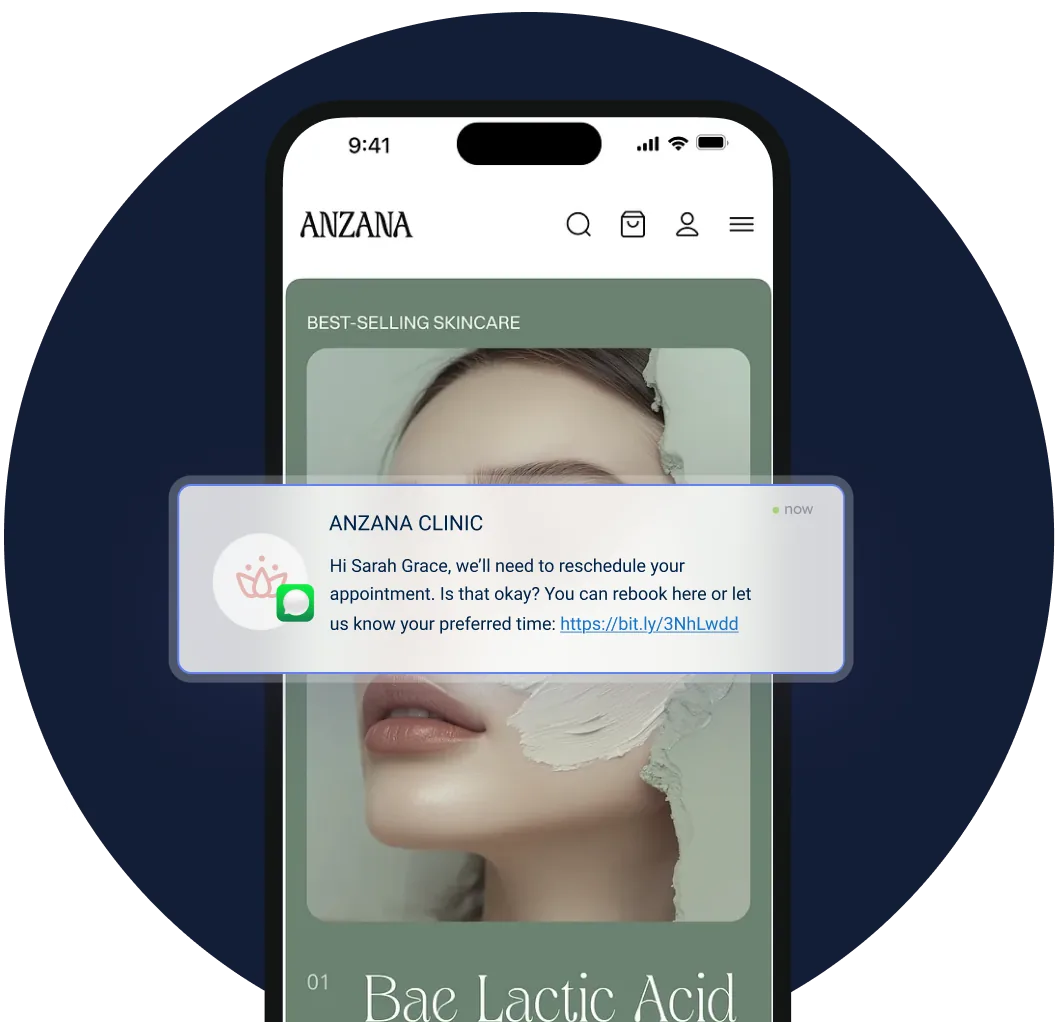
Patients expect digital self-service. A patient portal lets them book, complete intake forms, access their records, and manage appointments without calling the practice. This reduces administrative burden and raises patient satisfaction simultaneously. Clinics that still handle everything by phone create friction that drives patients toward competitors with smoother booking experiences.
Recall automation is where most clinics leave revenue on the table. A patient who received a treatment six months ago and heard nothing since is not a loyal patient. They’re a lapsed one. Structured recall campaigns triggered by treatment type and time elapsed are a core PRM function. The Medical Economics review of PRM technology identifies automation as the key mechanism for personalizing patient experience at scale without increasing headcount.
A workable sequence stays concrete: a check-in message three days after treatment, a review request around day seven, a recall timed to the treatment’s natural interval (a few months for repeat injectables, six months for a routine check), and a win-back offer once a patient passes 90 days with no booking. Each step fires automatically, so no one at the front desk has to remember who is due.
Post-appointment review requests are a PRM touchpoint, not just a marketing tactic. Patients who receive timely, warm follow-up messages are more likely to share positive experiences. Reputation and review management closes the loop between clinical experience and public perception, feeding new patient acquisition with verified social proof.
For physician-led practices, that same loop extends to medical review platforms, where online reputation management for doctors adds HIPAA-safe responses and profile claiming that generic review tools skip.
Patient relationship management without data is guesswork. Measuring patient satisfaction through structured surveys, NPS tracking, and return visit rates gives practice managers the evidence they need to improve processes. Without measurement, a clinic can’t distinguish between patients who leave because of wait times, poor communication, pricing, or clinical concerns.

From automated recalls and loyalty programs to review generation and patient portals, Pabau brings every PRM component into a single platform built for clinics.

Understanding the components is one thing. Implementing patient relationship management strategies that actually change clinic behavior is another. These are the approaches that make a measurable difference.
Before automating anything, map what patients experience from first inquiry to post-treatment follow-up. Most clinics discover missed steps they didn’t know existed: no confirmation email after online booking, no pre-care instructions before a first appointment, no follow-up after a clinical procedure. Mapping the current state makes those missed steps visible.
Not every patient needs the same communication. A patient who has been visiting quarterly for two years requires different outreach than someone who booked once and hasn’t returned. Segmentation lets clinics send relevant, timely messages rather than generic broadcast emails that patients learn to ignore. Automated recall workflows can trigger based on treatment type, last visit date, or specific clinical criteria, so the right message reaches the right patient at the right time.
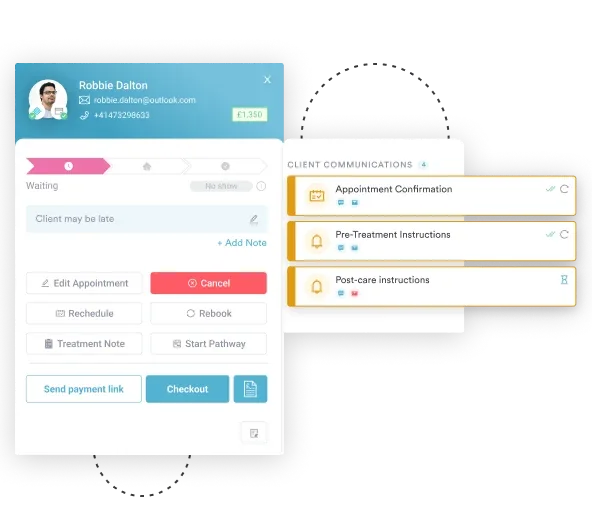
Loyalty programs formalize the relationship between clinics and long-term patients. Patient loyalty programs built into practice management software create a tangible reason for patients to return, refer, and spend more per visit. A med spa that rewards a patient after their fifth visit creates a structural incentive that passive good service alone doesn’t provide.
Post-appointment surveys sent automatically within 24-48 hours of treatment give clinics actionable data on where experience breaks down. Capturing patient feedback consistently is the only way to distinguish between a systemic problem and a one-off issue. A single negative review might be an outlier. Five patients citing the same front-desk experience is a process failure.
Patient data processed through PRM systems falls under HIPAA in the US and GDPR in the UK and EU. Every communication, every stored preference, every automated workflow must be handled within the appropriate regulatory framework. The Agency for Healthcare Research and Quality emphasizes that patient engagement strategies must prioritize safety and data integrity as foundational requirements. This means using PRM tools built specifically for healthcare, not repurposed general-purpose marketing software. In general medicine, purpose-built primary care software bakes those safeguards in from the start.
Audit your recall rate before investing in new PRM tools. Pull a report of patients who haven’t returned within 90 days of their last appointment and check what communication they received after their visit. For most clinics the weak point is the process itself, and automating a broken process just scales the mess. Fix the process first, then automate it.
Standalone PRM tools require clinics to manage patient relationships separately from their scheduling, billing, and clinical records. That creates data silos and manual synchronization overhead that most small-to-mid-size practices can’t absorb.
Integrated practice management platforms solve this by embedding PRM functionality into the same system clinicians use for day-to-day operations. When appointment data, treatment history, and communication logs sit in one place, recalls trigger automatically, follow-ups are contextually relevant, and nothing requires manual cross-referencing between systems.
Pabau, an all-in-one practice management system, brings together the full range of patient relationship management components in one platform: improving patient engagement through automated recalls and pre/post-care messaging, review generation, loyalty and membership management, digital forms, and a patient portal, all operating from the same patient record. There’s no separate PRM database to maintain and no integration to break.
Not every tool marketed as patient relationship management software fits a clinical setting. Before committing, check it against the requirements that separate healthcare-grade platforms from repurposed marketing apps:
A tool that misses any of these forces your team to cover the shortfall by hand, which is exactly the overhead good patient relationship management is supposed to remove. That’s why patient relationship management tools built for clinics beat general-purpose CRM software repurposed for healthcare.
For clinic owners evaluating software options, the question isn’t whether to invest in patient relationship management. It’s whether your current platform makes PRM something your team can actually execute without adding headcount or complexity.
Patient relationship management is the operational infrastructure that determines whether a clinic grows through retention and referrals or keeps paying to replace patients who quietly drift away. What separates clinics that grow from those that plateau is rarely clinical quality. It’s the consistency and intentionality of every interaction between appointments.
Building that consistency on purpose is also the most reliable way to reduce patient churn before it ever shows up in your numbers.
Pabau’s medical spa software and multi-specialty clinic platform builds patient relationship management into every workflow, so recalls go out automatically, loyalty rewards accumulate passively, and patient feedback reaches the right people without chasing. To see how it works in practice, book a demo with the team.

Want to catch dissatisfaction before it costs visits? Best patient satisfaction survey software compares tools that surface complaints from long waits or rushed consent before patients leave.
Need a ready-made survey to run today? Patient survey template gives 15 questions across scheduling, communication, care, and facility with a Likert or NPS scale.
Not sure whether to say patient or client? Client vs patient guide explains how the terms shape documentation, compliance, and professional identity across practice types.
Patient relationship management (PRM) is the system of strategies, processes, and technologies that healthcare practices use to manage every patient interaction across the full care journey, from first inquiry through long-term follow-up. It draws on CRM principles but adapts them for clinical contexts where care continuity, compliance, and patient safety are central concerns.
CRM manages commercial customer interactions with the goal of driving sales and retention. Patient relationship management goes further by incorporating clinical data, care milestones, recall schedules, and regulatory requirements like HIPAA and GDPR. A CRM treats patients as customers; a PRM system treats them as patients with ongoing clinical and communication needs.
Structured patient relationship management directly reduces patient dropout, increases recall compliance, and generates referrals through consistent, personalized communication. Research published in PMC shows it reduces costs while improving patient loyalty. For private practices and elective clinics, where patients choose whether to return, PRM is a primary driver of sustainable revenue.
The core components are: multi-channel patient communication (SMS, email, portal), automated recall and re-engagement campaigns, patient self-service tools (online booking and portals), post-treatment feedback collection, review generation, and loyalty or membership programs. In effective PRM systems, these operate from a single integrated platform connected to the clinical record.
PRM software improves retention by automating the follow-up touchpoints that clinics typically miss when managing manually. Recall campaigns trigger based on treatment type and time elapsed, post-appointment surveys catch dissatisfaction before patients leave quietly, and loyalty programs give long-term patients a structural reason to return. Retention improves because no patient interaction depends on a staff member remembering to act.
In this context, PRM stands for patient relationship management: the strategies, processes, and technology a practice uses to manage patient interactions across the care journey. The same three letters appear elsewhere in medicine, so the meaning depends on context. When the subject is engagement, recalls, and retention, it refers to managing the ongoing relationship with each patient.
A few concrete cases show how it works in a clinic: an automated recall campaign that reactivates patients due for a repeat treatment, a post-appointment survey sent within 48 hours to catch a problem before the patient drifts, a review request timed to a patient’s most satisfied moment, and a loyalty tier that rewards return visits. Each runs from the same patient record, so outreach stays relevant without extra admin.
In healthcare, PRM refers to patient relationship management: the coordinated way a practice handles engagement, recalls, and retention across the care journey. It brings appointment reminders, post-treatment follow-ups, feedback, and loyalty into one connected system, so communication with each patient stays consistent from first inquiry through long-term follow-up.
Four ideas underpin an effective approach: consistency, so every patient gets the same reliable follow-up; relevance, so outreach is segmented by treatment type and lifecycle stage; timing, so messages fire on care milestones rather than in bulk; and measurement, so recall rates and satisfaction scores show what to improve. Together they turn ad-hoc contact into a repeatable system.