How to ask patients for reviews: Timing, channels and scripts
Knowing how to ask patients for reviews comes down to four habits. Ask every pat...

Last Updated: Oct 8, 2026
Blog / Patient acquisition strategies: 6 top tactics + critical mistakes to avoid

A high-converting website, a complete Google Business Profile, and local SEO turn visitors into booked patients.
A consistent brand and genuine online reviews build the trust that convinces leads to choose your practice.
Personalized outreach, a referral program, and networking with other local practices extend your reach at low cost.
Patient testimonials give leads the social proof and reassurance to book with confidence.
The most common acquisition mistakes are inconvenient booking, a poor patient experience, and not measuring what actually works.
Practice management software like Pabau connects booking, marketing, and reporting so no lead falls through the cracks.
Patient acquisition is one of the most crucial healthcare marketing strategies. A strong patient acquisition strategy uses several coordinated tactics to attract more patients to your practice and optimize revenue.
In today’s highly competitive industry, having a robust plan to acquire new patients will be vital for your business’s longevity and successful growth.
In this guide, we’ll explore six effective patient acquisition strategies to help your practice stand out in a crowded marketplace:
Implementing these strategies while avoiding some of the most common acquisition mistakes will elevate your practice’s visibility, attract new patients, and help you scale smarter, not just faster. Let’s start from the top.
A patient acquisition strategy is the repeatable plan your practice uses to turn strangers into booked, returning patients. Patient acquisition is the process of attracting new patients and moving them from first interest to a completed visit. So the patient acquisition meaning most practices work from is broader than advertising: it covers every step from discovery to a confirmed appointment.
The goal of patient acquisition goes beyond clicks and raw leads. It runs through a full journey: someone finds you, trusts you enough to book, then actually shows up. That last step is where generic patient acquisition marketing often falls down.
New patient acquisition works best when every touchpoint connects, from your website and online booking to reminders and follow-up, instead of living in separate tools.
If you are still choosing channels, our medical practice marketing guide starts with positioning instead of tactics.
It also pays to pair acquisition with retention. Winning a patient is only worth it when they come back, so the strongest strategies protect that lifetime value from the first visit. You also don’t have to outsource all of this to healthcare marketing companies.
Practice management software like Pabau lets you run acquisition, booking, and follow-up from one system, so a new inquiry becomes a booked patient without anything slipping through the cracks.
If you run a general practice yourself, software built for GP practices makes tracking those incoming cross-referrals much easier.
A complete patient acquisition strategy usually spans a few connected pieces:
Your website is the digital face of your business. It’s the first place your patients visit when they want to book an appointment or find resources. It’s also the first destination for interested leads who might have learned about your services via social media, online searches, etc.
75% of people will judge a business’s credibility based on its web design. So, it’s crucial to leverage your website to attract more leads, and potentially convert them to patients.
Remember that leads are not yet your patients, and they value their time. To stand out among competitors and capture them effectively, your website has to be well-organized, informative, and user-friendly. Otherwise, even the most prospective clients might opt for a competitor’s website that meets their needs.
Local SEO and a complete Google Business Profile also help nearby patients find your practice first when they search for treatments in your area.
Those two channels carry the most buying intent. Orthodontic practice marketing shows how one specialty builds its visibility plan around them.
If a website is the digital face of your practice, your brand is its digital personality. Branding goes beyond having a good website. It defines how you approach patient care and engage with them to establish long-term trust. It’s a combination of how people see you on the outside — and how you can meet their needs on the inside.
A well-crafted brand identity can propel you ahead of competitors, securing your place in the industry. By humanizing your brand and building reliability — rather than just selling — you’ll spark interest among potential clients while retaining existing ones.
Understanding your target audience is a solid start, but for continued growth, it’s just the beginning. While factors like gender, age, and health status are crucial, adopting a more personalized approach can be one of the most vital patient acquisition strategies.
Personalized outreach involves digging deeper into the patient’s mindset — their inner motivations, care expectations, and concerns. It’s also about assuring new prospects that your solutions stand out from competitors.
Successful outreach is not only among the best patient acquisition strategies but also a numbers game. Positive patient reviews in emails can noticeably lift clickthrough rates. Additionally, people are four times more likely to open a welcome email than any other email.
Some specialties need extra care with email. Our guide to mental health email marketing covers consent, tone, and the privacy rules around patient messages.
And 36% of Americans say they get health information from social media at least sometimes, a reason to keep a steady presence there.
Word-of-mouth referrals are among the most invaluable patient acquisition strategies. Though digital marketing tools are also essential, nothing quite matches the impact of quality patient referrals.
Satisfied patients are the natural advocates for your practice, and can recommend your services to friends and family who may benefit from them. Ideally, you should create a designated referral program to both recognize and reward referring patients for their contributions.
A well-crafted referral program holds significant potential. It not only helps attract a trusting clientele to your practice but also ensures a consistent stream of appointments. For your practice, this is a cost-effective marketing strategy that can lead to more revenue, and expand your patient roster.
Patient referrals are one route in. Physician referral marketing covers the other, where you map referring providers and track what each one sends.
Patient testimonials can easily “seal the deal” with potential leads. Sharing patient experience improvements offers a personal touch that resonates with potential clients. Plus, 49% of people said they trust online reviews and testimonials, as much as personal recommendations.
Patient testimonials provide a sense of relatability and emotional connection for leads. When potential clients read success stories from your practice, they’re more likely to choose your services. Testimonials also help build credibility and trust, showing that your team consistently delivers top-notch care, with positive outcomes.
Finally, let’s explore tapping into your local community. Given that your practice also caters to local patients, collaborating with nearby health-related businesses becomes crucial for reaching potential leads.
Local networking is not only helpful for cross-referrals but also exposes your practice to different audiences, helping you strengthen your online reputation and contribution. Keep in mind that people will always want to stay connected with their health community, so you need to become a valuable voice on the local scene.
It helps to know what those neighbors are working toward. Primary care marketing leans on proximity, reviews, and the local map pack.
Despite appealing to prospective patients, your patient acquisition efforts might still fall flat. Here are four common mistakes to avoid when trying to land new patients.
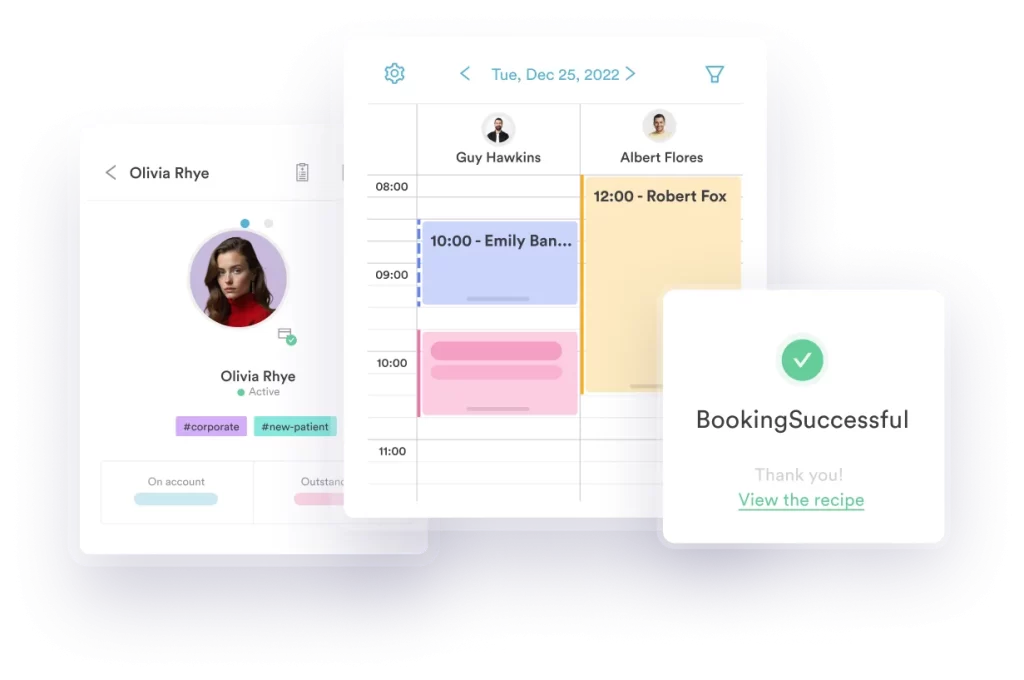
Overlooking convenient appointment options can easily push potential clients away from your practice. In today’s landscape, 89% of patients want the ability to schedule appointments online or via mobile tools, making digital scheduling pivotal for patient acquisition and patient retention.
One efficient option is to integrate medical software with flexible online bookings and a patient portal, so clients can book 24/7 and don’t have to sit in a call queue for ages.
Pabau’s all-in-one solution helps clients securely manage bookings and easily update, cancel, or reschedule them. Patients can opt to get online access to things like lab results and see their previous and upcoming visits, alongside all treatment information.
Clients can stay connected to healthcare organizations 24/7 and manage their bookings from one system.
Embracing flexible appointments is one of the best patient acquisition strategies. Without this convenience, 94% of respondents said they would be more likely to choose a new service provider that offered online booking options.
A subpar patient experience can easily tarnish your reputation and discourage potential patients. It risks negative reviews, reduced referrals, and a decline in patient loyalty.
Acquisition only pays off when those first visits become lasting relationships, so treating patient experience as part of the acquisition strategy, not an afterthought, protects that investment.
A poor experience can happen due to poor communication, a lack of online scheduling options, insecure patient data handling, incomplete intake forms, or limited payment options.
For a growing practice focused on patient acquisition, providing exceptional care is essential at every touchpoint in the patient journey — from the initial scheduling to their follow-ups. Consistent patient engagement across those touchpoints protects the investment you made to win the patient in the first place.
Asking for patient feedback can be valuable for addressing any issues and concerns. You’ll improve the overall patient experience, build trust, and foster a positive perception of your practice.
Attracting potential patients through email or social media is great, but without measuring your marketing efforts, you can’t pinpoint which channel brings in the most leads.
Think of patient acquisition metrics as a visual board for your efforts. To determine what works or doesn’t, you can track things like your email open rate on marketing campaigns, or track bookings that come from emails or social media engagement.
Regularly monitoring these metrics helps you identify areas for improvement and enhance your patient acquisition strategies. For instance, if you notice that leads briefly visit your website but don’t engage further, optimizing your homepage, content SEO, or loading speed can maintain their interest, serving relevant information at a glance.
Focus on conversion metrics like booked appointments, cost per booking, and your patient acquisition cost, rather than vanity traffic. Those numbers show which channels actually fill your calendar.
Using traditional methods for patient acquisition will only take you halfway there. In a world dominated by millennials and Gen Zs, embracing the latest marketing trends is essential to make your services resonate with prospects more personally.
Traditional approaches like ads and word of mouth hold value, but to attract new clientele, you must go beyond. Keeping up to date with the changing algorithms of social media, and partaking in the latest communication tools, e.g. TikTok or Threads, is essential.
You can enforce quality content marketing through videos and interactive content like polls and quizzes, e.g. “Which beauty treatment is best for your skin type? Take the quiz” to get that innovative edge that helps attract interested audiences.
Not every innovative approach resonates the same with every lead. So it’s crucial to test your options first. Tailoring your methods based on tested results will make for optimal engagement with your target audience. Even better, with automated software, you can automatically track and manage your acquisition success, leaving no good lead behind.

How does online booking help with patient acquisition? Online Booking Lets prospective patients book a first appointment themselves, 24/7, without waiting for a callback.
How can email and SMS campaigns bring in new patients? Email and SMS Campaigns Automates welcome messages, promotions, and reminders so new leads don’t go cold before their first visit.
Why do online reviews matter for winning new patients? Reviews Collects and showcases patient reviews so prospective patients see social proof before they book.
Patient acquisition works best when every step connects. For growing practices, that is easier to achieve with one system handling booking, marketing, and follow-up instead of five separate tools.
Pabau is all-in-one practice management software built to run that whole journey, including patient acquisition.
Reach leads through email, SMS, or targeted newsletters, and see which channels are actually working with patient feedback tools and marketing reports.
See how Pabau’s booking, marketing, and reporting tools work together to bring in new patients — book a demo to find out more.
Your website serves as the digital face of your practice and is often the first touchpoint for potential patients researching your services online. Since 75% of people judge a business's credibility based on web design, a well-organized, informative, and user-friendly website is essential to capture leads and convert them into patients before they turn to competitors.
Effective lead-generating websites should include visual call-to-actions like Book a free consultation, SEO-friendly content for better local ranking, treatment progress photos with patient consent, real-life images of your practice, and limited-time promotions. These elements work together to engage visitors, build trust, and encourage them to take the next step toward becoming patients.
The six key patient acquisition strategies are: using your website as a lead magnet, building a positive brand presence, reaching wider audiences through relevant outreach, setting up a referral program, using patient testimonials and reviews, and networking with other practices in your area. Implementing these strategies while avoiding common acquisition mistakes helps elevate your practice's visibility and attract new patients.
Referral programs are one of the six core patient acquisition strategies that encourage existing patients and partner practices to recommend your services to others. This approach leverages word-of-mouth and professional networks to bring new patients to your practice organically and cost-effectively.