Fertility clinic marketing: Strategies that attract & convert patients
Fertility clinic marketing is how a fertility practice attracts, educates, and c...

Last Updated: Oct 14, 2026

Patient retention strategies reduce churn and generate more revenue per visit than new patient acquisition alone
Automated recall and follow-up workflows are among the highest-ROI tools for bringing lapsed patients back
Personalized communication, loyalty programs, and frictionless scheduling address the top reasons patients leave a practice
Pabau’s automated workflows, recall tools, and patient portal help clinics build retention systems that run without manual effort
According to research from Bain & Company and Harvard Business Review, acquiring a new customer costs five to 25 times more than retaining an existing one. Healthcare follows the same pattern. Yet most practices spend the bulk of their marketing budget chasing new patients rather than protecting the ones they already have.
This guide covers the patient retention strategies that actually move the needle: from communication and scheduling to automation, loyalty programs, and the metrics worth tracking. Whether you run a private GP clinic, a dental practice, a med spa, or a multi-location aesthetics group, the principles of patient retention in healthcare are the same.
New patients cost money to attract. Long-term patients cost almost nothing to keep, yet they generate more revenue per visit, refer others, and are less price-sensitive over time. The math is straightforward: a patient who returns three times a year is worth more than three one-visit patients who each require their own acquisition spend.
There is also the trust factor. Research published on PubMed consistently shows that continuity of care improves patient adherence and clinical outcomes. Patients who see the same provider repeatedly are more likely to follow treatment plans, attend follow-up appointments, and act on preventive care advice.
For aesthetics and wellness clinics specifically, retention is the engine behind sustainable growth. Patient acquisition fills the diary in the short term. Retention fills it for years. Clinics that invest in improving patient engagement consistently outperform those that treat every visit as a transaction.
Before building retention tactics, it helps to understand why patients leave. The most common reasons behind patient attrition are not clinical.
Most of these are fixable with process changes and the right tools. The key is identifying which ones apply to your clinic using data, not assumptions.
Here are the patient retention strategies that consistently deliver results across private practices, aesthetic clinics, and wellness centers.
The single highest-ROI retention tool for most clinics is automated recall. When a patient’s next appointment interval arrives and they have not rebooked, a well-timed automated message brings a significant proportion back without any manual effort from your team.
This applies across specialties: a dental practice recalling patients for six-month cleanings, a physical therapy (physio) practice prompting patients who completed a treatment course, or a med spa reminding Botox clients when their maintenance window opens.
Dental patient retention strategies and aesthetics recall programs run on the same logic: trigger the message automatically instead of waiting for the patient to call. Clinic automations like these operate in the background, turning a passive patient list into an active revenue stream.
Pabau’s automated workflows let practices build recall and follow-up workflows triggered by treatment type, time since last visit, or custom conditions. Messages go out via SMS or email, and the system handles the whole sequence without manual intervention.
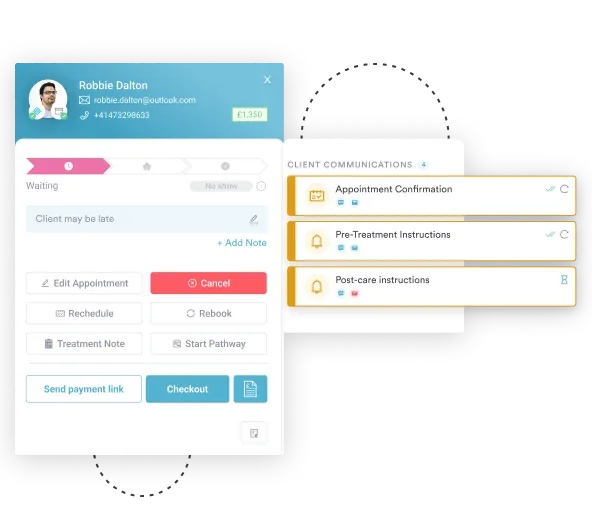
Every no-show is a lost appointment slot and a patient who did not receive care. Reducing no-show rates by even a few percentage points materially improves both revenue and retention, because patients who attend appointments are far more likely to rebook.
Automated appointment reminders (sent 48 hours and 24 hours before the appointment) reduce no-shows significantly, according to multiple peer-reviewed studies on reminder interventions. The channel matters: SMS open rates are substantially higher than email for appointment reminders. Appointment reminder messages work best when they include the date, time, and a one-tap confirmation or cancellation link.
Booking friction is a direct driver of patient loss. A 2024 Bain & Company survey found wait times, not cost, are patients’ biggest frustration with US healthcare, and more than 70% say they would seek care elsewhere rather than wait.
A patient who has to call during business hours, wait on hold, and explain what they need every time will eventually find a practice that lets them book in 90 seconds from their phone.
Pabau’s online booking allows patients to self-schedule 24/7, view real-time availability, and complete intake forms before they arrive. The process eliminates the front-desk bottleneck and makes the first touchpoint of every visit a positive one.
Offering telehealth or virtual consultations for follow-ups that do not need an in-person visit removes another barrier, especially for patients who would otherwise skip a check-in. For clinics on medical spa software, this is often one of the first patient retention wins teams notice after switching platforms.
Personalization in healthcare means showing patients that the practice knows them: their history, their preferences, their treatment goals, not running gimmicks. A follow-up message that references the specific treatment they had last visit lands differently than a generic “hope you are feeling well” email.
Structured patient care management and detailed records make this possible at scale. When practitioners have instant access to a patient’s full history, they can have more informed conversations, make appropriate recommendations, and demonstrate the continuity that builds long-term loyalty.
Pre- and post-care instructions sent automatically after each treatment are another personalization lever. When a patient receives tailored aftercare advice the same day as their appointment, it demonstrates clinical thoroughness and keeps the practice top of mind.
Loyalty mechanics work in healthcare for the same reason they work everywhere else: they give patients a structural reason to return. A well-designed membership program commits a patient to a regular visit cadence while also improving their perceived value of the practice.
For aesthetic and wellness clinics, tiered memberships that bundle treatments at a discount are a particularly effective retention tool. Patients on a monthly membership who receive a facial or massage every six weeks are far less likely to lapse than those on a pay-as-you-go basis.
Reducing membership churn is its own discipline, but the starting point is getting patients onto a structured program in the first place.
Pabau’s loyalty and memberships features allow clinics to create points-based reward systems and recurring membership packages directly within the platform. Patients see their points and benefits inside the client portal, which gives them an ongoing reason to engage.
Patients who only hear from a practice when they have an appointment perceive the relationship as transactional. Clinics that communicate value between visits, through educational content, seasonal treatment reminders, or check-in messages, maintain a higher baseline of patient engagement.
Staying in touch between visits is the heart of evidence-based patient engagement strategies, which keep patients connected between appointments.
This does not require a full content marketing operation. A monthly email newsletter highlighting new treatments, seasonal promotions, or staff updates keeps the practice visible without being pushy. HIPAA (in the US) and GDPR (in the UK and EU) both require that patient communications comply with consent and data handling obligations, so any marketing automation must be configured accordingly.
Pabau’s email and SMS campaigns tool integrates directly with patient records, so practices can segment their list by treatment type, last visit date, or spending history and send targeted messages rather than mass blasts. Covering the full patient journey with relevant touchpoints at each stage is what separates clinics with strong retention from those that rely on one-off visits. Replies to those campaigns land in one shared inbox, so a question between visits gets an answer the same day.
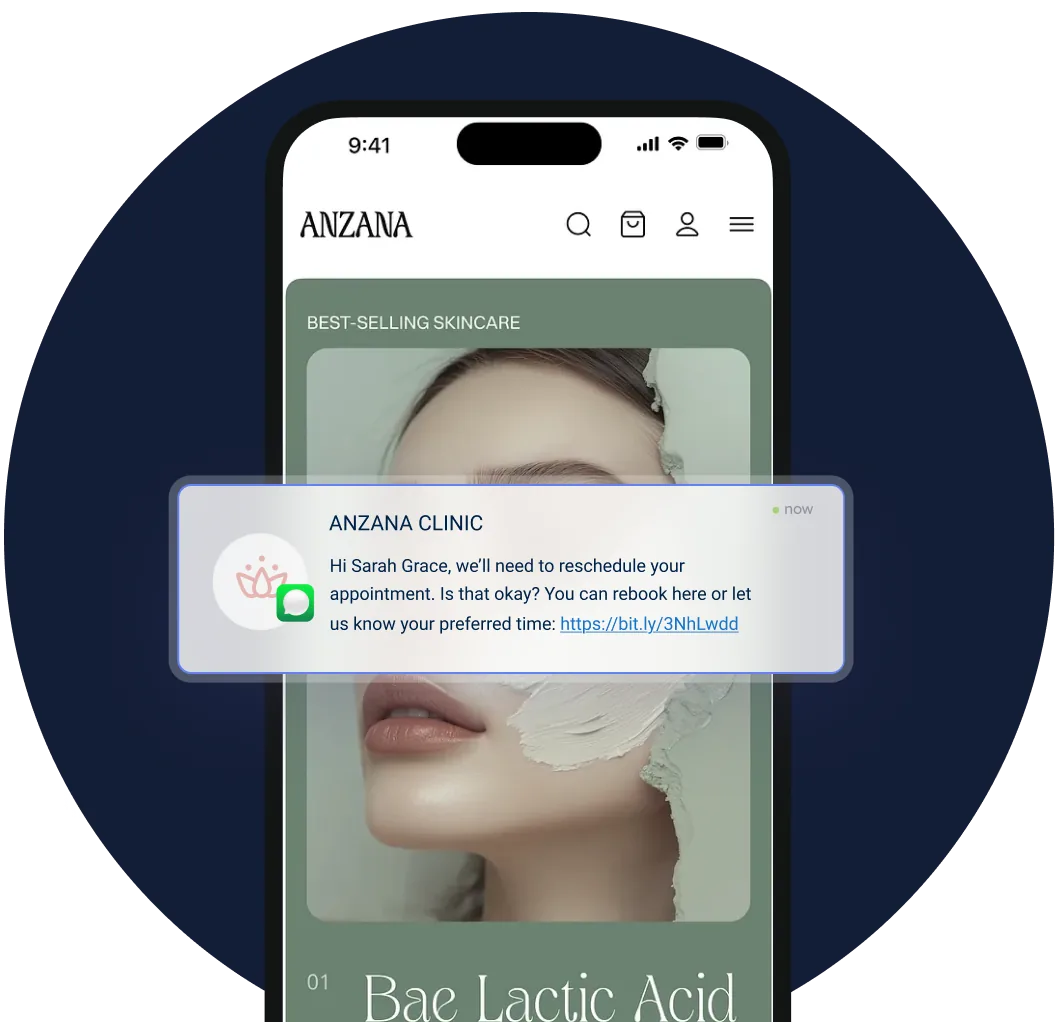
Feedback is both a retention strategy and a churn-prevention mechanism. Patients with unresolved concerns will not usually tell a practice directly. They will leave, and they may leave a public review on their way out.
A post-visit survey sent automatically within 24 hours of an appointment gives patients a private channel to raise concerns. When the practice responds quickly, the patient feels heard. That responsiveness is itself a retention driver. Collecting patient feedback systematically also surfaces recurring themes that no individual complaint would reveal.
Net Promoter Score (NPS) surveys are a useful benchmark for tracking satisfaction over time. A falling NPS trend typically precedes a churn spike by several months, giving practices the opportunity to investigate and intervene before patients start leaving. The fastest way to improve patient satisfaction is to close the loop on the concerns a survey surfaces, not just collect scores.

Automated recall, loyalty programs, online booking, and personalized messaging: everything in one platform so your team can focus on care, not chasing patients.

Patient retention rate is the percentage of patients who return to a practice within a defined period. The patient retention rate formula is:
Tracking these metrics monthly creates a baseline. When the no-show rate climbs or the retention rate drops, you have an early warning signal rather than discovering the problem when revenue is already falling. Measuring patient satisfaction alongside retention data gives a fuller picture of what is driving changes in patient behavior.
Run a cohort analysis quarterly: look at patients who first visited 12 months ago and count how many have returned at least once. That single number tells you more about the health of your practice than any marketing metric. Use it to benchmark the impact of any retention initiative you launch.
Not every lapsed patient is lost. Many have simply drifted, and a well-timed message from a practice they liked is enough to bring them back. Reactivation campaigns are among the most cost-efficient patient retention strategies available, because you are communicating with people who already know and trusted the practice.
A practical reactivation sequence looks like this:
Clinics using Pabau can build these reactivation sequences as automated workflows triggered by days-since-last-visit criteria, so the process runs continuously rather than requiring a manual campaign each time. Repeat bookings from existing patients are almost always cheaper to generate than new patient inquiries from paid advertising.
Every strategy on this list can be executed manually at small scale. The problem is that manual execution does not scale. When a practice grows from one practitioner to five, or from one location to three, manual follow-up becomes inconsistent and eventually stops happening.
Practice management software solves that problem. The right patient retention software handles recall, reminders, feedback collection, loyalty tracking, and communication from a single system, with rules that apply consistently to every patient regardless of which practitioner they see or how busy the front desk is.
For clinics comparing the best medical practice management software, the key capabilities to look for are:
Pabau combines all of these in one platform, built specifically for aesthetic, wellness, and private healthcare practices. Clinics on Pabau typically see their recall and reactivation workflows running automatically within weeks of setup, without requiring additional software or manual processes.
Most practices lose patients not through clinical failure but through friction, silence, and inattention. The patient retention strategies in this guide address each of those causes: automated recall brings back lapsed patients, smart reminders prevent no-shows, personalized communication makes every interaction feel deliberate, and loyalty programs give patients a structural reason to stay.
Pabau’s automated workflows, online booking, recall tools, and integrated loyalty features give clinics everything they need to build a retention system that runs without manual effort. If you want to see how it works for a practice like yours, book a demo and we will walk you through the setup.

What drives patients to leave a practice? Patient experience in healthcare explains how wait times, paperwork, and follow-up gaps shape whether patients return.
Are your client records audit-ready? Keep client records audit-ready shows how to log treatments, consents, reactions, and photos so any team member can continue care safely.
Tired of juggling separate reminder tools? Best patient communication software reviews platforms that unify reminders, intake forms, and follow-ups into one system.
Patient retention is the share of existing patients who keep returning to your practice for ongoing care rather than leaving after one or two visits. It is usually tracked as a retention rate over a set period, and a higher rate means more predictable revenue and stronger continuity of care.
Patient retention strategies are the systems, processes, and communications a practice uses to keep existing patients returning for ongoing care. They include automated recall, appointment reminders, personalized follow-up, loyalty programs, and proactive communication between visits.
The standard formula is: ((Patients at end of period minus new patients added) divided by patients at start of period) multiplied by 100. Track this monthly alongside no-show rate and NPS to get a full picture of retention health.
The most common reasons are poor communication between appointments, inconvenient scheduling, feeling like an anonymous number rather than a known patient, and unresolved concerns that were never given a feedback channel. Clinical dissatisfaction is less common than operational friction as a driver of patient loss.
Patient acquisition is the process of attracting new patients to a practice through marketing, referrals, and visibility. Patient retention is the process of keeping existing patients returning. Retention typically delivers a higher return on investment because existing patients require no acquisition cost and tend to increase their spend over time.
Practice management platforms automate the most labor-intensive retention tasks: recall sequences, appointment reminders, post-visit feedback surveys, and loyalty tracking. Automation ensures these touchpoints happen consistently for every patient, regardless of how busy the practice is, which is what makes technology a force multiplier for retention rather than just a convenience.
Private practices keep patients by removing everyday friction: automated recall when a visit is due, reminders that cut no-shows, self-service online booking, and personalized follow-up after each treatment. Consistency across every patient, not one-off effort, is what keeps the schedule full.