EHR ROI: How to calculate and maximize your return
EHR ROI is the financial return a practice earns on its electronic health record...

Last Updated: Oct 15, 2026

Patient communication directly affects safety: the Joint Commission identifies communication failure as a leading root cause of sentinel events in healthcare settings
Four core skills drive better outcomes: active listening, open-ended questions, plain language, and the teach-back method are evidence-based and teachable
Missing automation hurts retention: practices without automated reminders, portals, or recall workflows lose patients to simpler, faster competitors
Pabau’s automated messaging and client portal handle the operational communication layer so clinical teams can focus on the human layer
Practices that communicate well retain more patients, see fewer no-shows, and generate fewer clinical errors. Those that don’t lose patients quietly, to competitors who send a reminder text or follow-up email at the right moment. Patient communication is both a clinical skill and an operational system, and most practices treat it as neither.
Fixing this takes two things: clinical skills that build trust in the room, and an operational system that keeps patients engaged between visits. The right mix works whether you run a solo direct primary care practice or a multi-site medspa chain.
Patient communication is the exchange of information between a clinician or practice and the patients they serve. It covers clinical conversations (history-taking, explaining diagnoses, shared decision-making) and operational touchpoints (booking confirmations, pre-appointment instructions, post-visit follow-ups, recall messages). Terminology varies by specialty, and this client vs patient guide explains which term fits your practice.
The American Medical Association connects patient communication directly to patient safety outcomes. Poor communication contributes to misdiagnosis, missed follow-ups, and patients who simply stop engaging with care.
For practice owners and managers, the business case is equally clear. Patient satisfaction scores correlate strongly with communication quality. Recall and retention rates drop when patients feel uninformed or undervalued. And the cost of acquiring a new patient is significantly higher than retaining an existing one.
Communication does four jobs inside a practice:
Most clinicians want to communicate well, but the barriers they run into are structural, not personal. Naming each one is the first step toward fixing it.
Provider burnout deserves particular attention. When clinicians are running behind schedule, managing administrative backlog, and dealing with documentation after hours, the emotional bandwidth for active listening shrinks. Removing manual tasks from clinical workflows does more than save time. It directly improves the quality of human connection in the room.
Health literacy is the other underestimated factor. The Agency for Healthcare Research and Quality, or AHRQ, reviewed the research on this question. It found that patients with lower health literacy have more hospitalizations and weaker medication adherence.
They also make less use of preventive care, like cancer screening and flu vaccination. Practices that assume patient understanding without verifying it create silent compliance failures.
The evidence base for communication skills in healthcare is substantial. Four techniques consistently appear across clinical literature and have demonstrated impact on patient outcomes.
Active listening goes beyond hearing words. It involves maintaining eye contact, reflecting content back to the patient, asking clarifying questions, and resisting the urge to interrupt.
The American Academy of Family Physicians, or AAFP, links active listening directly to improved patient satisfaction scores and more accurate clinical information gathering.
Research on how AI scribes support patient care shows one practical benefit of documentation automation.
When clinicians are no longer mentally composing notes mid-consultation, listening quality improves measurably. The cognitive load of note-taking competes directly with active listening. Closer listening also helps you read a patient’s emotional state. This guide to types of moods shows what to look for.
Plain language means replacing medical terminology with everyday words. “You have hypertension” becomes “Your blood pressure is higher than it should be, which puts strain on your heart.” AHRQ endorses the teach-back method as one of the most effective, evidence-based strategies for confirming patient understanding. The same rule applies to assessment results, from bloodwork to Beery VMI scoring. Translate the numbers into what they mean for the patient day to day.
The teach-back method works in three steps:
The phrasing matters. “Does that make sense?” invites a nodded yes. “Can you tell me back what you’ll do?” surfaces what the patient missed. Better patient compliance with treatment instructions starts here: the patient who understands what to do, and why, is far more likely to do it.
Clinical communication is the human layer. But practices also need an operational layer: the system that handles confirmations, reminders, follow-ups, and recall without manual effort. This is where technology creates compounding value. Our guide to automated patient engagement maps out that layer end to end. Most of that layer runs through omnichannel patient engagement software, where every channel shares one inbox.
No-shows are a direct cost to the practice, and they interrupt a patient’s continuity of care. Studies suggest automated appointment reminders reduce no-show rates substantially.
The effect is strongest when reminders go out through the channel a patient prefers, SMS for most, email for others. Practices using email and SMS campaigns can build a multi-step reminder sequence:
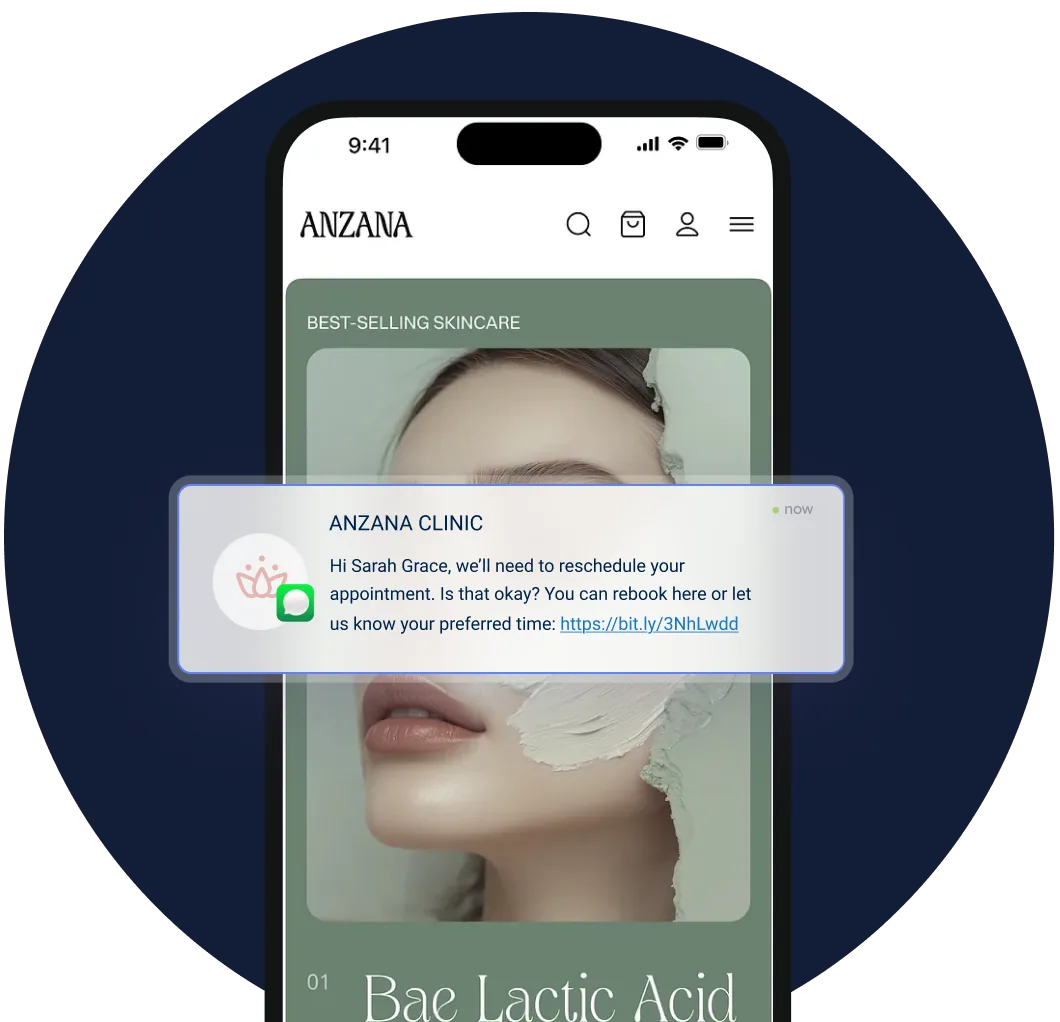
This matters most for a practice running hundreds of active patients. Automated recall turns retention into a system. Manual recall leaves it to luck. Repeat-visit models feel this first, whether that’s an HRT clinic running recurring reviews or a travel clinic working to fixed departure dates.
See appointment reminder message templates for tactical implementation guidance. If you’re weighing a generic email tool instead, our Pabau vs Mailchimp comparison covers client communication.
For coordination across the practice team, internal staff messaging ensures the right person is notified when a patient responds or cancels.
A client portal lets patients view their records, complete intake forms before arrival, access post-visit summaries, and message the practice securely. The reduction in phone volume alone justifies the investment for most mid-sized practices. Patients increasingly expect asynchronous access to their care team.
Adoption is the harder part. Portals only work if patients use them. A few things help:
For a deeper overview of what to look for, see patient portal software and benefits of patient portals. If your current system lacks these tools, this EHR migration guide walks through switching without losing patient data.
Telehealth adds another communication channel that many practices underuse, even though telemedicine software has become standard across most specialties.
For follow-ups, medication reviews, and patients with mobility constraints, telehealth software removes an access barrier and extends the practice’s reach without adding physical capacity.
Communication failure has consequences beyond frustration. The Joint Commission tracks this in its sentinel event data.
Communication breakdown consistently shows up as one of the top root causes of adverse events in healthcare. This includes handoff failures between providers, inadequate informed consent conversations, and instructions patients did not understand or receive.
The mechanism is straightforward. A patient who doesn’t understand discharge instructions is more likely to be readmitted.
Clinicians who don’t give patients space to voice concerns can miss a contraindication. And a practice that doesn’t confirm a patient understood post-procedure care carries both clinical risk and liability exposure.
Practice management software like Pabau automates this through pre- and post-care messaging. It sends treatment-specific aftercare instructions at the right moment, without relying on staff to remember. Sending it on schedule does more than save time. It also reduces clinical risk and shows the practice met its duty of care.
Run a brief audit: for your five most common treatments, does every patient automatically receive written aftercare instructions within 24 hours of their appointment? If not, a post-care automation workflow is the highest-impact communication improvement you can make this week.
You measure whether patient communication is working with five trackable metrics: no-show rate, patient satisfaction score, portal adoption, recall response rate, and complaint rate. Few practices track every one of them, which is why most communication investments go unmeasured.
Each of these metrics flags a different point where patient engagement can break down, from the first reminder text to the post-visit survey. The table below sets a benchmark for each one.
Practices should build tools for capturing patient feedback and measuring patient satisfaction into the post-visit workflow, rather than sending an ad-hoc survey occasionally. Consistent measurement creates the data you need. It shows whether a specific change (a new reminder sequence, a revised intake form, a new aftercare protocol) actually moves the numbers. If you want a dedicated tool for this, compare the leading patient satisfaction survey software options first. Appointment booking handled by phone alone caps how many appointments a practice can take in a day.
Applying patient communication improvements across a whole practice takes a structured approach that starts with how you schedule patients effectively in the first place. This checklist maps the key actions across the four phases of the patient journey.
Most practices run their communication through a patchwork of tools. A texting app handles reminders, a separate portal takes intake forms, and a shared inbox catches anything a patient sends after hours.
Each piece works fine on its own, but nobody owns the handoffs between them. Messages get missed when a staff member is out sick or the front desk is slammed.
Pabau brings reminders, portal messages, and recall notices into a single patient record. Any staff member can see the full conversation before picking up the phone, so nothing depends on one person remembering to check three different apps.
That matters most on a busy day. A front-desk staffer covering reception can glance at a patient’s file and know exactly what’s already gone out, what’s overdue, and what to say next.

Automated reminders, patient portals, recall workflows, and secure messaging, all connected in one system. Book a demo to see how Pabau handles the operational communication layer so your clinical team can focus on the human layer.

Communication failures are not random. They follow predictable patterns: rushed visits, unverified understanding, no-shows from skipped reminders, and patients who fall out of recall because no one tracked them. Practices that fix these patterns consistently outperform on retention, satisfaction, and clinical outcomes.
Fixing this doesn’t require a bigger team. It requires a system that handles the predictable parts of communication automatically. That frees staff to spend their time on the parts that need a human touch. Book a demo to see how Pabau’s automated messaging and patient portal support that shift for your practice.

Want to improve how your practice captures what patients think? Capturing patient feedback covers the methods and workflows that turn survey data into actionable insight.
Need software that unifies these touchpoints? Best patient communication software compares platforms that combine reminders, intake, and follow-ups into one system.
Looking for guidance on engaging patients between visits? Patient care management covers the strategies and tools that keep patients connected to their care plan.
Say it plainly and early, in a private room, rather than easing in with small talk. Pause so the patient can react, then answer their questions in plain language. Send a written follow-up, by portal or email, within 24 hours, so they have something to reference once the shock wears off.
Give them scripts for the calls that come up most, like rescheduling and billing questions, then have them practice out loud first. Review a few recorded calls each month and coach specific phrases, not general attitude. New hires should shadow an experienced staff member for at least a week before taking calls alone.
Patient communication is the exchange itself: a reminder text, a consult, a follow-up email. Engagement is the ongoing relationship those exchanges build over months and years. Good communication is what makes engagement possible. A practice can’t have one without the other.
You can outsource after-hours call triage to an answering service, and many practices do. Keep anything tied to clinical records inside your own system: aftercare instructions, recall messages, portal replies. That way the message and the patient’s file stay connected.
Review the core metrics, no-shows, satisfaction, portal adoption, every month, and do a deeper audit once a quarter. The quarterly audit is when you check message content itself: reminder wording, aftercare instructions, and front-desk scripts. Don’t just check whether messages went out on time.