List of vitamins: All 13 with RDAs and deficiency signs
A list of vitamins names the 13 essential vitamins the body needs from food or s...

12
Last Updated: Oct 8, 2026

A functional medicine intake form gathers detailed health history, lifestyle factors, and symptom patterns to identify root causes rather than treating isolated symptoms.
A thorough intake form should include patient demographics, medical history, current medications, family history, and a full body-system symptom review.
Splitting intake forms by gender improves screening accuracy by covering hormonal health, reproductive history, and sex-specific risk factors.
Digital functional medicine intake forms in practice management software like Pabau automate delivery, cut manual data entry, and sync responses into the patient record.
A general health-history intake form covering patient demographics, medical history, women’s health screening, medications, allergies, and family history. Includes a body-system symptom review covering energy, thyroid, weight, sleep, mood, and more. Ready to hand to new patients ahead of their first appointment.
Download templateAsk a new patient the wrong questions, and you miss the root cause of their symptoms. That’s the risk with a standard intake form in a functional medicine practice.
Standard forms ask about current symptoms and diagnoses. A functional medicine intake form goes further. It captures complete health history, medications, and family background, so you can trace patterns other forms miss. The template below gives you that structure, ready to customize for your practice.
A functional medicine intake form is a detailed questionnaire covering a patient’s health history, current symptoms, lifestyle patterns, and environmental exposures. It mirrors the Institute for Functional Medicine (IFM) Matrix.
The Matrix organizes clinical findings by body system, covering areas like digestion, energy production, and structural health, rather than a single diagnosis. IFM’s separate Timeline tool maps those same findings in chronological order instead.
Standard new-patient intake asks about diagnoses. A functional medicine form asks about causes instead, like recent diet, sleep, stress, and toxin exposure. That context uncovers the lifestyle and environmental drivers behind a health condition.
The downloadable template above is built around 19 sections, each covering a different part of a patient’s history and current health:
This template doesn’t include dedicated hormonal or gut-health questionnaires. Add custom sections if your practice needs deeper screening in either area. The customization tips below explain how.
The musculoskeletal section flags pain and stiffness but not day-to-day function. An upper limb functional assessment scores how well a patient manages everyday arm, shoulder, and hand tasks.
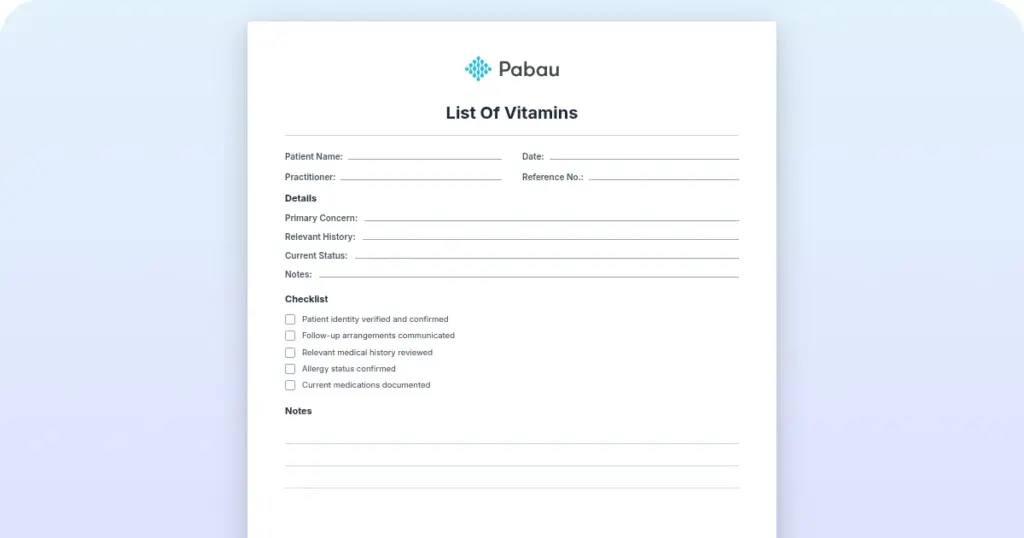
The supplements section asks which vitamins a patient takes but lists no names. Patients often leave over-the-counter vitamins off unless the form prompts them. A clinical vitamin list covers all 13 with adult RDAs, so supplement history comes back complete.
Yes, and many functional medicine practices now use separate forms for each.
Women’s forms lean on menstrual history, pregnancy and postpartum recovery, contraceptive use, menopause status, and hormone-related symptoms like mood and weight changes. Men’s forms lean on cardiovascular risk, metabolic markers, hormone balance, sexual function, and prostate health instead.
Root causes differ by sex, which is why the split matters.
A woman with fatigue often needs hormonal assessment, while a man with the same symptom may need cardiovascular and metabolic screening instead.
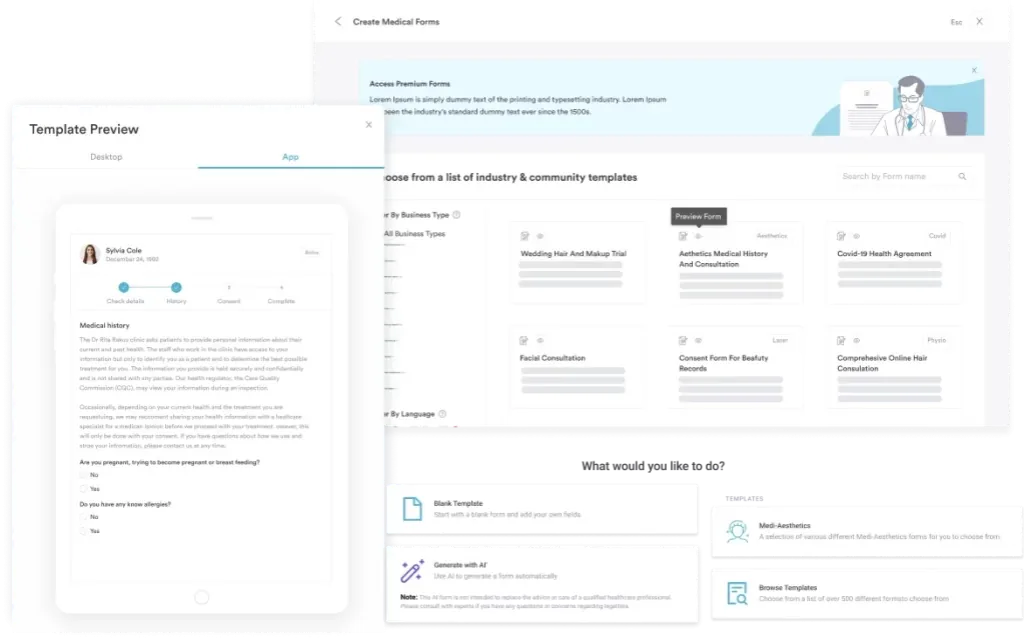
Digital forms sit at the center of practice management software, feeding records, billing, and follow-ups from one entry.
Once you’ve downloaded the template, roll it out in five steps:
The template above is a starting point. Every practice should adapt intake to match its own clinical model:
Paper intake creates administrative burden. Patients often fill it out incompletely in the waiting room. Staff then transcribe responses by hand into clinical notes, and the original form gets filed away, disconnected from the patient’s timeline. Digital intake removes that friction.
Deliver the form digitally through an online booking portal, and patients get it by email or app before their appointment. They complete it at their own pace, on their own device, with time to reflect on their history.
Responses flow directly into the patient record, with no transcription needed.
This shift also improves the quality of what you capture. Patients are more willing to disclose sensitive history on a private digital form. Think mental health, substance use, or sexual health, things they might not want to handwrite in a waiting room.
Digital intake also tends to raise completion rates and speed up turnaround compared with paper-only forms, though results vary by practice and patient population. Since responses auto-populate the patient timeline, you spend less time on admin and more time on the consultation itself.
Once the form is live, a few habits keep it clinically useful:
Most functional medicine practices still juggle paper intake, email attachments, and a separate patient record system. That means someone retypes answers by hand, and the original often never makes it past a filing cabinet.
Pabau’s forms replace that patchwork with one workflow. New patients get their functional medicine intake form through your online booking portal before their first visit, and every answer saves directly into their chart.
That keeps your intake, timeline, and clinical notes in one place. Staff spend less time chasing missing forms, and clinicians start the first consultation already knowing the patient’s history.

Pabau delivers your functional medicine intake form before the appointment and saves every response into the patient record. That keeps timeline data in one place, ready for the first consultation.

Get the intake form right, and the rest of the first visit runs smoother. Skip that step, and you’ll spend early visits reconstructing a history the form should already have given you.
Download the template, adapt it to your specialty, and move delivery online before your next new patient books in. That single change saves the most admin time and gives you the clearest possible read on a new patient before they sit down.
Book a demo to see how Pabau brings intake, timelines, and clinical notes together in one system.

Guiding patients on healthspan nutrition? Longevity diet plan combines plant-forward eating with intermittent fasting cycles to extend healthspan.
Trying to grow your patient base? Functional medicine marketing strategies covers SEO, email, and referral tactics that return the most for a practice.
Just starting a functional medicine practice? Starting a functional medicine practice walks through the administrative load behind a 90-minute intake and treatment protocol.
Also offering PRP therapy sessions? PRP consent template guides practitioners through the form structure and compliance requirements for PRP procedures.
Rethinking your practice’s revenue model? Functional medicine revenue frameworks explores business models built for long, relationship-heavy visits insurance rarely covers.
Standard forms ask about current diagnoses and medications. A functional medicine intake form maps your full health timeline, lifestyle, and environmental exposures to find root causes instead. Expect it to run three to five times longer than a standard form.
Integrative and functional medicine forms overlap closely, though integrative intake often leans more on complementary therapies like acupuncture or herbal medicine. Either works for functional practice, as long as it still covers full timeline, lifestyle, and environmental history.
No, a template only gives you structure. Compliance depends on the language and storage you add. Include a HIPAA notice in the US, a GDPR statement in the UK or EU, written consent, and secure storage. Have a compliance officer review your finished form if you’re unsure.
Most patients need 20 to 40 minutes on a first visit. Annual updates go faster, usually 10 to 15 minutes, since patients are only revising old answers. Sending the form digitally beforehand lets them finish it in stages, without feeling rushed.
The IFM’s Matrix organizes clinical findings by body system, not by date. Its separate Timeline tool is what maps symptoms and exposures in chronological order. An IFM-aligned intake form collects the history both tools need to work.