

HCPCS code E0198: Water pressure pad billing guide
HCPCS code E0198 is a water pad for a standard mattress HCPCS code E0198 is the ...

Last Updated: Oct 13, 2026
K0001 is the HCPCS Level II code for standard wheelchair.
Most K0001 denials come down to three failures: a missing modifier, a missing or invalid written order, or a non-qualifying diagnosis code. None of these are coding errors in the strict sense. Instead, they're documentation and workflow failures that surface after billers have already chosen the correct code.
Let Pabau's smart automation suggest the right codes, reduce claim denials, and keep your practice compliant—effortlessly.
Automate repetitive tasks and focus on what matters most—your patients.
Reduce coding errors and ensure compliance with the latest regulations.
Clean claims, fewer denials, and faster reimbursements.
Powerful insights and reporting to help your practice thrive.
HIPAA compliant SOC 2 certified GDPR-compliant Trusted by 4,000+ clinics worldwide

HCPCS Code K0001 is a Level II DMEPOS code for a standard wheelchair, not a CPT code, valid since January 1, 1994
Medicare requires documented mobility limitation and a face-to-face evaluation before K0001 can be billed
K0001 is billed RR (capped rental) with KH/KI/KJ stage modifiers for up to 13 months, not NU (outright purchase). Missing a modifier triggers automatic denial
Pabau’s claims management software tracks required HCPCS modifiers and supports DMEPOS billing workflows to reduce K0001 claim errors
HCPCS Code K0001 is a Level II Healthcare Common Procedure Coding System (HCPCS) code representing a standard wheelchair base. The Centers for Medicare and Medicaid Services (CMS) maintains it as part of the DMEPOS fee schedule. It differs from CPT codes, which the American Medical Association (AMA) maintains in a five-digit numeric format.
K0001 begins with the letter K, placing it firmly in HCPCS Level II. The code has been active since January 1, 1994, with no termination date. It falls under the Wheelchairs, Components, and Accessories category, and DME suppliers use it to bill Medicare Part B and most commercial payers for standard wheelchair supply. Practices billing in Australia use MBS item numbers for the wheelchair equivalent, following separate descriptor and eligibility criteria.
K0001 generally describes a manual wheelchair with fixed armrests, footrests, and a weight capacity up to about 250 pounds. Since classifications can change, verify exact product specifications against the current CMS DMEPOS Product Classification List (PCL), maintained by the PDAC contractor, before billing.
Medicare covers K0001 under the Durable Medical Equipment benefit (Medicare Part B, Section 1861(n) of the Social Security Act). Coverage isn’t automatic, though. A beneficiary must meet documented medical necessity requirements that the applicable Local Coverage Determination (LCD) for their Medicare Administrative Contractor (MAC) jurisdiction establishes.
The core requirement is a mobility limitation that seriously limits the beneficiary’s ability to perform one or more mobility-related activities of daily living (MRADLs) in the home. According to CMS policy, K0001 is appropriate for patients who need a standard wheelchair and don’t require a more specialized device.
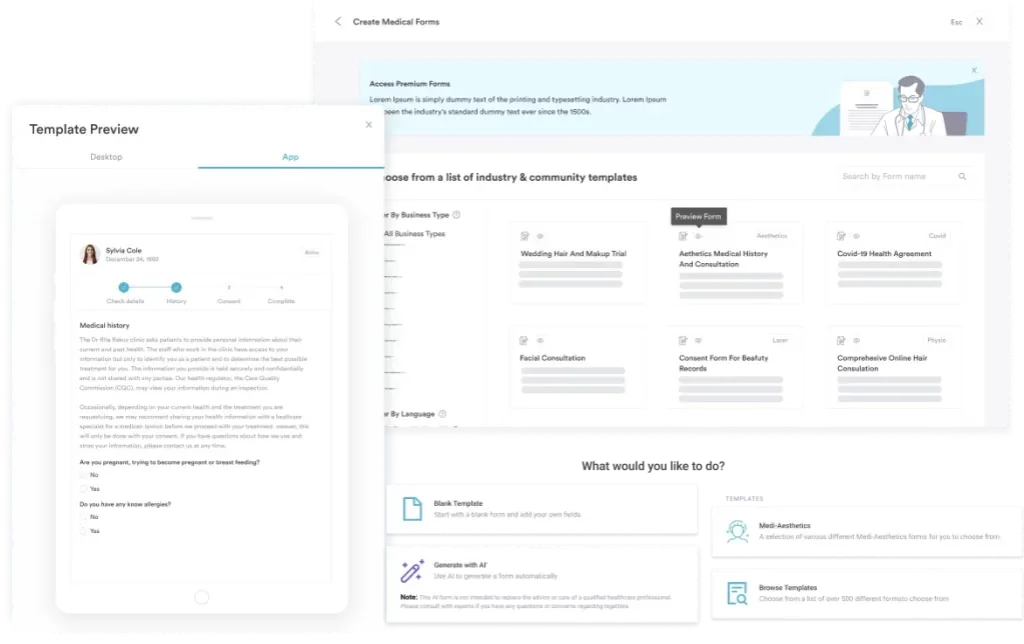
Before billing, confirm and document that the patient meets these coverage criteria. Keeping thorough medical forms at your healthcare practice supports this documentation process for every DMEPOS order.
Documentation has to name the underlying medical condition, not just the mobility limit. Nonunion after a femur fracture, coded S72.399N, is that level of detail.
Occupational therapy practices often lead these mobility evaluations. Keeping the face-to-face note, MRADL assessment.
Important: Coverage criteria may vary by MAC jurisdiction, so always check the applicable LCD for your region. No diagnosis code automatically guarantees coverage, and clinicians must establish medical necessity for each patient. See the HIPAA compliance requirements that govern how practices must store and protect this documentation.
Incomplete documentation is the leading cause of K0001 claim denials. CMS and MACs require a specific set of documents on file before submission, and collecting these upfront prevents post-payment audits and repayment demands. CMS spells out these expectations in its own DMEPOS order and documentation requirements.
Laterality is the detail most often missing. A right-femur code like S72.421N cannot be supported by a note that never says which leg.
Switching to digital forms for SWO collection reduces the risk of missing signatures, illegible handwriting, and lost paperwork that trigger denials. Strong patient data security practices also apply to all DMEPOS documentation under HIPAA.
A patient management system reminds you when issued equipment is due for review, replacement, or return.
DMEPOS claims for K0001 require specific transaction modifiers on every submission, and omitting them results in automatic claim rejection. Because K0001 is a Medicare capped-rental item, the modifier signals the rental stage or whether the equipment supplied is used.
Purchase vs. rental: K0001 is a Medicare capped-rental item. Suppliers bill it RR from the first month, adding the KH, KI, or KJ modifier to mark the rental month, for up to 13 months of continuous use. At the end of the capped-rental period, title transfers to the beneficiary and billing stops.
NU (outright purchase) isn’t a standard Medicare billing option for K0001. Billing NU instead of RR, or failing to transfer title at the 13-month mark, creates compliance exposure.
Suppliers submit claims on the CMS-1500 claim form, or its electronic equivalent, the 837P transaction. K0001 goes in the procedure code field with the appropriate modifier attached, and DMEPOS claims route to your MAC, not to a carrier.
The diagnosis pointer on that claim line carries its own rules. S72.434S, for instance, reports a late effect rather than the active fracture encounter.
Run a pre-submission modifier audit before batching K0001 claims. Filter your unbilled DMEPOS claims for any K0001 line missing a transaction modifier (RR plus a rental-stage modifier, or UE for used equipment). A missing modifier guarantees rejection, and catching it before submission takes seconds compared to days spent fixing it after a denial.
CMS sets Medicare reimbursement for K0001 annually through the DMEPOS fee schedule, and rates vary by geographic location and whether the item sits in a Competitive Bidding Area (CBA). The figures below are national average estimates for 2026, so always verify current rates using CMS’s official DMEPOS fee schedule files before submitting claims.
Competitive Bidding Areas (CBAs): However, the contract-supplier-only rule isn’t currently in force. CMS has kept the DMEPOS Competitive Bidding Program in a gap period since January 1, 2024, when all Round 2021 contracts expired, and the next round won’t start before January 1, 2028.
During this gap, any Medicare-enrolled supplier can furnish and bill K0001 in former CBA zip codes. Former CBA pricing still applies and adjusts annually, so confirm current status directly with CMS before assuming a contract is required.
Location matters a lot too, since urban areas in high-cost states typically have higher allowables than rural areas. The national average figures above are estimates from third-party aggregators, so verify them against CMS’s official DMEPOS fee schedule before using them in billing decisions.

Pabau’s claims management software supports HCPCS billing workflows, modifier tracking, and documentation requirements so your team spends less time on rework and more time on patient care.

Every K0001 claim must include a supporting ICD-10 diagnosis code that justifies medical necessity. The ICD-10 code alone doesn’t guarantee coverage, but submitting a code that doesn’t support mobility limitation will trigger denial. For physical therapy and rehabilitation practices handling physical therapy EMR workflows, pairing the correct diagnosis with the correct DMEPOS code is critical for clean claims.
These codes are examples of clinically plausible pairings, drawn from crosswalk data in coding references. Verify each combination against the current LCD diagnosis code list your MAC issues before billing. S72.361Q is one worth confirming before it goes on a K0001 line.
Complication diagnoses can also appear on these claims. Fracture site and displacement status both live in the code, as S72.436N shows.
Selecting the wrong wheelchair base code is a common billing error. K0001 through K0004 cover manual wheelchair bases that get more specialized as the code number increases. Using K0001 for a patient who clinically requires a K0003 or K0004 is both a coding error and a potential compliance issue.
The same risk applies to procedure coding more broadly. For example. The comparison below helps billers and prescribing practitioners select the correct code based on patient need.
Each accessory billed with K0001 needs its own HCPCS code and must meet its own coverage criteria. None can be bundled into the K0001 base code allowable.
ROHO and similar air-cell cushions are skin-protection products, not positioning cushions. Suppliers generally bill them under E2603 or E2604. They don’t belong under the plain positioning codes E2605/E2606, so always bill accessories on separate claim lines with their own modifier and supporting diagnosis.
Copying one diagnosis across every accessory line is the shortcut that draws review. Where the chart documents an epiphyseal femur fracture, S72.446E goes on the line it supports.
K0001 denials follow predictable, avoidable patterns once you know where to check before submission.
Cross-check code-level billing rules against your MAC’s published guidance, and confirm any K-series wheelchair specifics with your jurisdiction’s coding bulletins before submission.
Build a K0001 pre-submission checklist: transaction modifier present, KX attached if criteria met, SWO on file, face-to-face note within six months, ICD-10 code on LCD-approved list, prior auth confirmed if required. Run every claim through this checklist before batch submission to cut first-pass denial rates.
Manual DMEPOS billing workflows create risk at every step. Modifier fields can sit blank, staff may not track written orders to confirm they’re on file, and ICD-10 crosswalk validation happens at the biller’s discretion.
For DME suppliers and multi-location practices handling K0001 alongside dozens of other DMEPOS codes .
Practice management software like Pabau brings claims management into the same system as structured claim preparation, modifier tracking, and documentation checklists. The features that matter most for DMEPOS billing include automated claim validation, required-field enforcement before submission, and audit trail documentation for SWO and supporting clinical records.
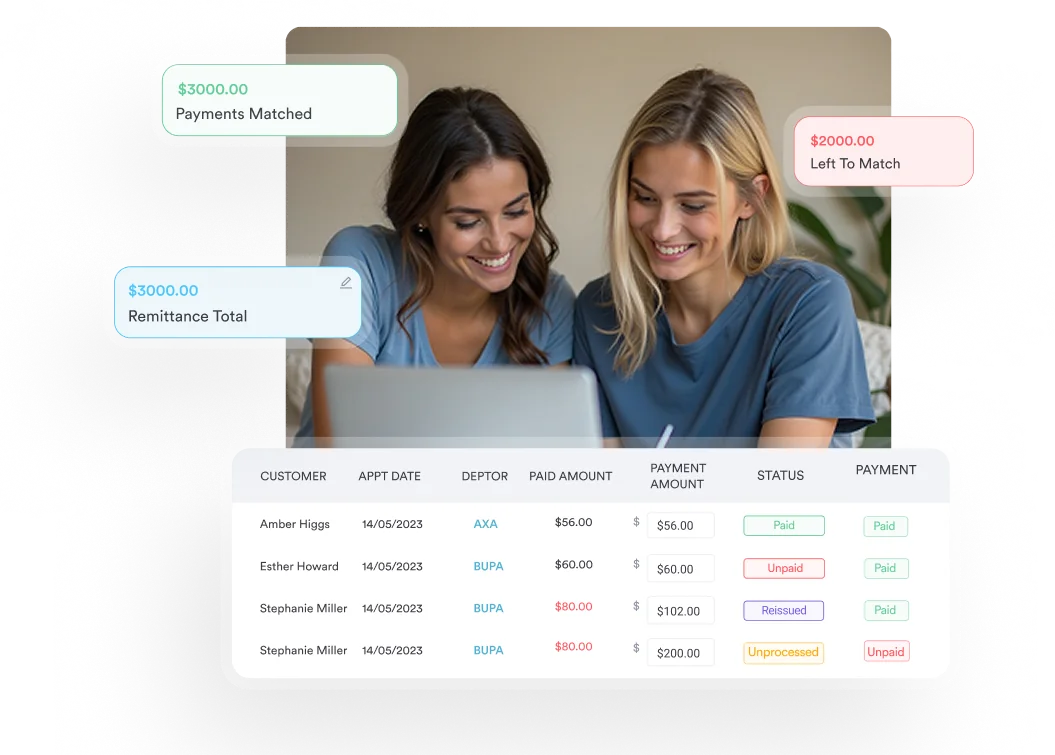
Integrating your billing workflow with an EHR integration layer means the face-to-face evaluation note, written order, and claim line populate from a single patient record. That eliminates the manual re-entry that introduces missing modifier errors in the first place. The practice management approach for DMEPOS-heavy practices reduces time on rework and increases first-pass claim acceptance rates.
K0001 denials come down to missing documentation and missing modifiers, both fixable with the right workflow. The code itself is straightforward. The compliance exposure comes from the surrounding paperwork.
Pabau’s claims management software brings modifier tracking, SWO documentation, and DMEPOS billing workflows into a single platform, so your team catches errors before claims leave the building. To see how Pabau handles HCPCS billing documentation end to end, book a demo.

Billing for outpatient detox services alongside DME? H0014 follows its own daily-rate and documentation rules, separate from DMEPOS claims.
Administering injectable corticosteroids in the same visit? J3300 carries its own dosage-based billing units, so keep it on a separate claim line from equipment codes.
Billing outside the standard CPT and HCPCS sets? 0080S shows how state-specific code sets follow their own submission rules.
Coding anesthesia for a nerve block instead of equipment? 01991 uses time-based anesthesia billing rules that don’t overlap with DMEPOS modifiers.
HCPCS Code K0001 is the billing code for a standard wheelchair, used by DME suppliers and HME providers when billing Medicare Part B and commercial payers for wheelchair supply to patients with documented mobility limitations. It is a HCPCS Level II DMEPOS code, active since January 1, 1994.
K0001 is a HCPCS Level II code, not a CPT code. CPT codes are maintained by the American Medical Association, consist of five numeric digits, and describe physician procedures and services. HCPCS Level II codes begin with a letter (A through V) and cover supplies, equipment, and services not described by CPT, including DME items like wheelchairs.
Every K0001 claim requires a transaction modifier. Because K0001 is a Medicare capped-rental item, suppliers bill RR plus a KH, KI, or KJ modifier to mark the rental month, for up to 13 months; UE applies when supplying used equipment. NU (outright purchase) is not a standard Medicare billing option for K0001. The KX modifier is also required when all coverage criteria and documentation are on file, and GA applies when an Advance Beneficiary Notice has been issued because coverage may be denied. Missing any required modifier triggers automatic claim rejection.
Required documentation includes a face-to-face clinical evaluation by the treating practitioner (within six months of the order date), a Standard Written Order (SWO) signed by the prescribing practitioner with the specific HCPCS code and quantity, and supporting clinical records documenting the mobility limitation. The SWO replaced the Certificate of Medical Necessity (CMN); CMS eliminated CMN requirements for wheelchairs in 2005 and phased out remaining CMN/DIF forms system-wide for dates of service on or after January 1, 2023. Missing any required document is sufficient grounds for denial or post-payment audit recoupment.
K0001 covers a standard wheelchair with fixed armrests and footrests, designed for patients who need basic mobility assistance. K0002 covers a standard hemi wheelchair with a lower seat height, designed for patients who propel the chair with one foot, typically post-stroke hemiplegia patients. Using K0001 when the patient clinically requires K0002 is a coding error and a compliance risk. The prescribing evaluation should clearly identify which base code applies.
Yes, Medicare Part B covers K0001 when medical necessity is documented. The beneficiary must have a mobility limitation that significantly impairs their ability to perform mobility-related activities of daily living in the home, the treating practitioner must complete a face-to-face evaluation, and the standard wheelchair must be the appropriate level of equipment for the patient’s condition. Coverage in former Competitive Bidding Areas currently does not require a contract supplier: CMS has kept the program in a gap period since January 1, 2024, with no new round expected before January 1, 2028, though former CBA pricing still applies.



