

HCPCS code E0198: Water pressure pad billing guide
HCPCS code E0198 is a water pad for a standard mattress HCPCS code E0198 is the ...

Last Updated: Oct 13, 2026
A4356 is the HCPCS Level II code for external urethral clamp or compression device (not to be used for catheter clamp), each.
Urology practices and DME suppliers routinely face denials on external urethral clamp claims because of one preventable mistake: submitting A4356 without airtight documentation of medical necessity under HIPAA-compliant clinical record standards. LCD L33803 sets narrow coverage criteria, and DME MACs apply them strictly.
The LCD also routes the claim by permanence: a permanent SUI diagnosis, the typical post-prostatectomy case, bills to the DME MAC, while a temporary condition bills incident-to the treating practitioner's service under Part B. A missing physician order or an unsupported ICD-10 code is enough to trigger a denial or a compliance audit.
Let Pabau's smart automation suggest the right codes, reduce claim denials, and keep your practice compliant—effortlessly.
Automate repetitive tasks and focus on what matters most—your patients.
Reduce coding errors and ensure compliance with the latest regulations.
Clean claims, fewer denials, and faster reimbursements.
Powerful insights and reporting to help your practice thrive.
HIPAA compliant SOC 2 certified GDPR-compliant Trusted by 4,000+ clinics worldwide

HCPCS code A4356 covers an external urethral clamp or compression device (each unit) – it is explicitly NOT for catheter clamps, a critical billing distinction.
A4356 routes by permanence under LCD L33803: a permanent SUI diagnosis bills to the DME MAC, while a temporary condition bills incident-to the practitioner’s service under Part B.
N39.3 (stress incontinence, female and male) is the primary ICD-10 code for A4356, paired with a post-prostatectomy history code such as Z85.46 for the most common indication.
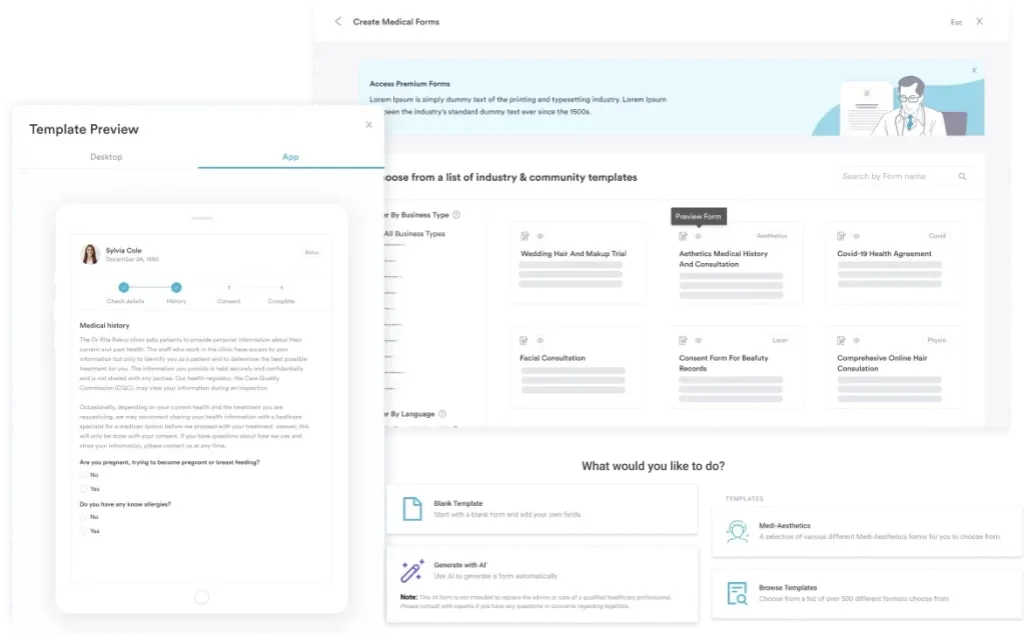
Structured digital records – intake forms and treatment notes like those in practice management software like Pabau – keep the physician order, diagnosis, and medical-necessity narrative together and audit-ready for A4356 claims.
A4356 describes a single unit of an external urethral clamp or compression device. The official CMS descriptor reads: External urethral clamp or compression device (not to be used for catheter clamp), each. That parenthetical is not incidental – it is a billing boundary. Submitting A4356 for a catheter clamp is a coding error with compliance implications, and it appears on DME MAC claim audits regularly.
The code falls under the Durable Medical Equipment (DME) supply category. A permanent SUI diagnosis routes the claim to the patient’s DME MAC by jurisdiction; a temporary condition instead bills incident-to the treating practitioner’s service under Part B. Getting that routing wrong for the diagnosis on file is a common denial trigger.
The Cunningham penile clamp, the most commonly dispensed device under this code, is explicitly confirmed as A4356 by the AAPC Urology Coding Alert.
The table below captures the key administrative metadata billers need before submitting a claim.
External urethral clamps are indicated primarily for male patients with stress urinary incontinence (SUI). The most common clinical scenario is post-prostatectomy incontinence: men who experience leakage following radical prostatectomy often use a penile clamp as a conservative, non-surgical continence management option while awaiting recovery or considering further intervention.
Per standard clinical documentation practice, the treating physician must confirm the diagnosis in the medical record before dispensing. LCD L33803 lists the covered indications. Billers should confirm the patient’s documented diagnosis matches a covered ICD-10 code before submitting.
A4356 is primarily a male-patient code. Female external urethral devices are typically coded differently. Always verify the specific device and patient sex align with the covered indications under L33803 before submitting.
Patients who also need absorbent backup protection may use an incontinence garment billed under A4520 or an adult brief billed under T4524.
Catheter-dependent patients billed under the same LCD may also need an irrigation syringe billed under A4322.
The best medical practice management systems tie supply usage to invoices, so dressing changes stop being free.
Coverage for A4356 is governed by Local Coverage Determination L33803 (Urological Supplies), issued by the DME MACs. This LCD defines which diagnoses qualify, what quantity limits apply, and what documentation the supplier must maintain.
Medical necessity is the cornerstone of coverage. The patient must have a documented diagnosis of stress urinary incontinence that is supported by a physician order. The LCD’s coverage indications include both conservative management of SUI and post-prostatectomy incontinence where the treating physician has determined a compression device is appropriate.
Practices that capture the physician order, diagnosis.
Every A4356 claim requires a supporting ICD-10 diagnosis code that establishes medical necessity under L33803. The table below lists the primary codes accepted by DME MACs. Verify the current LCD version at the CMS HCPCS resources page before submission, as coverage criteria can be revised.
Post-prostatectomy incontinence claims should pair N39.3, the primary stress incontinence diagnosis, with the relevant prostate history code such as Z85.46. Use N39.41, N39.42, or N39.498 only when the documented incontinence type is not stress incontinence.
Single-code claims without a documented incontinence diagnosis are routinely denied. Use structured patient records to ensure the diagnosis is captured at the point of care and flows accurately to the claim.
A4356 reimbursement is set through the Medicare DMEPOS fee schedule, not the Physician Fee Schedule, since A4356 is a supply code with no assigned RVUs. Rates vary by DME MAC jurisdiction and update annually. The figures below reflect 2025 estimates; verify current amounts using the CMS DMEPOS fee schedule file or the PDAC’s DMECS pricing tool at pdac.dmecs.net before billing.
The pricing indicator code assigned to A4356 determines whether the fee is set by fee schedule or by other pricing methodology. Because DME fee schedule rates update each calendar year and vary by locality, pulling the current rate directly from CMS is the only way to ensure accurate billing. Never hardcode a dollar amount in your billing system without confirming the current fee file.
Download the CMS DME fee schedule files annually from CMS.gov at the start of each calendar year. Update your billing system rates for A4356 before processing January claims. Rate discrepancies caught post-submission require corrected claim resubmission and delay reimbursement cycles.
Missing documentation is the leading cause of A4356 denials. LCD L33803 specifies what must be on file before and at the time of claim submission. Urology practices that maintain these records in a structured clinical system reduce denial rates significantly. For guidance on keeping records HIPAA-compliant, follow current HHS guidance.
Practices that capture clinical encounter notes digitally have a natural advantage here. When the physician order, diagnosis, and medical necessity narrative live in the same digital documentation system, the paper trail required by DME MACs is already assembled. Manual documentation workflows, by contrast, are far more likely to be missing a signed order or an unlinked diagnosis when an auditor asks for one.
LCD L33803 imposes quantity limitations on A4356. Submitting claims above these limits without an Advance Beneficiary Notice (ABN) constitutes a compliance violation and exposes the supplier to recoupment risk.
LCD L33803 covers one external urethral clamp or compression device (A4356) every 3 months, or sooner if the rubber or foam casing deteriorates before then. When a patient’s clinical need exceeds this limit, the treating physician must document medical necessity for the additional units.
The A4356 submission workflow has several steps that differ from standard Part B claims. Getting the routing and form right prevents denials at the front end. Use billing-specific practice management features to reduce manual submission errors.

Pabau keeps the physician order, diagnosis, and medical-necessity narrative together in one digital record, so your A4356 documentation is always audit-ready. Fewer denials, less rework, more revenue captured.

Most A4356 denials trace back to a short list of recurring errors. Identifying these early prevents them from becoming patterns in your billing workflow. The billing errors below are the ones DME MACs flag most often.
Billers working with urological supplies often encounter adjacent HCPCS codes. Choosing the wrong one creates a claim that doesn’t match the dispensed device. Use the AAPC HCPCS lookup tool to verify descriptions before building your charge master.
Medicare coverage under LCD L33803 is the most clearly defined pathway for A4356. Commercial and Medicaid coverage is considerably less consistent, and few coding references cover it in detail.
Commercial insurers: Coverage policies for A4356 vary by plan. Some commercial insurers follow Medicare’s LCD L33803 criteria directly; others impose stricter quantity limits or require prior authorization. Always verify coverage before dispensing by calling the payer’s provider services line and requesting the specific policy for urological supply codes. Document the verification call date and representative name.
Medicaid: State Medicaid programs set their own DME policies. Colorado’s Health Care Policy and Financing (HCPF) program, for example, maintains its own HCPCS-coded DME coverage list. Coverage and quantity limits for A4356 under Medicaid may differ from Medicare, and some states require a prior authorization for any urological supply. Check your state Medicaid DME fee schedule directly. Urology practices serving Medicaid patients benefit from compliance management tools that flag payer-specific requirements at the point of care. Diagnosis pointers on the claim form link each service line to the diagnosis that justifies it.
For multi-state practices or men’s health clinics serving patients across jurisdictions, maintaining a payer-specific coverage matrix for A4356 prevents billing errors before they occur. The matrix should document each payer’s coverage status, quantity limits, and prior authorization requirements, updated at least annually. Reference the PGM Billing lookup tool for baseline payer data.
Denials on A4356 claims are almost always preventable. The “not for catheter clamp” distinction, DME MAC routing, and LCD L33803 documentation requirements cover 90% of the issues practices encounter. Get those three right and the claim clears.
Pabau’s practice management platform keeps the physician order, diagnosis, and medical-necessity narrative together in one digital record, so the audit trail LCD L33803 requires is built at the point of care, not assembled after a denial. To see how Pabau supports billing documentation workflows for urology and men’s health practices, book a demo.

Also dispensing absorbent incontinence supplies? A4520 covers billing for incontinence garments dispensed alongside a urethral clamp.
Need the code for larger disposable briefs? T4524 explains billing for extra-large adult incontinence briefs.
Also billing catheter irrigation supplies? A4322 covers the irrigation syringe billed under the same urological supplies LCD.
Looking for the miscellaneous incontinence supply code? A4335 covers incontinence items that don’t fit a more specific HCPCS code.
HCPCS code A4356 is a Level II supply code describing an external urethral clamp or compression device, billed per each unit, and explicitly not for use with catheter clamps. It falls under the DME supply category and is governed by LCD L33803, which routes the claim to the DME MAC for a permanent SUI diagnosis or to Part B, incident-to the practitioner’s service, for a temporary condition.
The primary ICD-10 code supporting A4356 medical necessity is N39.3 (stress incontinence, female and male), which covers the typical post-prostatectomy indication when paired with a prostate history code such as Z85.46. N39.41 (urge incontinence), N39.42 (incontinence without sensory awareness), and N39.498 (other specified urinary incontinence) apply only when the documented incontinence type is not stress incontinence. Always verify against the current version of LCD Policy Article A52521.
No. The official CMS descriptor explicitly states “not to be used for catheter clamp.” Billing A4356 for a catheter clamp is a coding error with compliance implications and will result in a claim denial or audit finding if identified by the DME MAC.
Yes. Post-prostatectomy stress urinary incontinence is one of the primary covered indications under LCD L33803. The treating physician must document the incontinence diagnosis and the clinical rationale for a compression device, and the claim must include the appropriate ICD-10 code pairing alongside the prostate history or surgical complication code.
LCD L33803 covers one external urethral clamp or compression device (A4356) every 3 months, or sooner if the rubber or foam casing deteriorates before then. Dispensing above that limit without a valid Advance Beneficiary Notice (ABN) on file creates financial liability for the supplier if Medicare denies the overage.
Commercial insurance coverage for A4356 varies significantly by plan. Some plans mirror Medicare’s LCD L33803 criteria; others impose stricter quantity limits or require prior authorization. Medicaid coverage differs by state. Always verify the specific payer’s DME supply policy before dispensing, and document the verification in the patient file.



