

HCPCS code E0198: Water pressure pad billing guide
HCPCS code E0198 is a water pad for a standard mattress HCPCS code E0198 is the ...

Last Updated: Oct 13, 2026
A4520 is the HCPCS Level II code for incontinence garment, any type, (e.g., brief, diaper), each.
Incontinence supply claims are among the most frequently audited DMEPOS categories. The difference between a clean claim and a denial with another payer often comes down to one missing element: a signed, dated physician order that states medical necessity.
Let Pabau's smart automation suggest the right codes, reduce claim denials, and keep your practice compliant—effortlessly.
Automate repetitive tasks and focus on what matters most—your patients.
Reduce coding errors and ensure compliance with the latest regulations.
Clean claims, fewer denials, and faster reimbursements.
Powerful insights and reporting to help your practice thrive.
HIPAA compliant SOC 2 certified GDPR-compliant Trusted by 4,000+ clinics worldwide

HCPCS code A4520 is a Level II HCPCS code for incontinence garments (briefs, diapers) billed per each unit
Original Medicare statutorily excludes A4520 as a non-covered personal comfort item, with no LCD medical-necessity pathway to Part B payment
Coverage instead comes from state Medicaid programs, Medicare Advantage supplemental benefits, or commercial payers, each requiring a written physician order and documented medical necessity
Practice management software like Pabau can help practices organize the physician orders, intake forms, and patient records that support an A4520 claim
HCPCS code A4520 describes an incontinence garment of any type, for example a brief or diaper, billed per each unit. It is a Level II HCPCS code maintained by the Centers for Medicare and Medicaid Services (CMS) under Section A: Medical and Surgical Supplies.
Suppliers use it to bill state Medicaid programs, Medicare Advantage plans, and commercial payers for disposable or reusable incontinence garments dispensed to beneficiaries with documented urinary or fecal incontinence. Original Medicare does not pay this code (see the coverage section below).
The “any type” language in A4520 is intentional. It covers both disposable briefs and reusable garments, provided the item meets the product definition for an incontinence garment. Underpads and protective bedding are coded separately (see related codes below).
Original Medicare does not cover HCPCS code A4520. CMS’s Bowel Management Devices Local Coverage Determination (L36267) and its accompanying Policy Article state plainly that incontinence garments (briefs, diapers) coded A4520 “will be denied as statutorily non-covered, no benefit.” The same exclusion applies to the underpad codes A4553 and A4554.
Medicare.gov confirms that incontinence supplies and adult diapers are not a covered benefit. They’re classified as personal comfort and hygiene items, not durable medical equipment, so they fail the Medicare benefit-category test before medical necessity is even considered. There’s no MAC LCD medical-necessity pathway that gets A4520 to Medicare Part B payment, and no amount of documentation changes that outcome.
A4520 is not the only supply code excluded this way. Medicare treats full-length surgical stockings under A4510 as statutorily non-covered, so no written order or diagnosis makes the claim payable.
Coverage for A4520 comes from other payers instead. The three realistic reimbursement pathways are:
Even though Original Medicare won’t pay the claim, documentation still matters for every other payer. Baseline requirements that apply across state Medicaid programs, Medicare Advantage supplemental benefits, and commercial plans include:
Practices and suppliers managing incontinence supply programs for patients receiving care at physical therapy or pelvic health practices should confirm the specific state Medicaid program’s, Medicare Advantage plan’s, or commercial payer’s current coverage policy before billing. These policies are payer-specific and updated periodically.
Only DMEPOS suppliers enrolled with the applicable payer, whether that’s a state Medicaid program, a Medicare Advantage plan’s supplier network, or a commercial payer, may bill A4520. Because Original Medicare statutorily excludes this code, DMEPOS enrollment alone does not create a path to payment. Suppliers need enrollment or network participation with the payer that will reimburse the claim.
Physicians who prescribe incontinence garments but are not enrolled as DMEPOS suppliers cannot bill this code directly. The enrolled supplier bills A4520, and the prescribing clinician provides the written order and medical necessity documentation.
CMS still publishes a DMEPOS fee schedule amount for A4520 and updates it annually, but that published figure is a reference amount, not a Medicare payment. Original Medicare excludes A4520 from coverage entirely (see the coverage section above).
Many state Medicaid programs and Medicare Advantage plans set their own reimbursement rates for A4520, and some peg them to the published CMS fee schedule amount as a benchmark. The figures below reflect 2026 fee schedule data as published. Verify the actual payable rate against the specific state Medicaid, Medicare Advantage, or commercial payer’s fee schedule before submitting claims.
Per-unit reimbursement amounts for A4520 are modest because the code is billed per each garment. Suppliers typically bill for monthly quantities, and the paying state Medicaid program or Medicare Advantage plan sets its own quantity limits. Always confirm applicable quantity limitations with that specific payer before submitting high-volume claims.
With built-in inventory tracking, every dressing or catheter billed under these codes matches recorded stock movement.
Missing or incomplete documentation is the primary reason A4520 claims are denied or recouped on audit. Maintaining thorough medical forms at your practice for each supply order significantly reduces audit exposure. Use digital intake forms to capture and store the required clinical documentation alongside the billing record. When a claim on this code comes back unpaid, the denial reason codes on the remittance name the cause.
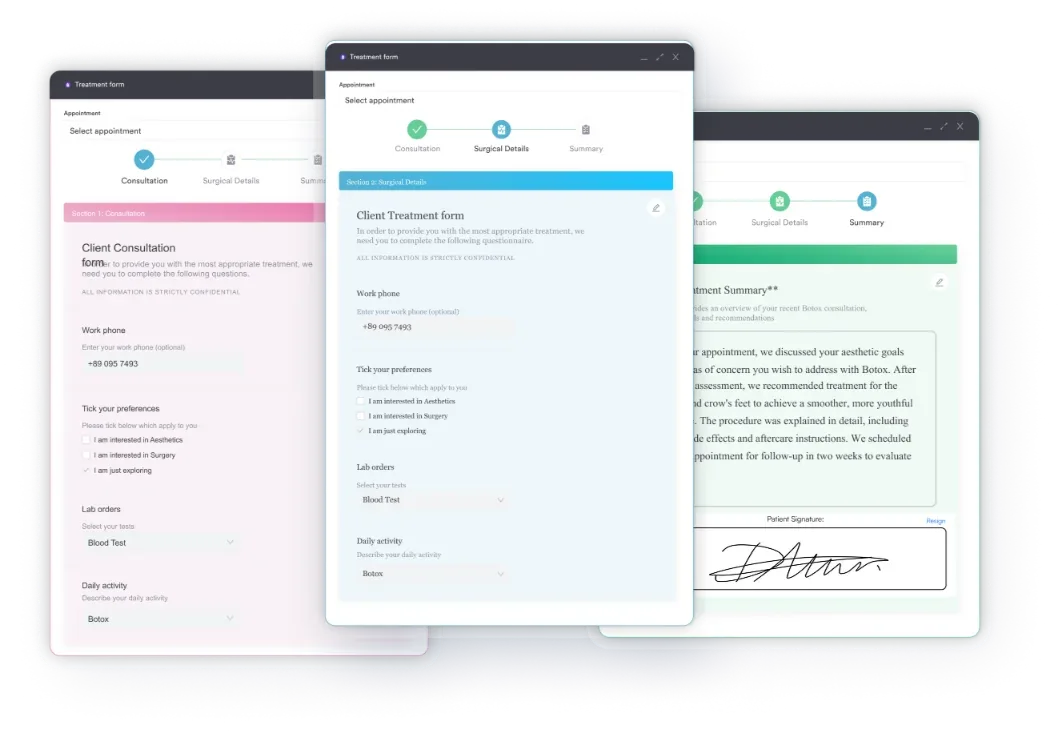
Improving patient compliance with supply programs is easier when the documentation workflow is standardized. Centralized patient records management that links the physician order, delivery confirmation, and diagnosis documentation in one place cuts the time needed to respond to a Medicaid or Medicare Advantage plan audit request.
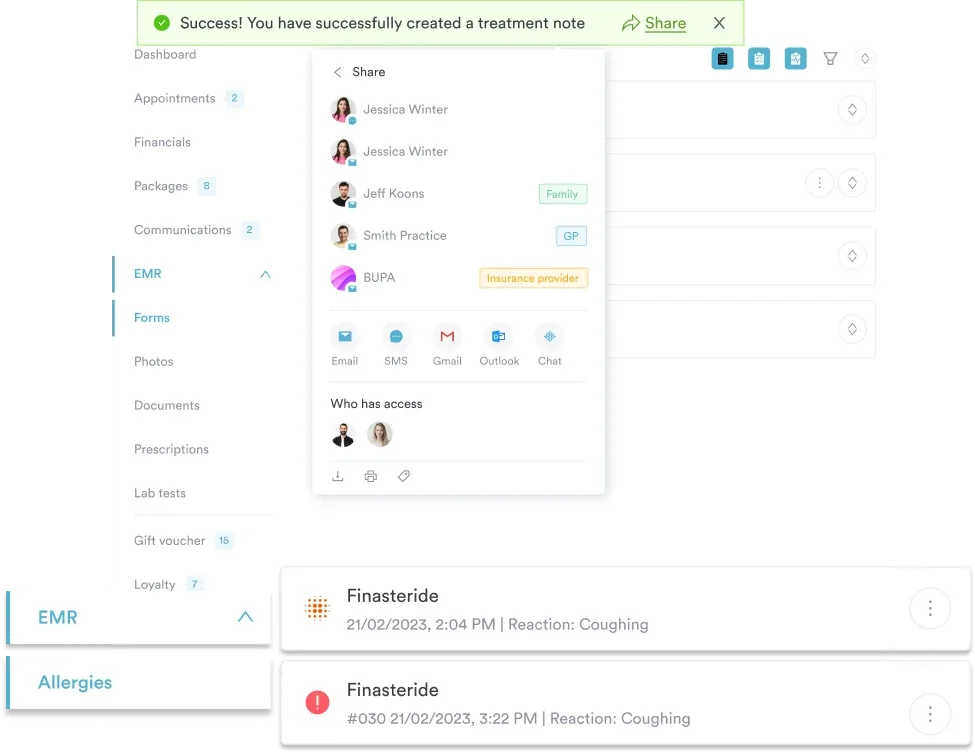
Correct claim submission for HCPCS code A4520 involves several billing mechanics that catch suppliers off guard. The steps below follow standard DMEPOS billing protocol. Confirm payer-specific requirements against the applicable state Medicaid, Medicare Advantage, or commercial payer’s supplier manual.
Practices using robust practice management software can standardize order tracking and flag missing documentation before a claim goes out the door. Automated checklists that catch a missing order date, ICD-10 linkage, or delivery confirmation before submission are one of the highest-impact investments a DMEPOS supplier can make.
Flag every A4520 refill order in your workflow system the day the written order is received. If the refill request lacks proof that the beneficiary is still using the garments, hold the claim until you can document active use. Shipping on an undocumented refill is the most common trigger for DMEPOS audits on incontinence supplies.
Every A4520 claim must be supported by an ICD-10-CM diagnosis code that establishes medical necessity. The codes below represent the primary diagnoses accepted by state Medicaid programs, Medicare Advantage plans, and commercial payers for incontinence garments. Verify the exact supported code list against the applicable payer’s coverage policy before billing. Accepted diagnoses can vary by payer and by state.
In complex cases where incontinence is secondary to a neurological or other systemic condition — for example a post-transplant complication such as heart transplant failure (T86.22) or heart-lung transplant rejection (T86.31) — code the underlying condition as the primary diagnosis and the incontinence code. The A4520 claim should carry the incontinence code to directly support medical necessity for the garment itself.
Understanding the adjacent code set prevents miscoding and claim rejections. The table below covers the codes most commonly used alongside or instead of HCPCS code A4520 in incontinence supply billing.
Neither A-codes nor T-codes are payable by Original Medicare for incontinence garments. The practical distinction is that A4520 is the national HCPCS code used by state Medicaid programs, Medicare Advantage plans, and commercial payers, while T4521 through T4544 are size-specific codes some state Medicaid programs use instead.
Underpads sit on their own T-codes in those programs. A state Medicaid plan bills a small disposable underpad as T4542, a pad placed on the bed rather than worn.
Always confirm a code is still active before billing it. HCPCS A-codes do get retired over time.

Pabau helps practices keep physician orders, intake forms, and patient records organized in one system, so documentation is ready whenever a payer asks for it.

The most frequently cited coding error in incontinence supply audits is billing A4520 for items that should be billed under a different code (or that are not separately billable at all). The Pricing, Data Analysis and Coding (PDAC) contractor has issued advisory guidance on correct coding for incontinence items. Key distinctions include:
Practices managing incontinence programs as part of a broader continence care offering benefit from standardized billing workflows. Tools that support HIPAA compliance for medical offices and automate documentation capture reduce the manual workload of ensuring every A4520 claim meets PDAC coding rules and payer-specific requirements before submission.
Practices that have adopted robust features that save private practices time report fewer DMEPOS audit findings because pre-submission checklists catch missing documentation before it becomes a post-payment recoupment. Keeping the order, diagnosis, and delivery documentation together in one patient record, rather than scattered across separate systems, protects both the supplier and the prescribing clinician.
Run a quarterly self-audit on all A4520 claims from the prior three months. Pull a random 10% sample and confirm each claim has: a signed physician order dated before the DOS, an ICD-10 code accepted by the paying Medicaid program or Medicare Advantage plan, a delivery confirmation, and a documented refill request. This mirrors what a Medicaid or Medicare Advantage plan’s additional documentation request (ADR) will ask for, and it surfaces missing documentation before it becomes a denial.
HCPCS code A4520 is straightforward in description but demanding in execution, and the first thing to get right is the payer: Original Medicare statutorily excludes this code, so clean claims start with billing the state Medicaid program, Medicare Advantage plan, or commercial payer that actually covers it.
From there, clean claims require a physician order dated before delivery, a covered ICD-10 diagnosis, supplier enrollment with that payer, and quantity limits within the payer’s policy thresholds. Misidentifying the code trips up few suppliers. The bigger risk is submitting without documentation to support an audit, or billing a payer that will never pay the claim.
Pabau helps practices keep the physician order, diagnosis, and delivery documentation for continence care programs organized in one patient record, so it’s ready the moment a payer asks for it. To see how Pabau supports practice documentation and patient records, book a demo.

Billing incontinence briefs by size? T4524 covers the extra-large adult disposable brief some state Medicaid programs bill instead of A4520.
Need a Medicare coverage comparison for another DME supply category? B4150 covers enteral formula billing and the Medicare rules that apply to it.
Managing urinary incontinence supplies beyond garments? A4349 covers billing for the male external catheter.
HCPCS code A4520 is a Level II HCPCS code for an incontinence garment of any type, such as a brief or diaper, billed per each unit. It falls under Section A: Medical and Surgical Supplies and is maintained by CMS, though Original Medicare excludes it from coverage as a statutorily non-covered item. Reimbursement instead comes from state Medicaid programs, Medicare Advantage plans, and commercial payers.
No. Original Medicare statutorily excludes incontinence garments billed under A4520 as a non-covered item, per CMS’s Bowel Management Devices Local Coverage Determination (L36267) and its Policy Article. Incontinence supplies are classified as personal comfort and hygiene items, not durable medical equipment, so no physician order or documentation of medical necessity can make them payable under Medicare Part B. Coverage instead comes from state Medicaid programs, Medicare Advantage plans (as a supplemental benefit), or commercial payers.
A valid A4520 claim requires a signed physician order dated on or before the date of service, clinical documentation supporting the incontinence diagnosis, a covered ICD-10-CM code, and proof of delivery to the beneficiary. Ongoing refill claims also require documentation that the beneficiary requested the refill and continues to use the garments.
Yes. The “any type” language in A4520’s description covers both disposable briefs and diapers, as well as reusable garments that meet the applicable product standards set by CMS’s Pricing, Data Analysis and Coding (PDAC) contractor. Pads and shields worn inside underwear are not garments and must be billed under A4521 (male) or A4522 (female) instead.
A4520 is the national HCPCS code used by state Medicaid programs, Medicare Advantage plans, and commercial payers for incontinence garments. T-codes such as T4521 through T4544 are Medicaid-specific size-differentiated codes that some states use instead. Neither code set is payable by Original Medicare. For dual-eligible beneficiaries, bill whichever code the state Medicaid program’s, or applicable Medicare Advantage plan’s, billing manual specifies. Original Medicare is not a payer for this benefit category regardless of dual-eligible status.
Commonly accepted ICD-10-CM codes include N39.3 (stress incontinence), N39.41 (urge incontinence), N39.46 (mixed incontinence), R32 (unspecified urinary incontinence), and R15.9 (full incontinence of feces). The exact accepted list depends on the specific state Medicaid program’s, Medicare Advantage plan’s, or commercial payer’s policy; verify before billing.



