

CCSD code G5100: Bypass of duodenum billing guide
CCSD code G5100 bills a bypass that leaves the duodenum in place CCSD code G5100...

Last Updated: Oct 16, 2026
K0003 is the HCPCS Level II code for lightweight wheelchair.
Let Pabau's smart automation suggest the right codes, reduce claim denials, and keep your practice compliant—effortlessly.
Automate repetitive tasks and focus on what matters most—your patients.
Reduce coding errors and ensure compliance with the latest regulations.
Clean claims, fewer denials, and faster reimbursements.
Powerful insights and reporting to help your practice thrive.
HIPAA compliant SOC 2 certified GDPR-compliant Trusted by 4,000+ clinics worldwide

HCPCS code K0003 identifies a lightweight wheelchair, a manual DME item billed to Medicare Part B under the K-code series for DME MACs
K0003 covers seat widths and depths of 15-19 inches with any seat height – product weight distinguishes it from K0001 (standard) and K0004 (high strength lightweight)
Documentation errors, missing Certificate of Medical Necessity, and incorrect modifier use are the top three reasons K0003 claims are denied by Medicare MACs
Pabau’s claims management software helps DME suppliers and multi-specialty clinics track K0003 claim status, attach supporting documentation, and reduce denial rates
Most K0003 denials trace back to a single root cause: the wrong wheelchair was ordered for the patient’s documented functional level, or the documentation doesn’t match the product billed. Getting this right starts with understanding exactly what claims management software and coders mean when they reference K0003.
HCPCS code K0003 is the billing code for a lightweight wheelchair – a manually propelled durable medical equipment (DME) item maintained by the Centers for Medicare and Medicaid Services (CMS) under the K-code series for DME Medicare Administrative Contractors. The code was created in 1993 and became effective January 1, 1994, alongside the full manual wheelchair K-code series (K0001 through K0009).
Per CMS Policy Article A52497, K0003 applies to manual wheelchair bases with the following standard seat specifications:
The “lightweight” designation refers to the wheelchair’s own weight, measured without front rigging but with all other standard components. Coders should verify the specific weight threshold for the product against current PDAC (Pricing, Data Analysis and Coding) product classification guidance, as the precise cutoff can vary by product category.
Medicare Part B covers K0003 when medical necessity is established and documented. Coverage falls under the DME benefit, meaning the item must be ordered by a treating physician or non-physician practitioner and supplied by an enrolled DMEPOS supplier.
The general Medicare coverage criteria for manual wheelchairs, including K0003, require that the beneficiary:
Coverage decisions are made by the DME MAC with jurisdiction over the claim. HIPAA compliance for medical offices and patient compliance documentation standards apply throughout the ordering and billing process. Specific coverage policies, including any Local Coverage Determination (LCD) that applies, vary by jurisdiction – always check with your MAC (CGS Medicare, Noridian, Palmetto GBA, or the applicable contractor) before billing.
In Competitive Bidding Areas (CBAs), K0003 pricing is set through the DMEPOS Competitive Bidding Program rather than the standard fee schedule. Suppliers in CBAs must be contract suppliers to receive Medicare payment. Outside CBAs, the national DMEPOS fee schedule rates apply. Verify your supplier’s bidding status before assuming standard fee schedule payment applies.
K0003 reimbursement rates under Medicare are published annually in the DMEPOS fee schedule and adjusted geographically. Rates differ between capped rental and purchase scenarios, and between CBA and non-CBA locations. The table below reflects the general payment structure – confirm current rates directly through the CMS Physician Fee Schedule lookup tool or your MAC’s published fee schedule before billing.
Verify current 2026 dollar amounts against the published CMS DMEPOS fee schedule or the PGM Billing HCPCS lookup tool. Rate fluctuations occur annually and vary by MAC jurisdiction, so using a static figure carries denial risk.
Always verify K0003 payment rates using the CMS fee schedule lookup rather than third-party databases. Rates are updated annually and differ between competitive bidding areas and non-CBA localities. Billing at the wrong rate triggers overpayment recoupment.
An inventory management tool ties each dispensed item to a patient and a billing code, ending stockroom guesswork.
Incomplete documentation is the single biggest driver of K0003 claim denials. Medicare requires a clear paper trail linking the patient’s functional limitations to the specific wheelchair ordered. Structuring your medical forms at your practice to capture this chain of evidence before the order is placed saves substantial rework downstream.
A completed Certificate of Medical Necessity is required for most Medicare wheelchair claims. The CMN must be signed by the treating physician or non-physician practitioner and must document the specific functional limitations that justify K0003 rather than a less costly alternative such as K0001 (standard wheelchair). The ordering clinician’s documentation in the medical record must support every answer on the CMN.
Key CMN documentation elements for K0003 include:
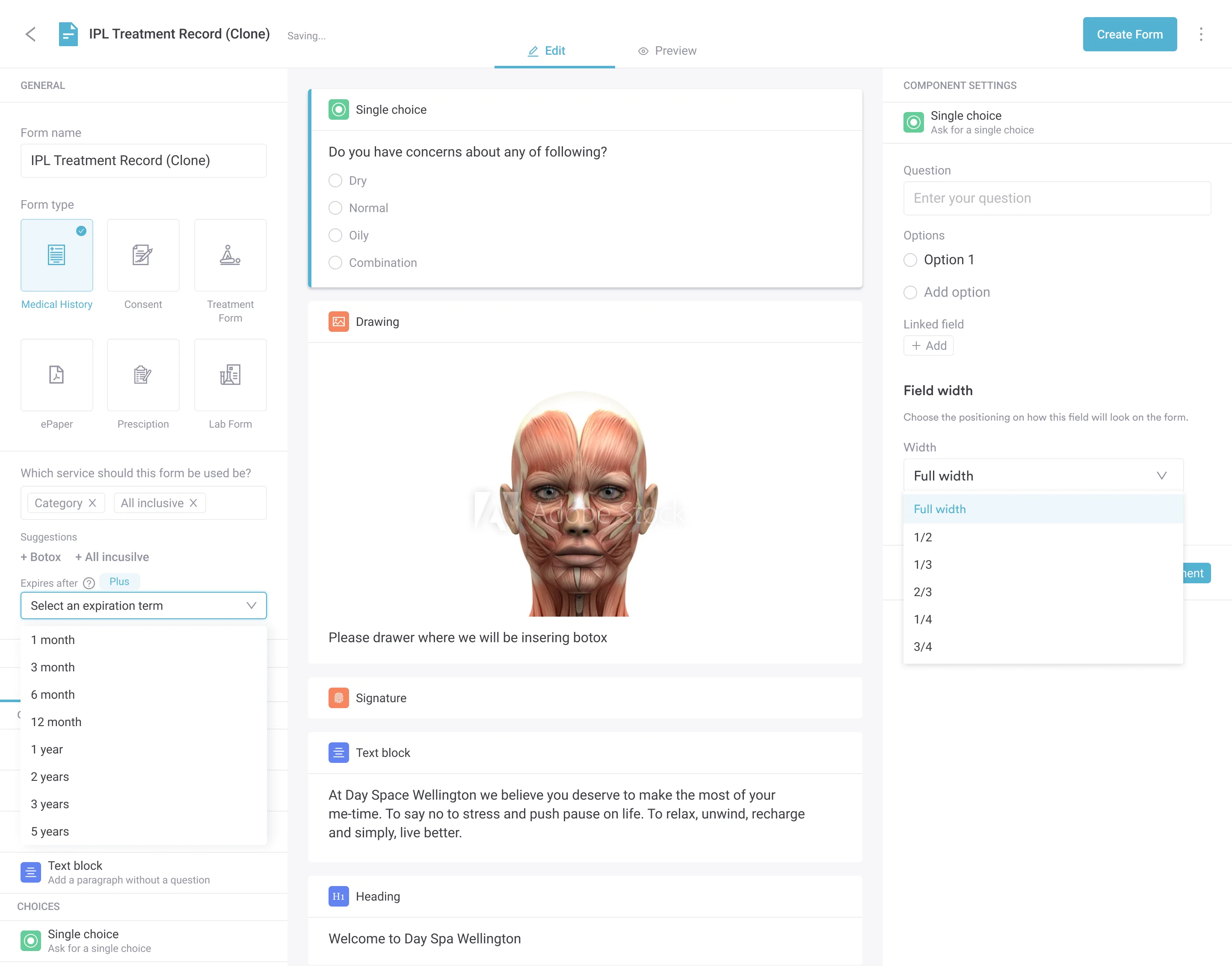
The CMN alone is not sufficient. Medicare auditors expect the underlying medical record to corroborate each CMN response. This means the treating practitioner’s notes – not just the DMEPOS supplier’s records – must document the functional evaluation. Using digital intake forms linked to the patient’s clinical record reduces the risk of the ordering clinician’s documentation being inconsistent with the CMN answers.
At minimum, supporting records should include:
Maintaining complete patient record management with linked documentation reduces audit exposure significantly. The HIPAA compliance checklist for primary care practices applies equally to DMEPOS ordering clinicians regarding record retention and security.
Modifier selection for K0003 directly affects whether Medicare pays, how much it pays, and whether the claim triggers a rental conversion audit. Applying the wrong modifier is one of the most common billing errors across DME MAC jurisdictions.
The AAPC Codify HCPCS lookup provides current modifier pairing rules and National Correct Coding Initiative (NCCI) edits that affect K0003. Always cross-reference modifier combinations against the applicable MAC’s billing guide before submitting.
Selecting the correct code within the K0001-K0005 series is a clinical and documentation decision, not just a billing one. Upcoding to K0004 or K0005 without supporting documentation is an audit risk. Downcoding to K0001 when K0003 is clinically justified can shortchange the supplier and leave the patient with inferior equipment. Review procedure billing codes across the DME series to ensure your team understands how these categories relate.
According to the Medi-Cal DME Billing Manual, lightweight wheelchairs must be billed with K0003, K0004, or K0012 (lightweight portable motorized/power wheelchair) rather than K0001 or K0002. This reinforces the importance of product classification before code selection.
The E-series carries its own standard wheelchair code, but Medicare does not pay HCPCS code E1130. CMS crosswalks it to K0001, while Medicaid programs and commercial plans that still recognize E1130 set their own coverage and pricing.
The primary clinical question separating K0003 from K0004 is whether the patient’s weight, activity level, or propulsion demands exceed what a standard lightweight frame supports. K0004 is appropriate when the patient self-propels actively over varied terrain or requires a higher weight capacity. K0005 requires a more detailed functional assessment linking the ultralightweight specification to a documented clinical need.
Before selecting between K0003 and K0004, review the patient’s physical therapy or occupational therapy evaluation for documented propulsion capacity and daily activity patterns. The clinical justification for K0004 over K0003 must appear in the ordering physician’s records, not only in the supplier’s product selection notes.
A clean K0003 claim follows a predictable sequence. Gaps in any step create downstream denials that take far longer to resolve than getting the workflow right the first time. For physical therapy practices involved in the ordering process, understanding where your documentation feeds into the supplier’s claim is essential.
The CGS Medicare coding verification guidance provides jurisdiction-specific detail on product classification and billing requirements for manual wheelchairs including K0003.
K0003 denials follow a consistent pattern across MAC jurisdictions. Most are preventable with better upfront documentation and code selection discipline. Tracking denial reasons systematically through your practice management software features reveals where the workflow is breaking down.

Pabau’s claims management tools help DME suppliers and clinic teams track K0003 claim status, attach supporting documentation to patient records, and monitor denial patterns before they become revenue leaks.

Prior authorization requirements for K0003 are not uniform across all MAC jurisdictions. CMS has expanded prior authorization programs for certain DMEPOS items in recent years. Check whether K0003 requires prior authorization in your specific MAC region before submitting a claim.
PDAC (Pricing, Data Analysis and Coding) coding verification is a separate process. PDAC maintains product classification files that confirm which specific wheelchair models qualify under K0003 versus adjacent codes. Suppliers should confirm PDAC classification for any new product line before billing under K0003. Billing a product that PDAC classifies as K0001 under K0003 is an upcoding violation with potential audit and recovery consequences.
Staying current on MAC-specific billing updates through resources like the CGS Medicare coding verification notices helps flag changes before they affect active claims. Integrate these updates into your team’s billing compliance calendar.
K0003 claims fail most often not because the wrong equipment was chosen, but because the documentation trail doesn’t hold together under scrutiny. The fix is upstream: a structured ordering workflow, a completed CMN that mirrors the medical record, correct product classification through PDAC, and the right modifier applied in the right rental month.
Pabau’s claims management software gives DME suppliers and multi-specialty clinics a single place to track claim status, attach supporting documentation, and identify denial patterns before they erode revenue. To see how Pabau fits into your DME billing workflow, book a demo with the team.

Coding an infected amputation site instead? Amputation stump infection coding guide covers the specific code needed for an infected left upper extremity amputation stump, since the parent code is non-billable.
Coding a pedestrian collision case instead? Pedestrian collision coding guide covers the code for a pedestrian conveyance rider who collides with a stationary object at a subsequent encounter.
Coding a skateboard injury case instead? Skateboard collision sequela coding guide covers the sequela code for a skateboarder injured in a collision with a railway train or vehicle.
HCPCS code K0003 covers a lightweight wheelchair: a manually propelled durable medical equipment item with seat widths and depths of 15-19 inches and any seat height, lighter than the standard wheelchair classified under K0001. It is billed under Medicare Part B through DME MACs when medical necessity is documented and a valid CMN is on file.
K0003 covers a standard lightweight wheelchair; K0004 covers a high strength lightweight wheelchair intended for patients with higher weight requirements or more active propulsion demands. K0004 requires stronger clinical justification documenting why a standard lightweight frame is insufficient for the patient’s specific activity level and body weight.
Medicare requires a completed Certificate of Medical Necessity signed by the ordering physician or NPP, plus supporting medical records documenting the patient’s functional mobility limitations. Records must confirm that less costly alternatives (walker, K0001) were considered and found insufficient, and must describe the patient’s home environment and propulsion capacity.
Yes, Medicare Part B covers K0003 lightweight wheelchairs when medical necessity is established through appropriate documentation and the item is supplied by an enrolled DMEPOS supplier. Coverage is subject to the beneficiary meeting functional eligibility criteria and the supplier complying with any applicable competitive bidding or prior authorization requirements in their MAC jurisdiction.
The primary modifiers are RR (rental), paired with KH for month 1, KI for months 2-3, and KJ for months 4 through the end of the capped rental period. NU is used for new equipment purchase and UE for used/refurbished equipment. Using the wrong modifier for the claim month is a common denial trigger.



