CCSD code F3070: Suture of palate billing guide
CCSD code F3070 covers stitching a wound in the palate CCSD code F3070 is the co...

Last Updated: Oct 12, 2026

CPT code 14041 reports adjacent tissue transfer on the forehead, cheeks, chin, mouth, neck, axillae, genitalia, hands and feet.
The code applies once the primary and secondary defect areas add up to between 10.1 and 30.0 sq cm.
Site and defect size choose the code, not the technique, so Z-plasty, W-plasty, rotation and advancement flaps can all qualify.
An unmeasured secondary defect causes more 14041 denials than any other documentation problem.
Pabau’s claims management software submits and tracks insurance claims, and checks insurer details before each one leaves your practice.
CPT code 14041 reports adjacent tissue transfer or rearrangement on the forehead, cheeks, chin, mouth, neck, axillae, genitalia, hands and feet. It applies when the defect measures 10.1 to 30.0 sq cm.
Two numbers decide whether the claim gets paid: the anatomical site and the measured defect. Nearly every denial traces back to the second one. Document the measurement properly and the rest of the claim tends to follow.
Long descriptor: Adjacent tissue transfer or rearrangement, forehead, cheeks, chin, mouth, neck, axillae, genitalia, hands and/or feet; defect 10.1 sq cm to 30.0 sq cm.
Short descriptor: Adj tiss trnsfr/rearr f/c/c/m/n/ax/g/h/f 10.1-30 sq cm.
Adjacent tissue transfer means local skin is lifted, moved, and used to close a defect right next to it. No distant tissue is involved, and there is no separate graft donor site. The CPT guideline for this family classifies the work by the combined defect area, not by the technique the surgeon chose.
Dermatology and plastic surgery teams bill this family week in, week out, usually after a skin cancer excision. Practices running dermatology EMR software hold the excision, the pathology result and the repair in one patient record. That makes the coder’s job far quicker.
CPT’s adjacent tissue transfer guideline lists qualifying techniques as examples, and the list is not limited to them. Z-plasty, W-plasty, V-Y plasty, rotation flaps, advancement flaps and double pedicle flaps all appear there. Here are the ones you will see most often on a 14041 claim.
Any of these bill under 14041 when the site qualifies and the combined defect lands between 10.1 and 30.0 sq cm. Still name the technique in the operative note. Reviewers read that line as evidence a flap was raised, rather than a wound simply being pulled together.
Measure the primary defect, measure the secondary defect, then add the two areas together. That total is what picks the code. Many practices record only the primary defect, which quietly undercodes the repair.
Here is how that plays out. A 3.0 by 2.5 cm excision leaves a 7.5 sq cm primary defect. Raising the flap opens another 4.5 sq cm. Together that is 12.0 sq cm, which puts the repair in 14041 rather than 14040.
A structured operative note template takes the memory work out of this. Practices on plastic surgery EMR systems can make both measurement fields mandatory, so the note cannot be signed off half finished.
These two codes cover exactly the same anatomical sites. Defect size is the only thing separating them. Pick the wrong one and the claim lands in the wrong payment tier, which often triggers a medical necessity review.
Boundary cases deserve extra care. When the total sits close to 10.0 sq cm, put the measurement in twice. Record it in the body of the note, then again in a summary line. Reporting 14041 on a 9.8 sq cm defect with no secondary area recorded is a reliable way to earn a denial.
The adjacent tissue transfer family runs from 14000 to 14302. Two variables move you around it: the body area treated, and the combined defect size. Reading the family as a grid makes the right code obvious.
Watch the pairs. The trunk sits with 14000 and 14001, while arms and legs share their codes with the scalp. So an arm repair of the same size belongs to CPT 14021, not 14001.
14302 is an add-on code, so it never travels alone. Verify any descriptor you are unsure of against the AAPC CPT lookup before the claim goes out.
Medical necessity for 14041 rests on the linked ICD-10-CM diagnosis. Payers read the diagnosis and the procedure together to check that the repair made clinical sense. Most pairings reflect the main use case, which is closing a surgical defect after a skin cancer is removed.
Match the wound type as well as the site. A puncture or a bite carries a different fifth character than a laceration, and a payer will spot the mismatch. Check specificity in the CDC ICD-10-CM tool, and fall back on a general wound code only when nothing more precise exists.
Capturing the diagnosis at the point of care beats reconstructing it later from a chart. Digital medical forms that pull the diagnosis into the visit record cut the number of coding queries your billing team has to raise.
The right modifier tells the payer how to process the line. The wrong one costs you money or invites an audit, and modifier misuse is one of the biggest sources of underpayment in surgical billing.
Modifier 59 deserves a word of caution. Use it only when a specific NCCI edit bundles 14041 with another code billed that day, and the two services really are separate. That means different sites, separate sessions, or unrelated conditions, spelled out in the record. Appending 59 without that rationale is a compliance problem, not a billing shortcut.
Medicare builds the payment from relative value units. Add the work, practice expense and malpractice RVUs, then multiply the total by the annual conversion factor. Your locality shifts the result through the Geographic Practice Cost Index.
Rates shift by Medicare Administrative Contractor, so a national average only ever gets you close. Pull the current figure from the CMS fee schedule lookup before you quote anything to a patient or a partner.
The split is about who carries the overhead. In your own treatment room, the fee covers your staff, your instruments and your consumables. In a hospital or ASC, the facility bills for all of that, so the physician payment leans on the work RVUs alone. Commercial contracts move independently of both figures, so never assume they track Medicare.
The RVU method does not cover every code on a surgical day. Anesthesia codes such as CPT code 00550 are paid from base units plus 15-minute time units, multiplied by an anesthesia conversion factor CMS publishes separately. Each line also carries a qualifier modifier, AA, QK, QX or QY, naming who delivered the service.
Before a 14041 claim leaves your practice, read three lines in the operative note: both defect measurements, the named anatomical site, and the technique used. Those three lines answer most of what a reviewer will ask for, and they take a minute to check.
A note that says “flap closure” and little else will not survive review. Reviewers look for a short list of specifics that confirm the code was picked correctly.
Turning that list into required fields is the cheapest fix available.
Knowing the route helps you see where claims stall. Here is the trip a single 14041 line takes.
Two steps swallow most of the lost revenue. Step two fails when the note is thin, so the coder drops to 14040 to stay safe. Step four fails on details that have nothing to do with surgery, such as a stale membership number. Neither is a clinical problem, and both are fixable before submission. Downcoding is as common as upcoding, and both trace back to how the decision-making level was recorded.
Denial patterns on this code repeat themselves across dermatology and plastic surgery. Almost all of them come down to what the note left out.
Catching these in the practice is far cheaper than appealing them later. Routing claims through practice management software that flags same-day code pairs takes the manual cross-checking off your billing team.
14041 rarely travels on its own. It usually shares the claim with an excision, a Mohs code, or another repair. NCCI rules decide which pairs are payable and which need a modifier first.
When a pair looks doubtful, go to the source. The CMS NCCI edit files are published quarterly and settle most same-day questions in a couple of minutes.
When 14041 follows Mohs surgery on the same day, confirm the defect was measured after the last Mohs stage. Final defect size decides the repair code. A measurement taken mid-procedure usually understates the defect, and that quietly undercodes the claim.
Six questions, asked in order, catch the vast majority of 14041 problems. Work through them while the note is still open.
In most practices the operative note lives in one system and the claim gets built in another. Someone retypes the measurements, then retypes the insurer details. Every hop is a chance to lose a number, and the claim comes back for reasons that have nothing to do with the surgery.
Practice management software like Pabau keeps the note, the codes and the claim in the same patient record. Pabau’s claims management software submits insurance claims, tracks where each one sits, and reconciles what comes back against what you billed. Before anything goes out, it validates insurer details such as membership numbers and authorization codes.
So your billing staff spend less time chasing front-end rejections. Nobody has to open a payer portal to find out whether a claim landed. For a practice running several flap repairs a week, that is an afternoon a month back. A coding error surfaces as a cash flow problem weeks later, which is why the healthcare revenue cycle is measured end to end.
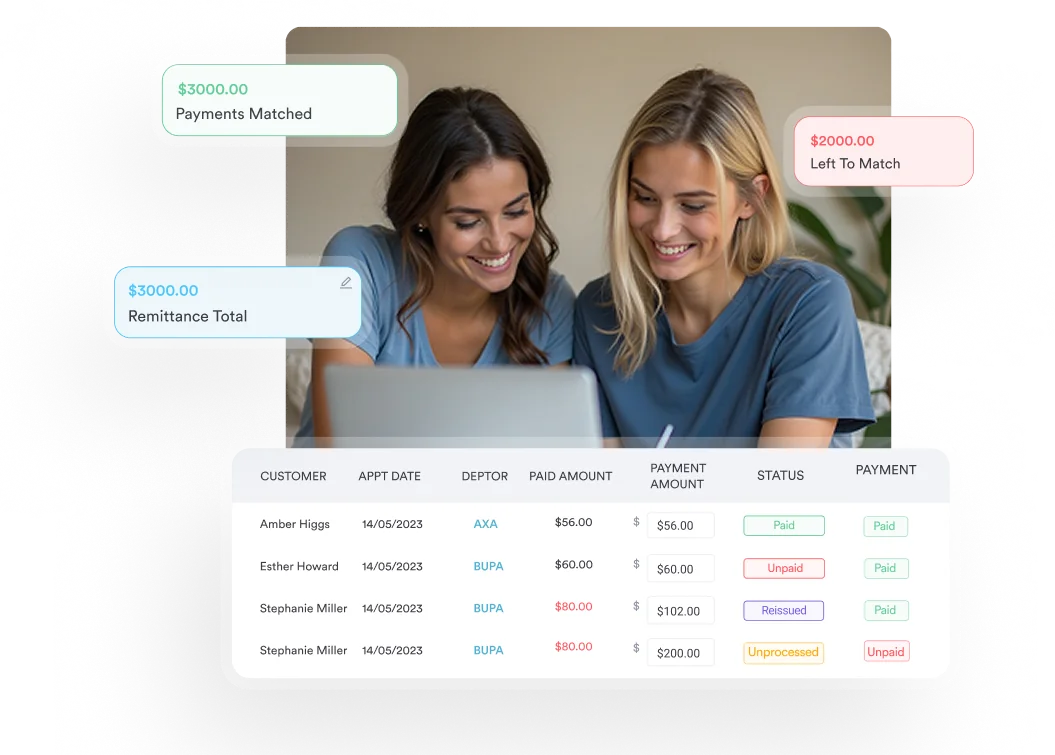

Pabau’s claims management software submits and tracks insurance claims from the same record that holds the operative note. It checks insurer details before submission, so fewer repair claims come back to you.

14041 rewards practices that treat measurement as part of the procedure rather than paperwork for later. Write both defect areas down while the flap is still in front of you, and the coding argument is already won.
The money sits in the boundary cases. A 9.8 sq cm defect and a 10.4 sq cm defect look identical in a photograph and pay differently on a remittance. Only the note can tell them apart, so build the habit once and the monthly denial list gets shorter.
Want to see how dermatology and plastic surgery claims can be submitted and tracked from the same record as the note? Book a demo and we will walk you through it with your own workflow.

Repairing a defect on the trunk instead? CPT 14000 covers the smaller trunk tier of the same adjacent tissue transfer family.
Need the excision code that creates the defect? CPT 11640 sets out how malignant lesion excisions on the face are sized and billed.
Closing a wound without raising a flap? CPT 12036 explains how intermediate repair length is measured and reported.
Wondering when complex repair applies? CPT 13100 walks through the documentation that separates complex repair from a flap.
Billing a larger reconstruction with a flap? CPT 19367 shows how flap reconstruction is coded when the defect is far bigger.
Yes. Adjacent tissue transfer is major surgery, so the code carries a global period that covers routine follow-up care. Check the global days indicator for the code in the CMS fee schedule before you bill a post-op visit. If you treat something unrelated inside that window, append modifier 24 to the office visit.
A flap keeps its own blood supply and slides in from the tissue next door. A graft is cut free and moved from another site, which is why grafts bill from the 15000 series instead. Reporting a graft code for a flap repair is a common denial.
Per defect. One flap closing one defect is one unit of 14041. When two separate defects are repaired, measure and code each one on its own. Never add the areas of unrelated defects together to reach the next size tier.
Medicare does not require prior authorization for office-based repairs, though some commercial plans do. Read the plan’s surgical policy before the day of surgery. Where a payer might read the repair as cosmetic, prior authorization with photographs settles it faster than an appeal.
With Medicare you have 120 days from receiving the initial determination to file a redetermination. Commercial deadlines are often tighter, so read the remittance carefully. Send the operative note, both defect measurements and the pathology report with the request.