

HCPCS code E0198: Water pressure pad billing guide
HCPCS code E0198 is a water pad for a standard mattress HCPCS code E0198 is the ...

Last Updated: Oct 13, 2026
K0004 is the HCPCS Level II code for high strength, lightweight wheelchair.
Most denials on K0004 claims come from administrative errors, not clinical ones. An incorrect modifier, a missing functional assessment note, or a supplier without PDAC coding verification can trigger a full recovery demand at post-pay audit.
CGS Medicare's 2021 widespread post-pay review of K0001 through K0004 found documentation failures behind most improper payments.
Let Pabau's smart automation suggest the right codes, reduce claim denials, and keep your practice compliant—effortlessly.
Automate repetitive tasks and focus on what matters most—your patients.
Reduce coding errors and ensure compliance with the latest regulations.
Clean claims, fewer denials, and faster reimbursements.
Powerful insights and reporting to help your practice thrive.
HIPAA compliant SOC 2 certified GDPR-compliant Trusted by 4,000+ clinics worldwide

HCPCS code K0004 describes a high strength, lightweight wheelchair weighing less than 34 lbs, distinct from the standard lightweight K0003 (34–36 lbs) and the ultralight K0005
Medicare Part B covers K0004 under Local Coverage Determination guidelines when medical necessity is documented by a treating physician and the supplier has PDAC coding verification
Modifiers KX, GA, GY, and GZ each carry different claim-level consequences: Billing the wrong modifier is among the most common post-pay audit triggers for K0001-K0004 claims
Practice management software like Pabau helps DME suppliers and practices keep K0004 order documentation, physician evaluations, and compliance records together, so nothing is missing when a MAC reviewer asks for it
HCPCS code K0004 is the billing code for a high strength, lightweight wheelchair, as maintained by the Centers for Medicare and Medicaid Services (CMS). The code was added to the HCPCS Level II code set on January 1, 1994, with no subsequent maintenance action (action code N).
It falls within the Wheelchairs, Components, and Accessories range (K0001 through K0195), as classified by the AAPC Codify HCPCS reference.
The short description used on remittance advice is “High strength ltwt whlchr.” The long description is “High strength, lightweight wheelchair.” CMS Policy Article A52497 governs allowances for manual wheelchair bases including K0004, K0003, K0005, K0006, K0007, K0008, and E1161.
The defining physical characteristic of a K0004 wheelchair is a total weight of less than 34 lbs. This is the threshold published by PDAC guidance and cited in Mobility Management’s wheelchair definitions series. Frame materials are typically high-strength aluminum or titanium alloys, chosen for the strength-to-weight ratio that distinguishes K0004 from adjacent codes in the K-series.
Wheelchair accessory codes are billed separately from the base code. The skin protection cushion covered under E2607, for example, requires its own PDAC verification and is not bundled into the K0004 allowance.
The K0004 row in the table above sits directly below K0003 rather than overlapping it: K0003 covers wheelchairs weighing 34 to 36 lbs, and K0004 covers anything under 34 lbs. The two bands are adjacent, not shared.
K0004 also requires the additional structural characteristic of high-strength frame construction. PDAC coding verification by the manufacturer is required before a product can be marketed and billed under K0004.
Medicare Part B covers the K0004 high strength, lightweight wheelchair under its durable medical equipment (DME) benefit. Coverage is governed by the applicable Local Coverage Determination (LCD) for manual wheelchair bases, administered through the DME MACs (Medicare Administrative Contractors). The primary policy reference is CMS’s HCPCS system guidance alongside LCD L33788 and Policy Article A52497.
Four conditions must be satisfied before a K0004 claim will pass initial MAC review.
California Medi-Cal follows similar rules, requiring K0004 for high strength lightweight wheelchairs and K0005 for ultralightweight models. Medicaid billing rules vary by state, so always verify the applicable state DME manual before billing non-Medicare payers. Robust patient compliance documentation at the point of order helps suppliers satisfy MAC reviews without additional information requests.
Request the treating physician’s face-to-face evaluation notes before submitting the K0004 claim, not after. MAC additional documentation requests (ADRs) routinely ask for records the supplier assumed the physician had already completed. Building a pre-submission documentation checklist into your ordering workflow eliminates the most common ADR trigger for K0001-K0004 claims.
Documentation errors cause more K0004 denials than eligibility failures. CGS Medicare’s Jurisdiction C MAC announced a widespread post-pay, service-specific review of HCPCS codes K0001 through K0004 in April 2021, citing documentation deficiencies as the primary driver of improper payments. Suppliers need to maintain a complete record for each claim.
Digitizing order packets through digital intake forms helps DME suppliers capture all seven elements at the point of referral. Incomplete paper-based ordering workflows are the most frequent failure point found during MAC post-pay review. Linking order documentation to the patient record within a single system also simplifies the response to ADR requests, which typically require submission within 45 days.
Other DME code categories face similarly strict documentation standards. Incontinence supplies billed under T4521, for instance, require the same kind of physician order and proof-of-delivery paper trail as K0004.
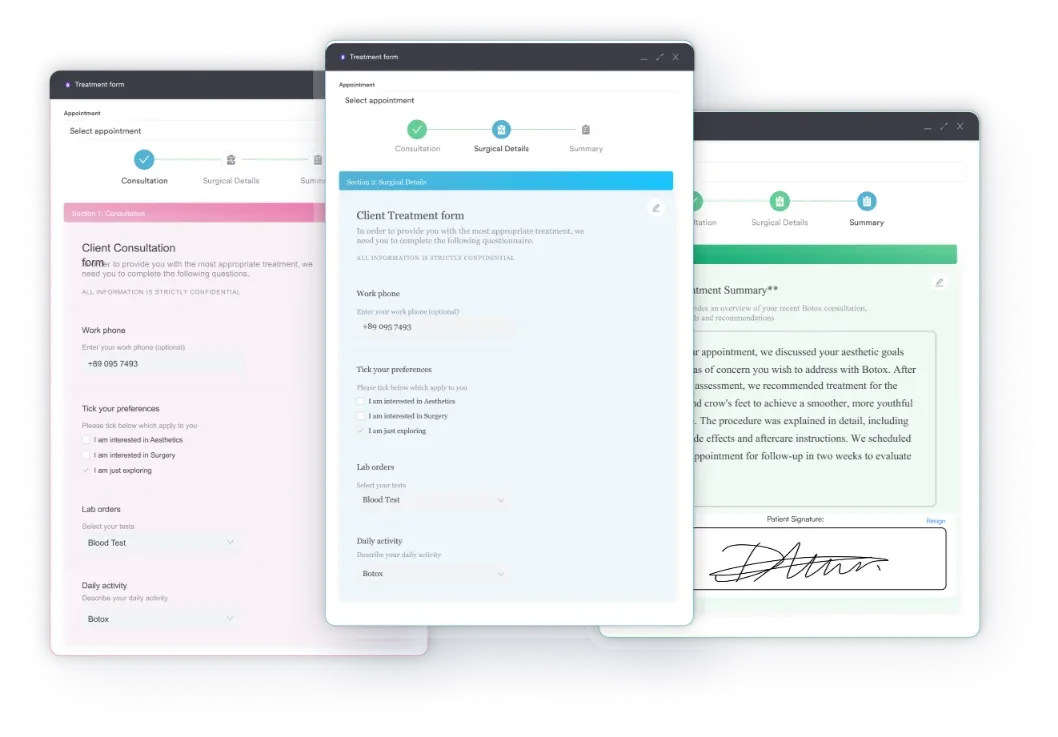

Practice management software like Pabau helps DME suppliers capture ordering documentation, manage physician evaluations and patient records, and keep compliance documentation organized and audit-ready.

Equipment orders need follow-through, and patient management software tracks who received what, and when it needs review.
Modifier selection is where most K0004 billing errors originate. Each modifier signals a different claim-level condition to the MAC, and applying the wrong one can trigger an automatic denial or, worse, a fraud and abuse flag at post-pay review.
The KX modifier is the standard modifier for K0004 claims where documentation is complete. Never append KX unless the full documentation set is on file and the supplier can produce it within 45 days of an ADR. Applying KX when records are incomplete exposes the supplier to false claims liability.
GA requires a properly executed ABN. The ABN must be signed before the item is delivered, not retroactively. Using GA without an on-file ABN shifts liability back to the supplier. Check MAC-specific modifier stacking guidance, as some jurisdictions require additional modifiers for repair or replacement claims.
GZ covers the opposite scenario from GA: The supplier expects Medicare to deny the item as not reasonable or necessary and has no signed ABN on file. That combination results in an automatic denial, and the supplier cannot shift the cost to the patient.
Never substitute GZ for GA, or vice versa. The presence or absence of a signed ABN on file determines which one applies.
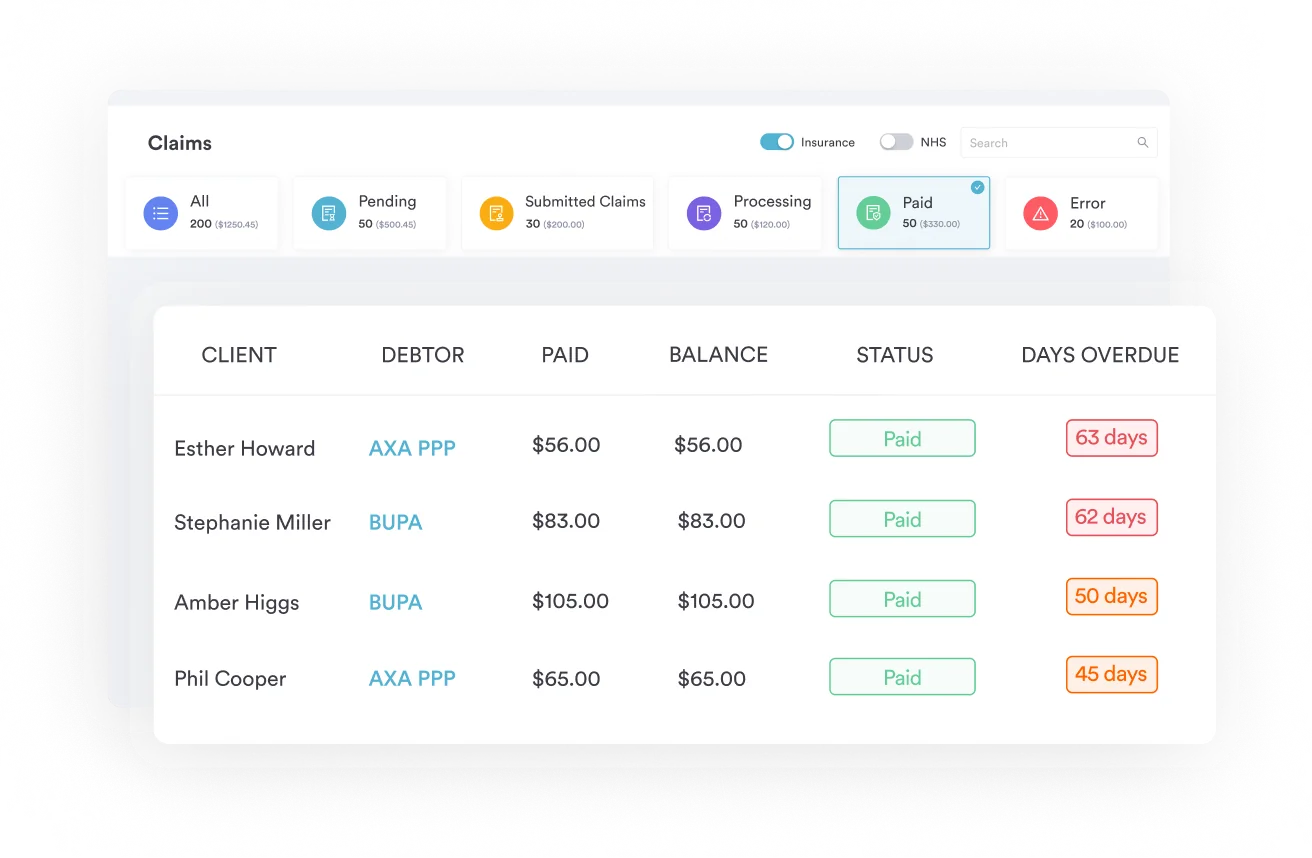
Selecting the wrong code in the K-series is a high-frequency billing error. K0003, K0004, and K0005 are all lightweight manual wheelchairs, but each maps to a specific product specification range. Billing a lower-weighted code for a qualifying K0004 product, or vice versa, results in either underpayment or a recoverable overpayment.
Weight class is not the only fork in the K-series. A patient who needs a lower seat height for foot propulsion belongs under K0002, the standard hemi wheelchair, whatever the frame weighs.
Seat cushion codes such as E2622 follow their own separate PDAC verification path. They are billed alongside, not instead of, the base wheelchair code.
The additional distinguishing factor is frame construction. K0004 requires the manufacturer to have obtained PDAC coding verification that the frame meets high-strength material specifications, which K0003 does not require.
A supplier billing K0004 for a product that only has K0003 PDAC verification will face recovery at post-pay audit. Good data management practices in supplier operations include maintaining a product-to-PDAC verification mapping file updated annually.
K0005 is the ultralight wheelchair, typically constructed from titanium or carbon fiber and weighing less than 30 lbs. K0005 also requires more substantial clinical justification: The Medicare LCD for K0005 generally requires documentation of a patient whose medical condition would significantly benefit from the added features of an ultralight over a K0004.
The reimbursement differential between K0004 and K0005 can be significant, making correct code selection both a compliance and a revenue integrity issue. California Medi-Cal explicitly separates these two codes in its DME billing manual, requiring K0005 exclusively for ultralight models. Other DME categories follow a similar fee-schedule and PDAC verification structure.
K0004 is reimbursed under the CMS DMEPOS fee schedule, which is updated annually. Rates are established per the competitive bidding program for CBAs (Competitive Bidding Areas) and the non-bid single payment amounts for non-CBA areas.
The 2026 fee schedule rates for K0004 should be verified directly against the Physician Fee Schedule lookup tool. Published rates vary by MAC jurisdiction and CBIC adjustment factors.
Other HCPCS DME codes follow the same rate-setting structure. Breast prostheses billed under L8030, for example, go through the same competitive bidding and non-bid rate process as K0004.
Medicare pays 80% of the allowed amount after the Part B deductible. The beneficiary or their supplemental coverage is responsible for the remaining 20% coinsurance.
For rental vs. purchase billing, manual wheelchairs including K0004 are capped rental items: Medicare pays monthly for the first 13 months, after which title passes to the beneficiary. Understanding the capped rental schedule is essential for revenue forecasting in high-volume DME operations.
Accurate automated billing workflows can flag capped rental milestones before the final payment month. This prevents billing errors on month 14 and beyond.
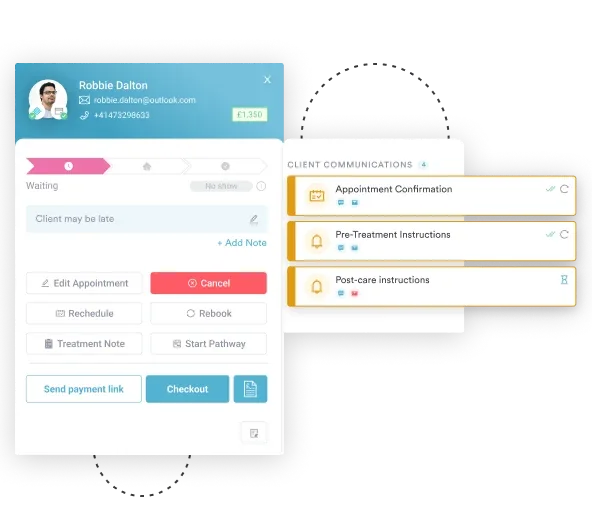
K0004 is not on the CMS Prior Authorization List for DME, which primarily covers power wheelchairs and certain high-cost items. However, prior authorization requirements vary by MAC jurisdiction and by commercial or Medicaid payer. Some state Medicaid programs, including certain Medi-Cal managed care plans, do require prior authorization for K0004.
Always verify payer-specific PA requirements before delivery. Suppliers operating without a prior authorization tracking system risk delivering equipment that was never approved, resulting in a full write-off.
Build a payer-grid matrix listing PA requirements for K0004 by each contracted payer, updated quarterly. Commercial payers and state Medicaid plans change PA requirements more frequently than Medicare, and a single undocumented PA can result in a denial that is never recoverable if the item has already been delivered.
K0004 claims are submitted by DMEPOS suppliers on the CMS-1500 form (or its electronic equivalent, the 837P transaction set). The claim maps to service type 12 (DME) and requires specific data elements beyond the standard professional claim.
For practices that also provide clinical services alongside DME supply. This eliminates the most common delay in ADR response: Locating the treating physician documentation.
DME suppliers looking to reduce claim error rates should also review how other high-scrutiny HCPCS categories are structured. Power mobility devices billed under K0835 face comparable documentation and PDAC verification scrutiny, and the documentation architecture is often transferable.
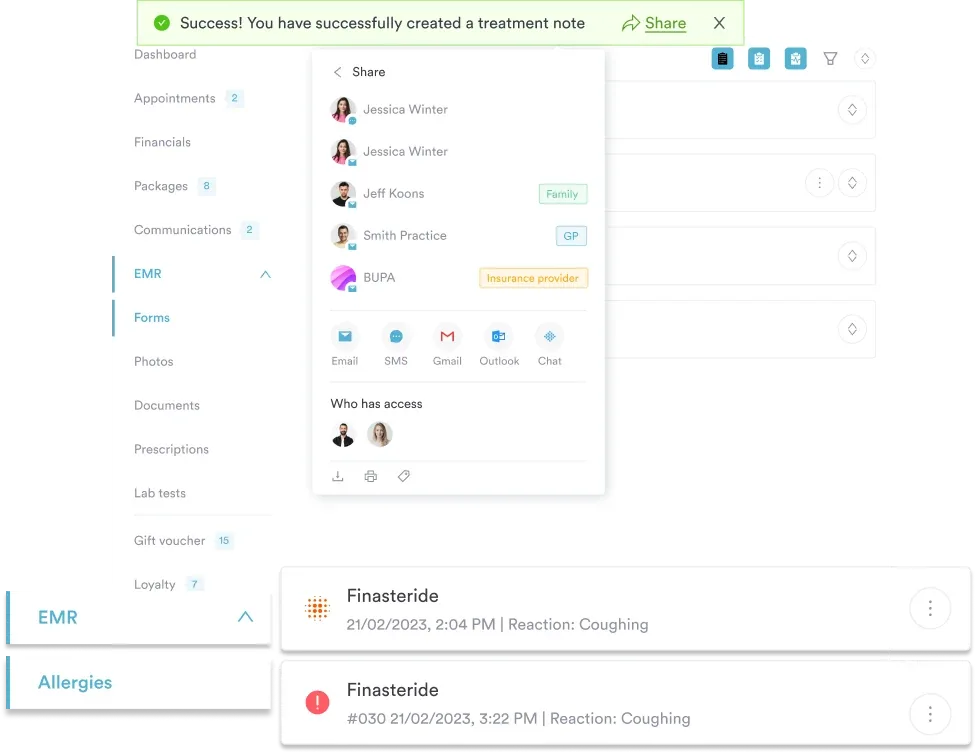
Medicare requires at least one ICD-10 diagnosis code that supports medical necessity for the K0004 on every claim. The diagnosis must reflect the patient’s mobility impairment, not just an incidental condition. Common ICD-10 categories paired with K0004 claims include mobility impairment codes under M and G chapters, musculoskeletal disorders, neurological conditions affecting ambulation, and post-surgical mobility deficits.
Always select the most specific diagnosis code available. Unspecified codes are accepted but may attract additional scrutiny at MAC review. A specific musculoskeletal diagnosis such as M72.2, rather than an unspecified code, better supports medical necessity documentation and reduces the rate of vague diagnosis pairing that triggers post-pay review flags.
CGS Medicare’s 2021 widespread post-pay review of K0001 through K0004 found improper payment rates high enough to warrant ongoing monitoring. Understanding the denial taxonomy helps suppliers structure internal audits ahead of a MAC review.
Practices that combine DME supply with clinical services have a structural advantage: The treating physician’s documentation lives in the same system as the ordering workflow. This eliminates the most common breakdown between clinical records and billing records.
Tools that support compliance management software reduce the cross-departmental documentation breakdowns that drive denial rates on K0001 through K0004 claims. Practices exploring AI in healthcare compliance can automate parts of that cross-checking process.
HCPCS code K0004 billing is precise, and the margin for documentation error is narrow. CGS Medicare’s 2021 post-pay review made clear that the most common failures, missing DWOs, absent face-to-face evaluations, and unverified PDAC coding, come down to process, not coding knowledge.
Practice management software like Pabau helps clinical and DME operations keep ordering documentation, physician evaluations, and compliance records together at the point of order, not the point of audit. To see how Pabau supports patient intake, records management, and compliance documentation across DME and clinical workflows, book a demo with our team.

Coding a cyclist’s late-effect injury instead? Pedal cycle sequela coding guide explains when a cyclist’s late-effect injury needs the sequela code instead of the subsequent-encounter code.
Coding an e-bike accident case instead? E-bike accident coding guide covers the follow-up code for an e-bike rider hurt in a nontraffic collision with a bus or heavy vehicle.
Coding a motorcycle passenger’s late effects? Motorcycle passenger sequela coding guide explains how to choose between the sequela and subsequent-encounter codes for a motorcycle passenger’s late-effect claim.
HCPCS code K0004 is the billing code for a high strength, lightweight wheelchair, defined as a manual wheelchair weighing less than 34 lbs with a high-strength frame (typically aluminum alloy or titanium) that has received PDAC coding verification. It is billed by DMEPOS suppliers for Medicare Part B and most Medicaid and commercial payers when a patient’s medical condition requires a stronger, lighter chair than the standard K0001 or K0003.
K0003 and K0004 sit in adjacent, non-overlapping weight bands: K0003 covers wheelchairs weighing 34 to 36 lbs, while K0004 covers wheelchairs weighing less than 34 lbs. K0004 also requires PDAC coding verification that the frame is constructed from high-strength materials, such as high-strength aluminum or titanium, which K0003 does not require. Billing K0004 for a product that only has K0003 PDAC verification is a recoverable overpayment at post-pay audit.
The four modifiers used with K0004 are KX (all documentation requirements are met and on file, supporting payment at the fee schedule rate), GA (a signed ABN is on file, used when medical necessity criteria may not be met), GY (the item is a statutory exclusion from Medicare coverage), and GZ (the supplier expects a medical necessity denial and has no ABN on file, resulting in an automatic denial the supplier cannot bill to the patient). KX is the standard modifier for compliant K0004 claims; using KX without complete documentation on file creates false claims exposure.
Medicare does not currently require prior authorization for K0004 as part of its standard DME prior authorization program, which focuses primarily on power wheelchairs. However, many commercial payers and state Medicaid programs (including some Medi-Cal managed care plans) do require prior authorization. Always verify the specific PA requirement with each payer before delivering the wheelchair.
Required documentation includes a signed detailed written order (DWO) from the treating physician obtained before delivery, a face-to-face clinical evaluation documenting the patient’s functional limitations and home environment, a functional mobility assessment where required by the applicable LCD, proof of delivery, and the supplier’s on-file PDAC coding verification letter for the specific product model billed as K0004.



