CPT code 21011: Excision of soft tissue tumor of the face
CPT code 21011: Official descriptor and procedure overview CPT code 21011, as pu...

Last Updated: Oct 8, 2026
H0014 is the HCPCS Level II code for alcohol and/or drug services; ambulatory detoxification.
Let Pabau's smart automation suggest the right codes, reduce claim denials, and keep your practice compliant—effortlessly.
Automate repetitive tasks and focus on what matters most—your patients.
Reduce coding errors and ensure compliance with the latest regulations.
Clean claims, fewer denials, and faster reimbursements.
Powerful insights and reporting to help your practice thrive.
HIPAA compliant SOC 2 certified GDPR-compliant Trusted by 4,000+ clinics worldwide

HCPCS Code H0014 describes alcohol and/or drug services; ambulatory detoxification – a HCPCS Level II code maintained by CMS for reporting outpatient detox services
H0014 is covered primarily by state Medicaid programs; Medicare generally does not cover H-series codes, though Medicare Advantage plans may vary
Claims are billed on a per diem or per-episode basis depending on payer; prior authorization is commonly required – verify requirements with each state Medicaid program or managed care organization
Practice management software like Pabau helps behavioral health providers submit H0014 claims, track denial rates, and maintain the documentation needed to support Medicaid reimbursement
HCPCS Code H0014 (Alcohol and/or drug services; ambulatory detoxification) is a HCPCS Level II code for medically supervised withdrawal management delivered on an outpatient basis. It is billed primarily to state Medicaid programs, most often on a per diem basis, and requires documentation that establishes medical necessity under ASAM criteria.
Unlike CPT codes (HCPCS Level I), H-series codes are not maintained by the American Medical Association. CMS publishes and updates them annually to capture behavioral health, substance use disorder, and other services not adequately described by CPT.
H0014 falls within the H0001-H2037 range covering Alcohol and Drug Abuse Treatment Services, which also extends to broader behavioral health services beyond alcohol and drug treatment alone.
Ambulatory detoxification means medically supervised withdrawal management delivered in an outpatient setting. The patient goes home at the end of each service day rather than being admitted to an inpatient unit. This distinguishes H0014 from inpatient detox, which typically bills through facility revenue codes and admission-based HCPCS or CPT codes.
H0014 captures the full scope of an ambulatory detoxification day, not individual service components within it. When billed, the code represents a bundled day of medically supervised withdrawal management delivered outside a hospital or residential facility.
Services typically included under an H0014 day rate are:
What H0014 does not cover: inpatient or residential detoxification, crisis stabilization billed separately, or services delivered exclusively via telehealth where state Medicaid policy restricts H-code telehealth billing. Always check each state’s Medicaid billing manual for service-specific restrictions before submitting H0014 claims.
Behavioral health practices supporting mental health treatment and substance use disorder care need clear workflows to distinguish covered from non-covered service components per payer.
Miscellaneous codes are easy to mishandle, and medical practice management software keeps their documentation attached and auditable.
Provider eligibility for H0014 billing depends on state Medicaid program rules and the provider’s license type. Medicaid programs typically require providers to be enrolled specifically as substance use disorder treatment facilities or behavioral health organizations, not simply as general medical providers.
Eligible provider types commonly approved for H0014 billing include:
Provider qualifications vary significantly by state. Some Medicaid programs restrict H0014 to facility-level providers billing on a UB-04 (institutional claim), while others allow professional providers to bill on a CMS-1500. Confirm your state Medicaid program’s enrolled provider type requirements before billing.
Practices managing HIPAA compliance for behavioral health medical offices should ensure their billing workflows account for state-specific provider enrollment rules.
Understanding which payers cover H0014 prevents claim submissions that will never pay. The coverage picture varies considerably by payer type.
The Mental Health Parity and Addiction Equity Act (MHPAEA) requires commercial payers that cover mental health and SUD benefits to do so at parity with medical/surgical benefits. However, parity does not require commercial payers to accept HCPCS H-codes if they have equivalent CPT-coded benefits.
When billing commercial plans, providers should confirm whether the payer accepts H0014 or requires equivalent CPT ambulatory detox codes. Providers pairing H0014 with diagnoses like F10 should also confirm payer-specific diagnosis pairing rules for submissions.
H0014 reimbursement rates are set by each state Medicaid program, not by a single national fee schedule. The CMS Physician Fee Schedule does not publish a national rate for HCPCS H-codes because these codes fall outside traditional Medicare coverage. Rates are published in each state’s Medicaid fee schedule and updated on the state’s fiscal year cycle.
Typical state Medicaid per diem rates for H0014 ambulatory detoxification range from approximately $85 to $250 per diem, though individual state rates fall outside this range depending on program design and cost-of-care adjustments.
For 2025 and 2026 rates, access your state Medicaid program’s published fee schedule directly through the state agency website or through the AAPC HCPCS code reference for payer-specific rate guidance.
Key reimbursement variables that affect H0014 payment amounts:
Review your state Medicaid program’s behavioral health billing manual before setting your H0014 charge master rate. Some states publish a maximum allowable rate, not a fixed fee, meaning your billed charge can exceed the rate, but reimbursement is capped at the published maximum. Billing significantly below the maximum allowable leaves revenue on the table.
H0014 is most commonly billed as one unit per day of ambulatory detoxification service. A five-day detox episode submits as five separate dates of service, each billed as one unit of H0014.
Some state Medicaid programs allow per-episode billing (a single claim covering the full detox episode), while others – North Carolina Medicaid among them – bill H0014 in 15-minute time-based units rather than per diem or per episode. Confirm your state’s required billing unit before submitting.
Modifier acceptance for H0014 is payer-specific. The following modifiers are commonly applied but must be verified with each payer’s billing manual before use:
Never apply a modifier to H0014 without first confirming the payer accepts it. Incorrect modifier use is one of the top denial triggers for H-series claims. Practices using compliance management workflows should document modifier rationale in the clinical record for each H0014 submission.
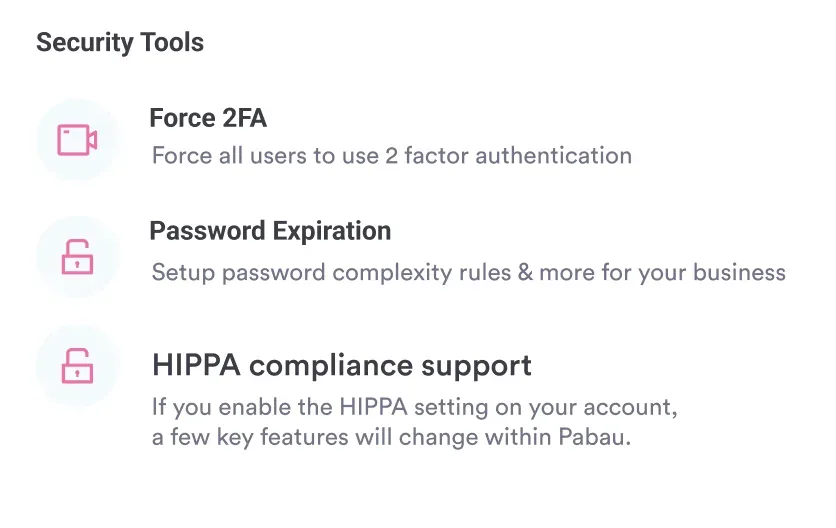

Pabau connects clinical documentation to claim submission so your H0014 encounters capture the right codes, modifiers, and supporting notes before the claim goes out. Track denial rates and reimbursement trends across your HCPCS H-series codes in one place.

Insufficient documentation is the leading cause of H0014 claim denials on audit. State Medicaid programs and MCOs will recover payments on H0014 claims that cannot demonstrate medical necessity on the date of service.
The documentation checklist for each H0014 service date typically includes:
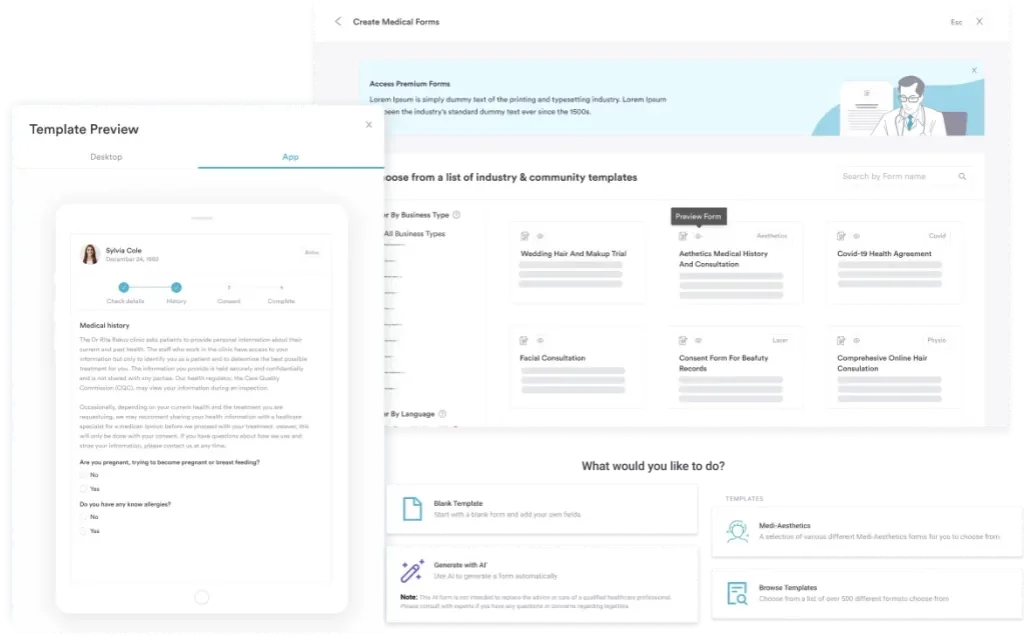
Practices using digital clinical forms can standardize ASAM assessment capture and daily progress note templates so every H0014 service day generates the required documentation automatically, rather than relying on staff memory. The Pabau client record keeps all documentation linked to the encounter date, making audit responses significantly faster.
H0014 claims require a supporting ICD-10-CM diagnosis code that establishes the clinical rationale for ambulatory detoxification. The primary diagnosis must reflect an active substance use disorder or withdrawal state. The F10-F19 diagnostic range in the CDC/NCHS ICD-10-CM classification covers substance-related and addictive disorders and provides the correct primary diagnosis codes for H0014 claims.
Code to the highest level of specificity available. For alcohol withdrawal, ICD-10-CM distinguishes uncomplicated withdrawal (F10.230), withdrawal with perceptual disturbance (F10.232), and unspecified withdrawal (F10.239).
Some state Medicaid programs and MCOs specify required diagnosis codes in their billing manuals; always verify payer requirements rather than assuming any F10-F19 code will be accepted. Providers also billing F11.20 or other F10-F19 diagnoses should confirm each H-series submission includes the appropriate primary diagnosis code per payer policy.
H0014 claims fail for predictable reasons. Identifying the pattern behind your denials is the fastest way to improve clean claim rates for ambulatory detoxification services.
Practices managing behavioral health billing for multiple payers benefit from patient care management workflows that flag incomplete documentation before the claim is submitted rather than after the denial arrives.
H0014 sits within a broader set of H-series codes covering the full continuum of substance use disorder treatment. Understanding where H0014 fits relative to adjacent codes helps coders select the right code for each level of care and avoid upcoding or undercoding.
H0014 specifically captures ambulatory detoxification. Once the patient completes detox and transitions to ongoing SUD treatment, the encounter shifts to codes like H0015 (intensive outpatient) or H0004 (individual counseling). Billing H0014 beyond the active detox episode, or using H0014 for counseling-only visits, is a compliance risk.
Providers managing multi-phase SUD treatment programs should review their HIPAA compliance workflows to ensure billing codes align with documented services at each phase of care.
When a patient transitions mid-week from ambulatory detox (H0014) to intensive outpatient (H0015), bill H0014 through the last active detox day and switch to H0015 from the first day of IOP services. Document the clinical rationale for the transition in the progress note on that date. Payers routinely audit claims where H0014 and H0015 overlap for the same date of service.
Behavioral health practices billing HCPCS H0014 face a specific challenge: per diem billing requires a discrete, complete clinical record for every service day, not just an admission note and a discharge summary.
When documentation is created in one system and claims are submitted in another, daily service notes get missed, PA numbers don’t transfer to the claim, and modifier decisions happen inconsistently across billing staff.
Pabau’s claims management software connects clinical documentation directly to the billing workflow. Progress notes, ASAM assessments, and treatment plan signatures created in the client record are available to the billing team when building each H0014 claim, reducing the missing documentation that triggers denials.
For practices also using automated workflows, daily encounter reminders and documentation completeness checks can be configured so that a day of detox service is never submitted without a corresponding progress note.
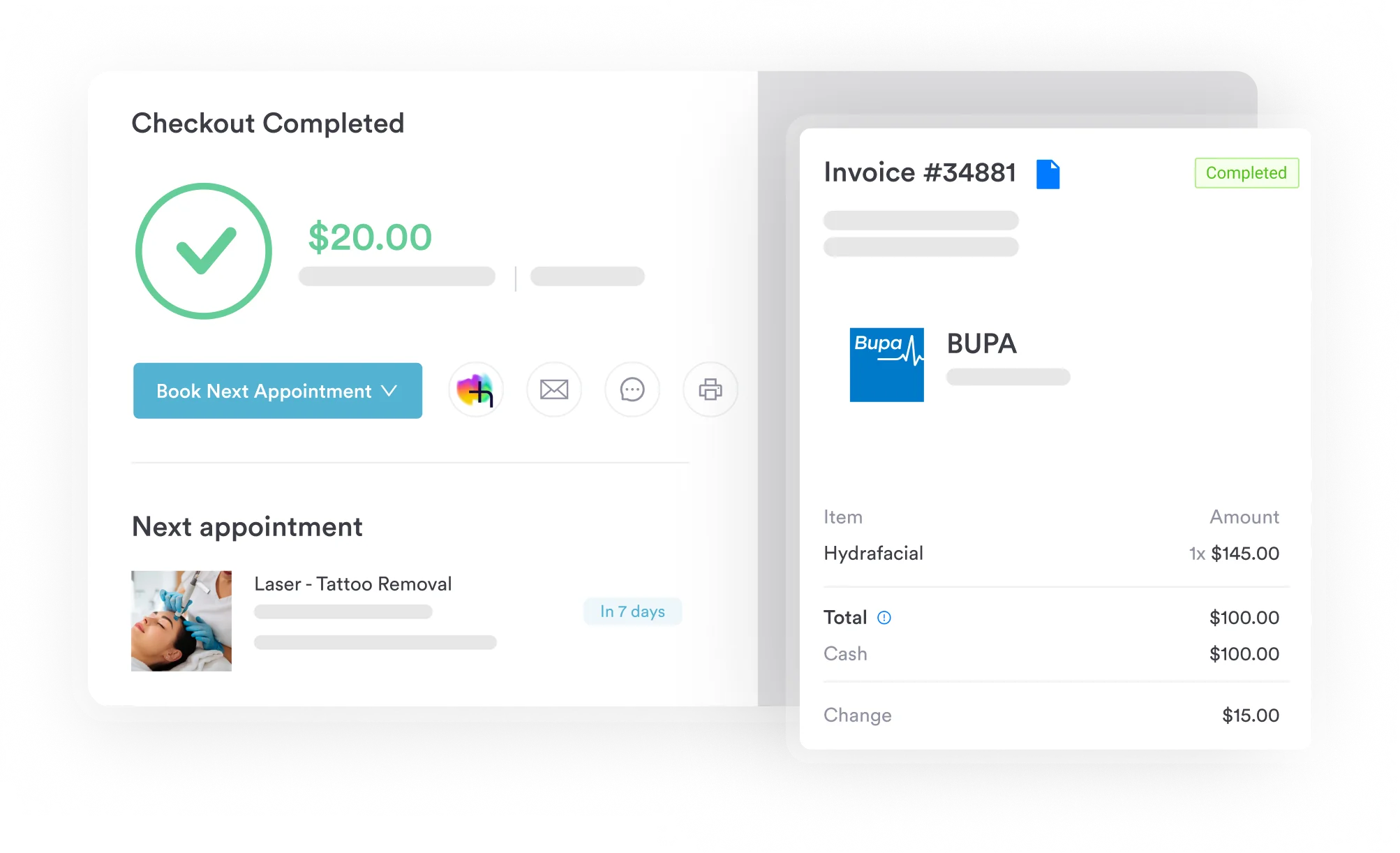
Practices supporting behavioral health and mental health treatment programs also benefit from Pabau’s reporting tools, which track denial rates by code, allowing billing teams to identify whether H0014 rejections cluster around a specific modifier, diagnosis code, or provider. That data-driven view makes it much faster to find and fix the specific issue rather than reviewing every denied claim individually.
For multi-location SUD treatment programs.
HCPCS Code H0014 is a Medicaid-primary code with per diem billing mechanics and documentation requirements that differ meaningfully from most outpatient professional service codes.
The most common failure points are missing prior authorizations, incomplete daily progress notes, and provider enrollment mismatches – all preventable with the right workflows in place.
For behavioral health practices billing H0014 alongside a broader HCPCS H-series code set, keeping clinical documentation and claim submission in the same platform removes the manual handoff where denial risk is highest.
Pabau’s psychiatry practice management tools are built to support exactly this kind of integrated documentation-to-billing workflow.
See how it works for your practice by reviewing Pabau’s claims management features or booking a demo with the team.

Billing for a standalone mental health intake? HCPCS Code H0031 covers mental health assessment services billed separately from ambulatory detox.
Coding a benign lip growth? ICD-10 code D10.0 covers a benign neoplasm of the lip, including the mucosa, frenulum, and vermilion border.
Billing anesthesia for a psychiatric procedure? CPT code 00104 covers anesthesia for electroconvulsive therapy, a related behavioral health billing scenario.
HCPCS Code H0014 is a HCPCS Level II code that describes alcohol and/or drug services; ambulatory detoxification. It is used by behavioral health providers and certified substance use disorder treatment facilities to bill Medicaid and certain other payers for medically supervised, outpatient withdrawal management services where the patient is not admitted to an inpatient or residential setting.
H0014 is generally not covered by traditional Medicare (Parts A and B). Coverage is primarily through state Medicaid programs. Medicare Advantage (Part C) plans may cover substance use disorder services using H-codes depending on plan benefit design, so providers should verify directly with each Medicare Advantage plan before billing H0014 to a Part C beneficiary.
H0014 is most commonly billed on a per diem basis, with one unit submitted for each day of ambulatory detoxification service. Some state Medicaid programs allow per-episode billing where a single claim covers the full detox episode, but per diem is the predominant method. Check your state Medicaid program’s behavioral health billing manual to confirm the required billing unit before submitting claims.
Prior authorization is commonly required for H0014 by most state Medicaid programs and managed care organizations, though requirements vary by payer and state. Prior authorization should be obtained before the first day of ambulatory detoxification services, and the PA number must be documented in the clinical record and included on the claim. Verify requirements with each payer individually rather than assuming a universal rule applies.
H0014 is paired with ICD-10-CM diagnosis codes from the F10-F19 substance-related and addictive disorders range. The most common pairings are F10.239 (alcohol dependence with withdrawal, unspecified), F11.23 (opioid dependence with withdrawal), and F13.239 (sedative/hypnotic dependence with withdrawal). Always code to the highest level of specificity available and verify payer-specific diagnosis requirements with each state Medicaid program or MCO.
The most closely related codes are H0001 (alcohol/drug assessment), H0004 (behavioral health counseling per 15 minutes), H0015 (intensive outpatient program), H0018 (short-term residential program), H0020 (methadone administration and/or service), and H2035 (alcohol/other drug treatment program, per diem). Select the code that matches the documented level of care and the services actually delivered on the date of service.