



HCPCS code E0198: Water pressure pad billing guide
HCPCS code E0198 is a water pad for a standard mattress HCPCS code E0198 is the ...

Last Updated: Oct 13, 2026

CPT code 20200 covers an open biopsy of superficial muscle, in the musculoskeletal section of the CPT code set.
Depth decides the code, so 20200 covers superficial muscle, 20205 covers deep muscle, and 20206 covers a percutaneous needle biopsy.
Superficial means close to the skin, so the operative note has to say it before a coder can assign 20200.
CPT 20200 carries a 000-day global period, which makes a later wound check a billable visit rather than bundled aftercare.
Practice management software like Pabau keeps CPT code entry beside the clinical note, which cuts re-keying and denial risk on musculoskeletal claims.
CPT code 20200 covers an open biopsy of superficial muscle. The surgeon cuts through skin and subcutaneous tissue, takes a sample from the superficial muscle layer, then closes the incision.
The code sits in the musculoskeletal system section of the AMA’s CPT code set, in the general subsection running from 20000 to 20999.
The official AMA descriptor is Biopsy, muscle; superficial. That single word, superficial, is the billing hinge.
Depth here means distance from the skin rather than the name of the muscle. A biopsy counts as superficial when the surgeon reaches the sample without dissecting past the superficial layer. Leave that out of the note and the claim cannot support 20200.
The steps below are also the elements a coder has to find in the operative note.
The operative note has to confirm the depth as superficial. If the dissection went beyond the superficial layer to reach the sample, CPT 20205 applies instead. Never assign 20200 from a generic muscle biopsy note that carries no depth qualifier.
The most common coding error on a muscle biopsy is picking the wrong depth code. Here is how the three biopsy codes compare.
Imaging can direct needle placement on a percutaneous biopsy. Ultrasound guidance is reported with CPT 76942 and CT guidance with 77012, alongside CPT 20206. Do not report a guidance code with 20200 or 20205, because the open approach does not rely on imaging to reach the muscle.
Tissue type matters as much as depth. When the target is bone rather than muscle, the biopsy leaves this code family altogether. An open deep bone biopsy is CPT 20245.
Modifier selection is where CPT 20200 claims get underpaid or denied most often. The table below sets out which modifiers apply and when. Verify modifier policy with the treating physician’s Medicare Administrative Contractor, known as the MAC, before submission. Local coverage determinations can restrict specific combinations.
Check the AAPC Codify CPT lookup for National Correct Coding Initiative (NCCI) edit pairs that bundle 20200 with other musculoskeletal codes. When modifier -59 is used to bypass a bundling edit, the documentation has to be strong enough to survive a post-payment audit.
Medical necessity for a superficial muscle biopsy rests on the ICD-10-CM diagnosis code you pair with it. Coders in physical therapy and musculoskeletal practices meet these pairings most often.
Check each code against the current CMS ICD-10-CM file before you submit, because the code set is updated every year.
Always confirm the ICD-10-CM code reflects the clinical indication the ordering physician documented. Connective tissue diagnoses such as ICD-10 M35.7 also turn up on musculoskeletal claims, so read the referral rather than the problem list. Payers sometimes require a local coverage determination review for muscle biopsy, particularly on less common diagnoses. Australian practices bill the equivalent service through MBS item numbers, which carry their own descriptors and eligibility rules. Time-based and complexity-based selection can point at different codes, so the documented medical decision making decides.
Always attach the ordering physician’s clinical notes when submitting CPT 20200 claims with inflammatory myopathy diagnoses. Many MACs require documentation of prior lab work, such as CK levels and EMG findings. That evidence supports medical necessity before they approve a muscle biopsy claim.
Medicare pays more for CPT 20200 in the office than in a facility. The practice expense component moves depending on who carries the overhead. The table below shows how the setting changes the rate rather than the dollar amount.
Check current figures in the CMS fee schedule lookup for the applicable calendar year. CMS updates the rates annually through the final rule.
Geographic Practice Cost Index (GPCI) adjustments mean the payment amount varies by locality. A practice in Manhattan is paid differently from one in rural Mississippi for the same CPT 20200 claim. Use the CMS lookup with your own locality code for an accurate figure.
RVUs drive every Medicare payment calculation. Medicare multiplies the total RVUs by the annual conversion factor, then applies GPCI adjustments. Three components make up the total for CPT 20200.
Work RVU values hold steady across settings. Practice expense values shift with the site of service. For the current conversion factor and final RVU values, use the FastRVU lookup tool. It mirrors the CMS data file and applies geographic adjustments for you.
CPT 20200 is generally eligible for performance in an ambulatory surgical center, or ASC. The CMS ASC payment indicator decides whether the ASC can bill separately for the procedure under the ASC payment system. That status is updated annually.
When you report CPT 20200 in an ASC, confirm the payer treats the ASC as a covered setting for musculoskeletal biopsies. Some commercial payers and Medicare Advantage plans impose site-of-service restrictions that CMS fee-for-service does not.
CPT 20200 carries a 000-day global period on the Medicare Physician Fee Schedule, so it has no postoperative window at all. The CMS relative value file assigns the code pre-operative, intra-operative and post-operative shares of 0.00. No follow-up work is built into the payment for the biopsy itself.
The global days value lives in the CMS relative value file, which CMS republishes several times each year. Confirm the indicator for 20200 there before you build billing rules around it.
A 000-day code that your system treats as a 10-day code will suppress follow-up claims you are entitled to bill.
Do not build a 10-day follow-up hold into your CPT 20200 billing rules. Because the code has a 000-day global period, a wound check on day five is a billable visit rather than bundled aftercare. The rule worth automating is the opposite one. Flag same-day encounters instead, since modifier -25 and the NCCI minor-procedure bundle decide whether that visit gets paid.
Accurate clinical documentation workflows are the foundation of a clean CPT 20200 claim. The operative note has to support every element of the code before your biller touches it.
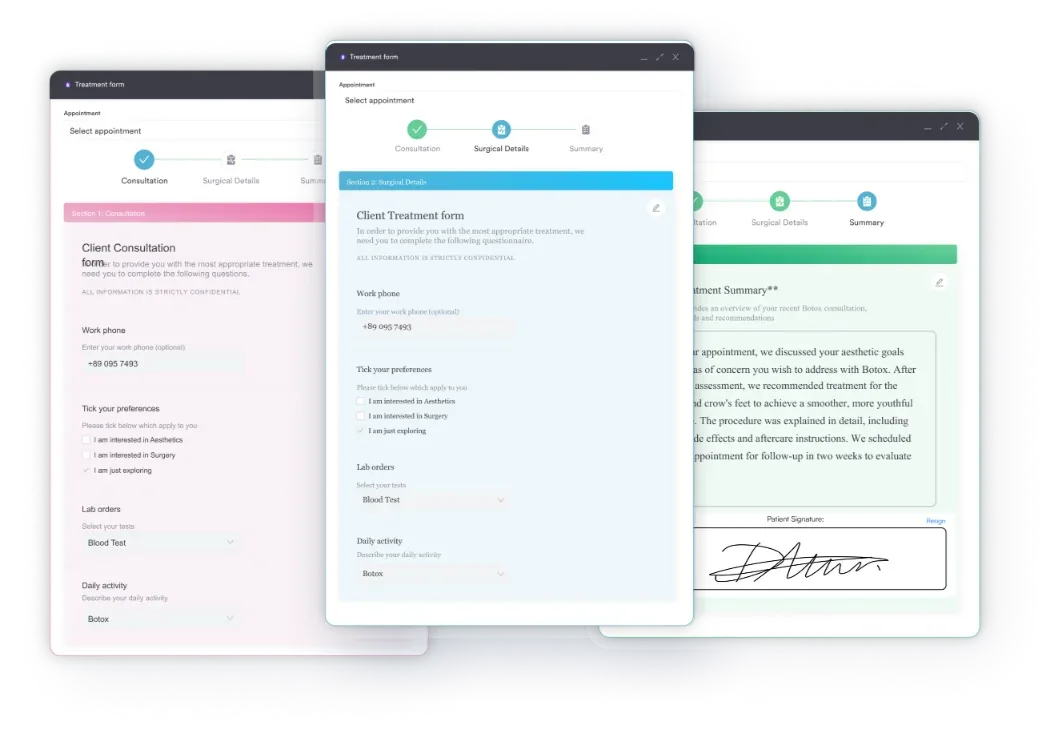
Practices using digital intake forms can pre-populate the procedure fields that capture depth, laterality, and anatomic site at the point of care. That takes the documentation work off clinical staff after the fact.
In sports medicine practices, where muscle biopsies come up more often, a biopsy-specific note template is worth the setup time.
Commercial payer policies for muscle biopsy can be stricter than Medicare defaults. Some payers require prior authorization for CPT 20200, especially when the ordering diagnosis is a rare neuromuscular condition.
Check your HIPAA compliance requirements before you transmit clinical documentation to payers electronically for prior authorization. Verify current payer policy with the MAC or the plan’s provider portal before you submit.
Most coding errors on CPT 20200 claims start in the workflow rather than in clinical judgment. Depth documentation lands in the wrong field. Modifier selection waits for a biller reading the note three days later. The reason for a same-day visit stays buried where no claim can reach it.
Practice management software like Pabau keeps CPT code entry, modifier flags, and note data in one workflow. Its claims management carries the depth field a clinician wrote straight into the claim your biller prepares. Nobody re-keys the code, and nobody hunts for the note.
For practices watching denial patterns across musculoskeletal codes. Your billing manager sees which codes are generating denials before the volume turns into a revenue problem.
If you are comparing medical practice management software options, the question worth asking is where the CPT workflow lives. A system that keeps coding beside the clinical note catches a missing depth word before submission. A system that keeps them apart catches it after the denial.

Pabau keeps CPT code entry, clinical notes, and modifier tracking in one platform. Your billing team gets what it needs to submit a clean CPT 20200 claim the first time.

CPT 20200 is a short code with a narrow definition, and that is exactly why it gets denied. One word in the operative note decides whether the claim survives. Write superficial and the depth is settled. Leave it out and no modifier will rescue the claim.
The second thing worth carrying away is the global period. CPT 20200 has none, so a wound check on day five is a visit you can bill. Set your billing rules up that way and you stop writing off work you have already done.
Book a demo to see how Pabau carries depth documentation and modifier flags from the procedure note into the claim.

Billing another musculoskeletal excision this week? CPT 21026 covers the documentation and modifier rules for an excision of facial bone.
Coding protrusio acetabuli on a hip claim? ICD-10 code for protrusio acetabuli covers the billable code for this hip disorder, where the socket protrudes into the pelvic cavity.
Coding joint pain without a specific site? ICD-10 code for unspecified joint pain explains why M25.50 claims get denied when a more specific joint site was documentable.
CPT Code 20200 is used to report an open biopsy of a superficial muscle. The surgeon incises through skin and subcutaneous tissue to reach the superficial muscle layer, then removes a tissue sample for diagnostic pathology. It is most commonly ordered during workups for inflammatory myopathy, muscular dystrophy, or unexplained proximal muscle weakness.
CPT 20200 is a superficial muscle biopsy. CPT 20205 is a deep muscle biopsy, which requires dissection beyond the superficial fascial layer to reach the sample site. Assign 20200 only when the operative note explicitly documents the muscle as superficial. If the note is ambiguous about depth, query the surgeon before coding.
Five modifiers come up most often with CPT Code 20200. They are -22 (increased procedural services), -51 (multiple procedures), -59 (distinct procedural service), -LT/-RT (laterality), and -50 (bilateral procedure). Always confirm modifier applicability with the treating MAC, as local coverage determinations and commercial payer policies may differ from CMS defaults.
Medicare reimbursement for CPT 20200 is higher in the non-facility setting (POS 11) than in facility settings (POS 22, 24). The physician bears the overhead costs in an office. Exact dollar amounts vary by geographic locality and change with each annual CMS final rule. Use the CMS Physician Fee Schedule lookup tool with your specific locality code for current figures.
CPT 20200 carries a 000-day global period, which means it has no postoperative period at all. The CMS relative value file assigns it pre-operative, intra-operative and post-operative shares of 0.00. Follow-up visits after the biopsy are not bundled into the procedure payment. Modifier -24 does not apply to this code, because there is no postoperative window for it to cross.
CPT 20200 is generally eligible for performance in an ambulatory surgical center. The ASC payment indicator and covered status are set by CMS and updated annually. Confirm the current ASC payment indicator for 20200 in the CMS ASC payment system addendum before scheduling the procedure in an ASC setting.



