HCPCS code G0257: Unscheduled or emergency dialysis billing guide
HCPCS code G0257: Official descriptor and code overview HCPCS code G0257 is defi...

Last Updated: Oct 27, 2026

CPT Code 01991 covers anesthesia for diagnostic or therapeutic nerve blocks and injections when not otherwise listed in the CPT codebook
Billing uses base units plus time units (per 15-minute interval) multiplied by a conversion factor; modifier AA, QK, QX, or QZ is required on every claim
Missing or incomplete pre-anesthesia evaluation notes are the leading cause of claim denial for CPT 01991
Pabau’s claims management software helps anesthesia practices automate modifier selection, time unit capture, and documentation compliance
Anesthesia coders running nerve block claims without a clear handle on CPT Code 01991 face predictable denials. This is one of the “when not otherwise listed” catch-all anesthesia codes, which means payers scrutinize it more carefully than procedure-specific codes.
The official description from the American Medical Association’s CPT code set reads: Anesthesia for diagnostic or therapeutic nerve blocks and injections; when not otherwise listed. It sits in the Anesthesia section alongside its companion, CPT Code 01992, and covers situations where no more specific anesthesia code applies to the nerve block or injection procedure being performed. Unlike other anesthesia CPT codes that are tied to a specific anatomical region or procedure, 01991 is used for diagnostic nerve blocks and injections.
For billing professionals and anesthesia practices, understanding exactly when to use this code, how to pair it with the right modifiers, and what documentation CMS requires is the difference between clean claims and preventable write-offs. This reference covers code description, base unit calculations, modifiers, reimbursement rates, documentation requirements, and common billing errors for CPT Code 01991. For a wider look at other anesthesia-adjacent CPT codes, Pabau’s procedure code library covers related specialties.
CPT Code 01991 applies when an anesthesiologist or CRNA provides anesthesia services for a diagnostic or therapeutic nerve block or injection, and no more specific CPT code exists for that particular procedure. Think of it as the coding safety net for nerve block anesthesia.
Common clinical scenarios that trigger CPT Code 01991 include:
One key distinction: CPT Code 01991 requires that the procedure being supported not have its own dedicated anesthesia code. If a more specific code exists, use it. Coders working with CPT codes for procedural anesthesia contexts should apply the same “most specific code first” logic.
According to the CMS Medicare Coverage Database Article A57361, which governs Monitored Anesthesia Care billing, CPT Code 01991 is explicitly listed as a covered code under MAC policies. That means it can be billed with MAC modifiers when the clinical situation warrants sedation monitoring rather than full general anesthesia.
CPT Code 01991 and CPT Code 01992 are companion codes in the same anesthesia subsection. Both cover nerve block and injection procedures, but they differ in scope. Understanding which applies prevents upcoding and under-coding errors.
The critical differentiator is the neurolytic agent. If a chemical or thermal agent is used to intentionally destroy nerve tissue, the claim belongs to 01992. All other diagnostic or therapeutic nerve block anesthesia scenarios default to 01991.
Anesthesia billing calculates reimbursement differently from surgical billing. Rather than a flat fee per procedure, anesthesia claims use a formula: (Base Units + Time Units) x Conversion Factor = Billable Amount. Two practices can bill the same encounter at a different visit level, and the note settles which was right.
Here is how each component works for CPT Code 01991:
Note: ASA Relative Value Guide base units and CMS-assigned base units can differ. Always cite the specific source when calculating. For current Medicare anesthesia conversion factor rates, use the CMS Physician Fee Schedule lookup tool and select the applicable locality.
Every anesthesia claim billed under CPT Code 01991 requires at least one anesthesia modifier. Missing the modifier is a guaranteed denial. The modifier signals who performed or supervised the anesthesia service, which directly affects payment rate.
CRNA supervision modifiers (QX, QY, QK) have strict concurrent case rules under Medicare. The supervising anesthesiologist must be present for induction and emergence and immediately available throughout. Verify modifier rules against current CMS policy and your regional MAC’s local coverage determinations before billing.
Audit your 01991 claims quarterly for modifier consistency. QK claims require documentation that the physician was immediately available for all concurrent cases. A single chart with a missing physician availability note can trigger a retrospective audit across all billed QK cases for that date.
Medicare reimburses CPT Code 01991 using the anesthesia formula (base units + time units x conversion factor). The specific dollar amount varies by geographic locality, facility type, and whether the service is provided in a facility or non-facility setting.
Because reimbursement rates are locality-adjusted annually, the table below shows the general rate structure rather than a single national figure. Always verify current rates using the FastRVU 2026 RVU lookup tool or the CMS MPFS lookup for your specific locality.
Private payers do not follow Medicare’s formula precisely. Many negotiate a fixed conversion factor per contract rather than using GPCI locality adjustments. Always pull your current contracted rate file before citing reimbursement figures in billing training materials.

Pabau’s claims management software helps anesthesia and pain management practices automate modifier selection, capture time units accurately, and flag documentation gaps before submission.

Incomplete anesthesia records are the single largest driver of CPT Code 01991 claim denials and RAC audit findings. CMS and the American Society of Anesthesiologists both specify what must appear in the anesthesia record for a claim to be payable.
Ensuring your practice uses digital intake and consent forms that capture all required fields at the point of service is the most reliable way to prevent documentation gaps. The required elements for CPT Code 01991 include:
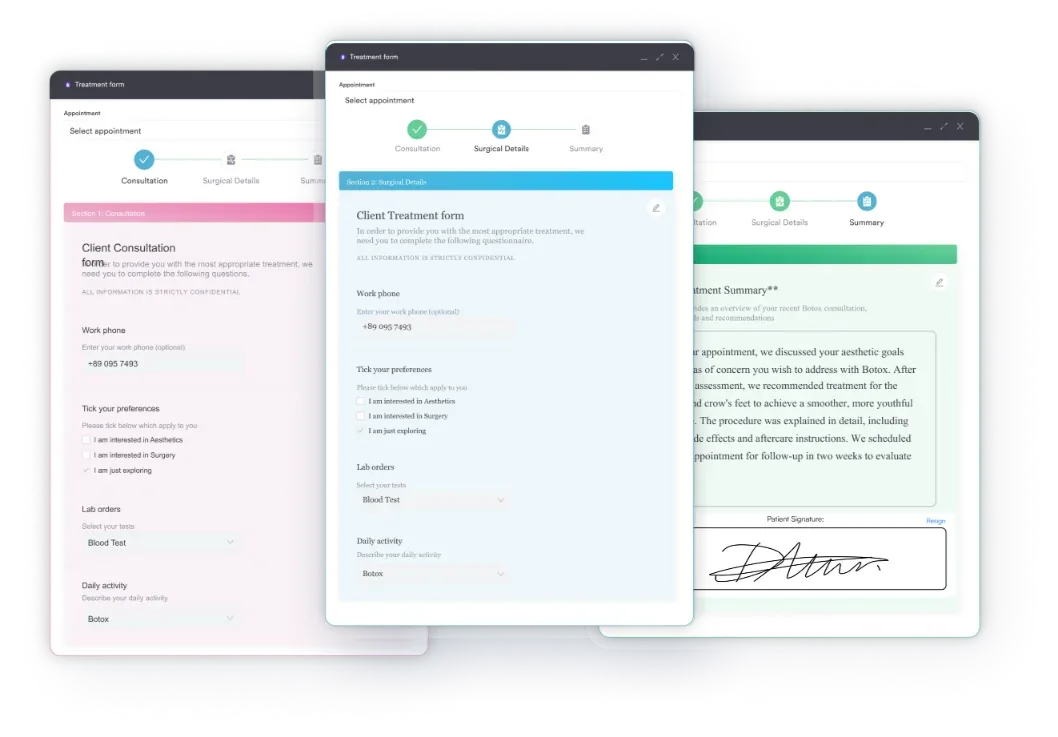
Practices using paper-based anesthesia records frequently miss the time stamp requirements. Switching to digital medical forms for clinical documentation allows real-time capture of start/stop times, reducing the retroactive reconstruction that leads to audit exposure. Review your documentation workflows against HIPAA-compliant documentation practices to ensure your records meet both clinical and regulatory standards.
CPT Code 01991 does not exist in isolation. Coders need to know which related codes might apply and when to use each. The crosswalk below covers the most commonly referenced anesthesia and procedure codes in the nerve block and injection context.
When CPT Code 62323 (or similar spinal injection procedure codes) appears on the same claim as 01991, billers must confirm that the anesthesia was separately documented and medically necessary. Bundling edits can reduce both codes if the payer views anesthesia as included in the procedure. See the AAPC CPT code lookup for full code hierarchy context. You can also browse specialty CPT code references for related anesthesia and procedure coding resources.
The diagnosis codes on a CPT Code 01991 claim must establish medical necessity for anesthesia during a nerve block or injection procedure. Payers and MACs can have Local Coverage Determinations (LCDs) specifying which ICD-10 codes support coverage. The table below lists commonly paired codes; always verify against your MAC’s current LCD.
Important: M54.5 was retired as a billable code in FY 2021. Claims with M54.5 as the primary diagnosis will be rejected. Use the current subcategory codes (M54.50, M54.51, M54.59) instead. Pairing a retired ICD-10 code with CPT Code 01991 is a common error that triggers immediate rejection.
Because 01991 is a “when not otherwise listed” code, payers apply extra scrutiny. The five errors below account for the majority of claim denials and audit findings in practices that bill this code regularly.
Spinal work gives a clear example of the specificity rule. Anesthesia for CPT Code 62272, a therapeutic spinal puncture, is reported under 00635 rather than 01991.
Run a monthly CPT 01991 denial report filtered by denial reason code. CO-4 (procedure code inconsistent with modifier) and CO-5 (procedure code inconsistent with place of service) together account for most modifier-related denials. Fixing the three most frequent denial codes will recapture more revenue than addressing a dozen less common ones.
Manual anesthesia billing for codes like CPT Code 01991 has two pressure points: accurate time unit capture and consistent modifier assignment. Both are human-error-prone when done by hand, and both are leading causes of claim denials.
Pabau’s claims management software helps anesthesia and pain management practices reduce these errors through structured billing workflows. Rather than relying on staff to remember which modifier applies to a QK versus QY situation, the system prompts the appropriate modifier selection based on provider role and documentation status. This is particularly relevant for practices with mixed anesthesiologist-CRNA staffing models where the supervising structure changes case by case.
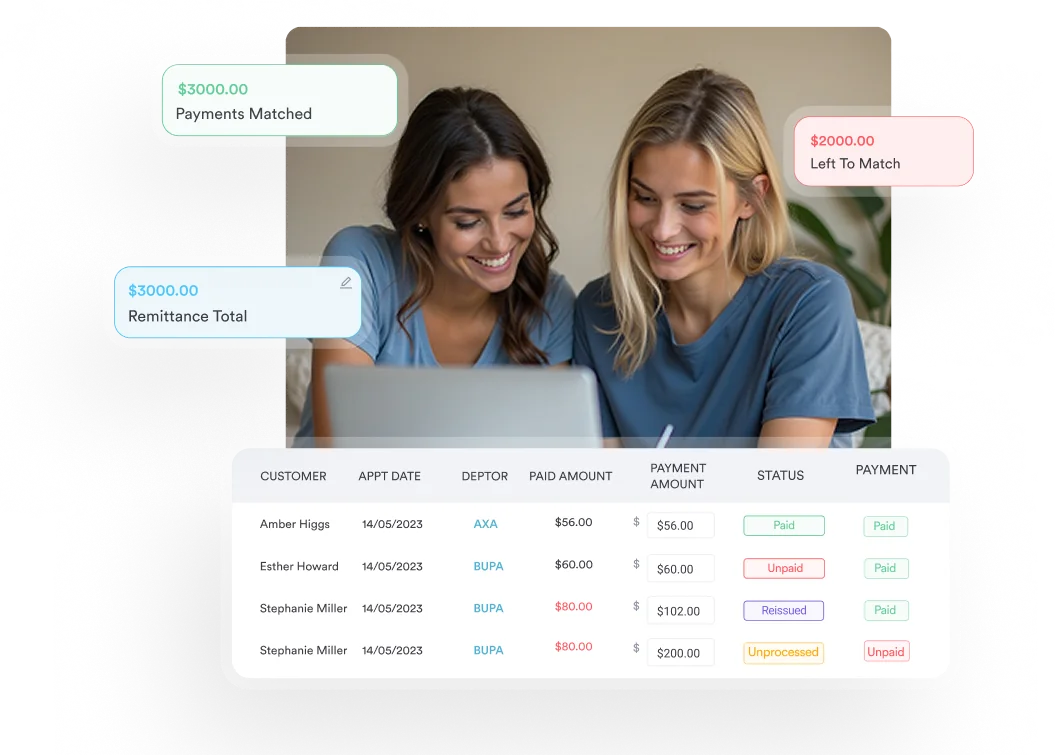
Beyond modifier logic, the key documentation requirements for CPT Code 01991 (pre-anesthesia evaluation, intraoperative time stamps, post-anesthesia note) map directly to structured digital chart fields. When those fields are built into the workflow rather than treated as optional narrative notes, documentation completeness improves significantly. The core practice management software features that matter most for anesthesia billing include structured form templates, automated claim scrubbing, and denial tracking dashboards. Practices can also benefit from reviewing EHR integration for anesthesia workflows to understand how documentation systems connect to billing platforms.
CPT Code 01991 is straightforward in concept but easy to get wrong in execution. The correct modifier, complete pre-anesthesia documentation, accurate time units, and the right ICD-10 pairing are the four variables that determine whether a claim pays cleanly or triggers a denial cycle.
For practices billing anesthesia services alongside nerve block procedures, Pabau’s claims management platform automates modifier validation and flags incomplete documentation before claims are submitted, reducing avoidable denials. To see how it works for your billing team, book a demo with the Pabau team.

Billing a Kyleena IUD device? Kyleena IUD billing guide explains how HCPCS code J7296 bills the device separately from the insertion procedure.
Billing for a contraceptive device insertion? HCPCS code J7301 billing guide covers billing the Skyla 13.5 mg levonorgestrel IUS with CPT 58300 and a matching Z30 diagnosis.
Managing multiple providers and anesthesia supervisions? Team management software supports provider role tracking across anesthesia and clinical teams.
CPT Code 01991 is an anesthesia billing code that covers anesthesia services provided for diagnostic or therapeutic nerve blocks and injections when no more specific anesthesia CPT code applies to the procedure. It is published by the American Medical Association and used by anesthesiologists and CRNAs billing for nerve block anesthesia in pain management and procedural settings.
The required anesthesia modifiers for CPT Code 01991 are: AA (personally performed by anesthesiologist), QK (medical direction of two to four concurrent procedures), QX (CRNA with physician direction), QY (medical direction of one CRNA), QZ (CRNA without physician direction), and AD (supervision of more than four concurrent procedures). Every 01991 claim must include one of these modifiers or it will be denied.
CPT 01991 covers standard diagnostic or therapeutic nerve block anesthesia when not otherwise listed. CPT 01992 is used when the nerve block procedure involves a neurolytic agent such as alcohol, phenol, cryotherapy, or radiofrequency ablation. The presence of a neurolytic agent is the sole differentiator; 01992 also carries higher base units (5 vs 3).
Required documentation includes: a pre-anesthesia evaluation completed before the procedure, an intraoperative anesthesia record with continuous vital signs and time stamps, precise anesthesia start and stop times, all medications and doses administered, and a post-anesthesia note. For QK and QY cases, the supervising physician must also document immediate availability throughout the procedure.
Yes. CMS Medicare Coverage Database Article A57361 explicitly includes CPT Code 01991 as a covered code under Monitored Anesthesia Care (MAC) policies. When MAC is medically appropriate for a nerve block or injection procedure, 01991 can be billed with G8 or G9 modifiers to indicate the qualifying MAC circumstance.
Anesthesia time units are calculated at one unit per 15 minutes of anesthesia service. Time begins when the anesthesia provider starts preparing the patient and ends when the patient is transferred to post-anesthesia care. For a 30-minute procedure, that equals 2 time units, which are added to the base units before multiplying by the conversion factor.