CCSD code H3322: Laparoscopic abdominoperineal resection
CCSD code H3322: Definition and procedure scope CCSD code H3322 is the private h...

Last Updated: Oct 27, 2026

CPT code 14021 covers adjacent tissue transfer or rearrangement on the scalp, arms, or legs for defects of 10.1 to 30.0 sq cm.
Defect size means the primary wound plus the secondary donor site, added together. Leaving the donor site out is the leading audit trigger.
Modifier 51 applies when 14021 runs alongside another surgical procedure on the same day.
Excision of the same lesion is a component of 14021, so it is never billed separately and no modifier overrides that.
Practice management software like Pabau keeps the operative note, the diagnosis, and the claim on one patient record. Nothing the coder needs sits in another system.
CPT code 14021 covers adjacent tissue transfer or rearrangement on the scalp, arms, or legs for defects of 10.1 to 30.0 sq cm. The defect is not only the wound you closed. It is that wound plus the donor site you created to close it.
Adjacent tissue transfer is one of the most audited procedures at dermatology practices. Miss the donor-site measurement and the claim comes back downcoded. Pick the wrong body-site code and it comes back denied.
The bundling rule catches people out most often. When you excise a lesion and then move a flap to close it, CPT treats that excision as part of 14021. It is not a second line item, and no modifier changes that.
The code sits in the 14000 series published by the American Medical Association (AMA). It applies to the scalp, the arms, and the legs, and only to combined defects between 10.1 and 30.0 sq cm. Anything outside either boundary belongs to a different code.
The code fits when a surgeon closes a scalp, arm, or leg wound by mobilizing healthy tissue from right next to it. Nothing is taken from a distant body site. Most cases follow a skin cancer excision, a traumatic wound, or a scar revision on an extremity.
Adjacent tissue transfer moves skin that already sits beside the wound. The surgeon raises a flap of skin and subcutaneous tissue, slides it over the primary defect, then closes the donor site separately. No tissue travels from a distant site, and that single fact separates the 14000 series from the skin graft codes. A clean claim rate below the practice benchmark usually points at one recurring coding or eligibility error. The filing deadline runs from the date of service, not the date the practice noticed the claim was unpaid.
Practices running plastic surgery EMR software can record the technique, both measurements, and the closure method in one operative note. The detail goes in while it is still fresh, rather than three weeks later when a payer asks.
All three local flap techniques bill under CPT code 14021 once the body site and size criteria are met.
Wound geometry and anatomy decide which technique the surgeon uses. The code does not change with the technique. The note still has to name the one you performed.
Defect size for 14021 is the primary wound plus the secondary donor defect, added together. Measure only the primary wound and you will land on a code that is too low. CPT’s instructions for the 14000 series require the combined figure, and omitting the donor site is the leading audit trigger on these claims.
Both measurements have to appear in the operative note by name. A note that records only the primary defect gives the payer grounds to downcode. The next code down is CPT 14020, which covers scalp, arm and leg defects up to 10.0 sq cm. That single omission is worth a few hundred dollars a claim.
Skin procedure documentation gets demanding fast, so plastic surgery EMR software with photo and consent tools helps.
Medicare pays roughly $530 to $570 for CPT code 14021 in an office setting, and $290 to $320 in a facility. Both are 2026 national figures before any geographic adjustment.
Both figures come from the CMS Physician Fee Schedule, which also publishes the work, practice expense, and malpractice RVU components behind them. Check your own locality in the fee schedule lookup before you submit, since geographic adjustment factors vary by jurisdiction.
Private payers set their own schedules and may pay above or below Medicare. Verify each contract separately rather than assuming the Medicare figure travels.
Modifier 51 is the one you will reach for most, when a second surgical procedure runs in the same session. Modifier 59 has a much narrower use than coders often assume, and it will not unbundle an excision of the same lesion.
Check every modifier against the current CMS NCCI Policy Manual before you submit. The rules refresh quarterly, and allowances for specific code pairs do change between versions.
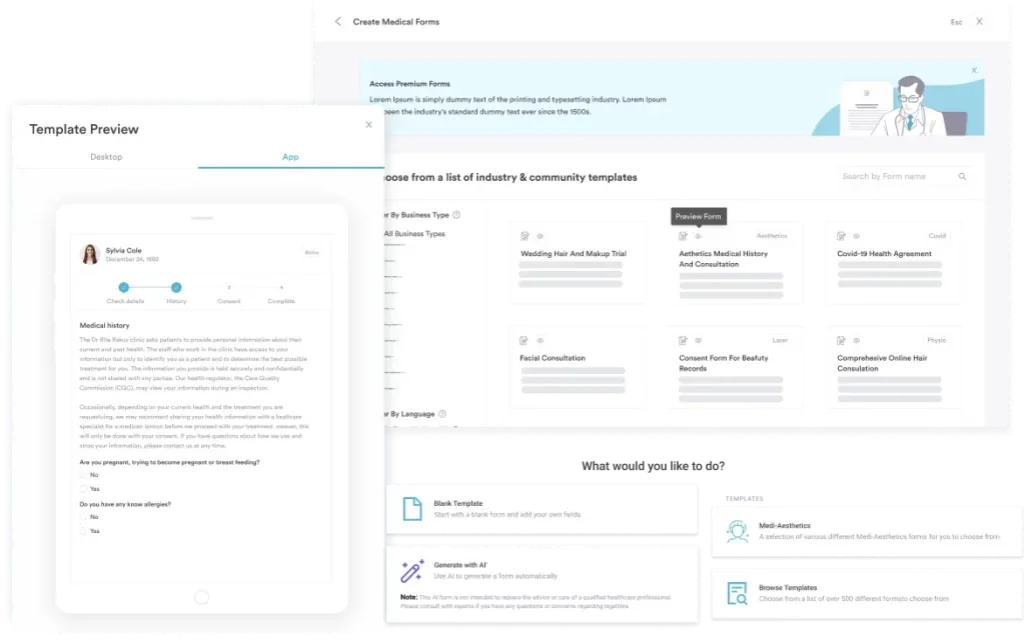
An operative note that supports 14021 carries seven elements. Miss one and the payer can request records or deny the line outright. Solid medical forms matter more here than across most of the surgical book.
The surgeon completes them at the point of care instead of reconstructing measurements from memory a week later.
Treat the AMA’s CPT codebook instructions for the 14000 series as your primary reference for what counts. Your own patient care management standards then decide who reviews the note before the claim is released.
Audit your own 14021 claims once a quarter. Pull 10 recent operative notes. Check each one for the primary defect, the secondary defect, the combined total, the site, and the flap technique. Spotting a pattern yourself costs far less than having your MAC spot it.
When you excise a lesion and close the defect with a local flap, that excision is not separately billable. CPT treats it as a component of 14000 through 14302.
The instruction lives in CPT itself, not in an NCCI edit you can override. Codes 11400 to 11446 and 11600 to 11646 are components of the tissue transfer whenever they treat the same lesion. Appending modifier 59 to CPT 11606 will not make that line payable.
Modifier 59 earns its place only on a service that stands apart. Say you excise a basal cell carcinoma on the left forearm and transfer a flap to close it. In the same session you also excise an unrelated lesion on the right calf. That second excision is distinct, so it bills separately.
Read the current CMS NCCI edit tables directly, because the pairs are refreshed every quarter.
Some services do stay separate. Evaluation and management bills on its own when the note documents a distinct service, and the anesthesia provider bills the anesthesia code. Each separately reported line still needs its own support in the record.
The diagnosis on a 14021 claim has to show why the tissue transfer was needed. Post-excision defects, traumatic wounds, and scar conditions are the three groups that carry it.
Laterality matters on the injury codes. The S41-, S51-, S71- and S81- series each carry the limb and the side, so choose the one that matches the site in your note. Avoid a history code such as Z87.39, since a personal history cannot establish necessity for an active repair.
AAPC’s CPT code range directory is a quick way to confirm a descriptor and the range a code sits in. It is a directory rather than a crosswalk, so verify payer acceptance against your MAC’s current Local Coverage Determinations.
Body site comes first in the 14000 series, then defect size. Get the site group right and the size band picks the code for you.
Choosing the wrong code from the series is the most common error on these claims. Pair the table below with your practice management software so the site and size checks happen while the note is still open. If you are evaluating vendors, our roundup of medical billing platforms compares the leading US options.
Both codes cover defects of 10.1 to 30.0 sq cm, so size will never separate them. CPT code 14021 is the scalp, the arms, and the legs. CPT 14041 covers the forehead, cheeks, chin, mouth, neck, axillae, genitalia, hands, and feet.
A wound on the hand or the neck belongs to 14041, never to 14021. The trunk has its own pair in CPT 14000 and 14001. Read the site off the operative note, not off the defect size.
Once the combined area passes 30.0 sq cm, 14301 becomes the primary code and covers 30.1 to 60.0 sq cm. Beyond 60.0 sq cm, report add-on 14302 for each additional 30.0 sq cm or part of it.
You never report 14021 alongside 14301 for the same wound. Crossing the threshold changes the code rather than adding one.
Not every closure is a tissue transfer. A layered closure that needed no flap is an intermediate or complex repair, coded from the 12000 and 13000 series instead.
CPT 12054 covers intermediate repair. Reach for 14021 only when you genuinely raised and moved a flap.
Five errors account for most 14021 denials and downcodes. Four of them start in the operative note rather than in the coding.
No software will catch a measurement nobody wrote down. What plastic surgery software can do is put the required fields in front of the surgeon as part of the note. That closes four of the five errors at the point of care rather than at appeal.
A 14021 claim passes through three pairs of hands. The surgeon writes the note, the coder picks the code, and the biller releases the claim. Most practices send that claim out as an 837 claim file, the electronic format payers require for professional services. Most denials begin at the first step and only surface at the third, so run these six checks before anything goes out.
If a line fails, fix the note before the claim leaves. An addendum written after a denial carries far less weight with a payer than a complete note written on the day of surgery.
In most practices the operative note lives in one system. The measurements sit on a scanned paper form, and the claim is built somewhere else again. The coder then emails the surgeon for a donor-site figure that was never written down, and the claim waits.
Practice management software like Pabau keeps the note, the photos, the diagnosis, and the invoice on the same patient record.
Digital forms are customizable, so the seven required 14021 elements become fields on your operative note template.
What changes day to day is small and useful. The measurement exists because the form asked for it. Your coder reads it straight off the note, and the claim goes out in the same week as the procedure.
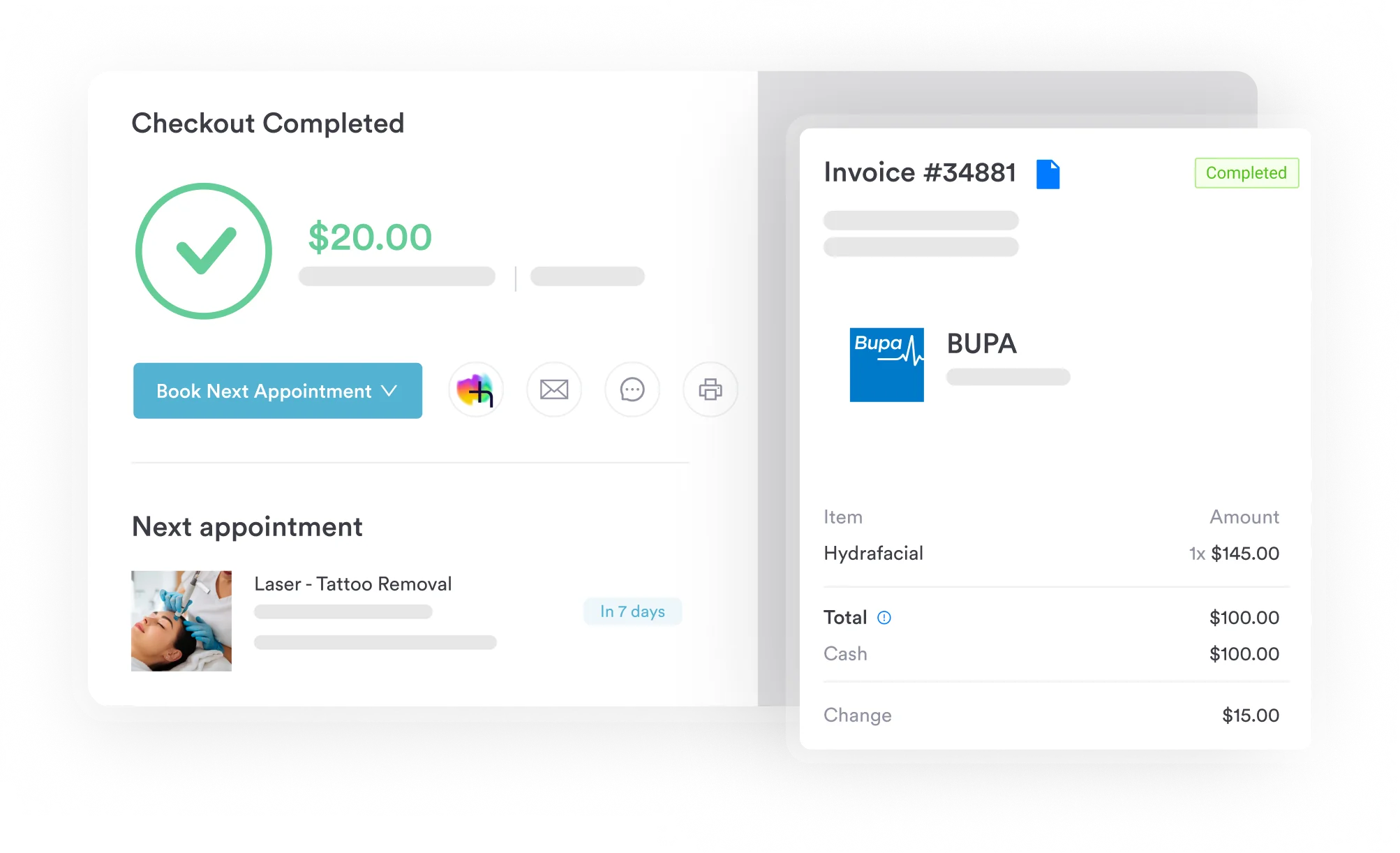

Pabau brings the operative note, the diagnosis, and the claim onto one patient record. Customizable digital forms capture the fields your coder needs, and claims management validates insurer details before you send.

A 14021 claim turns on two facts. One is the combined defect area, the other is the body-site group the wound falls in. Capture both on the day of surgery and the coding follows almost on its own.
The bundling rule is worth committing to memory, because it costs money in both directions. Bill the same-lesion excision separately and you invite a review. Leave the donor site unmeasured and you accept less than the work was worth.
If your notes already carry both measurements, the site, and the technique, everything after that is bookkeeping. If they do not, fix the template rather than the appeal letter. Book a demo to see how Pabau captures 14021 documentation and validates claims on one patient record.

Coding the excision that came first? CPT 11624 walks through malignant lesion excision on the trunk, arms, and legs, the family that bundles into 14021.
Closed the wound without raising a flap? CPT 12036 sets out how intermediate wound repair is sized and documented.
Need to import tissue instead of moving it? CPT 15241 explains how full-thickness skin graft add-ons are reported alongside a primary graft code.
Billing a flap reconstruction on a larger scale? CPT 19367 covers TRAM flap breast reconstruction, including the documentation payers ask for.
Picking the diagnosis for a healed limb wound? ICD-10 code S51.801S shows how the sequela character works on forearm open wounds.
Not for the same lesion. CPT treats excision codes 11400 to 11446 and 11600 to 11646 as components of 14000 through 14302. The excision is not separately reportable, and modifier 59 does not change that. An unrelated lesion excised at a separate site does bill separately.
Yes. Adjacent tissue transfer codes carry a 90-day global period on the Medicare Physician Fee Schedule. Routine follow-up visits for that wound are included in the 14021 payment. A staged or related return to the operating room inside those 90 days needs modifier 58 and its own documentation.
Yes, when two separate defects on qualifying sites each need their own flap. Total the primary and secondary areas per defect, and do not add areas across non-contiguous wounds. Document each defect with its own measurements, site, and technique so the second line survives review.
Usually not. Payers treat tissue rearrangement done purely to improve appearance as cosmetic and deny it. Coverage needs a functional problem in the record, such as a contracture limiting movement or a wound that will not close. Note the functional finding, not only the scar.