ICD-10 Code Y76.0: Diagnostic obstetric and gynecological devices
ICD-10 Code Y76.0: Definition and billable status ICD-10 Code Y76.0 is a valid, ...

Last Updated: Oct 23, 2026
Billable Code Specific Code
I25.2 is the billable ICD-10-CM code for old myocardial infarction.
ICD-10 Code I25.2, titled "Old myocardial infarction," classifies a past MI that a patient has experienced but which is no longer active or symptomatic at the time of the encounter. The CDC/NCHS ICD-10-CM web tool defines it as a past myocardial infarction diagnosed by ECG or other investigation, but currently presenting no symptoms.
This distinction matters clinically. The code does not indicate ongoing ischemia, active chest pain, or hemodynamic instability. It signals a healed infarct: structural evidence remains (often visible on ECG as Q-waves or imaging findings), but the patient has no current acute presentation requiring treatment for the MI itself.
Let Pabau's smart automation suggest the right codes, reduce claim denials, and keep your practice compliant—effortlessly.
Automate repetitive tasks and focus on what matters most—your patients.
Reduce coding errors and ensure compliance with the latest regulations.
Clean claims, fewer denials, and faster reimbursements.
Powerful insights and reporting to help your practice thrive.
HIPAA compliant SOC 2 certified GDPR-compliant Trusted by 4,000+ clinics worldwide

ICD-10 Code I25.2 (Old myocardial infarction) classifies a past MI that occurred more than 4 weeks (28 days) prior to the current encounter and presents no active symptoms.
I25.2 is a billable, specific ICD-10-CM code valid for reimbursement in FY 2026 and is classified under Chapter I25: Chronic ischemic heart disease.
The 4-week threshold separates I25.2 from acute MI codes (I21.x) and subsequent MI codes (I22.x): crossing that line with the wrong code triggers audit risk and claim denials.
Practice management software like Pabau helps cardiology and primary care teams apply ICD-10 codes accurately, reducing denials in cardiac rehab billing.
A documented history of MI should be coded I25.2, not Z86.79 — the personal-history code specifically excludes old myocardial infarction.
I25.2 is the code, but the search terms don’t always match the code number. “ICD-10 code for old MI” and “old myocardial infarction ICD-10” are two of the most common ways coders phrase the same lookup. Here’s the quick reference:
The code sits under the I25 parent category (Chronic ischemic heart disease). I25 itself is not billable; I25.2 is the specific, reportable subcode.
The 4-week rule is the most important boundary in MI coding, and it is where most billing errors originate. The ICD-10-CM classification treats MI as acute for the first 28 days. Once that window closes, the infarct is classified as old (or healed), and I25.2 applies.
A practical scenario: a patient presents for a routine cardiology follow-up visit 6 weeks after discharge from a STEMI admission. The acute episode has resolved, no further MI treatment is being provided, and the ECG shows residual Q-waves. ICD-10 Code I25.2 is the correct code here.
Coding it as I21.x would misrepresent the clinical status and flag the claim for review.
Another common situation involves incidental ECG findings. A patient being evaluated for hypertension has an ECG showing Q-waves consistent with an old inferior MI, but reports no cardiac symptoms and has no prior cardiac history on record.
Under ICD-10-CM guidelines, I25.2 correctly captures this asymptomatic, investigation-based diagnosis. Practices managing patients with several cardiovascular comorbidities still need structured documentation workflows so each condition is captured clearly at the point of care.
Understanding where I25.2 sits in the hierarchy helps coders assign the right code when multiple cardiac conditions are present. The I25 parent code covers the full spectrum of chronic ischemic heart disease. Key subcodes relevant to cardiovascular coding include the following:
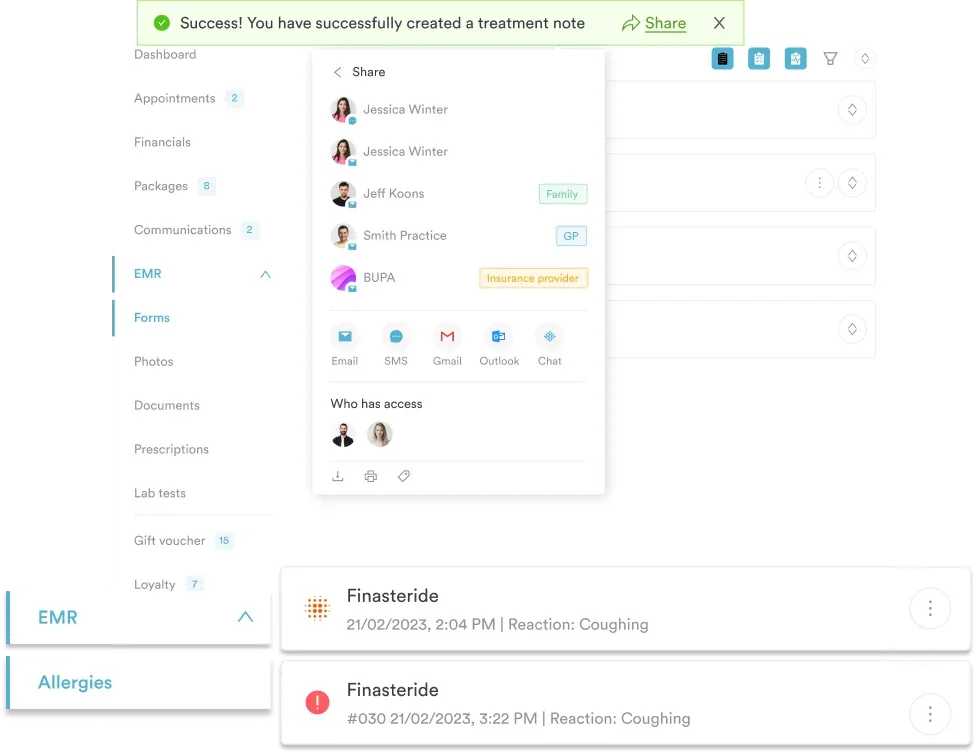
Practices that manage patients with multiple cardiovascular diagnoses benefit from structured documentation inside their electronic medical records (EMR) system. Pabau’s patient record management feature organizes comorbidities and past diagnoses so coders can select the accurate code from documented findings at each encounter, not from memory.
For coders who need to verify the current hierarchy and any FY 2026 updates, the AAPC Codify ICD-10-CM lookup provides searchable access to the tabular list with annotation back-references for all parent codes in the I25 category.
When a patient has documented coronary artery disease AND an old MI, code both I25.1x (specifying vessel and presence or absence of angina) and I25.2 as separate diagnoses. The AAPC coding guidelines support dual coding here, and payers expect specificity. Using I25.9 (unspecified) when you have the documentation for both is a missed specificity opportunity that can flag your claims.
An EHR suited to primary care keeps hypertension and heart disease codes consistent across years of visits.
A documented history of MI often gets coded as Z86.79 (personal history of other diseases of the circulatory system) out of habit. That’s the wrong code. Z86.79 carries an Excludes2 note that specifically excludes old myocardial infarction, routing it to I25.2 instead. The ICD-10-CM classification treats a past MI as a cardiovascular diagnosis, not a general history code.
This holds regardless of how the original event was documented. A “history of NSTEMI ICD-10” search and a “history of STEMI ICD-10” search both resolve the same way: once the event is more than 4 weeks old and asymptomatic, I25.2 covers it no matter which acute MI subtype started it.
Z86.79 still has a place. Use it for a history of other resolved circulatory conditions, such as a treated arrhythmia or a fully resolved episode of heart failure. For a past MI specifically, I25.2 is the code the classification points to, not a personal-history code.
The documentation burden for I25.2 is lower than for acute MI codes, but it is not zero. Coders need specific evidence in the record before assigning this code. Underdocumented encounters produce unspecified codes (I25.9), which carry less clinical weight and may affect risk adjustment in value-based care models.
For accurate ICD-10-CM diagnosis coding, the record must support the code being assigned. For I25.2, acceptable documentation includes any of the following:
The ICD-10-CM Official Guidelines specify that diagnosis codes should reflect conditions that affect patient care, monitoring, or treatment at the current encounter. If the old MI is being managed (for example, as the qualifying diagnosis for cardiac rehabilitation), it affects the encounter and must be documented and coded accordingly.
Maintaining HIPAA-compliant documentation workflows. Every code assigned should have a traceable documentation trail in the patient record.

Pabau helps cardiology and primary care practices manage patient records, code encounters accurately, and reduce claim denials through integrated documentation and claims management tools.

Whether I25.2 is coded as primary or secondary depends entirely on the reason for the encounter, and getting this wrong affects reimbursement and quality reporting.
I25.2 can serve as the principal diagnosis when the old MI is the main condition being evaluated at the encounter. This is uncommon in outpatient settings but occurs when a patient presents specifically for review of a previously diagnosed old MI (for example, a new patient who had a foreign MI and is establishing care).
More commonly, I25.2 appears as an additional (secondary) diagnosis supporting the reason for the encounter. Typical scenarios include:
The ICD-10-CM Official Guidelines make clear that secondary diagnoses should be coded when they affect patient management at the encounter. An old MI that influences drug selection (antiplatelet therapy, beta-blockers), rehabilitation decisions, or risk stratification clearly meets this threshold.
Using Pabau’s digital intake forms for cardiology patients creates structured fields for capturing cardiac history, including prior MI dates. This data flows directly into encounter documentation, giving coders the specificity they need without relying on verbal history at billing time.

Audit your cardiac rehab billing quarterly. Pull all claims where I25.2 appears and verify: (1) the encounter notes explicitly state ‘old’ or ‘healed’ MI, (2) the date of the original MI can be confirmed as more than 28 days prior, and (3) no acute MI code (I21.x) was assigned during the same admission. Even one misassigned acute code in the 28-day window creates audit risk for the entire cardiac rehab claim set.
ICD-10 Code I25.2 is a qualifying diagnosis for Medicare Phase II cardiac rehabilitation coverage. This is one of its highest-stakes billing applications, and the CMS coverage article (A53775) specifically lists I25.2 among the approved diagnoses for cardiac rehab reimbursement.
Under Medicare, cardiac rehabilitation programs are covered for patients whose qualifying event or condition is documented and dated. For old MI patients, the documentation must confirm the infarct occurred more than 4 weeks before the rehabilitation services begin. Practices should have a process for confirming this threshold at intake, not at billing.
That diagnosis code travels to the payer inside the 837 file, the electronic format practices use to submit claims.
Key Medicare cardiac rehab coding points for I25.2:
Practices using claims management software can validate diagnosis codes at the point of care, catching a misassigned code, like an acute MI billed past the 28-day window, before the claim goes out rather than during a remittance review or audit.
Practices comparing systems can review the best medical billing software for US practices to find one that flags qualifying diagnoses automatically.
The ICD List reference database provides a quick-reference lookup for I25.2 alongside its approximate synonyms and inclusion terms, useful for verifying that the clinical terminology used in documentation maps to the correct code before submission.
I25.2 is a low-complexity code conceptually, but it produces specific, recurring billing errors in practice. Recognizing these patterns helps coders and practice managers reduce denial rates before they accumulate.
The most common error. A patient is seen on day 35 post-MI and the coder assigns I21.09 (STEMI involving other coronary artery) out of habit from the discharge coding. The acute code is now incorrect.
This triggers claim review because the payer sees an acute MI code on a date well beyond the expected acute phase, raising questions about whether the visit is for a new event or an ongoing acute episode.
When documentation clearly states “old myocardial infarction” or “history of MI with no current symptoms,” using I25.9 (unspecified) is a missed specificity error. Payers and risk adjustment models weight I25.2 differently from I25.9, and under HCC risk adjustment, specificity affects the patient’s risk score. Chronic disease management programs and cardiac rehab authorizations also require specific qualifying diagnoses, not unspecified codes. Coding names the service; medical billing gets it submitted, adjudicated and paid. Where a payer still requires a paper claim, the practice needs the current revision of the form.
The opposite problem: the old MI is documented but not coded because it is considered “just history.” Under ICD-10-CM Official Guidelines, conditions affecting patient management at the encounter must be coded. If the old MI informs the treatment plan (antiplatelet prescribing, exercise capacity limits, cardiac rehab eligibility), it belongs on the claim.
Using structured practice management software with problem-list features that flag past diagnoses during encounter documentation reduces omission errors.
Coders should not be working from a blank slate at each visit for established cardiac patients. Similarly.
Some coders reach for Z86.79 (personal history of circulatory disease) whenever the chart says “history of MI,” treating it as a catch-all history code. The Excludes2 note under Z86.79 rules this out for old MI specifically: I25.2 is the code the classification directs coders to use instead.
The 4-week threshold defines the boundary between acute MI coding and ICD-10 Code I25.2.
Misassigning an acute code past 28 days, using the unspecified I25.9 when documentation supports I25.2, or omitting the code entirely when it affects patient management all cost practices money and create audit exposure.
Pabau’s claims management software gives cardiology and primary care teams the tools to validate diagnosis codes, capture complete documentation at every encounter, and reduce the manual review burden that leads to these errors. To see how Pabau supports accurate cardiovascular coding workflows, book a demo with the team.

Need to code other cardiovascular ICD-10 conditions? ICD-10 code I24.1: Dressler’s syndrome coding guide covers a related post-MI complication and its documentation requirements.
Coding a first-degree AV block? AV block coding guide covers I44.0, often denied over missing physician interpretation or an undocumented PR interval.
New this week: our CPT Code 00210 guide covers anesthesia billing for intracranial procedures.
Also new: the HCPCS Code Q4104 guide breaks down billing for Integra bilayer matrix wound dressing.
Coding a nonspecific intraventricular block? Intraventricular block coding guide covers I45.4, slowed ventricular conduction that does not fit a named bundle-branch pattern.
ICD-10 Code I25.2 is a billable ICD-10-CM diagnosis code for “Old myocardial infarction,” classifying a past heart attack that occurred more than 4 weeks (28 days) before the current encounter and that presents no active symptoms at the time of coding. It sits under the I25 Chronic ischemic heart disease parent code and is valid for FY 2026 reimbursement.
I21.x codes (Acute myocardial infarction) apply during the first 28 days after MI onset, covering active or evolving infarction requiring treatment. I25.2 applies from day 29 onward, when the MI is healed and no longer symptomatic. Using I21.x past the 28-day mark misrepresents the clinical status and triggers payer review for an apparently chronic claim coded as acute.
Yes, I25.2 can be the principal diagnosis when the old MI is the main reason for the encounter, such as a new patient visit focused on evaluating a prior MI. More commonly it appears as a secondary (additional) diagnosis supporting cardiac rehab eligibility, comorbidity documentation, or risk stratification when the encounter’s primary reason is something else, like hypertension management or pre-operative assessment.
Yes. CMS Medicare Coverage Database Article A53775 lists I25.2 as a qualifying diagnosis for Phase II cardiac rehabilitation. The MI must have occurred more than 4 weeks before rehab services begin, must be documented with a confirmed date, and must appear on the claim as the qualifying diagnosis, not only in the progress notes.
I25.2 is appropriate when an ECG or imaging study identifies evidence of a prior MI (such as Q-waves or a regional wall motion abnormality) and the treating provider documents the finding and acknowledges the past infarct in the encounter notes. The physician must explicitly reference the old MI; coders cannot assign I25.2 based on test results alone without documented clinical acknowledgment.
In ICD-10-CM, “old myocardial infarction” means a healed or resolved heart attack that occurred more than 28 days prior to the encounter and is no longer presenting symptoms requiring acute treatment. The term is equivalent to “healed MI,” “past MI,” and “history of MI” in clinical documentation, and all of these phrases in the physician’s notes support assignment of I25.2.
This phrasing describes the timeline ICD-10-CM uses to select an MI code, not three separate codes. “Acute” means the MI occurred within the past 4 weeks, coded I21.x. “Subacute” is not a distinct ICD-10-CM code category; it’s the informal term for the tail end of that same acute window. Once more than 4 weeks have passed and the patient has no active symptoms, the diagnosis becomes an old myocardial infarction, coded I25.2.