ICD-10 Code Y76.0: Diagnostic obstetric and gynecological devices
ICD-10 Code Y76.0: Definition and billable status ICD-10 Code Y76.0 is a valid, ...

Last Updated: Oct 23, 2026
Billable Code Specific Code
Q18.5 is the billable ICD-10-CM code for microstomia.
Assigning it is the easy part. Getting it paid takes a record that establishes congenital origin, plus attention to the Excludes1 note sitting above Q18.5 in the Q18 category. Both catch experienced coders out.
Let Pabau's smart automation suggest the right codes, reduce claim denials, and keep your practice compliant—effortlessly.
Automate repetitive tasks and focus on what matters most—your patients.
Reduce coding errors and ensure compliance with the latest regulations.
Clean claims, fewer denials, and faster reimbursements.
Powerful insights and reporting to help your practice thrive.
HIPAA compliant SOC 2 certified GDPR-compliant Trusted by 4,000+ clinics worldwide

ICD-10 code Q18.5 is the billable ICD-10-CM diagnosis code for microstomia, an abnormally small mouth opening present from birth.
The code is valid for FY2026, which runs from October 1, 2025 through September 30, 2026.
The record has to establish congenital origin, because acquired causes such as systemic sclerosis are coded elsewhere.
The Q18 Excludes1 note applies to Q18.5, so cleft codes and facial malformation syndromes are not reported with it.
Practice management software like Pabau checks the fields an insurer requires before a claim can be sent, so nothing goes out incomplete.
Q18.5 is a billable, specific ICD-10-CM code. You can submit it on a HIPAA-covered transaction without reaching for a more granular subcategory, because none exists. The FY2026 edition took effect on October 1, 2025 and runs through September 30, 2026.
That status is the easy question, and every code lookup answers it. The harder question is what microstomia has to look like in the record.
Microstomia is an abnormally small mouth opening that a patient is born with. The term comes from the Greek mikros, meaning small, and stoma, meaning mouth. In ICD-10-CM it sits with the other congenital malformations of the face and neck.
Presentation varies a lot. Some patients have a mild restriction that nobody treats. Others cannot take a bottle as infants, cannot open wide enough for a dental exam, or need staged release of the oral commissures. Correction is reconstructive work.
Function is usually what brings the patient in. Feeding, dental access, and speech are the three areas most often documented. Many of these patients are also seen by speech therapy practices for articulation work, which is worth knowing when you are reading a multi-specialty chart.
One distinction governs everything else. If the small oral aperture was acquired, Q18.5 is the wrong code. Burn and surgical scarring, radiation fibrosis, and systemic sclerosis all narrow the mouth, and each of those is coded in its own chapter.
The FY2026 Alphabetic Index carries exactly one entry that maps here: Microstomia (congenital). That is worth knowing, because coding databases publish longer synonym lists that are not index terms.
Phrases such as “congenital small mouth” or “abnormally small mouth opening” do appear in clinical notes. They are informal descriptions rather than official index entries. Treat them as a prompt to check the record for congenital origin, then code from the index itself.
Q18.5 has no exclusion note printed under it. The parent category does, and a category note governs every code beneath it. The FY2026 tabular carries an Excludes1 note at Q18 covering:
Excludes1 means the two codes are not reported together. So a claim carrying Q18.5 next to a cleft palate code from Q35-Q37 breaks convention, even when both conditions are documented. The CDC ICD-10-CM tool shows the current note if you want to confirm it before a batch goes out.
Before a batch of claims leaves, scrub for Q18.5 sitting alongside Q35-Q37, Q87.0, Q75.- or M26.-. Those pairings all come from the Q18 Excludes1 note. They are the quickest way to turn a clean congenital claim into a rejection you have to rework.
With software for managing patients, these diagnoses stay linked to growth checks, screenings, and specialist reviews.
Q18.5 is a four-character code at the bottom of its branch. Reading that branch upward is how you find the notes that apply to it.
Chapter 17 covers structural malformations present at birth. Chapter 16 is a different animal. It covers conditions that originate in the perinatal period. A congenitally small mouth belongs in Chapter 17 whatever the patient’s age at diagnosis.
Anyone coding craniofacial anomalies regularly should know the whole Q10-Q18 block, which is published in the CMS ICD-10 code files. Selecting from the block, rather than from memory, is what keeps you on the most specific code available.
Nine other codes share the Q18 category. Two of them cause most of the confusion, and both involve the mouth.
Q18.4 is macrostomia, the opposite finding, and it is a transcription slip away from Q18.5. Q18.7 is microcheilia, meaning congenitally small lips, which is a different structure from a restricted opening. A patient can have both, and each one needs its own line in the note before you report both codes. Electronic claims leave the practice as an 837 file, so a coding error becomes a rejection at the clearinghouse.
Chapter 17 has reporting conventions of its own, set out in the ICD-10-CM Official Guidelines for Coding and Reporting. Three of them come up on almost every microstomia claim.
It can be either. When the visit exists to evaluate or treat the microstomia, Q18.5 is the principal diagnosis. When the patient came in for something else and the microstomia is context, report it as an additional diagnosis. The note has to make the reason for the visit obvious.
Q18.5 applies at any age. A 40-year-old presenting for commissure release still gets Q18.5, because the condition was there at birth. Nothing in Chapter 17 restricts these codes to newborn or pediatric encounters.
There is a practical wrinkle in that. The evidence of congenital origin may be decades old. When it does not, a provider attestation is what carries the claim.
When microstomia appears as part of a wider picture, code each condition the provider actually documented. Check the Excludes1 list first, since a named facial malformation syndrome replaces Q18.5 rather than joining it. Never code an anomaly you inferred from a photograph or a family history.
A billable code and a payable claim are two different things. The record is what closes the distance, and for a congenital diagnosis it needs to answer five questions. Well-built medical forms do most of that work at the point of care.
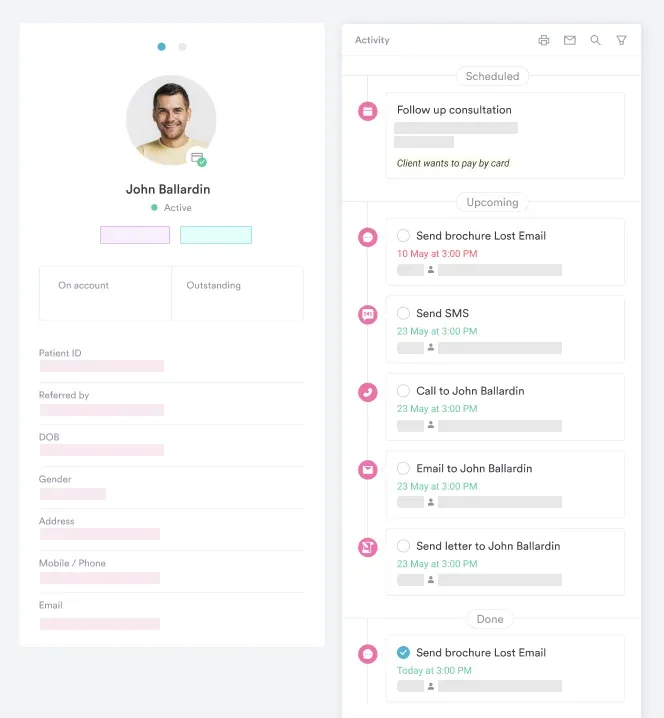
Two of the five are usually the ones missing: the measurement and the congenital statement.
Intake is the cheaper place to catch them.
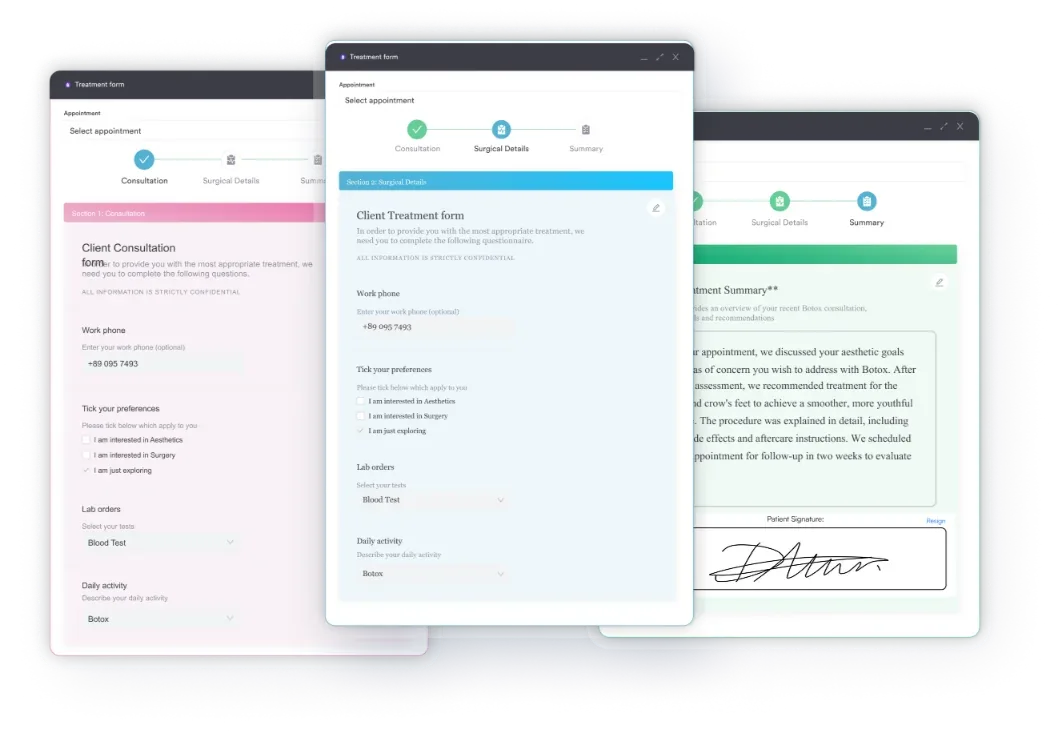
If any answer is no, query before you submit. A query costs a day. A denial costs a rework, a resubmission, and a spot in someone’s follow-up queue. Practices that keep records up to date rarely have to send one.
Verify congenital origin in the record before you submit Q18.5. Acquired restriction from systemic sclerosis, radiation fibrosis or surgical scarring is coded elsewhere. A single line of provider attestation confirming congenital onset is usually all it takes to protect the claim.
On a professional claim, Q18.5 goes into the diagnosis field of the CMS-1500, and a diagnosis pointer ties it to the procedure line it supports. On an institutional claim it is reported as the principal or a secondary diagnosis, depending on why the patient was admitted.
Every one of those claims is a HIPAA-covered transaction. So HIPAA compliance reaches the diagnosis data on the claim, not just the chart it came from.
All five are visible in a chart review before a payer ever sees them. A regular medical chart audit on congenital codes is about the cheapest control a practice can run.
Q18.5 has been billable and unrevised since ICD-10-CM took effect in the US. No description change, no reclassification, no split into subcategories.
A check each October is still worth the five minutes, because exclusion notes change more often than code titles do. The AAPC code lookup publishes the new edition on the first day of the fiscal year.
Eight codes sit close enough to Q18.5 to matter. Four of them can never share a claim with it, and the table below flags which.
The differential that comes up most often is acquired against congenital. Systemic sclerosis, coded in the M34 group, tightens perioral tissue and narrows the mouth in adults. The presentation resembles microstomia, but the origin is acquired, so Q18.5 stays off the claim.
Check the index under Microstomia whenever a note describes a small mouth opening. The FY2026 Alphabetic Index carries one entry, and it points to Q18.5 for congenital cases. If the note does not say congenital, query the provider before you assign a Chapter 17 code.
In most practices the evidence for Q18.5 is scattered. Birth history sits in a scanned referral. The oral aperture measurement is buried in a surgeon’s note. The coder finds neither, so an email goes out asking whether the microstomia is congenital.
Practice management software like Pabau keeps that material on one patient record. Intake answers, consent forms, treatment notes, and clinical photos live in the same file as the appointment and the invoice. A coder reviewing the encounter can read the birth history without leaving the record.
Pabau’s claims management then checks that a claim carries the fields the insurer requires, and holds back anything incomplete until they are filled. A status dashboard shows where every claim stands, so a rejection does not sit unnoticed for three weeks.
The outcome is fewer provider queries after the fact, and less time spent reconstructing why a code was chosen months ago.
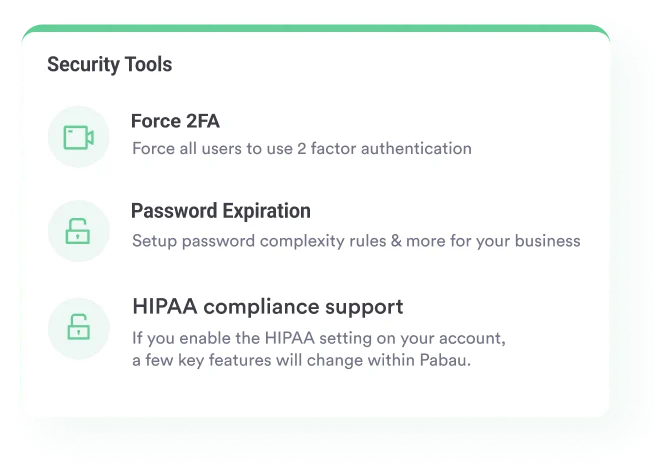

Pabau holds intake answers, treatment notes, and clinical photos on a single patient file. It also checks the fields an insurer requires before a claim can be sent. Fewer provider queries, fewer avoidable rejections.

Q18.5 is one of the calmer codes in Chapter 17. It has not changed, it is billable on its own, and there is no laterality or extension to get wrong. The judgment call sits upstream, in the record.
So the habit worth building is a two-question check before you submit. Does the note say congenital? Does anything else on the claim appear in the Q18 Excludes1 list? If either answer is unclear, query the provider and wait.
When chasing that evidence across paper notes and separate systems is the bottleneck, one shared patient record fixes most of it. Book a demo to see how Pabau keeps documentation and claim checks together for congenital diagnosis coding.

Billing a craniofacial reconstruction? CPT code 21175 breaks down the descriptor, the modifiers, and the diagnosis pairings that support the claim.
Coding a facial reconstruction graft? CPT code 15845 sets out how the operative note has to read before the claim goes out.
Working across the perinatal chapter? ICD-10 code P22.0 shows how Chapter 16 reporting differs from congenital malformation coding.
Documenting a facial excision? CPT code 11443 explains how lesion size and site drive the code you pick.
Billing a DNA-based blood typing test? CCSD code 0186U for red cell genotyping covers the billing code for DNA-based red cell antigen genotyping used when standard typing falls short.
No. Q18.5 is complete at four characters. Microstomia has no laterality and no seventh-character extension, so adding one will reject the claim. Coders moving over from the injury chapters often expect an extension out of habit.
No. A documented congenital small oral aperture is enough, and no genetic test is required. If the provider names a malformation syndrome affecting facial appearance, check the Q18 Excludes1 note before you report both codes.
Not on its own. Q18.5 names the anomaly, while the payer also wants the functional limit. Document feeding difficulty, dental access, airway concerns, or a measured oral aperture alongside the code.
Q18.9 covers an unspecified congenital malformation of face and neck. Query the provider first, because an unspecified code weakens a medical necessity argument and invites a request for records.
Yes. The ADA dental claim form carries a diagnosis code field, and restricted oral access often explains why a dental procedure needs extra time or sedation. Check the payer’s dental policy first.