ICD-10 Code V28.01XD: E-bike driver noncollision accident, nontraffic, subsequent encounter
ICD-10 Code V28.01XD: Definition and billable status ICD-10 Code V28.01XD is the...

Last Updated: Oct 20, 2026
Billable Code Specific Code
S42.009B is the billable ICD-10-CM code for fracture of unspecified part of unspecified clavicle, initial encounter for open fracture.
The code sits in the S42 category, which covers fractures of the shoulder and upper arm in Chapter 19 of ICD-10-CM.
Two words in that description carry most of the coding risk. "Unspecified part" means the note never located the break within the bone. "Unspecified" clavicle means it never stated left or right. S42.009B is therefore a last-resort code on two separate axes at once.
The code is still billable and specific enough for claims, per the CMS ICD-10-CM tabular list.
Let Pabau's smart automation suggest the right codes, reduce claim denials, and keep your practice compliant—effortlessly.
Automate repetitive tasks and focus on what matters most—your patients.
Reduce coding errors and ensure compliance with the latest regulations.
Clean claims, fewer denials, and faster reimbursements.
Powerful insights and reporting to help your practice thrive.
HIPAA compliant SOC 2 certified GDPR-compliant Trusted by 4,000+ clinics worldwide

S42.009B is the ICD-10-CM code for fracture of unspecified part of unspecified clavicle, initial encounter for open fracture
Category S42 allows only the 7th characters A, B, D, G, K, P and S, so no Gustilo type extension applies
The 6th character 9 means laterality was never documented, so use S42.001B for right or S42.002B for left instead
Do not confuse S42.009B with S42.202B, which codes an open fracture of the upper end of the left humerus
Practice management software like Pabau prompts clinicians to record fracture site, laterality and phase of care at every visit
Each character position in S42.009B carries its own clinical meaning. Reading the string position by position is what stops a coder from settling on the wrong bone or the wrong phase of care.
The 4th character is the one to guard. A 0 in that position means clavicle, while a 2 means the upper end of the humerus.
The 5th character 0 says the record did not place the fracture at the sternal end, the shaft, or the lateral end. The 6th character 9 signals missing laterality, so use it only when the note genuinely omits left or right.
Laterality digits do not carry across the clavicle subcategories, which trips up coders working from memory. In S42.00-, the 6th character 1 means right, 2 means left, and 9 means unspecified. So a left clavicle fracture of unspecified part, seen at follow-up with delayed healing, takes ICD-10 code S42.002G.
In S42.02-, the same position encodes displacement and side together, so 1 is displaced right and 2 is displaced left. Always read the digit against its own subcategory.
The 7th character extension drives some of the most common errors in musculoskeletal trauma coding. Fracture categories carry more extension options than the injury codes around them. A coder moving between chest and shoulder trauma has to switch rule sets. Three points matter most.
Coders often reach for the Gustilo-Anderson extensions here, and that is a mistake. The Gustilo-based characters for type I or II versus type IIIA, IIIB and IIIC apply only to the forearm, femur, and tibia and fibula categories.
Category S42 has no C, E, F, H, J, M, N, Q or R option. Codes such as S42.009C do not exist, so a claim carrying one will reject as invalid.
Gustilo classification still belongs in the clinical note. It guides antibiotic choice, debridement timing and prognosis, and it supports the surgical CPT code. It just does not change the ICD-10-CM diagnosis code for a clavicle.
Whenever the record names a side or a fracture site, a more specific sibling code exists. Reading the sibling descriptions side by side shows which one the note supports. The table below lists the alternatives coders reach for most often.
The shaft is by far the most common site, so S42.02- codes appear more often than the unspecified-part group. If your unspecified-code volume outweighs your shaft-code volume, the documentation is the problem rather than the case mix.
Because every code in this block starts with S42, a single wrong digit moves the claim to a different bone. These three neighbors cause most of the confusion.
Use the CDC/NCHS ICD-10-CM web tool to confirm any clavicle code against the current fiscal year tabular list. The AAPC Codify lookup also lets you check a sibling description by keyword in a few seconds.
Clinics tracking fracture and sprain recovery in Jane often start comparing Jane App alternatives as caseloads grow.
Clinical notes rarely use the tabular wording, so coders need to recognize the everyday phrasings that map to this code.
One default rule decides the “open” half of this code. ICD-10-CM Section I.C.19.c instructs coders to treat a fracture as closed when the record does not say open or closed. So S42.009B needs positive evidence of an open wound, not an assumption. The same section defaults an unstated fracture to displaced, which matters once a site is documented.
S42.009B is assigned when an open clavicle fracture is under active treatment and the note names neither a site nor a side.
Clavicle fractures make up roughly 2 to 5 percent of all fractures seen in emergency and orthopedic settings. Open ones are rare, so this code applies in a narrow window within that group.
The mechanism that opens a clavicle rarely stops at the bone. Scan the record for a documented chest injury such as S27.309A, and code it alongside the fracture when the provider treats both.
Practices running physical therapy documentation workflows meet this code when patients transfer from acute surgical care into rehabilitation. The therapist should confirm whether the encounter still counts as active treatment before the coder picks a 7th character.
Check whether the treating clinician documents active treatment or routine follow-up in the assessment. That distinction decides whether the 7th character is B or D, so it belongs in every note. Ask the provider when the phase of care is unclear, rather than defaulting to the initial-encounter extension.
The ICD-10-CM Official Guidelines for Coding and Reporting set out four elements coding staff should confirm before assigning S42.009B. Orthopedic billing teams get the best results by building these into digital intake forms and clinical note templates.
Dictated notes deserve the same discipline. An Pabau scribe captures what the surgeon says, so an operative note that never states the side still reaches the coder without it.
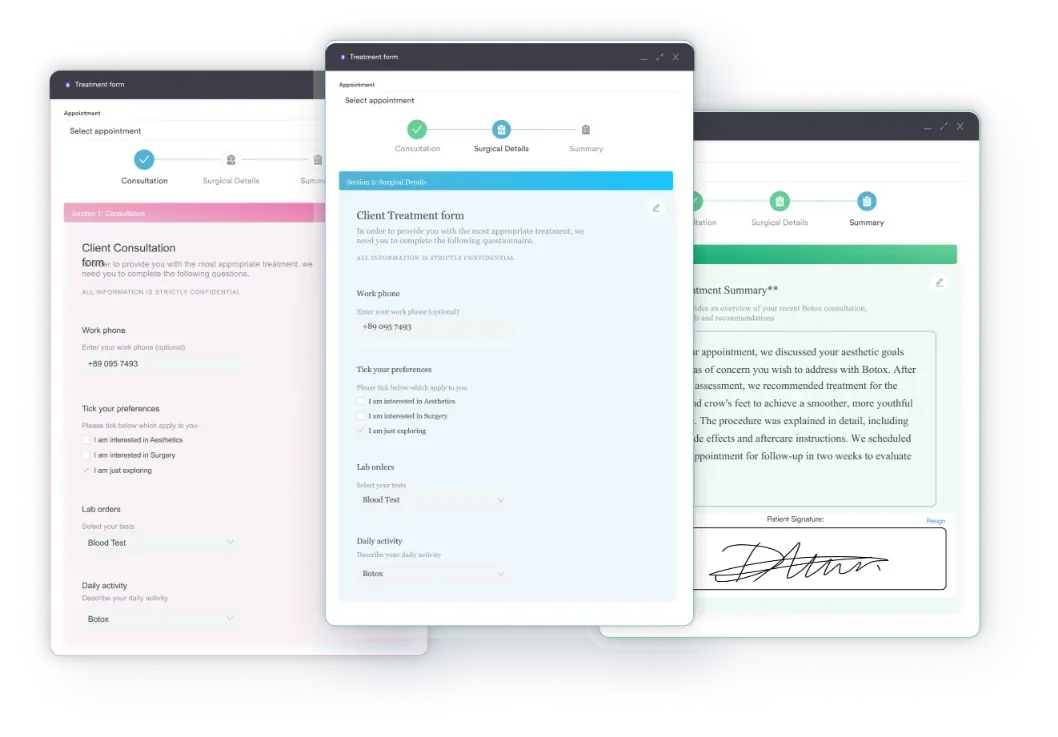
Where several practitioners share a caseload, centralizing note templates stops the inconsistent documentation that pushes coders toward unspecified codes. That is the practical route to fewer S42.009B assignments and more specific ones.
Open fractures carry higher acuity than closed ones, and the diagnosis code supports medical necessity for surgical repair. S42.009B on its own does not guarantee a reimbursement amount, though. Payers apply their own policies, and grouping depends on the full claim.
A rising count of S42.009B rejections usually points to a missing external cause code, absent laterality, or the wrong encounter extension. Denials left unworked reach the patient as a balance.
Two worked examples show what that secondary code looks like. A patient struck by a motorcycle while riding on the outside of a bus takes V72.7XXA. If the same fracture came from a cleat strike in a sports pile-up, the mechanism code is W21.31XA instead.
For current Medicare data, the CMS ICD code lists give valid diagnosis codes for Section 111 reporting and coverage coordination. Check commercial payer policies directly, since their open-fracture rules can differ from Medicare.
Fracture codes sit inside the wider framework of HIPAA compliance requirements for diagnosis coding. HIPAA administrative simplification obliges covered entities to use ICD-10-CM for diagnoses on electronic transactions. Submitting a retired or invalid code is a compliance exposure as well as a payment one.
An invented extension such as S42.009C is worth catching early. It is not a valid ICD-10-CM code, so it fails the code set requirement outright. Building the valid 7th characters for S42 into your claim scrubber and compliance checks removes that risk before submission.
The American Hospital Association Coding Clinic for ICD-10-CM and PCS remains the definitive source for edge cases. Consider a note that confirms a wound but never links it to the fracture. Published Coding Clinic advice decides whether “B” applies or a physician query comes first.
Add one sanity check to your clavicle coding workflow: confirm the 4th character is 0 before the claim goes out. S42.0- is the clavicle family, while S42.2- covers the upper end of the humerus. A single mistyped digit turns S42.009B into S42.202B, which describes a different bone and a documented left side.
Accurate coding starts with accurate notes, which is a documentation problem before it is a billing one. Practice management software like Pabau lets orthopedic, sports medicine and physical therapy practices build note templates around the four elements S42.009B depends on. Open versus closed, site within the clavicle, laterality and phase of care can each be set as a required field. A pre-authorization number has to reach the claim, and a missing reference is a common avoidable denial. Accounts receivable aging shows which codes are slow to pay long before anyone calls it a denial problem.
Pabau’s claims management software then links those notes to the claim. Missing external cause codes and blank laterality surface before submission instead of arriving back as a denial. Practices with heavy trauma caseloads can group denial reasons by code family and feed that back into documentation training.
The outcome is a shorter query list for coding staff and fewer unspecified codes leaving the practice. Coders spend less time chasing laterality, and providers answer fewer queries after the fact.

Pabau connects clinical documentation to claims submission, so open clavicle fracture codes like S42.009B carry the right detail at every encounter.

S42.009B applies to an open clavicle fracture during active treatment. It fits only when the record names neither a site within the bone nor a side. Two of its seven characters exist only because information is missing, which makes it a code to move away from rather than settle on.
Better documentation is what moves the claim onto a more specific sibling.
Two checks prevent most errors here. Confirm the 4th character is 0 so the claim stays on the clavicle and not the humerus. Then confirm the 7th character is one of A, B, D, G, K, P or S, because Gustilo-based extensions are invalid in category S42.
Pabau brings structured clinical notes and claims submission together, so fracture site, laterality and phase of care get captured consistently. That is what shrinks the query queue for coding staff. Book a demo to see it against your own trauma workflow.

Coding an unspecified musculoskeletal diagnosis? M79.0 shows how far documentation has to go before an unspecified code is the right answer.
Billing an FNA biopsy under MRI guidance? FNA biopsy MRI guidance add-on code explains why payers reject the claim without parent code CPT 10011.
Coding a fine needle aspiration biopsy? Fine needle aspiration biopsy billing guide covers the code for a first lesion sampled without imaging guidance.
Billing an image-guided abscess drainage? Image-guided fluid collection drainage guide covers the three elements that determine whether this drainage code applies.
ICD-10 Code S42.009B is the ICD-10-CM diagnosis code for fracture of unspecified part of unspecified clavicle, initial encounter for open fracture. It is a billable, specific code in Chapter 19 of ICD-10-CM. Both the part of the bone and the side are undocumented here. A more specific sibling code applies as soon as either detail appears in the record.
The 7th character is the only difference. S42.009A covers an initial encounter for a closed clavicle fracture, and S42.009B covers an initial encounter for an open one. The site stays identical in both, meaning an unspecified part of an unspecified clavicle. If the note does not state open or closed, ICD-10-CM guidelines default the code to closed, so S42.009A applies.
Use “B” as the 7th character while the patient is receiving active treatment for an open fracture. Active treatment includes the initial emergency visit, surgical fixation, and any later visit that still manages the acute injury. Once care becomes routine healing follow-up, switch to “D”. For category S42, B is the only open-fracture extension available.
No. Category S42 allows only seven extensions, namely A, B, D, G, K, P and S as the 7th character. The Gustilo-based extensions for open fracture type I, II, IIIA, IIIB and IIIC belong elsewhere. They cover the forearm, femur, and tibia and fibula instead. A code such as S42.009C does not exist and will reject as invalid. Record the Gustilo grade in the clinical note anyway, since it guides treatment.
In subcategory S42.00-, the 6th character 1 means right clavicle, 2 means left, and 9 means the side was not documented. That pattern does not carry across the whole family. In S42.02-, the same position combines displacement and side, so 1 is displaced right and 2 is displaced left. Always read the digit against its own subcategory description.
Start from the S42.0- clavicle family and pick the subcategory that matches the documented site. Use S42.00- for an unspecified part, S42.01- for the sternal end, S42.02- for the shaft, and S42.03- for the lateral end. Add the 6th character for laterality, then add “B” for an open fracture at initial encounter. Finally, add a secondary external cause code for the injury mechanism.