






Key Takeaways
Always-on surveys sent by text or email right after each appointment capture feedback while the visit is still fresh.
On-site feedback forms, paper or digital, give patients a structured way to rate specific parts of their visit in real time.
A dedicated feedback landing page makes it easy, and more private, for patients to share detailed, considered responses.
Social media polls, stories, and comments open up an informal feedback channel for patients who won’t fill out a formal survey.
Phone calls let staff ask follow-up questions and surface the qualitative detail that other methods miss.
The 5 patient feedback methods at a glance
Each method suits a different goal. Use this comparison to pick the right one, or combine two or three.
| Method | Best for | Typical response | Effort to run | Patient can stay anonymous |
|---|---|---|---|---|
| Post-visit survey (text/email) | Trackable ratings at volume | Higher when sent right after the visit | Low once automated | No |
| On-site feedback form | Immediate reactions to one visit | High, captured in the room | Low | Optional |
| Feedback landing page | Detailed, considered comments | Lower volume, higher quality | Low | Yes |
| Social media poll or story | Quick reactions from followers | Wide reach, shallow detail | Low | No |
| Phone call | Deep, qualitative detail | Low volume, time-intensive | High | No |
1. Send a patient feedback survey by text or email
A patient feedback survey is the most scalable way to gather valuable feedback from patients.
Rather than running one big survey every few months, make it always-on: build a feedback request into your process so that after every appointment, patients get a quick prompt shortly after.
This works on two levels. First, it ensures your wins get noticed and issues get addressed quickly. Second, it gives you a continuous stream of reviews.
- Text messages: Send convenient survey links directly to patients’ mobile phones, enabling quick responses even on the go.
- Emails: Use Pabau’s email marketing feature to send survey requests via email, allowing for more in-depth feedback.
With Pabau, you can send the right message at the right time to automate patient engagement around each visit. Send the survey right after the appointment while the experience is fresh, or delay it if the treatment needs time to take effect.
You can also:
- Build review requests into the booking process with a single checkbox
- Use a question bank of survey questions you can customize to your practice, or start from our 12-item short form survey template
- Customize when a review request goes out, specific to each service
- Prompt clients to share four- and five-star reviews on Google
Positive patient reviews collected through Pabau also boost your practice’s reputation. Publishing them online showcases your strengths, provides social proof, and attracts new patients.
Patient satisfaction survey questions to ask
These patient satisfaction survey examples work well sent by text or email:
- How would you rate your overall experience during your visit today?
- Were you satisfied with the level of care provided by our staff?
- Did you feel that your privacy and confidentiality were respected during your visit?
- Did you experience any difficulties in scheduling your appointment with us? If yes, please elaborate.
- Did you have any issues with the billing process or insurance handling during your visit?
2. Ask patients to fill out a patient feedback form
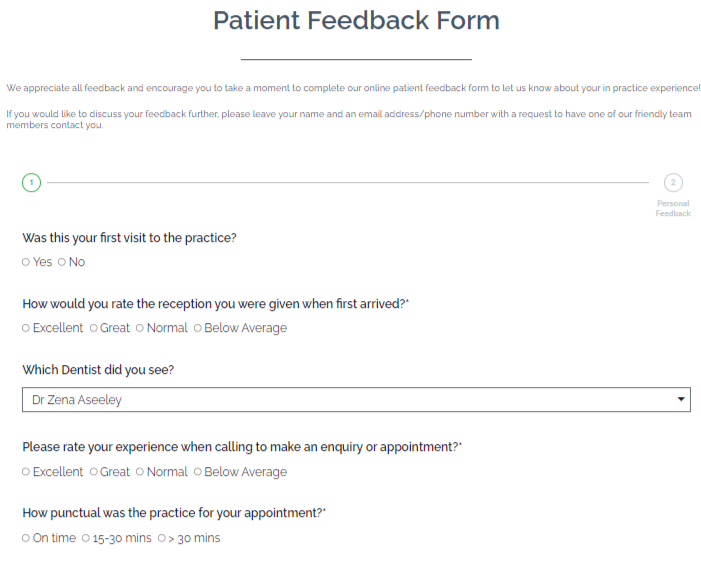
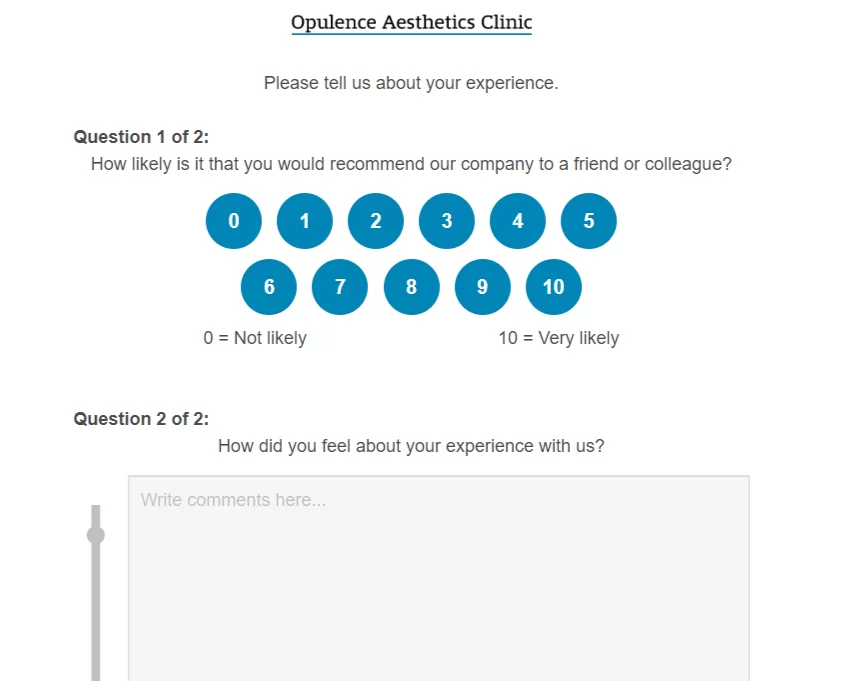
A patient feedback form offers a structured way to collect specific information about patient interactions and experiences within your practice.
Unlike patient surveys, which are usually more comprehensive and completed remotely, feedback forms are typically filled out on-site during the visit, so you get real-time feedback that reflects the patient’s immediate experience.
Feedback forms ask specific questions about the patient experience: quality of care, communication with providers, cleanliness and comfort of facilities, and overall satisfaction.
Feedback forms can be completed electronically or on paper, so they’re accessible to patients of all ages and preferences. If you print them, leave a stack in a tray at reception or on a table in the waiting area, alongside a box for completed forms.
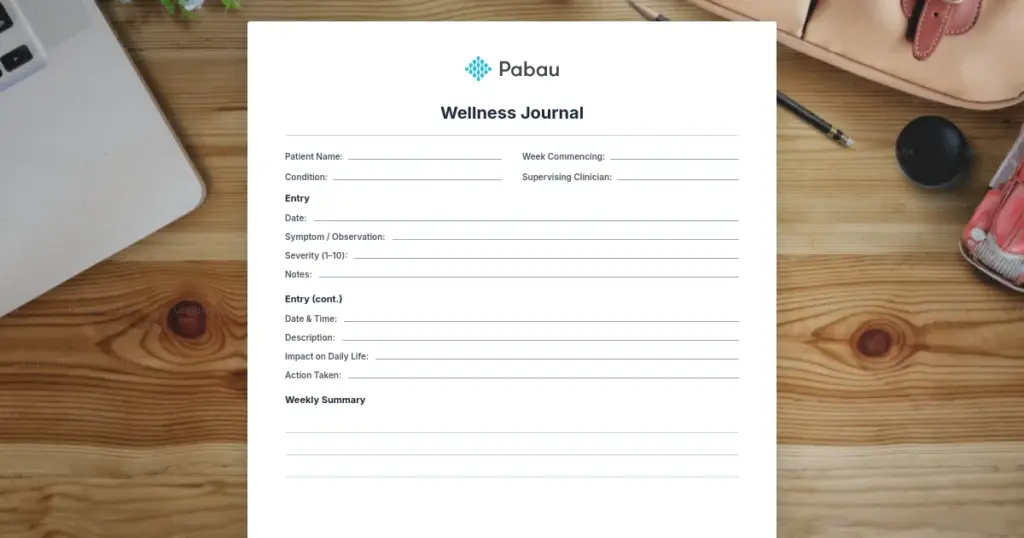
Mix question formats within the form: pair multiple-choice questions, where patients rate their experience on a numerical scale, with open-ended questions that invite more detail. The same principle applies to structured clinical worksheets, such as our eating disorder recovery worksheet, which combine rating scales with open prompts.
Example feedback form questions
- Was everything explained clearly to you by your healthcare provider?
- Were all of your concerns/questions answered? [Yes/No]
- On a scale of 1 to 10, how would you rate the cleanliness and comfort of our facilities?
- Do you have any suggestions or feedback for improving our services or enhancing the patient experience?
3. Create a landing page for your practice's website
A landing page dedicated to collecting patient feedback is a useful tool for any practice looking to improve its services.
It shows patients that you’re committed to listening, to praise and complaints alike. When someone visits your landing page and sees that you actively seek and act on feedback, they’re more likely to see your practice as patient-centered and responsive.
It’s also more convenient: patients don’t have to leave feedback in person while they’re in a rush, so responses tend to be more thoughtful and considered. It also gives patients who’d rather stay anonymous a straightforward way to share praise or constructive criticism.
Include a mix of question types, such as yes/no questions, numerical rating scales, and open-text boxes, to get a broad range of responses. You can also ask patients their age, the treatment they received, and the practitioner they saw, then categorize responses accordingly. This lets you identify trends, pinpoint areas for improvement, and target solutions to specific patient segments.
Aesthetic and cosmetic practices can pair this feedback page with treatment-specific resources, such as lip blushing aftercare instructions or an eyelid surgery consent form, to reassure patients before they book and prompt feedback once they’ve healed.
A strong feedback landing page also supports your wider reputation management strategy, giving you first-party quotes to use in marketing.
Landing page examples
4. Use social media to interview patients
Social media channels to use
Social media is a good way to connect with patients, gather feedback, and engage with them in a more informal, interactive way.
It also gives you a direct line of communication outside traditional clinical settings, so you can reach patients who wouldn’t otherwise take part in more formal feedback methods, like surveys.
One advantage of social media is its reach: platforms have a large, diverse user base spanning different demographics, and many patients now check a provider’s web presence, business profile, and reviews before booking.
Patients may also feel more comfortable sharing opinions on social media, where they can engage with providers directly and see what their peers are saying.
Use Instagram’s Stories feature to ask questions, run polls, and conduct short interviews with patients. For instance, a simple poll question could be:
📊 How did you rate your last booking experience with us?
a) Excellent
b) Good
c) Average
d) Poor
- Stories on Instagram are a quick way to ask your followers questions, run polls, and get real-time feedback. Stories disappear after 24 hours, which encourages spontaneous participation.
- Facebook offers an all-round approach to patient engagement, letting providers create posts, host live video sessions, and interact with patients through comments, messages, and story polls. Its reach and diverse user base make it a strong channel for gathering feedback.
- X’s (formerly Twitter) real-time nature and concise format suit quick conversations and gathering immediate feedback through posts and direct messages. Providers can use trending hashtags and join relevant discussions to reach a wider audience.
- LinkedIn is where healthcare professionals connect with each other and industry experts, and it’s a good place to get feedback from patients indirectly. Providers can join closed groups discussing patient experiences, treatments, and trends, and use their connections to run surveys and polls.
5. Call your patients
Phone calls offer a personal, direct way to collect patient feedback.
Unlike the other methods on this list, calls allow for real-time dialogue and deeper follow-up on what a patient tells you.
Providers can directly address patient concerns and show their commitment to patient satisfaction, which builds loyalty and trust.
Calls also surface qualitative detail that other methods miss: providers can ask probing questions, seek clarification, and dig into the specific causes behind a patient’s concerns.
Sample over-the-phone questions to ask
- How was your overall experience during your recent visit to our practice?
- Were you provided with clear instructions regarding your treatment by our staff?
- Do you have any suggestions for improving our services or facilities?
- Would you recommend our practice to friends or family members?
How to use patient feedback to improve your practice
According to Accenture research, 34% of patients who’ve had a negative healthcare experience switched to a different provider afterward.
Improving your practice starts with listening to patients. Their feedback shows you exactly which areas need work.
1. Communication
Start by reviewing patient feedback to identify communication issues that may be causing problems. Investing in staff training and better communication tools, such as confirmation emails, creates a more professional, friendly environment where patients feel heard.
2. Streamlining processes and systems
Patient feedback can reveal process problems worth streamlining, such as long wait times or inefficient booking. According to TechTarget, 80% of patients want self-service online scheduling, so if you’re not offering it yet, it’s worth adding.
Improving workflows and investing in technology, such as online appointment scheduling systems, makes things easier for patients and shows you value their time.
3. Clinical quality improvement
Reviewing feedback helps you identify areas for improvement and ensures that treatments and procedures meet high standards of care.
What do patients say about your consultation process? What feedback do you get about your team? Regularly monitoring clinical performance and acting on evidence-based decisions builds patient trust, confidence, safety, and treatment effectiveness.
Frequently asked questions
How do you collect feedback from patients?
You can collect feedback from patients through post-visit surveys sent by text or email, on-site feedback forms, a dedicated feedback landing page, social media polls, and follow-up phone calls. Most practices combine two or three so they capture both quick ratings and detailed comments.
Why is patient feedback important?
The importance of patient feedback comes down to retention and quality of care. It tells you which parts of the visit work and which drive patients away, so you can fix issues before they cost you appointments and reviews.
How often should you collect patient feedback?
Make it always-on rather than an occasional big push. A short request after every appointment gives you a steady stream of responses while the visit is fresh, and makes trends far easier to spot than a once-a-quarter survey.
Collect patient feedback with Pabau
Patient feedback is critical to running a successful practice, but collecting it isn’t always easy. It can turn into an admin task that eats up hours each week. Pabau’s feedback tools are built to save you that time.
- Automated feedback requests: Pabau’s integrated feedback request feature sends out requests automatically once you tick a box, with no extra manual work.
- Centralized review management: Pabau’s review management tool centralizes online reviews from multiple sources, so practices can respond to and showcase positive feedback from one place.
- Customizable survey questions: Tailor feedback collection to your practice’s needs using Pabau’s question bank and merge tags.
- Share your best reviews on Google: A strong online footprint helps you show up in search results, so Pabau prompts clients to leave four- and five-star reviews on Google.
- User-friendly interface: Add, edit, or delete questions easily, so feedback forms stay fine-tuned to your practice’s requirements.
See Pabau’s patient feedback system for yourself by booking a demo.