EHR ROI: How to calculate and maximize your return
EHR ROI is the financial return a practice earns on its electronic health record...

Last Updated: Oct 15, 2026

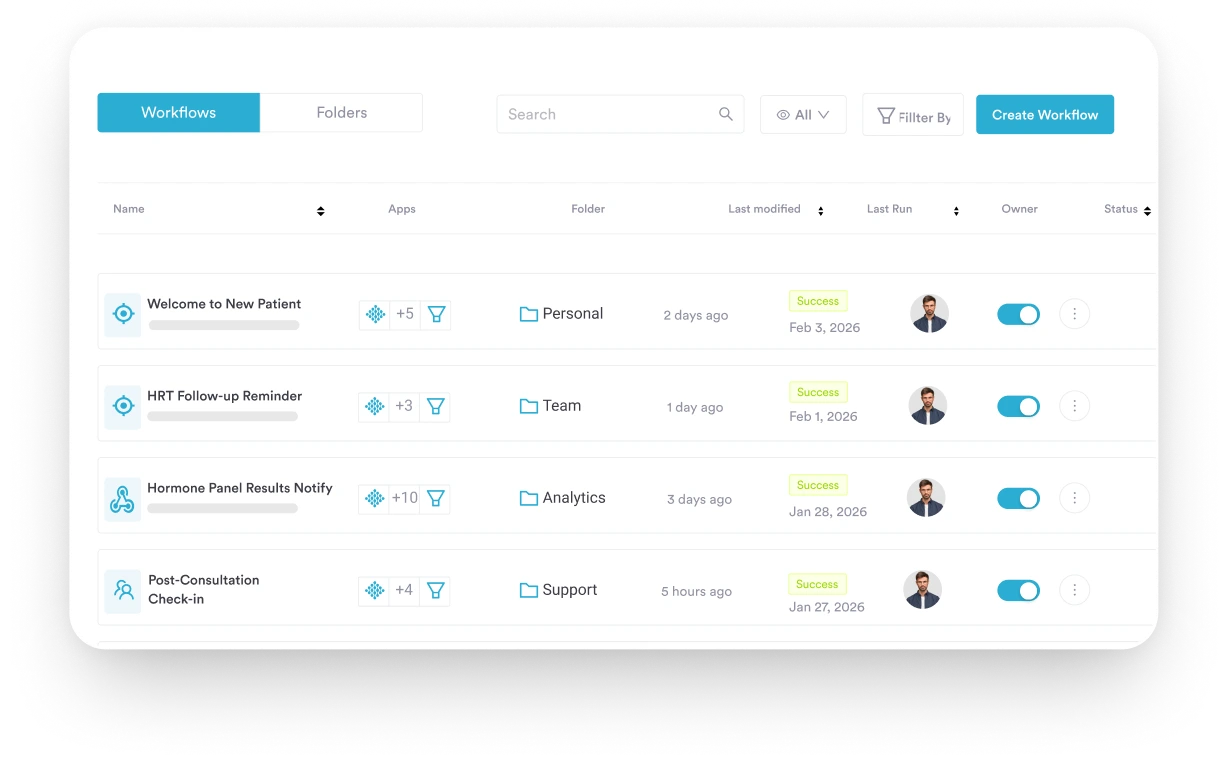
Automated patient engagement uses software workflows to handle booking, reminders, intake, follow-up, and recall without manual staff input.
Clinics using automated appointment reminders typically see meaningful reductions in no-shows, since most missed appointments stem from patients simply forgetting.
HIPAA and GDPR compliance requirements apply to every automated message sent to patients, including SMS, email, and portal notifications.
Pabau’s automated workflows cover the full patient journey, from online booking to post-treatment recall campaigns, in one unified platform.
Patient no-shows alone cost the U.S. healthcare system an estimated $150 billion per year, with each missed appointment representing $200-$375 in lost revenue. Most clinics lose revenue not because they lack patients, but because they lose them between visits. A patient books an appointment, misses it without a reminder, never receives a follow-up, and eventually drifts to a competitor. Automated patient engagement addresses exactly this problem by replacing manual, inconsistent communication with reliable, timely workflows that run without staff involvement.
This guide is written for clinic owners, practice managers, and clinical leads evaluating how patient engagement automation can reduce administrative overhead while improving retention. It covers the five core automation touchpoints across the patient journey, compliance obligations for automated messaging, and a practical framework for implementation across aesthetic, wellness, and private practice settings.
Automated patient engagement refers to the use of software-triggered workflows to communicate with patients at defined points in their care journey, without requiring staff to manually initiate each interaction. The Mayo Clinic Platform describes it as technology that transforms patient interactions by automating scheduling and customer service requests. That definition is narrow. In practice, patient engagement automation covers far more: appointment reminders, intake form delivery, pre-care instructions, post-treatment follow-up, satisfaction surveys, and recall campaigns. Automation is the delivery mechanism for patient engagement in healthcare, not a replacement for it.
The operational case for automation is straightforward. A front desk team managing 80 appointments per week cannot reliably send personalized reminders, follow up every discharged patient, and run recall campaigns simultaneously. Manual communication is inconsistent by nature. Automation makes it consistent by design.
For multi-location or high-volume clinics, the difference between manual and automated communication compounds. A single missed recall campaign for a patient cohort that books quarterly treatments represents a measurable revenue loss per quarter, per location. Automated patient engagement closes that shortfall systematically rather than relying on staff bandwidth. Automated sends still need somewhere for answers to land, which is the job of omnichannel patient engagement software.
Effective automation works as a series of triggered communications mapped to specific moments in the patient lifecycle, not a single tool. Each touchpoint serves a distinct operational purpose.
The booking interaction is the first point of engagement. Automated online booking removes the need for phone-based appointment requests by giving patients real-time access to availability across services, practitioners, and locations. When booking is embedded in a clinic’s website or social profiles, it captures demand outside staffed hours without generating call volume.
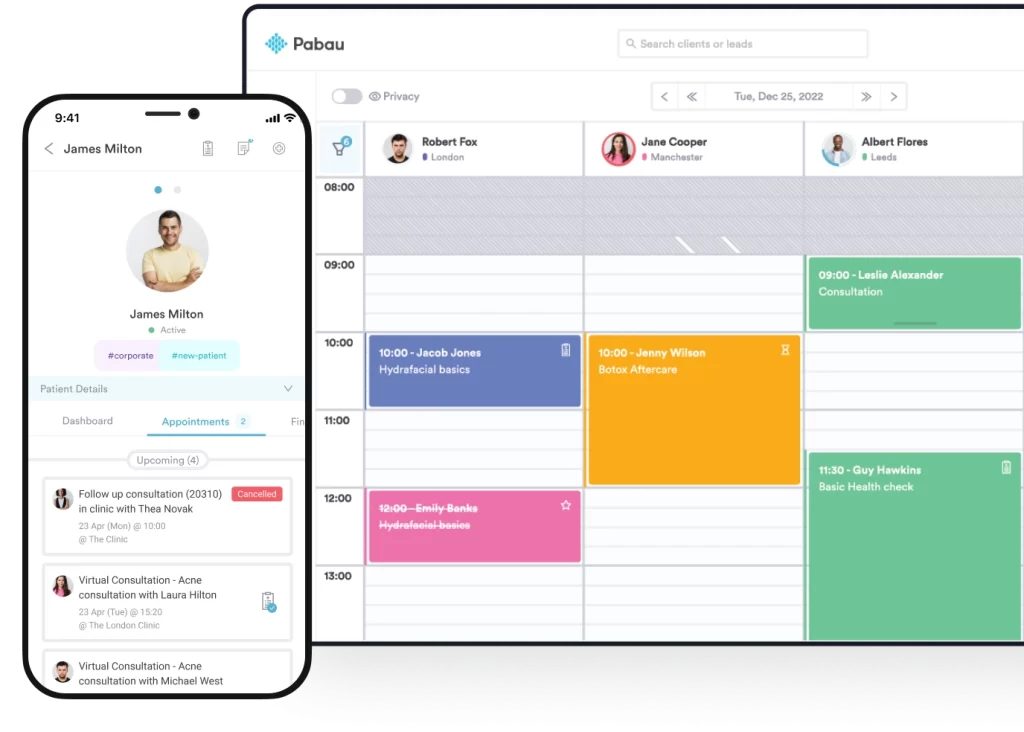
For clinics running multiple practitioners or treatment rooms, the scheduling logic needs to account for resource-level availability, not just calendar slots. A laser clinic offering both consultations and laser treatments, for example, needs booking rules that prevent double-booking equipment and staff simultaneously.
Most no-shows are not intentional. A study published in BMC Health Services Research found that forgetting was the most commonly reported reason patients missed scheduled appointments, with other research placing the rate between 27% and 37% of all no-shows. Automated SMS and email reminders sent at configurable intervals before an appointment address this directly.
A common configuration is a 72-hour email reminder followed by a 24-hour SMS. Clinics can build in two-way confirmation responses so the system tracks which patients have confirmed and flags unconfirmed slots for staff attention.
Reminder workflows can also include pre-appointment preparation instructions specific to the treatment type. A laser clinic sending a Nd:YAG session reminder can include sun avoidance instructions in the same automated message. That adds clinical value without additional staff effort. Practice management software like Pabau supports this kind of treatment-specific customization through its automated workflows.
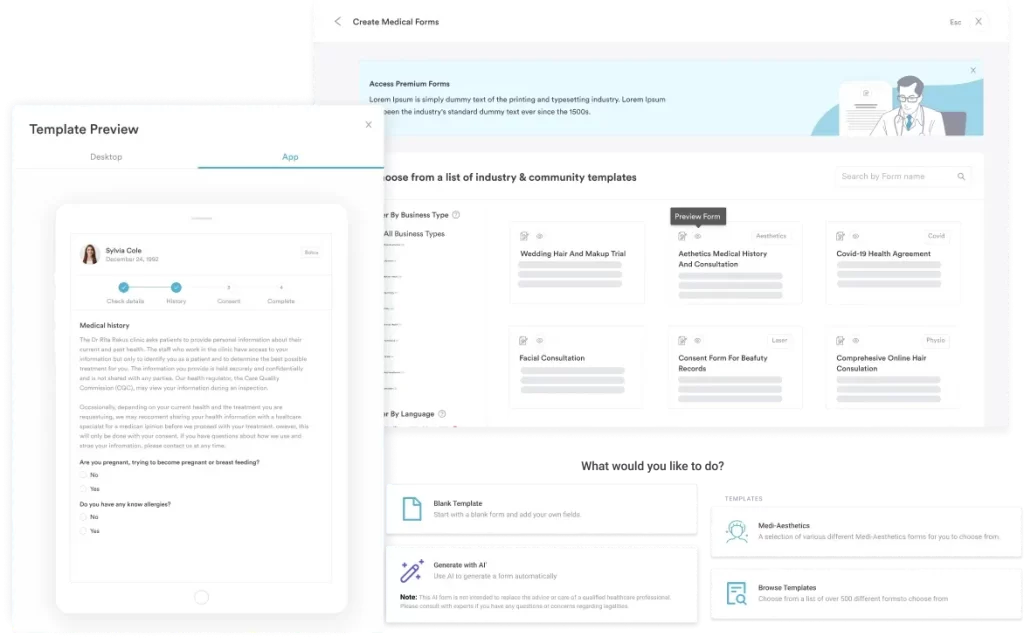
Sending intake documentation after booking rather than at the point of arrival removes the paper queue from the waiting room and gives clinicians pre-populated patient data before the appointment begins. Digital intake forms triggered automatically upon booking capture medical history, consent, and contraindication information in advance. For aesthetic and clinical settings, this includes treatment-specific consent forms with e-signature capture.
The operational benefit extends beyond convenience. Incomplete or unsigned consent collected at the desk creates a compliance risk. Automated pre-appointment form delivery with completion tracking ensures documentation is in place before the patient arrives, reducing liability and improving clinical preparation.
Post-treatment communication is often the last touchpoint clinics automate. When setup focuses on the pre-visit journey, post-visit engagement is left to chance. Automated pre and post-care messaging addresses this by delivering aftercare instructions, checking on patient recovery, and prompting satisfaction feedback at a defined interval after treatment.
According to athenahealth’s patient engagement research, proactive automated messaging helps catch overdue follow-ups and reminds patients about important next steps, improving both engagement and adherence. For clinics treating chronic conditions or running multi-session treatment protocols, this matters directly for retention outcomes. Cardiac rehabilitation teams, for example, can pair follow-up messaging with clinical measures like the cardiac output formula to monitor recovery.
Automated patient outreach triggers recall messages based on the time elapsed since a patient’s last visit or a specific treatment type. A physical therapy practice can automate a re-engagement message six weeks after discharge. An aesthetics clinic can trigger a Botox recall campaign three months after the last treatment session. Without automation, this requires a staff member to manually query the database and send communications. With it, the workflow runs independently.
Email and SMS campaign tools integrated with the patient record allow recall messages to reference the specific treatment the patient received, making the outreach relevant rather than generic. That specificity is the difference between a recall message that prompts a booking and one that gets ignored.

From online booking and digital intake forms to post-treatment follow-up and recall campaigns, Pabau handles every patient communication touchpoint automatically. Book a demo to see it in action.

No-shows are one of the most direct revenue leaks in any clinic model. A 20-appointment day with a 15% no-show rate means three empty slots that generated zero revenue but still consumed practitioner time. The cost compounds when those slots are for high-value treatments with equipment or consumable costs committed in advance.
Automated patient engagement reduces no-shows through three mechanisms:
A peer-reviewed study published in PMC (PubMed Central) found that automated outreach for chronic disease patients, particularly when combined with caregiver feedback, meaningfully increased patient engagement in mobile health communication programs. While the study focused on IVR-based systems for chronic conditions, the core finding transfers: regular, structured automated contact keeps patients connected to their care provider.
For clinics with a cancellation policy built into the booking flow, automated enforcement removes the awkward manual conversation when a patient cancels inside the notice window. The policy is communicated at booking, enforced automatically, and logged in the patient record without requiring staff intervention.
Every automated message sent to a patient containing health information is subject to data protection regulations. In the US, HIPAA governs the handling of protected health information (PHI) in any electronic communication. In the UK and EU, GDPR applies. Clinics operating across both markets face requirements from both frameworks simultaneously.
The key compliance considerations for automated patient communication are:
Pabau is designed with HIPAA compliance and GDPR considerations built into the platform, including consent capture at registration, data encryption, and configurable communication preferences per patient. Practices should still review their specific workflows with compliance guidance appropriate to their jurisdiction and patient population.
Implementing automated patient engagement does not require replacing every existing system at once. Most clinics benefit from a phased approach that prioritizes the touchpoints with the highest operational impact first.
| Phase | Automation Priority | Expected Outcome |
|---|---|---|
| Phase 1 | Appointment reminders and online booking | Immediate no-show reduction and front-desk call volume drop |
| Phase 2 | Digital intake and consent forms | Paperless workflow, pre-populated clinical records, compliance documentation |
| Phase 3 | Post-treatment follow-up and satisfaction surveys | Improved patient experience data, aftercare adherence |
| Phase 4 | Recall campaigns | Systematic retention, repeat booking lift, revenue recovery from lapsed patients |
The most common implementation mistake is configuring automation for every possible touchpoint simultaneously before the team understands the message volume patients receive. Patients who receive six automated messages before their first appointment may disengage entirely. Start with reminders, measure response rates, then layer in additional workflows once the baseline is established.
For clinics using Pabau, the automation features are configured through a workflow builder that allows trigger conditions, timing intervals, and message content to be set per service type. This means an aesthetic clinic can configure a different reminder cadence for a 90-minute body treatment than for a 20-minute injectable consultation, without managing separate tools. The client management layer connects communication history to the patient record, so staff can see every automated interaction alongside clinical notes in one view.
Multi-location practices should also consider how multi-location management intersects with automation. A patient who visits different locations should receive communications that reflect their booking location and assigned practitioner, not generic messages that ignore location context. Platform-level automation that respects location and practitioner assignment reduces patient confusion and keeps communication relevant.
Finally, the client portal provides patients with a self-service layer on top of automated outreach. Rather than requiring patients to respond to every automated message through SMS or email, the portal gives them a single interface to confirm appointments, complete forms, and review their treatment history. Portals reduce inbound communication volume while giving patients more control, which typically improves satisfaction scores independently of the automation itself. Portals also anchor a wider digital patient engagement strategy that spans telehealth and two-way messaging. Practices looking to measure the impact of these workflows can track outcomes through reporting and analytics dashboards.

Curious which AI tools fit a med spa? Best AI practice management tools matches nine AI tools to specific problems, from all-in-one platforms to scribes and CRMs.
Wondering how AI writes clinical notes? Clinical notes AI explains how a recorded visit becomes a structured note you review and sign, and where it fits.
Looking to automate your med spa marketing? Medspa AI covers how AI drafts social posts, email, and SMS follow-ups, and personalizes offers by booking history.
Ready to explore the automation feature set in detail? Pabau Automated Workflows shows how each trigger and workflow is configured for different clinic types.
Clinics that rely on manual communication at scale undercut their patient acquisition efforts by losing patients between visits. The stretch between booking and recall is where retention fails, and no front desk team can cover it consistently without automation support.
Pabau’s automated workflows cover every touchpoint discussed in this guide, from online booking through post-treatment recall, in a single platform connected to the clinical record. To see how the automation configuration works for your clinic type, book a demo.
Scaling starts with standardising your trigger logic. Define which events (booking confirmation, 48-hour pre-appointment, post-treatment day 3) generate a communication, then apply that logic uniformly across all patients. Multi-location practices should ensure location-specific fields populate correctly so message volume scales without losing relevance.
Patient communication platforms handle message delivery (SMS, email, portal messages). Patient engagement platforms connect that communication layer to clinical and operational data, so messages are triggered by patient events (a booking, a discharge, a lapsed visit interval) rather than manually scheduled. The distinction matters because engagement platforms reduce admin load while communication platforms still require staff to initiate most outreach.
Reminders help but work best when combined with a deposit or cancellation policy enforced at booking. Patients with no financial stake in attendance are less responsive to reminders alone. Pairing reminder automation with a deposit requirement creates both a memory prompt and a commitment mechanism, which together produce a stronger reduction in no-show rates than either approach alone.
Not always, but EHR or practice management integration significantly increases the value. Standalone messaging tools send reminders, but they cannot trigger communications based on clinical events (treatment completion, recall intervals, overdue-care flags) without access to the clinical record. Platforms that combine practice management and engagement automation in one system eliminate the need to sync data across separate tools.
Both regulations govern how protected health information appears in automated communications. Clinics should obtain explicit consent before sending any health-related message, avoid exposing PHI in SMS previews or email subject lines, and ensure their automation platform stores communication data with appropriate encryption and access controls. Clinics serving both US and UK/EU patients face requirements under both frameworks simultaneously.
Set trigger-based workflows tied to the appointment: a confirmation at booking, a reminder 24 to 72 hours before, and a post-visit follow-up on a fixed day after treatment. Because each message fires from a patient event rather than a manual task, patient engagement automation runs the full reminder and follow-up sequence without staff scheduling every send.