HIPAA compliant texting: What you can send patients & how to communicate securely
HIPAA compliant texting is possible when a text holds no protected health inform...

Last Updated: Oct 16, 2026

Patient engagement strategies are proactive measures that move patients from passive recipients of care to active participants in their own health outcomes.
The highest-evidence strategies include group-based chronic disease education, SMS and web-based interventions, and telehealth-supported self-monitoring (NCBI NBK561683).
Most clinics lose patients between visits, not during them: automated recall, post-care follow-up, and portal access are the three highest-leverage retention tools.
Pabau automates recall workflows, sends pre- and post-care instructions, and gives patients a self-service portal, so engagement runs without manual effort from your team.
Private clinics and aesthetic practices lose an estimated 20-30% of their active patient base each year, and most of that loss is quiet drift rather than defection to a competitor. Patients attend one appointment, receive good care, then disappear because nobody followed up. Improving your patient engagement strategy is the operational lever that closes that gap, yet most clinics treat it as a marketing problem rather than a workflow one.
This guide covers the evidence-based patient engagement strategies that work in private clinics, from pre-visit intake through post-visit recall, with specific attention to where automation makes the difference. Each one is a practical way to increase patient engagement without adding to your team’s workload. If you run a clinic of 1-20 practitioners and want to convert first-time patients into long-term advocates, these strategies are worth building into your operations.
The CDC’s research summary on patient engagement draws on the Patient Activation Measure (PAM), a validated 0-100 scale that identifies four levels of patient activation: passive, beginning to take action, taking action, and proactively maintaining health behaviors. Patients who score in the higher activation levels consistently show lower hospitalization rates, better chronic disease management, and higher treatment adherence. Those are the concrete benefits of patient engagement that make activation scores a better predictor of outcomes than demographics alone.
An NCBI evidence summary on patient, family, and caregiver engagement identifies the strategies with the strongest randomized controlled trial (RCT) evidence:
High-evidence patient engagement strategies are not complicated, but they rely on consistent communication, accessible information, and reducing friction between the patient and their care team. What kills engagement in private practice is manual effort. A staff member has to remember to send the reminder, find the recall list, or follow up on a lapsed patient, while automation removes that constraint. Consistency is easier when every reply lands in one inbox instead of three separate tools.
Patient engagement starts way before the appointment. Anxiety is highest in the pre-visit window when patients are most likely to cancel or not show up, and when the right information can make the clinical encounter more productive.
| Pre-visit touchpoint | Engagement goal | Delivery method |
|---|---|---|
| Appointment confirmation | Reduce no-shows, set logistics expectations | Automated SMS/email |
| Pre-care instructions | Prepare patient for treatment, reduce complications | Automated email with PDF attachment |
| Digital intake forms | Gather clinical history, reduce waiting-room admin | Patient portal link sent 24-48 hrs pre-visit |
| Procedure explainer content | Increase patient confidence, reduce cancellations | Email with linked resources |
| Consent documentation | Legal compliance, informed decision-making | Digital forms via patient portal |
Sending digital intake forms to patients 24-48 hours before their appointment does two things simultaneously: it shortens the clinical encounter (no paper forms to process) and it signals to the patient that the practice is organized and professional. Patients who complete pre-visit admin are less likely to cancel.
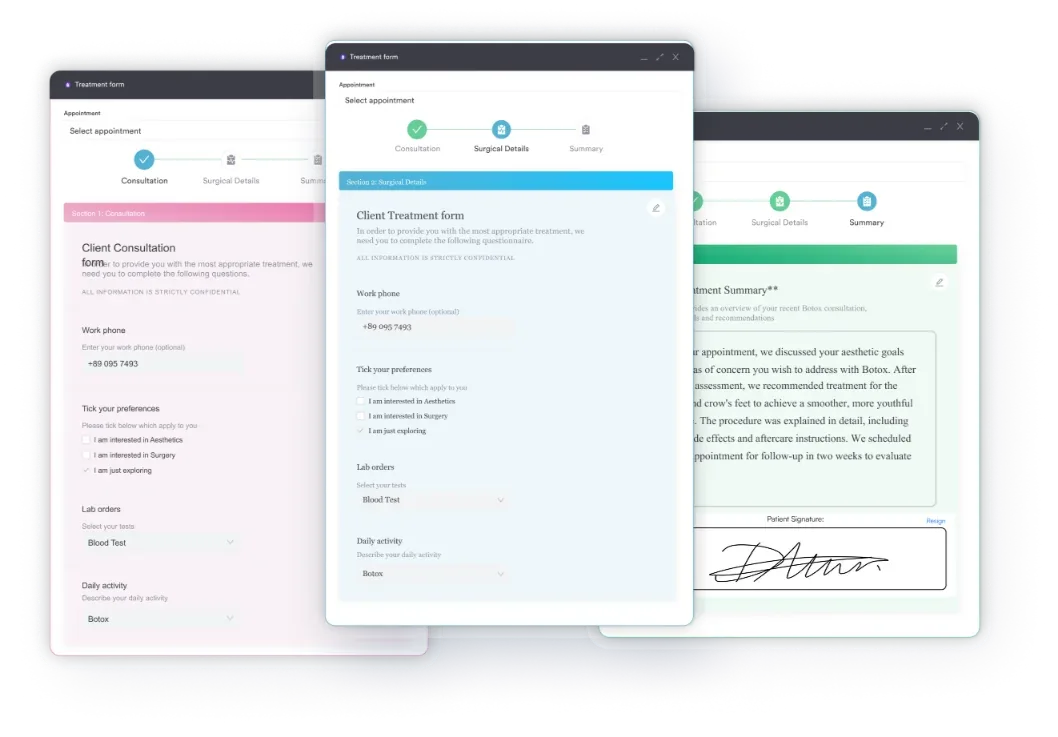
The benefits of patient portals extend into this pre-visit phase as well. A patient engagement portal that patients can log into to review their records, complete forms, and receive personalized prep instructions gives the clinic a communication channel that operates independently of staff availability.
The clinical encounter itself is the highest trust moment in the patient journey. Shared decision-making, where the patient participates in choosing their treatment path rather than simply receiving recommendations, is one of the most evidence-cited engagement techniques in the literature. It improves treatment adherence because patients who chose a plan are more committed to following it.
Three practical during-visit engagement moves for private clinic owners:
A patient portal that patients can access post-visit to review their clinical notes, treatment records, and upcoming recommendations extends the during-visit engagement window. The consultation does not end when the patient leaves the room.

Automated reminders, digital intake forms, patient portals, and post-visit recall workflows, all connected in one platform. Book a demo to see how Pabau handles patient engagement without adding staff workload.

This is where most private clinics fail. The visit was good. The patient left satisfied. And then nothing happened for six months until the clinic sent a generic newsletter. By then, the patient had booked with someone else or simply stopped thinking about their care.
Effective post-visit patient engagement strategies work through three mechanisms:
Sending aftercare instructions within 24 hours of treatment is both a clinical safety measure and an engagement signal. It tells the patient the clinic is still thinking about their outcome. For aesthetic and wellness practices, these instructions carry real clinical weight: correct post-treatment care affects results. An automated workflow that triggers post-care content based on the specific treatment received, rather than a generic message, signals genuine personalization. This kind of automated patient engagement scales personalized follow-up without adding front-desk workload.
Recall is the single highest-ROI patient engagement activity for private clinics. A patient who had a Botox treatment three months ago is statistically likely to need a follow-up session. An automated recall workflow identifies that patient, sends a personalized prompt at the clinically appropriate interval, and offers a direct booking link. No staff member needs to maintain a spreadsheet or remember to call.
Consistent recall is also the engine of long-term patient retention, since a returning patient costs far less to keep than a new one won through healthcare lead generation does to acquire.
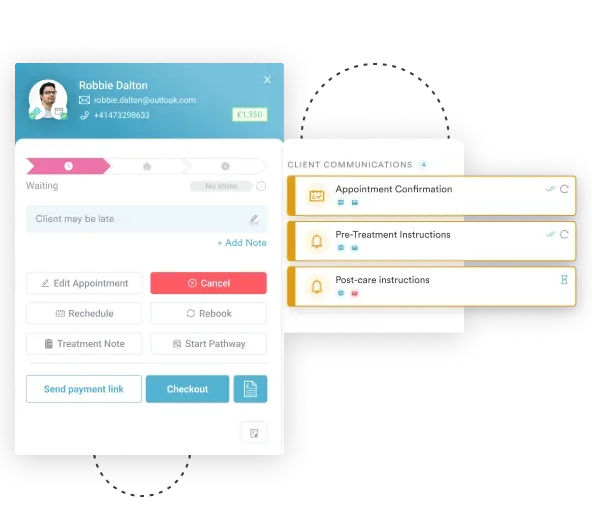
The same logic applies to any time-sensitive treatment or review like annual skin checks, quarterly wellness consultations, or six-month dental hygiene appointments. The recall workflow codifies clinical best practice into an automated sequence.
Broadcast marketing has low engagement rates in healthcare because patients expect communication that is relevant to them specifically. A patient who came in for IV therapy does not want a promotion for laser hair removal. SMS and email campaigns segmented by treatment history, demographics, or engagement level consistently outperform generic blasts. The National Association of Community Health Centers (NACHC) notes in its Patient Engagement Action Guide that patients respond to communication that reflects their individual circumstances, not one-size-fits-all messaging.
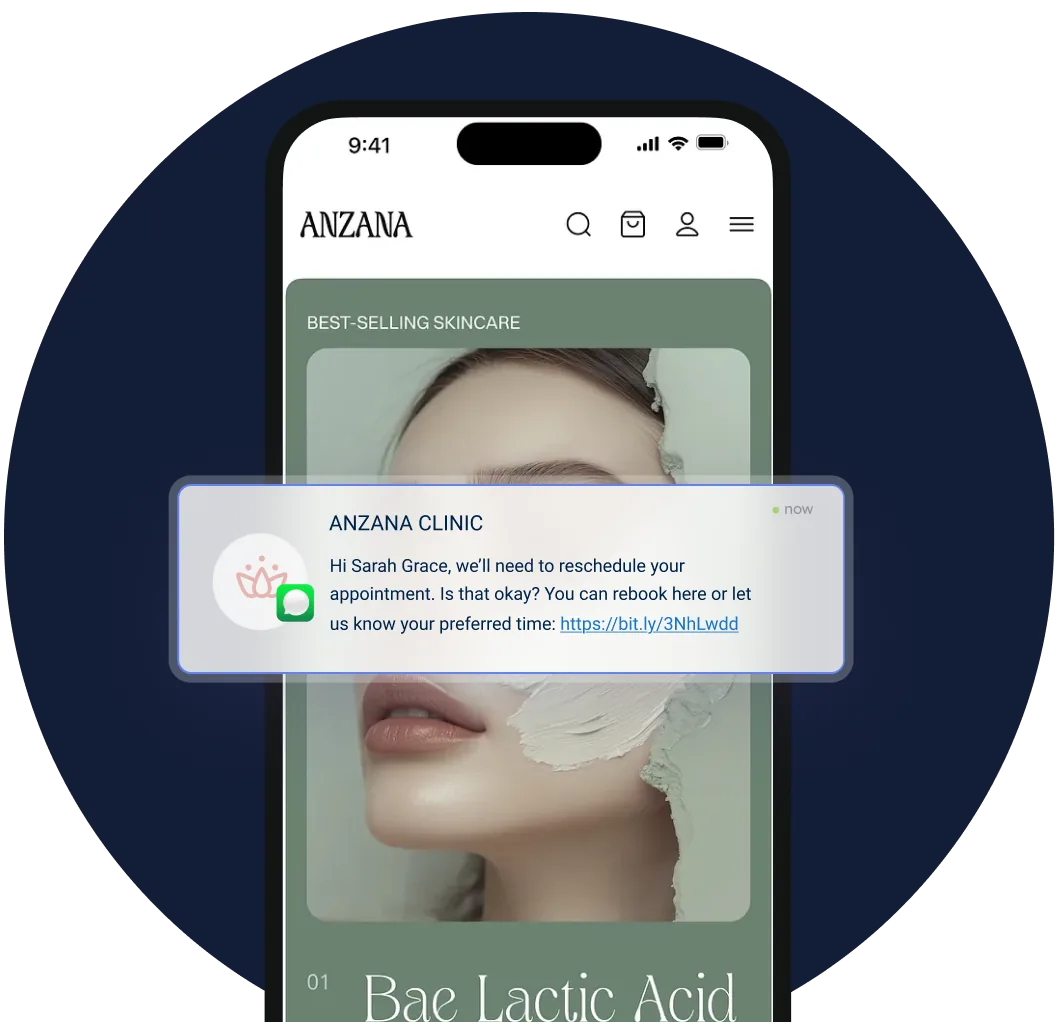
Audit your lapsed patient list quarterly. Any patient who has not booked in 90+ days for a repeat-treatment service (Botox, fillers, skin peels, IV therapy) should be in an active reactivation sequence, not a passive newsletter list. A personalized SMS with a booking link converts at significantly higher rates than a general email campaign.
Digital tools don’t replace the clinical relationship, but rather extend it. A patient who can message their care team between visits, access their records at midnight before a treatment, or complete a health questionnaire from their phone is more engaged than one who has to call reception during business hours to get any of those things done.
This is where patient engagement software earns its place. Rather than bolting a reminder app onto a separate forms tool, patient engagement platforms that sit inside your practice management system keep every interaction tied to the patient record. The strongest digital patient engagement tools also meet patients on the channel they already use, whether that is SMS, email, or a portal, instead of forcing everyone through one inbox.
Key technology-driven patient engagement strategies for private clinics:
The best patient engagement tools in healthcare turn the patient journey into a continuous relationship, rather than a series of discrete appointments. Technology enables that continuity when staffing constraints would otherwise make it impossible.
You can’t improve what you don’t measure. Most private clinics track appointment volume and revenue but miss the engagement metrics that predict those numbers six months in advance.
Core patient engagement KPIs worth tracking:
For deeper analysis, measuring patient satisfaction through post-visit surveys and review collection adds a qualitative dimension to these quantitative KPIs. A practice with strong retention but low satisfaction scores is at risk: patients are returning out of habit, not genuine engagement, and one bad experience will break the cycle. Tying satisfaction data to capturing patient feedback systematically gives clinics early warning before retention rates decline.
Patient drift is a solvable problem, and the gap between a good clinical encounter and a retained, engaged patient comes down to what happens in the 48 hours before the visit and the 90 days after it.
Pabau’s automated recall and workflow tools handle the post-visit engagement sequence without manual effort: timed recall messages, segmented campaigns, post-care instructions, and a patient portal that keeps the clinical relationship active between appointments. For clinics running on tight staffing, that automation is the difference between a patient who returns and one who drifts. Book a demo to see how Pabau operationalizes patient engagement across the full care journey.

Want a framework for the full patient journey? Patient care management strategies for private clinics covers the operational model from intake through long-term retention.
Want the data behind these engagement strategies? Patient engagement statistics sets out the benchmarks that show engagement is an operational issue, not a patient one.
Ready to build a patient portal strategy? Benefits of patient portals outlines what patients actually use portals for and how to drive activation rates.
Patient engagement strategies are structured, proactive approaches that encourage patients to actively participate in their own care: completing intake forms, following treatment plans, attending follow-up appointments, and communicating with their clinical team between visits. They range from automated appointment reminders and digital portals to shared decision-making during consultations and personalized recall campaigns after treatment.
Common examples include automated appointment reminders, digital intake forms sent 24-48 hours before a visit, shared decision-making during the consultation, treatment-specific aftercare messages, and recall campaigns that prompt patients to rebook at the right clinical interval. The most effective clinics combine several of these across the patient journey rather than relying on one, which is the practical way to increase patient participation between visits.
The most effective improvements target three points in the patient journey: the pre-visit phase (automated confirmation, digital forms sent 24-48 hours before the appointment), the during-visit phase (shared decision-making, real-time documentation), and the post-visit phase (automated aftercare instructions, recall workflows, and segmented follow-up campaigns). Clinics that automate the post-visit sequence see the largest retention gains because that is where patient drift is most common.
The Patient Activation Measure (PAM) is a validated assessment tool that scores patients on a 0-100 scale across four levels of activation, from passive (unaware of their health management role) to proactive (maintaining health behaviors independently). According to CDC research, higher PAM scores correlate with better clinical outcomes and lower long-term healthcare costs. It is used in research settings and chronic disease management programs to benchmark and track engagement improvements.
Technology extends the clinical relationship between appointments. Patient portals give patients 24/7 access to their records and forms. Automated SMS and email sequences deliver recall messages, aftercare instructions, and appointment reminders without staff effort. Telehealth platforms enable follow-up consultations without in-person visits. Together, these tools create a continuous engagement loop that was previously only possible in high-staffed hospital settings.
The most actionable metrics are patient retention rate (percentage returning within 12 months), recall conversion rate (percentage of recall messages that result in bookings), no-show rate, portal activation rate, and average treatments per patient per year. Post-visit satisfaction surveys add qualitative context. Clinics tracking these KPIs can identify engagement failures before they show up in revenue figures.