CPT code 93503: Swan-Ganz catheter billing and modifiers
CPT code 93503: Official descriptor and procedure overview In the AMA CPT code s...

Last Updated: Oct 23, 2026
H0038 is the HCPCS Level II code for self-help/peer services, per 15 minutes.
Let Pabau's smart automation suggest the right codes, reduce claim denials, and keep your practice compliant—effortlessly.
Automate repetitive tasks and focus on what matters most—your patients.
Reduce coding errors and ensure compliance with the latest regulations.
Clean claims, fewer denials, and faster reimbursements.
Powerful insights and reporting to help your practice thrive.
HIPAA compliant SOC 2 certified GDPR-compliant Trusted by 4,000+ clinics worldwide

HCPCS code H0038 covers self-help/peer services billed in 15-minute increments, used primarily in Medicaid-funded behavioral health and substance use disorder programs.
Only credentialed peer specialists (certification requirements vary by state) may bill H0038 – supervising provider documentation is often also required.
The HQ modifier flags group peer support sessions; GT or 95 modifiers apply to telehealth delivery, though state Medicaid policies on telehealth coverage vary.
Pabau’s practice management software supports time-based unit tracking and structured service notes for behavioral health practices billing H0038.
HCPCS code H0038 covers self-help and peer support services, billed in 15-minute increments and used mainly in Medicaid-funded behavioral health and substance use disorder programs. Peer support itself is one of the most evidence-backed interventions in behavioral health.
Yet it’s also one of the most consistently underbilled. Time-based units, state-variable certification rules, and payer-by-payer coverage differences combine to make the code simple in concept but genuinely complex to bill correctly.
This guide covers what a behavioral health practice or billing team needs for clean H0038 claims, covering the official descriptor, eligible provider types, Medicaid coverage rules, modifiers, documentation requirements, fee schedule context, and common denial triggers. The same principles behind simplifying practice management in behavioral health settings apply directly to peer support billing workflows. Where a practice does not bill the payer directly, the patient needs an itemized statement carrying this code and its charge.
H0038 belongs to the HCPCS Level II H-code series, which the Centers for Medicare and Medicaid Services (CMS) maintains for state Medicaid programs rather than Medicare. According to CMS’s HCPCS overview, these alphanumeric codes cover services not adequately described by CPT codes.
That distinction matters. A practice that bills H0038 to Medicare will see the claim denied. Medicaid is the correct payer for peer support services under this code.
The single biggest source of H0038 denials is a credentialing mismatch. The service must be delivered by a qualified peer specialist, but what “qualified” means depends entirely on the state Medicaid program.
At the federal level, the Substance Abuse and Mental Health Services Administration (SAMHSA) defines peer support workers as people with lived experience of mental illness or substance use disorder who are trained and certified to support others in recovery.
Individual state Medicaid programs translate that into specific credential requirements, which vary considerably. Behavioral health practices should verify their state’s requirements directly before billing.
For practices operating a mental health EMR system, tracking peer specialist credentials within the platform reduces the risk of submitting claims under an uncredentialed provider.
Never assume a credential accepted in one state transfers to another. A CPS certified in Texas may not satisfy New York Medicaid’s enrollment requirements. Always verify with the state Medicaid provider manual before enrolling peer specialists.
H0038 is a time-based code, billed in 15-minute increments. Each unit on a claim represents one 15-minute block of peer support service delivered to one client. Getting the unit count wrong is the fastest path to a denial or an audit flag.
Most state Medicaid programs follow a rounding convention similar to the AMA’s 8-minute rule: if more than half of a 15-minute interval has elapsed, you may bill one unit for that interval. The table below shows how session length translates to billable units using this convention. Efficient patient scheduling software makes this calculation automatic rather than manual.
Daily unit limits are payer-specific. Some state Medicaid programs cap H0038 at 8 units per day (120 minutes), while others allow higher limits with prior authorization. Never assume a universal cap. Verify the maximum units per day with each payer before billing high-volume peer support days.
Solid practice management software for medical teams means every miscellaneous code carries the notes a payer will ask for.
Modifiers change how a claim is interpreted without changing the base code. H0038 uses several modifiers depending on service setting, delivery mode, and population served. Applying the wrong modifier, or omitting a required one, is a leading cause of denials for peer support claims.
The HQ modifier is widely cited in billing guidance for group peer support, but application is payer-specific. Verify with your state Medicaid program and any managed care organizations before assuming HQ is accepted.
Telehealth modifiers (GT and 95) have become particularly variable following the expiration of COVID-era waivers, which had expanded telehealth coverage for peer support services in many states. Current telehealth policies may differ from what was in place during 2020-2022, so always check the current state Medicaid provider manual.
H0038 is a Medicaid-primary code. Medicare does not reimburse for H-series HCPCS codes. Commercial insurance coverage is inconsistent and often absent. For most behavioral health practices, Medicaid is the only payer that will process H0038 claims.
Each state Medicaid program sets its own coverage policy for H0038, so two neighboring states can have entirely different rules. State programs vary in two ways: which credentials they accept for the billing provider, and whether they cover H0038 under the Medicaid benefit package at all.
Practices operating across state lines need separate verification for each state they bill in. Maintaining HIPAA-compliant practice software is also essential when managing Medicaid claim submissions across multiple jurisdictions.
H0038 reimbursement rates vary significantly by state Medicaid program. There is no single national rate. The CMS Physician Fee Schedule lookup does not apply to H0038 because Medicare does not cover this code. Rates are set at the state level.
General industry ranges suggest per-unit rates (per 15 minutes) typically fall between $4 and $18, though rates outside this range exist. Higher rates tend to appear in states with strong peer support infrastructure, urban Medicaid markets, or MCO contracts that include quality incentives. These are general guidance figures. Always verify current rates with your state Medicaid fee schedule.
Set a calendar reminder to review your state Medicaid fee schedule each October, when most states publish updated rates effective January 1. Rate changes often arrive with minimal direct notice to providers, and billing at outdated rates leads to underpayment that is difficult to recover retroactively.
Incomplete documentation is the primary reason H0038 claims fail post-payment audits. Time-based codes require more precise recordkeeping than flat-rate service codes.
Practices should also follow HIPAA-compliant documentation practices for all peer support service records.
Notes that say only “provided peer support” or “discussed recovery goals” are insufficient for audit purposes. The note must reflect the specific content of the session in enough detail that a reviewer unfamiliar with the client can understand what occurred and why it was clinically appropriate.
Using digital documentation tools with structured fields for time, credentials, and session content reduces incomplete documentation significantly.
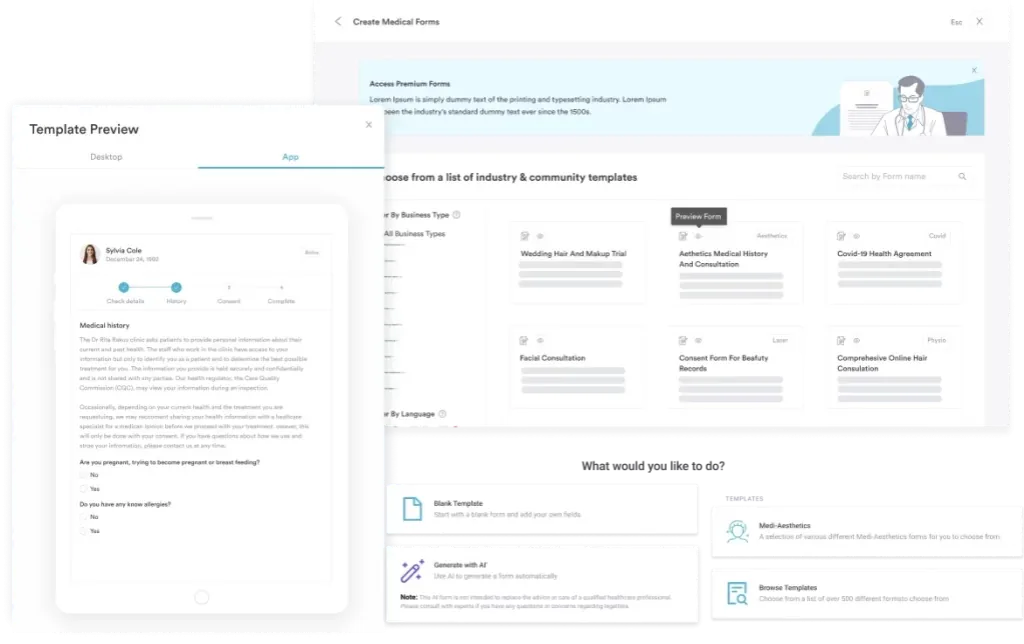

Pabau helps behavioral health practices track time-based billing units, manage peer specialist credentials, and generate structured service notes that hold up to Medicaid audit review.

H0038 claims require a supporting ICD-10 diagnosis code that establishes medical necessity. Payers use the diagnosis code to determine whether the peer support service is clinically appropriate for the individual. Required diagnoses are payer-specific, and the table below reflects commonly accepted pairings.
For substance use diagnoses such as F10.20 and F11.20.
Practices using psychiatry EMR software that integrates diagnosis tracking with billing workflows can reduce the risk of missing or mismatched diagnosis codes on claims.
Never assume a diagnosis code is accepted by all payers. Verify accepted diagnosis pairings with each state Medicaid program and any MCOs before billing. Some payers publish accepted diagnosis lists in their provider manuals. Others apply the diagnosis requirement only through claim edits that trigger on submission.
H0038 billing errors cluster around four areas: time documentation, modifier misuse, credential issues, and unit limit violations. Each represents a distinct failure mode with a specific fix.
H0038 sits within a broader set of behavioral health H-codes. Knowing the adjacent codes helps avoid unbundling errors and supports accurate coding when peer support is delivered in conjunction with other services. Group counseling led by a licensed clinician rather than a certified peer specialist belongs under H0005, not H0038.
H0039 and H0040 are frequently confused with H0038 in assertive community treatment settings. ACT programs use a multi-disciplinary team model and bill differently from individual peer support under H0038. Billing H0038 when the service was delivered as part of an ACT team constitutes a coding error and may constitute unbundling. Verify the correct code with your program type before billing.
Most billing errors with H0038 stem from manual processes:
Pabau’s claims management software is built to solve these problems for behavioral health practices. The platform integrates structured service notes with billing unit calculation, so the documentation that supports each claim is captured in the same workflow that generates the claim.
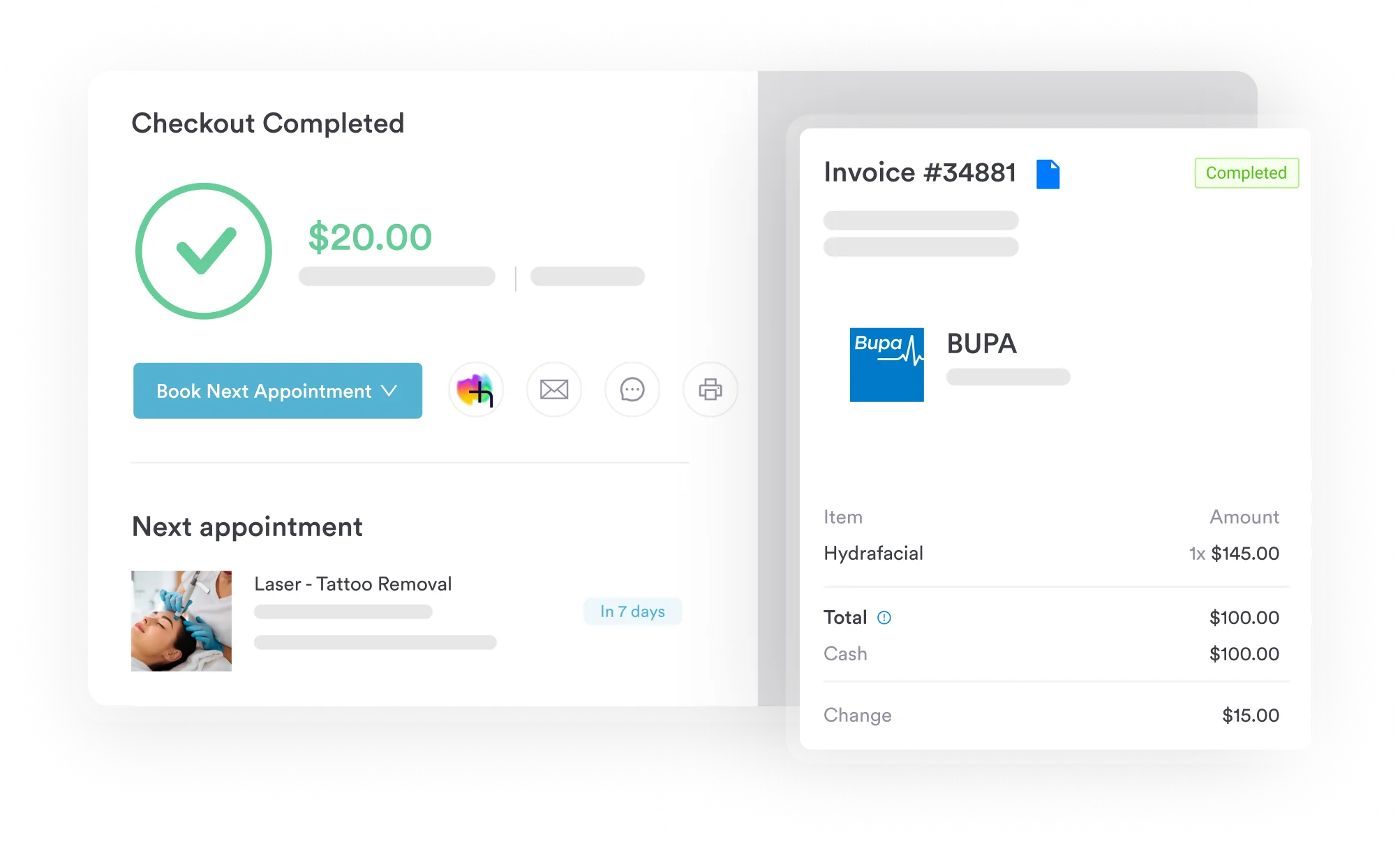
For practices managing peer specialists with varied credentials and supervising providers with attestation requirements.
Practices looking for time-saving features will find that structured intake and billing templates substantially reduce the administrative overhead of H0038 compliance.
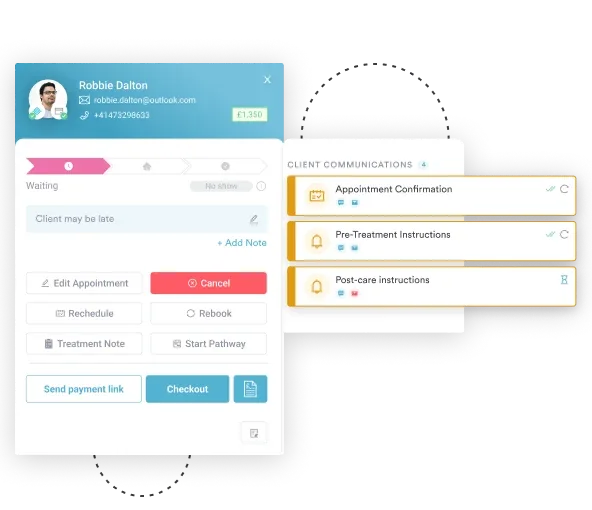
HCPCS code H0038 gives behavioral health practices a specific, Medicaid-supported mechanism to bill for peer specialist services, but billing it correctly takes work. Time-based documentation, credential verification, modifier discipline, and per-payer coverage confirmation are all required for clean claims.
Pabau’s practice management platform gives behavioral health practices the structured documentation and billing workflow tools to manage H0038 claims accurately. To see how Pabau handles time-based billing unit tracking and peer specialist credential management, book a demo with our team.

Coding memory loss from a known cause? ICD-10 code F04 covers amnestic disorder from a known cause such as a brain injury or hypoxia.
Documenting delirium in a patient? ICD-10 code F05 covers delirium due to a known physiological condition, a frequently undercoded diagnosis.
Coding a mood disorder diagnosis? ICD-10 code F06.31 covers a mood disorder linked to a documented medical condition, with depressive features.
HCPCS code H0038 covers self-help and peer support services delivered by a certified peer specialist, billed in 15-minute increments. It is used in behavioral health and substance use disorder settings where individuals with lived experience of mental illness or addiction provide structured recovery support to others.
Billing is restricted to credentialed peer specialists, most commonly a Certified Peer Specialist (CPS) or Certified Peer Recovery Specialist (CPRS). Exact credential requirements vary by state Medicaid program; some states also require supervising provider co-signature on service notes before a claim is submitted.
Yes, most state Medicaid programs cover H0038, but coverage policies, rates, and daily unit limits vary by state. Some states require prior authorization. Medicaid managed care organizations within the same state may also have different rules than fee-for-service Medicaid. Medicare does not cover H0038.
Prior authorization requirements for H0038 are payer-specific. At least some state Medicaid programs and Medicaid managed care organizations require prior authorization before services begin. Verify with each payer before delivering services to avoid claim denials for services rendered without required PA.
Telehealth delivery of peer support services under H0038 is covered by some state Medicaid programs, but coverage is not universal. Where covered, the GT or 95 modifier is typically required. COVID-era telehealth waivers that expanded coverage have expired or changed in many states; verify current policy with your state Medicaid program directly.
The most common errors are: documenting session duration without specific start and end times, applying the wrong modifier (or omitting a required one), billing above the payer’s daily unit limit without authorization, submitting claims under an uncredentialed peer specialist, and billing H0038 to Medicare, which does not cover H-series codes.