Pabau GO app

The new Pabau GO is heredownload on the App Store

Download on the App Store
Book a demo Book a demo
Mental Health & Therapy

Resilience worksheet: Build mental strength

Key Takeaways

Key Takeaways

A resilience worksheet is a self-assessment and action-planning tool therapists assign to adult clients to strengthen coping, identify strengths, and build adaptive responses to adversity.

Resilience can be systematically developed through intentional practice grounded in cognitive-behavioral and positive psychology frameworks — it is not fixed.

Effective worksheets combine self-assessment, strengths mapping, coping strategy identification, and a concrete action plan clients can implement between sessions.

Practice management software like Pabau lets therapists assign resilience worksheets via a secure client portal, streamlining between-session workflows and improving completion.

Download your free resilience worksheet

Download the resilience worksheet PDF below — a clinician-ready template you can assign to adult clients and work through collaboratively in session.

Resilience Worksheet

A comprehensive resilience worksheet combining self-assessment, strengths identification, coping strategy mapping, and a structured resilience-building action plan for adult therapy clients.

Download template

Therapists reach for a resilience worksheet when a client understands their difficulties but can’t yet act on them. The worksheet turns coping into something concrete: a self-assessment, a strengths inventory, and an action plan the client works through between sessions.

This guide covers what to put in the worksheet, how to introduce it in session, who it suits, and when to hold off.

What is a resilience worksheet?

A resilience worksheet is a structured self-assessment and action-planning tool therapists use to help adult clients evaluate their psychological resilience and develop practical strategies for managing adversity. It typically combines three core elements:

  • Self-assessment section: Clients rate their current coping abilities across key domains, including emotional regulation, stress response, adaptive thinking, and support-seeking behavior.
  • Strengths and resources inventory: Clients identify personal assets such as past successes, relationships, and skills.
  • Action-planning component: Clients map specific coping strategies and commit to resilience-building practices they can implement between sessions.

Unlike generic self-help worksheets, clinician-facing resilience worksheets are grounded in evidence-based frameworks. Commonly used approaches integrate crisis intervention frameworks, cognitive-behavioral therapy (CBT) principles, and positive psychology:

  • CBT-informed worksheets emphasize thought patterns and coping responses.
  • Positive psychology worksheets focus on strengths, hope, and post-traumatic growth.
  • Acceptance and commitment therapy (ACT) worksheets help clients clarify values and commit to meaningful action despite adversity.

The American Psychological Association (APA) defines resilience as “the process and outcome of successfully adapting to difficult or challenging life experiences,” emphasizing that resilience is not a fixed trait but a dynamic capacity that develops through practice and support. A well-designed resilience worksheet operationalizes this definition by giving clients concrete tools to strengthen that capacity.

Why therapists use resilience worksheets in clinical practice

Therapists assign a resilience therapy worksheet for three primary clinical reasons: assessment, skill-building, and between-session engagement.

  • Assessment: The self-assessment sections reveal which resilience domains clients perceive as strong (e.g., problem-solving, social support) and which feel underdeveloped (e.g., emotional regulation under stress, reframing negative thoughts). This baseline guides therapy focus areas and helps therapists tailor interventions.
  • Skill transfer: Worksheets operationalize abstract concepts like “building resilience” into discrete, actionable steps. A client who understands resilience intellectually may still struggle to apply it; a structured worksheet turns that understanding into practice by naming specific coping techniques and prompting action.
  • Homework compliance: Research on therapy outcomes consistently shows that clients who engage in between-session work demonstrate faster symptom improvement and stronger treatment retention. A resilience worksheet gives clients a clear, time-limited task that reinforces session content.

Additionally, worksheets reduce therapist note-taking burden during sessions and create a shared reference point for follow-up conversations. When clients return having completed a resilience worksheet, therapists can review the assessment results and action plan directly within a therapy practice management system rather than relying on recall.

How to use a resilience worksheet in sessions

Effective worksheet use follows a five-step clinical workflow:

  1. Introduce the framework: At the start of a session or module addressing adversity and coping, explain the concept of resilience and why you’re using the worksheet. Frame it as a collaborative tool: “This worksheet helps us identify your existing strengths and map out concrete strategies you can practice this week.” Avoid presenting it as a test or diagnostic measure.
  2. Complete the self-assessment section together or as homework: If your client learns best through guided exploration, complete the assessment during session, discussing each item (e.g., “When you say you ‘sometimes’ bounce back from setbacks, what does that look like in practice?”). If they prefer independent reflection, assign it as homework to be reviewed at the next session.
  3. Review and validate strengths: Spend time on the strengths inventory section. Many clients struggling with adversity minimize their assets; therapy’s strength-based stance means explicitly naming and validating the resources they identify (relationships, past successes, values, skills). This shifts the narrative from deficit (“I can’t cope”) to resource (“I have coped before; here’s how”).
  4. Co-create the action plan: Use the coping strategies and resilience goals the client identified to build a concrete plan: “You mentioned exercise and talking to your sister both help. Let’s set one specific goal for this week.” Make the plan observable and time-bound (e.g., “Walk 30 minutes three times this week” rather than “exercise more”).
  5. Follow up at the next session: Review progress on the action plan. Celebrate successes, troubleshoot barriers, and revise the plan as needed. This closing loop reinforces that the worksheet is a working tool, not a one-time form.

Best practice: Always pair the worksheet with a structured psychiatric assessment if exploring trauma history or severe mental health symptoms. A resilience worksheet complements but does not replace comprehensive diagnostic assessment.

Who benefits from resilience worksheets

A resilience worksheet for adults suits clients navigating these scenarios:

  • Recovery from acute adversity: Job loss, relationship dissolution, bereavement, health crisis. Clients benefit from concrete strategies to process the event and identify what helps them move forward.
  • Chronic stress or ongoing challenges: Clients managing long-term illness, caregiver burden, or occupational stress. The worksheet helps them build sustainable coping practices rather than relying on crisis-mode responses.
  • Anxiety or depression with functional impairment: Clients whose mental health symptoms undermine their confidence in their ability to handle difficulties. Resilience work directly rebuilds that confidence through skill-building and evidence of past successes.
  • Preparation for predictable transitions: Career change, relocation, parenting transitions. Proactive resilience planning helps clients enter these transitions with a toolkit rather than reactive coping.
  • Post-traumatic growth: Clients who have experienced significant trauma and are working to integrate that experience and rebuild meaning. Resilience worksheets support the positive psychology lens that growth is possible alongside grief.

Structured worksheet assignment that’s easy to assign and follow up on — something a mental health practice management system supports — helps sustain the between-session engagement that therapy outcomes depend on. Digital delivery via patient portals also tends to lift completion rates compared with paper handouts.

Clinical benefits for your practice

Integrating resilience worksheets into your therapy workflow yields four direct clinical benefits:

  • Measurable progress documentation: Resilience assessments provide a pre-post comparison. When a client’s self-rated ability to “adapt to change” increases from 3/10 to 7/10 over treatment, that’s concrete evidence of progress to review in session and report in clinical notes.
  • Reduced appointment time spent on assessment: Rather than spending 15 minutes each session asking about coping and strengths, clients complete the assessment outside session. You review and deepen the conversation, saving chair time and freeing space for intervention work.
  • Increased between-session engagement: Therapy outcomes depend heavily on what happens outside the room. A specific resilience action plan (e.g., “Reach out to one person this week for support”) is more likely to be completed than a vague directive to “work on coping.”
  • Compliance and risk reduction: Documented resilience assessments and action plans become part of the clinical record, demonstrating informed, structured care. This protects your practice in the event of a complaint or review and strengthens your clinical defense if a client experiences a setback.

Using digital forms for client assessment and sharing completed worksheets via a secure client portal further increases efficiency and client engagement. Clients can complete worksheets at their own pace before session, reminders ensure higher completion rates, and you have their responses immediately available during the appointment.
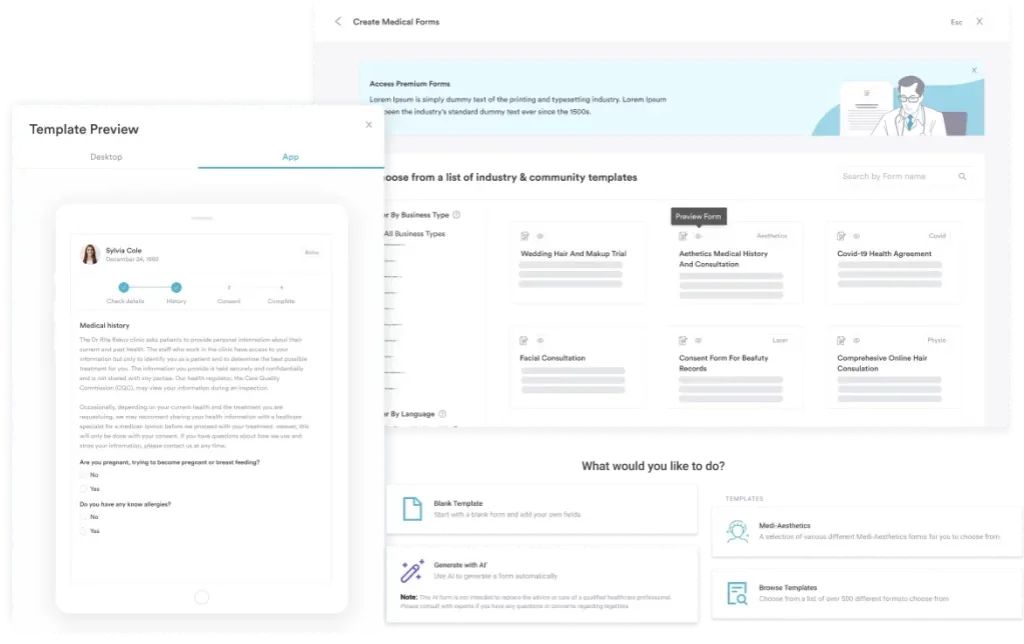
Digital forms
Digital forms

Clinical note: A resilience worksheet is a complement to, not a replacement for, crisis assessment. If a client presents in acute distress or with safety concerns, conduct your standard safety evaluation first before introducing coping or resilience work.

Evidence-based frameworks behind these tools

Well-designed resilience worksheets — whether framed as a building resilience worksheet or a broader coping tool — integrate research from three complementary areas:

  • Cognitive-Behavioral Therapy (CBT): CBT-informed resilience worksheets emphasize the thought-emotion-behavior loop. Clients learn to identify unhelpful thought patterns when facing adversity and practice realistic, flexible thinking. Coping strategies focus on problem-solving and behavioral activation (e.g., “What is one thing you can do today that gives you a sense of accomplishment?”).
  • Positive Psychology: Rather than focusing only on symptom reduction, positive psychology asks: What are your strengths? What gives your life meaning? What past successes can you draw on now? Resilience worksheets grounded in this framework include strengths inventories, values clarification exercises, and hope-building reflections. Research by psychologists like Barbara Fredrickson shows that cultivating positive emotion alongside addressing difficulty accelerates recovery.
  • Acceptance and Commitment Therapy (ACT): ACT-informed worksheets help clients accept difficult emotions while committing to values-aligned action. Rather than trying to eliminate anxiety or sadness, clients learn to feel those emotions while still moving toward meaningful goals. This reduces the “struggle against struggle” many clients experience.

The Resiliency Toolkit — 73 tools and worksheets by Angela M. Doel, MS (Between Sessions Resources) — exemplifies this integrated approach, combining self-assessment, coping skills, emotion regulation, goal-setting, and meaning-making.

Integrating worksheets into your clinical workflow

To maximize worksheet impact, embed them into your standard clinical procedures:

  • Intake or module-opening: Assign the resilience worksheet at the start of a therapy module addressing coping, stress, or adversity. This baseline assessment informs your treatment plan.
  • Progress monitoring: Readminister the assessment mid-treatment and at closeout to track change, pairing it with a broader quality of life assessment where relevant. This provides quantitative data for your session notes and justifies continued care if needed.
  • Crisis or setback response: If a client experiences a relapse or new stressor, the worksheet becomes a tool for collaborative problem-solving: “Let’s revisit your strengths and coping strategies to build a plan for this challenge.”
  • Preventive work: Use resilience worksheets proactively with clients facing predictable stressors (job change, health diagnosis, family transition), pairing them with brief practices like a 5-minute meditation script to build their toolkit before adversity hits.

Assign worksheets through automated follow-up workflows. Send the form right after the session, schedule a reminder email two days later, and auto-flag incomplete forms so you know who to nudge. Digital assignment like this tends to lift completion rates compared with paper handouts.
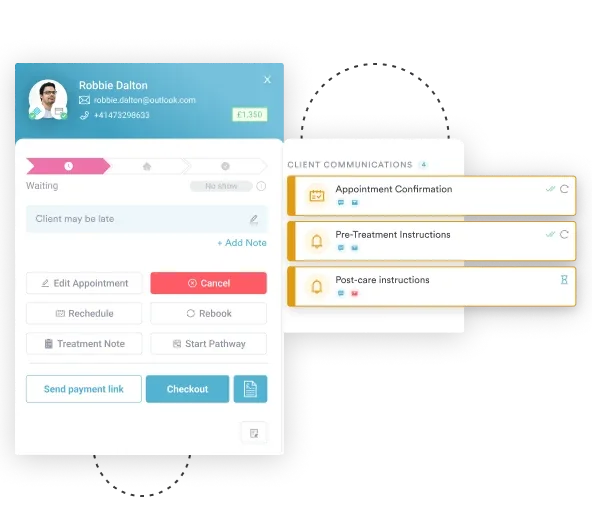
Automated communication in Pabau

Special considerations: Trauma, culture, and adaptation

A few important caveats when using resilience worksheets:

Trauma survivors: Clients recovering from trauma may have had their coping skills overwhelmed or their resilience beliefs shattered. Introducing a resilience worksheet too early can feel invalidating (“Why are you asking me to build resilience when I’m still in survival mode?”). Wait until the client has established safety and stabilization; then the worksheet can shift to meaning-making and post-traumatic growth.

Cultural responsiveness: Resilience worksheets developed in Western, individualistic contexts may emphasize personal agency and individual coping. For clients from collectivist cultures, family systems, or communities, adapt the worksheet to highlight community support, spiritual resources, and interdependence alongside personal strengths.

Neurodivergence: For clients with ADHD, autism spectrum, or executive function challenges, simplify the worksheet: fewer items, larger font, more visual layout, shorter response options. Worksheets should support skill-building, not create task overwhelm.

As part of comprehensive patient care management, always tailor worksheets to the individual rather than applying a one-size-fits-all approach.

Pro Tip

Build a worksheet library within your practice management system. Create standard versions for key scenarios (stress management, grief, anxiety, trauma recovery) so you can assign the right worksheet at the right time without searching. Label each with the evidence base it draws from (CBT, ACT, positive psychology) so clinicians know which framework applies to their client’s needs.

Conclusion

A resilience worksheet is a practical, evidence-based tool that connects therapy session insight to real-world coping. By combining self-assessment, strengths identification, and action planning, the worksheet operationalizes the APA’s definition of resilience — “the process and outcome of successfully adapting to difficult or challenging life experiences” — into concrete, assignable work clients can do between sessions.

Whether you’re working with clients navigating grief, career transitions, chronic illness, or post-traumatic growth, a resilience worksheet provides structure, documentation, and momentum. Deliver it digitally via your practice portal, use automated reminders to boost completion, and review responses collaboratively to maximize impact. Book a demo to see how Pabau’s digital forms and client portal streamline worksheet assignment and compliance tracking.

Continue your research

Continue your research

Looking for frameworks to structure resilience conversations? Therapist burnout prevention explores the same resilience principles from a clinician perspective, helping you strengthen your own coping while modeling resilience for clients.

Need to document informed consent when assigning therapeutic worksheets? Group therapy informed consent provides a template for ensuring clients understand the purpose and scope of therapeutic tools and interventions.

Want to integrate resilience-building into your practice’s standard care pathway? Patient engagement strategies outlines evidence-based approaches to sustaining client involvement between sessions — exactly what resilience worksheets enable.

Frequently asked questions

What is a resilience worksheet used for in therapy?

A resilience worksheet is a structured tool therapists assign to help clients assess their coping abilities, identify personal strengths, and develop an action plan for managing adversity.

How long does a resilience worksheet take to complete?

Most take 10–25 minutes depending on depth; assign as homework so clients can reflect rather than rushing.

Can resilience worksheets be used with clients in crisis?

No. Prioritize safety assessment and stabilization first; use the worksheet in recovery and post-crisis resilience-building phases only.

How do I adapt a resilience worksheet for a client’s specific needs?

Simplify language and reduce items for clients with cognitive processing differences; emphasize family and community strengths for clients from collectivist backgrounds.

Should I review the worksheet in session or leave it for homework?

Both work; best practice is to assign as homework and dedicate the next session’s opening 10–15 minutes to reviewing responses together.

Can I use the same resilience worksheet with all my clients?

A well-designed worksheet suits most adult clients facing adversity, but build a small library of variants (grief, trauma, job loss) to assign the most relevant version.
×