Kate Tarrant
Nursing care plan for aggressive behavior
A nursing care plan for aggressive behavior is a structured clinical document fo...

2
Last Updated: Oct 26, 2026
Free PDF 2 pages, print-ready Clinician-reviewed
Download your free ACE questionnaire PDF Adverse Childhood Experiences (ACE) Questionnaire A ready-to-use, 10-item ACE questionnaire PDF covering yes/no screening questions across the abuse, neglect, and household dysfunction domains. Use it with adults during clinical intake, trauma screening, and mental health assessment to identify patients who need trauma-informed care. Download template The adverse childhood experiences […]
A ready-to-use, 10-item ACE questionnaire PDF covering yes/no screening questions across the abuse, neglect, and household dysfunction domains. Use it with adults during clinical intake, trauma screening, and mental health assessment to identify patients who need trauma-informed care.
Upload this PDF, or any form you already use, and Pabau's AI Form rebuilds it with tick boxes, text fields and a signature. Attach it to the treatment once, and every patient gets it on time.
AI Form rebuilds the consent, history and aftercare forms you already use. You review each one, then publish.
Patients complete forms on their phone before they arrive, so the front desk stops retyping paper.
Every signed form is versioned and attached to the treatment record, ready when you need it.
Set how long a consent stays valid. Returning patients skip forms they have already signed.
Supports HIPAA and GDPR compliance AES-256 encryption 4.8 on G2 4.7 on Capterra Trusted by 4,000+ practices worldwide

The adverse childhood experiences (ACE) questionnaire is a validated 10-item screening tool that measures trauma exposure across three domains: abuse, neglect, and household dysfunction before age 18.
ACE scores range from 0-10; a score of 4 or higher is associated with significantly increased risk for chronic disease, mental health disorders, and early mortality.
Scoring requires summing yes responses; clinicians interpret the total score using evidence-based risk bands and implement trauma-informed follow-up protocols.
Practice management software like Pabau streamlines ACE questionnaire delivery, automated scoring, and trauma-informed care documentation within a single secure patient record.
The adverse childhood experiences (ACE) questionnaire is a brief. Clinicians use it to identify patients who experienced abuse, neglect, or household instability before age 18.
That information directly informs diagnosis, treatment planning, and trauma-informed care. You can download the full 10-item ACE questionnaire as a free PDF above.
This guide covers how to score and interpret ACE results for adults, plus how practice management software like Pabau lets you deliver the screening, auto-calculate scores, and document follow-up in one patient record.
The adverse childhood experiences (ACE) questionnaire is a 10-item self-report screening instrument developed from the landmark Kaiser Permanente and CDC study (1995-1997) that surveyed over 17,000 adults.
ACE stands for adverse childhood experiences: potentially traumatic events a person is exposed to before age 18. The tool captures three core domains: abuse (physical, emotional, sexual), neglect (physical, emotional), and household dysfunction (parental substance use, mental illness, incarceration.
The ACE-Q has one primary clinical purpose: to rapidly identify patients at elevated risk for chronic disease, mental health conditions, and premature mortality based on cumulative childhood adversity. The link is dose-dependent, so the more adversities a patient experienced, the steeper their health-risk trajectory. That makes the tool useful for early intervention, care coordination, and trauma-responsive treatment planning. Psychological assessment is only as useful as the record that keeps it comparable over time.
The questionnaire is free to administer and available through ACEs Aware, the California-based public health initiative, as well as through validated research resources. It remains one of the most widely used childhood trauma screening tools, or ACE screeners, across mental health, primary care, and addiction medicine settings.
Each of the 10 ACE questions asks yes or no about a specific childhood experience before age 18. If you are wondering what the 10 questions on the ACE test cover, they cluster into three thematic domains, each with distinct clinical implications.
Each question uses a simple yes/no format, and the scoring is straightforward: sum the number of yes responses. Clinically, the three domains reveal different trauma pathways, each with distinct neurobiological and psychological sequelae:
ACE questionnaire scoring is clinically simple, but it requires careful documentation for the patient record. Follow these steps to score the adverse childhood experiences questionnaire consistently.
Many practices log scores like these in measurements tracking software, so progress charts update the moment a reassessment is saved.
Interpreting an ACE score means reading the total against evidence-based risk bands, not treating the number as a diagnosis. The ACE score’s clinical value lies in its dose-response relationship with adult health outcomes. The CDC reports that higher ACE scores correlate with exponentially increased risk for chronic and mental health conditions.
Patients with ACE scores of 4 or higher are at elevated risk for depression, anxiety.
A score of 4 or 5 already places a patient in the high-risk band, and a score of 6 or more signals very high cumulative adversity. The relationship is cumulative: each additional ACE multiplies risk in a dose-dependent manner.
Decades of research following the original Kaiser/CDC study demonstrate that mental health clinicians and primary care providers who screen for ACEs can identify patients at risk for multiple downstream health conditions.
These associations are correlational. Early trauma triggers toxic stress, a prolonged activation of the body’s stress response that dysregulates hormones like cortisol and drives risky health behaviors.
These associations underscore why ACE screening is a practice-level intervention, not just a mental health intervention. Identifying high ACE scores enables early, coordinated, trauma-informed care across primary care, mental health, addiction, and specialty settings.
Effective ACE screening is more than administering a questionnaire. Adverse childhood experiences and trauma-informed care go together: the score identifies risk, and a documented protocol turns that risk into action.
This embeds trauma-informed care directly into clinical workflows.
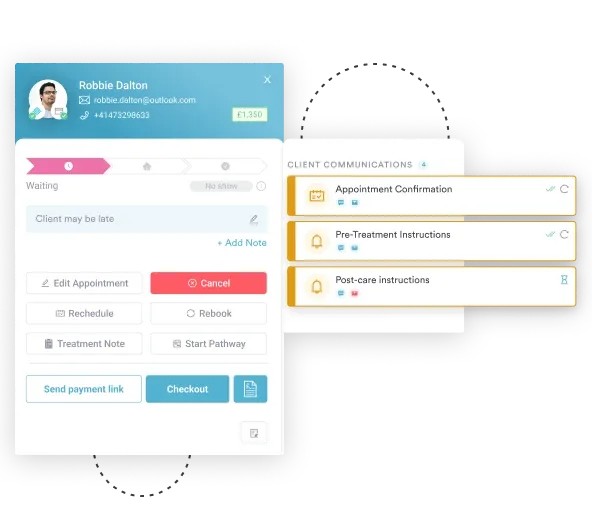

Pabau’s digital intake forms deliver the ACE questionnaire pre-visit, auto-calculate scores, and surface results in the patient record with trauma-informed follow-up prompts-all in one integrated system.

The original 10-item ACE questionnaire is designed for adults reflecting on childhood (age 0-18). Several validated variants exist for different clinical populations.
For children and early adolescents, age-appropriate versions adapt the language and structure. The best-known pediatric adaptation is the CYW ACE-Q, developed by the Center for Youth Wellness. These versions assess current or recent adversity rather than lifetime retrospective experiences, making them suitable for children in protective services, foster care, or early intervention settings.
Adolescent versions simplify language for ages 12-17 while maintaining the core 10-item structure, enabling earlier identification of at-risk youth for prevention and early intervention programs.
The World Health Organization developed the ACE-IQ (ACE International Questionnaire) to expand the original tool beyond the 10 domains. The ACE-IQ adds items assessing community violence, collective violence, and other adversities prevalent in low- and middle-income country contexts. It remains psychometrically sound and is increasingly used in international mental health and public health research.
While the ACE questionnaire is evidence-based and widely used, clinicians should understand its known limitations to interpret scores appropriately and avoid over-reliance on the tool.
The ACE questionnaire is best used as a screening conversation starter, not a diagnostic tool. Follow-up clinical assessment, validated trauma symptom scales (e.g., PCL-5 for PTSD), and trauma history interviews provide deeper clinical understanding. Clinicians building a broader intake profile might also add a highly sensitive person scale to flag sensory and emotional processing traits.
The adverse childhood experiences (ACE) questionnaire is a brief, validated screening instrument that gives clinicians actionable insight into childhood trauma exposure and the health risks tied to it. Administering the tool during intake, interpreting scores with clinical judgment, and implementing trauma-informed follow-up protocols directly improve patient outcomes and practice efficiency.
Storing ACE data securely within one clinical record system ensures consistent, evidence-based trauma-responsive care. Explore how Pabau’s clinical documentation tools can embed ACE screening into your practice workflows.

Want a simple tool to build self-esteem? Positive affirmation worksheet gives clients a two-part exercise to list personal strengths and write present-tense affirmations.
Need a CBT worksheet for negative thinking patterns? Positive thinking worksheet covers thought identification, evidence testing, and balanced-thought writing for sessions or homework.
Referring a patient to trauma-focused therapy? Consent to counselling form documents informed consent before starting talk therapy.
The 10 items assess childhood exposure to three domains: abuse (emotional, physical, sexual), neglect (physical, emotional), and household dysfunction (parental substance use, mental illness, incarceration, domestic violence, parental separation/divorce).
An ACE score of 4+ indicates significantly elevated risk for chronic disease, mental health disorders, and early mortality. Clinicians should implement trauma-informed care protocols and assess for current trauma symptoms.
Sum the total number of yes responses across the 10 items. The ACE score ranges from 0 to 10. Score ≥4 triggers a trauma-informed follow-up assessment and documentation.
Yes, the ACE questionnaire is free and publicly available through ACEs Aware, research databases, and peer-reviewed publications. No licensing fee is required to administer it in clinical practice.
The original ACE-Q is designed for adults. Age-appropriate pediatric and adolescent versions exist for children and early teens; these simplify language and assess current/recent adversity rather than lifetime retrospective experiences.
Implement a trauma-informed response: validate resilience, assess current trauma symptoms and safety, offer trauma-focused therapy or support groups, monitor for PTSD and depression, and coordinate care across primary care and specialty providers.
The original ACE-Q has 10 items for adult retrospective assessment. The WHO’s ACE-IQ expands the framework to include community violence, collective violence, and other culturally relevant adversities, making it suitable for international and low-resource settings.
Limitations include binary yes/no scoring without severity weighting, retrospective self-report bias, missing assessment of systemic/community adversities, and the fact that high ACE scores do not guarantee poor health outcomes. The tool should be used as a screening conversation, not a diagnostic endpoint.
Yes. A score of 7 sits in the very high range (6 or more), signaling exposure to multiple serious adversities and the highest risk tier for chronic disease and mental health conditions. It warrants a thorough trauma assessment and coordinated follow-up.