Pabau GO app

The new Pabau GO is heredownload on the App Store

Download on the App Store
Book a demo Book a demo
Mental Health & Therapy

ABCDE Journal PTSD Worksheet

Key Takeaways

Key Takeaways

The ABCDE Journal PTSD Worksheet is a structured cognitive-behavioral tool rooted in Rational Emotive Behavior Therapy (REBT) that helps therapists guide PTSD clients through identifying and challenging trauma-linked distorted thinking patterns.

The five ABCDE components (Activating Event, Beliefs, Consequences, Disputation, Effective New Belief) operationalize cognitive restructuring.

Therapists use this worksheet to help clients process traumatic memories in a structured format.

Pabau’s template library integrates downloadable clinical worksheets directly into your practice management system, enabling seamless documentation, client record linking, and workflow continuity without switching between tools.

Download your free ABCDE Journal PTSD worksheet

A ready-to-use cognitive restructuring worksheet that guides PTSD clients through identifying activating events, challenging beliefs, understanding consequences, disputing distorted thoughts, and developing effective new beliefs aligned with trauma-focused CBT principles.

Download template

Mental health professionals working with post-traumatic stress disorder (PTSD) clients need structured intervention tools that guide cognitive processing without overwhelming patients in early recovery stages. The ABCDE Journal PTSD Worksheet answers that need: a free, evidence-based cognitive restructuring worksheet that operationalizes the therapeutic mechanism at the heart of effective PTSD treatment.

The mental health therapy field increasingly recognizes that standardized worksheets reduce clinician burden, improve consistency across sessions, and give clients a take-home reference that extends learning beyond the therapy room.

This article explains the worksheet’s clinical foundation, step-by-step use cases, and how to integrate it into your digital practice workflow.

What is the ABCDE Journal PTSD worksheet?

The ABCDE Journal PTSD Worksheet is a structured cognitive-behavioral tool designed to help therapists guide clients with PTSD through identifying and challenging trauma-linked distorted thinking patterns.

The acronym stands for Activating Event, Beliefs, Consequences, Disputation, and Effective New Belief. It is a five-step cognitive restructuring framework derived from Rational Emotive Behavior Therapy (REBT), developed by Albert Ellis in 1955.

Unlike open-ended journaling, which can amplify emotional rumination in trauma survivors, the ABCDE model worksheet provides a scaffolded format. Clients work through each column sequentially, transforming raw emotional reactivity into structured analysis.

As a PTSD worksheet, it standardizes psychoeducation, reduces administrative overhead, and creates consistent documentation for client records. Digital clinical forms and worksheet templates like this are becoming essential infrastructure in therapy practices.
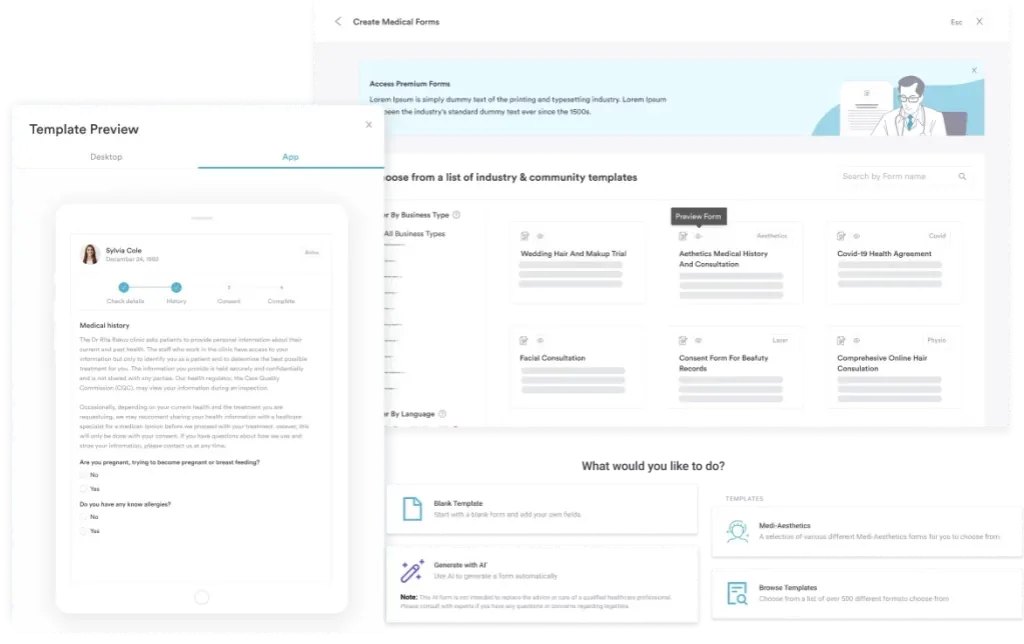
Digital forms
Digital forms

What each letter stands for?

  • A – Activating Event: The objective event or trigger (a noise, a thought, an anniversary date, a sensory cue). Critically, this is NOT the trauma itself, but a current reminder that activates trauma memory. Therapists help clients distinguish between the triggering event and the original trauma.
  • B – Beliefs (or thoughts): The automatic interpretations and thoughts that arise in response to the activating event. In PTSD, these are often catastrophic (“I’m in danger”, “I will be hurt again”, “I cannot cope”). REBT theory posits that it is not the event itself but the belief about it that drives emotional distress.
  • C – Consequences (emotional and behavioral): The feelings and behaviors that follow from the beliefs. Examples: anxiety, avoidance, hypervigilance, emotional numbing. The worksheet helps clients see the causal chain and recognize that changing beliefs can shift emotional outcomes.
  • D – Disputation (or challenging): Disputation is the therapeutic work of questioning the belief’s accuracy, looking for evidence, and exploring alternative interpretations. Therapists model this process, then guide clients to do it themselves. This is where cognitive flexibility begins.
  • E – Effective New Belief: A more realistic, adaptive belief that survives scrutiny. Not toxic positivity, but a belief grounded in evidence and psychological flexibility. Examples: “That noise startled me, but I am safe now” or “This memory is difficult, and I can tolerate it.”

The APA Clinical Practice Guideline for the treatment of PTSD confirms that cognitive restructuring is a core active ingredient in evidence-based PTSD treatments. In the ABCDE model, this is the shift from belief (B) to effective new belief (E), and the worksheet operationalizes that mechanism in a client-friendly format.

How to use the ABCDE Journal worksheet for PTSD in therapy sessions

  1. Psychoeducation on the model: Before the first worksheet, spend 5-10 minutes explaining the ABCDE chain. Use a current client example or a neutral scenario (e.g. a car backfire). Normalize that trauma survivors often jump from A (event) straight to C (panic) without noticing B (belief). The worksheet creates space for B and D work.
  2. Identify a recent activating event: Work with the client to choose a recent trigger, not the original trauma, but something manageable that occurred in the past week. Write the objective facts in column A (who, what, where, when), with no interpretation yet.
  3. Elicit automatic thoughts: Ask “What went through your mind in that moment?” Write down the B beliefs as they emerge. Therapists often hear catastrophic or all-or-nothing thoughts here. Do not challenge them yet. Normalize that these are automatic.
  4. Name the consequences: Ask “How did you feel? What did you do?” in response to those beliefs. Write emotional labels (fear, shame, rage) and behavioral responses (avoidance, freezing, hypervigilance) in column C. Help clients see the link between B and C.
  5. Guide disputation gently: In column D, therapist and client collaborate to question the belief. Ask Socratic questions: “Is that thought 100% true?” “What evidence do you have?” “What would you tell a friend in this situation?” Write alternative perspectives, not a therapist-imposed correction.
  6. Develop the effective new belief: Synthesize the disputation into a more balanced, realistic belief in column E. This belief should feel credible to the client, not “Everything is fine” but “This was scary and I handled it” or “This memory came up and I am still here, still safe.”

A worked ABCDE worksheet example

Here is how a completed ABCDE worksheet example might read for a client processing a common trauma trigger. A veteran hears a car backfire on the walk to session:

  • A – Activating event: A car backfired loudly as I crossed the street this morning.
  • B – Belief: “I’m under attack. I’m not safe. Something bad is about to happen.”
  • C – Consequences: Racing heart, sweating, scanning for exits. I ducked into a doorway and arrived late and shaken.
  • D – Disputation: A backfire is not gunfire, and nothing bad happened. My body reacted to a memory, not to present danger.
  • E – Effective new belief: “That sound startled me because of what I have lived through. It was a car, and I am safe now.”

How long a single pass takes varies widely. Some clients move through it quickly, while others need most of a session.

Saving that completed example to the client’s record, rather than a loose printout, lets you set it beside last month’s worksheet on the same trigger. This shows the client, in their own words, how their disputation has sharpened over time.

Client records in practice management systems can store completed worksheets alongside clinical notes, creating a longitudinal picture of cognitive shifts and progress over treatment. This integration reduces time spent searching for past worksheets and improves treatment continuity.
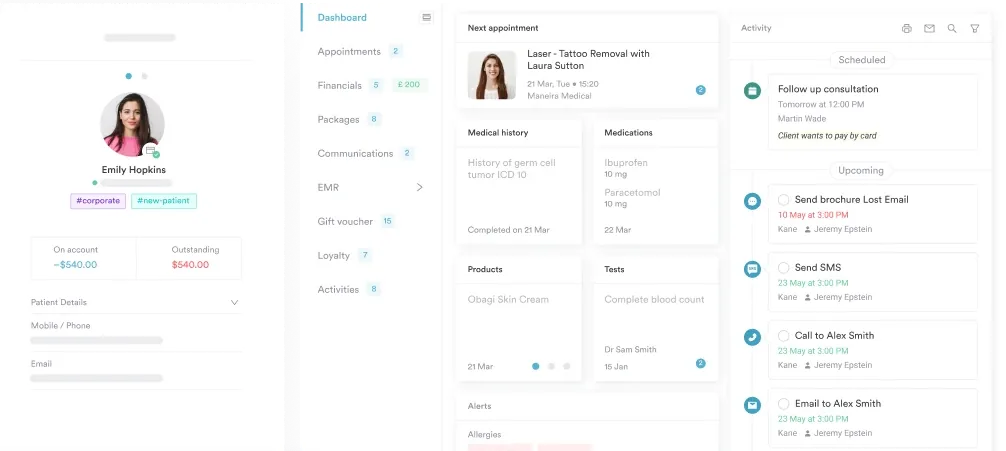
Detailed client records in Pabau

When to use the ABCDE worksheet in PTSD clinical work

Timing and patient readiness determine worksheet effectiveness. Introducing cognitive restructuring too early in trauma treatment, before safety stabilization, can re-traumatize clients or increase avoidance.

Screening tools like the ACE Questionnaire can help clinicians gauge trauma history before introducing structured cognitive work.
  • Mid-to-late stabilization phase: Once the client has basic emotional regulation and can tolerate discussing triggers without overwhelming dysregulation, introduce the worksheet. Typically, this is 4-8 sessions in, depending on trauma severity.
  • When avoidance is prominent: Clients who ruminate or actively avoid thoughts and situations benefit from the worksheet’s structure. It creates a bridge between avoidance and processing.
  • Concurrent with exposure therapy: Therapists using trauma-focused CBT or Cognitive Processing Therapy (CPT) often pair the worksheet with gradual exposure. The worksheet helps process the thoughts and beliefs that arise during exposure.
  • Between sessions for homework: The worksheet becomes a take-home tool. Clients complete a column or two during the week, bringing it back to process together. This distributes the work and reinforces learning.
  • For clients with intellectual strength in verbal processing: Clients who prefer thinking through problems, who are articulate, and who respond well to cognitive frameworks tend to find the worksheet most useful. For clients with limited literacy or significant cognitive impairment, offer verbal processing or paired completion instead.

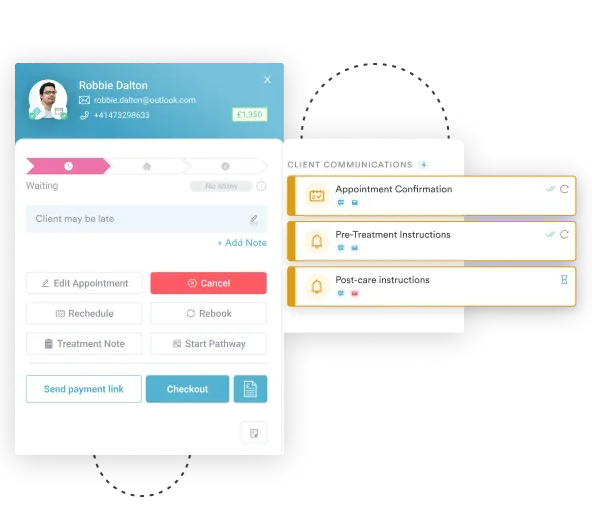
Automated clinical workflows can prompt clinicians to upload or reference worksheets at appropriate treatment milestones, ensuring the tool is not overlooked and that documentation stays consistent across the caseload.

Automated communication in Pabau

Evidence-based benefits of the ABCDE worksheet for PTSD recovery

  • Reduces cognitive fusion: Trauma survivors often fuse with thoughts (“I am in danger”) rather than observing them. The worksheet creates psychological distance: “That’s a thought I’m having” rather than “That’s reality.” This shift alone reduces the emotional power of intrusive thoughts.
  • Builds cognitive flexibility: By documenting B (beliefs) and then generating alternatives in D (disputation), clients practice generating competing thoughts. Over time, this flexibility generalizes to new situations without the worksheet.
  • Lowers avoidance and emotional numbing: Structured engagement with triggering thoughts, rather than suppression, activates natural emotional processing. Clients report decreased urges to avoid situations or dissociate.
  • Improves emotional regulation: Naming and examining beliefs creates a pause between stimulus (A) and reaction (C), where choice becomes possible. Clients gain agency over their emotional responses.
  • Aligns with evidence-based PTSD treatment guidelines: The Substance Abuse and Mental Health Services Administration (SAMHSA) and the American Psychological Association endorse cognitive restructuring as a first-line PTSD intervention. Using the ABCDE worksheet ensures treatment fidelity to established protocols.

How the ABCDE model relates to REBT and CBT theoretical frameworks

The ABCDE model originates in Rational Emotive Behavior Therapy (REBT), developed by psychologist Albert Ellis in 1955. Ellis’s key insight: emotional suffering is not caused directly by adversity, but by irrational beliefs about adversity.

The original ABC model (Activating Event → Belief → Consequence) was later extended to ABCDE by adding two steps, disputation and effective new belief. These additions make the model more action-oriented and practical.

In its three-step form, clinicians often call this the ABC model worksheet. The D and E steps are what turn insight into change. Like other REBT worksheets, the REBT ABCDE worksheet keeps the focus on the belief rather than the event itself, which is why it transfers so cleanly to trauma work.

Cognitive Behavioral Therapy (CBT) built on REBT foundations and adapted them for specific disorders. For PTSD, CBT and its variants, including Trauma-Focused CBT (TF-CBT) and Cognitive Processing Therapy (CPT), all use cognitive restructuring as a core intervention. The ABCDE worksheet is a practical operationalization of the ABCDE model of CBT and its core principle: changing thoughts changes feelings and behavior.

The VA/DoD Clinical Practice Guideline for PTSD recommends cognitive-behavioral approaches as first-line treatment. The ABCDE worksheet supports fidelity to these evidence-based standards.

Practical tips for therapists using the ABCDE worksheet in PTSD sessions

  • Start with low-threat events: Do not begin with the trauma itself or the most distressing current trigger. Choose a mildly upsetting event from the past week. Success on an easier example builds confidence and skill before tackling core trauma material.
  • Write legibly and visibly: Use large print, clear handwriting (or typed), so the client can see each step fill in. Visual clarity reduces cognitive load and makes the causal chain obvious.
  • Validate emotions before disputing beliefs: Clients whose distress is immediately challenged without empathic acknowledgment may feel dismissed. Say “That belief makes complete sense given what you’ve been through. Let’s examine whether it’s helping you now” before moving to D.
  • Avoid therapist-imposed “correct” beliefs: The effective new belief in E must come from the client’s own reasoning, not the therapist’s reassurance. A belief imposed by the therapist carries no weight. One discovered by the client sticks.
  • Use the worksheet as a template, not a straitjacket: If a client’s process does not fit the columns neatly, adapt. Some clients need two activating events, or want to revisit E multiple times. Flexibility preserves engagement.
  • Revisit the same event multiple times if needed: One worksheet session rarely resolves entrenched beliefs. Over weeks, a client may return to the same activating event and generate increasingly nuanced effective new beliefs. This repetition builds durable cognitive change.

Pairing the worksheet with complementary tools, like a resilience worksheet, can help reinforce the adaptive beliefs clients build in column E.

Integrating the ABCDE worksheet into your practice management workflow

A clinical advantage that standalone worksheet libraries like Therapist Aid or ChoosingTherapy do not offer is seamless integration into your broader practice. Compliance and documentation requirements create competing demands. Clinicians need quick access to validated worksheets, but they also need those materials linked to client records, appointment notes, and treatment planning systems.
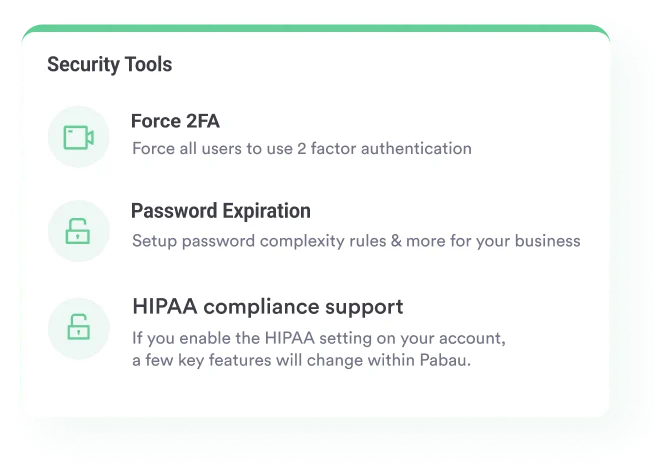
HIPAA compliance in Pabau

When the ABCDE worksheet lives in your practice management platform alongside therapy practice management tools, you gain continuity:

  • Therapists can reference prior ABCDE worksheets without switching apps.
  • Supervisors can audit worksheet use for quality assurance.
  • Client progress becomes visible across the whole record.

Digital form templates also reduce printing, enable real-time note linking, and ensure consistent access across multiple practices if you scale.

This is where practice management software like Pabau differentiates: you do not just download and print a worksheet in isolation. You embed it into your workflow, connecting each completed form to the client’s longitudinal record and treatment timeline. Other structured templates, like a divorce worksheet, follow the same digital workflow.

Book a demo to see how Pabau’s template library and digital form builder let you customize the ABCDE worksheet for your specific practice protocols and integrate it into your documentation system without extra steps.

How the ABCDE worksheet fits into broader PTSD treatment pathways

The ABCDE worksheet is one tool within a comprehensive PTSD treatment plan. It is not a standalone intervention, but a structured vehicle for a key therapeutic mechanism: cognitive restructuring. Clinicians managing F43.1 embed it within broader treatment planning that also includes psychoeducation, emotional regulation training, exposure therapy, and behavioral activation.

The worksheet shines in the cognitive restructuring phase of trauma-focused CBT or in the impact/meaning-making stages of Cognitive Processing Therapy. When timed correctly, after initial stabilization but before the most exposure-intensive phases, it accelerates cognitive change and increases client agency in the healing process.

For mental health professionals seeking telehealth capabilities and integrated template management, Pabau combines the ABCDE worksheet with the broader infrastructure clinics need to deliver PTSD care at scale: secure video sessions, digital consent forms, automated client communications, and robust client records, all in one system.

Frequently asked questions about the ABCDE Journal PTSD worksheet

What is the ABCDE model in CBT?

The ABCDE model is a cognitive restructuring framework where A is an Activating Event (trigger), B is the Belief (automatic thought), C is the Consequence (emotion/behavior), D is Disputation (challenging the belief), and E is the Effective New Belief (more realistic alternative). It originates from REBT and is core to CBT-based PTSD treatment.

How do you use the ABCDE journal for PTSD?

Work through each column sequentially with a recent manageable trigger: write the objective activating event, elicit the automatic beliefs, name the emotional/behavioral consequences, guide the client in disputing the belief (asking for evidence, alternatives), and develop a more balanced effective new belief. Process this collaboratively during the session or assign as homework.

What is the difference between the ABC model and the ABCDE model?

The ABC model (Event → Belief → Consequence) identifies the causal chain. The ABCDE model adds two action steps: D (Disputation/challenging the belief) and E (Effective New Belief/developing alternatives). ABCDE makes the model more therapeutic by guiding belief change, not just identification.

Can the ABCDE model help with PTSD symptoms?

Yes. Research supports cognitive restructuring as an active ingredient in evidence-based PTSD treatment. In the ABCDE model, this is the shift from belief (B) to effective new belief (E). Reducing trauma-linked catastrophic beliefs lowers hyperarousal, avoidance, and emotional numbing. It works best as part of a comprehensive treatment plan including stabilization and exposure.

Is the ABCDE CBT worksheet available as a PDF?

Yes. The ABCDE journal on this page downloads as a free, printable PDF. You can complete it by hand or adapt it inside your practice management system. It follows the same five-step CBT structure as the on-screen worksheet: activating event, beliefs, consequences, disputation, and effective new belief.
×