CPT code 93503: Swan-Ganz catheter billing and modifiers
CPT code 93503: Official descriptor and procedure overview In the AMA CPT code s...

Last Updated: Oct 23, 2026

CPT code 15050 covers a pinch graft that closes a small ulcer, a digit tip, or another minimal open area outside the face.
The defect must measure 2 cm or less in diameter, and that measurement belongs in the surgeon’s operative note.
A 090 global period folds 90 days of routine postoperative care into a payment of about $605.89 in a physician office.
NCCI edits bundle same-site debridement codes with 15050, so a claim without a supporting modifier will be denied.
Practice management software like Pabau validates insurer-required claim fields and automates follow-up tasks, so fewer claims come back for rework.
CPT code 15050 is a billable surgical code for a pinch graft. It covers a small ulcer, a digit tip, or another minimal open area outside the face, up to 2 cm in diameter.OPinch grafts turn up most often in wound care and dermatology practices. Two details drive almost every denial on this code. One is the wound measurement. The other is the 90-day global period, which is longer than most coders expect. The Medicare Benefits Schedule sets its own item structure, so a US code has no direct Australian counterpart.
This reference covers the official descriptor, clinical indications, modifier rules, ICD-10 pairings, NCCI edits, and 2026 Medicare rates. Use it alongside your payer contracts and your practice’s own coding policies.
CPT code 15050 describes a pinch graft used to cover small, open wounds outside the face. The American Medical Association maintains the official descriptor, which has two halves.
Two constraints are non-negotiable. The defect must measure no more than 2 cm in diameter, and the graft site must not be on the face. One code covers both single and multiple pinch grafts applied to the same site in one session.
Because 15050 falls under autografts, the graft material must come from the patient. Allografts and synthetic substitutes use different code families. Coding teams at plastic surgery practices should confirm donor-site documentation is captured alongside the recipient site note.
The 090 global period is the detail billing teams most often get wrong. Medicare treats a pinch graft as major surgery, so the payment already covers one preoperative day and 90 days of routine follow-up. Dressing changes and graft checks inside that window are not separately billable.
CPT code 15050 applies when a surgeon harvests and applies a pinch graft to cover a small, non-facial wound. The three canonical indications align directly with the AMA descriptor.
Two scenarios fall outside CPT code 15050. Any defect on the face uses codes from the facial repair series, whatever its size. Wounds wider than 2 cm move to CPT 15100 or another graft code. Applying 15050 to an oversized defect is a common audit flag.
Digit injuries in particular split across several codes. A complete amputation treated by replantation codes to CPT code 20816. A nail bed injury drained rather than grafted codes to CPT code 11740.
A pinch graft claim needs three things in the operative note. Record the anatomical site, the wound diameter in centimeters, and why the graft was medically necessary. Missing any one of them is the biggest cause of post-submission audits on this code.
The measurement trap: the most common audit trigger is a wound diameter that sits in the patient chart but never reaches the operative note. CMS reviewers treat the operative note as the primary evidence document. A diameter recorded only in a nursing assessment leaves the claim exposed. Write it into the surgeon’s procedure note, in centimeters.
Surgeons billing these codes often run the whole workflow inside dedicated plastic surgery software.
Modifiers -57, -24, -59, and -58 decide most 15050 claims. Modifiers -51, -50, and -LT/-RT cover multiple procedures, bilateral grafts, and lateralized sites. The 090 global period makes 15050 major surgery, which changes how same-day office visits are reported. Verify each one against the AMA’s CPT coding resources and your payer contracts.
Modifiers -57 and -25 are not interchangeable. Medicare ties -57 to major surgery, which is exactly what a 090 global period signals. Reaching for -25 on the same-day visit invites a denial, so check your payer’s policy before submitting.
Chronic ulcer codes in the L97 and L89 families and digit wound codes in the S61 family cover most 15050 claims. The diagnosis has to support medical necessity for a graft. Payers cross-reference it against the procedure, and a mismatch triggers an automatic edit.
Laterality is where these codes catch people out. S61.200A is the right index finger and S61.201A is the left, and the pair is easy to transpose at charge entry. Match the laterality in the diagnosis code to the laterality in the operative note every time.
A burn wound is sized differently on the diagnosis side. The T31 extent family reports total body surface area as a percentage, and ICD-10 code T31.52 splits its 20-29% third-degree share from the 50-59% total. Record both percentages, since the operative-note diameter does not stand in for them.
Use the most specific ICD-10 code available. Codes ending in 9 are acceptable when severity or laterality is genuinely undocumented. Payers increasingly flag them for additional documentation requests, so unspecified should be a last resort rather than a habit. Secondary diagnoses count as well, so a skin condition that slows healing.
The National Correct Coding Initiative bundles certain wound preparation and debridement codes with 15050. The edits apply when both services are performed at the same anatomical site on the same date. CMS considers those services part of the primary procedure.
Modifier -59 is not a default fix for NCCI edits. It requires documentation proving the second procedure is distinct in time, site, or clinical purpose. Payers audit -59 usage, and overuse without documentation creates recoupment risk.
Medicare pays about $605.89 for CPT code 15050 in a physician office and about $428.53 in a facility setting in 2026. Those are national averages, so your locality rate will differ. The CMS Physician Fee Schedule lookup tool is the authoritative source. Confirm the figure with your Medicare Administrative Contractor (MAC) before billing.
The office rate runs about $177 higher than the facility rate. It includes the practice expense overhead a hospital absorbs in an outpatient setting.
Those figures come from the relative value units behind the code. CPT code 15050 carries 18.14 total non-facility RVUs and 12.83 facility RVUs. Multiply either by the 2026 conversion factor of $33.4009 and you have the national average payment.
Billing the office rate for a hospital-based graft inflates the claim, and payer edits catch it quickly. The place of service on the claim has to match where the graft was actually performed.
Geographic adjustment then uses the Geographic Practice Cost Index. High-cost areas such as San Francisco or Manhattan apply a multiplier that can push rates well above the national average. Rural MACs may pay below it, so pull locality-specific rates before forecasting revenue for this code.
Run a MAC-specific fee schedule check for CPT code 15050 at the start of each calendar year. Rates reset on January 1, and the conversion factor change can shift your expected reimbursement by 2-5% before any locality adjustment is applied.
Most 15050 denials trace back to one of four errors. Catching them before submission is far cheaper than chasing appeals. For practices managing HIPAA compliance, documentation discipline around wound size is a compliance question as well as a billing one.
Commercial payers often follow CMS guidelines, but many add prior authorization requirements for skin graft procedures. Verify authorization rules for the specific code before the case is scheduled, not after the graft is done.
Build a CPT code 15050 charge entry checklist into your EHR workflow. Confirm the wound size is in the surgeon’s note, the site is non-facial, debridement codes have been reviewed for bundling, and ICD-10 laterality matches. Running it at charge capture catches the errors behind most denials on this code.
Pinch graft coding sits inside a family of skin graft and wound repair codes. The right choice depends on graft type, wound size, and anatomical location. The table below covers the codes cross-referenced with 15050 most often, including those that take over once the defect exceeds 2 cm.
Two neighboring codes matter in dermatology and wound care practices. Mohs surgery on the trunk or limbs bills under CPT code 17313, and a small resulting defect may be closed with a pinch graft. Drainage of a hematoma or fluid collection bills under CPT code 10140.
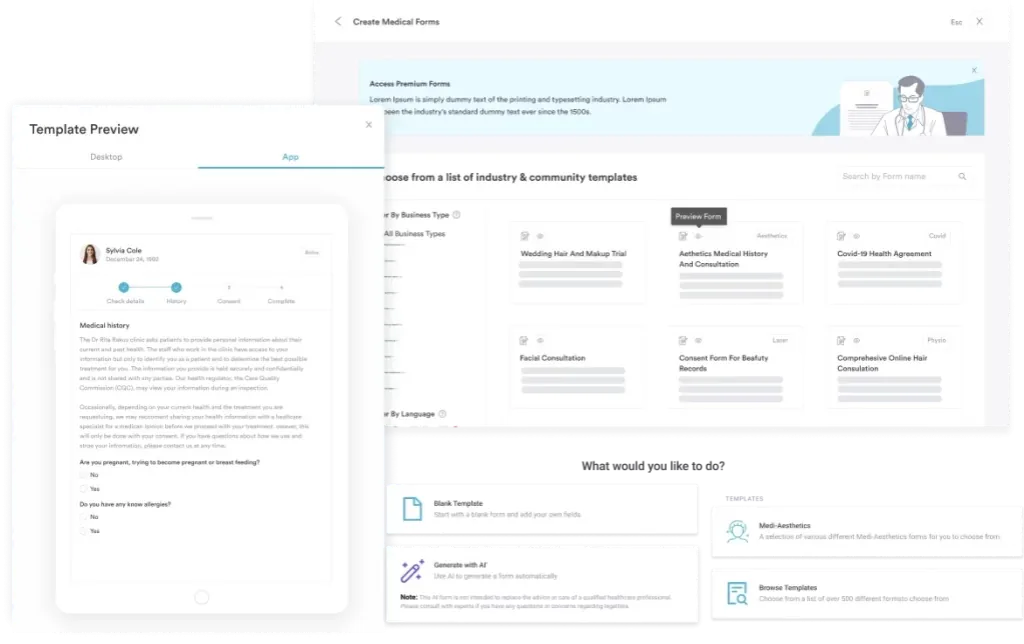
Practice management software like Pabau supports pinch graft billing by moving the checks in front of submission. The wound diameter, the place of service, and the follow-up dates all sit in one patient record before charge entry opens. Fixing a problem there takes minutes. Fixing it after the remittance takes a corrected claim or an appeal.
That is how a bundling conflict surfaces early. When the surgeon debrides and grafts the same wound, 97597 and 15050 land on the same encounter, side by side in the record. Whoever posts the charge sees the pair. They then drop 97597 or document the separate site that justifies modifier -59.
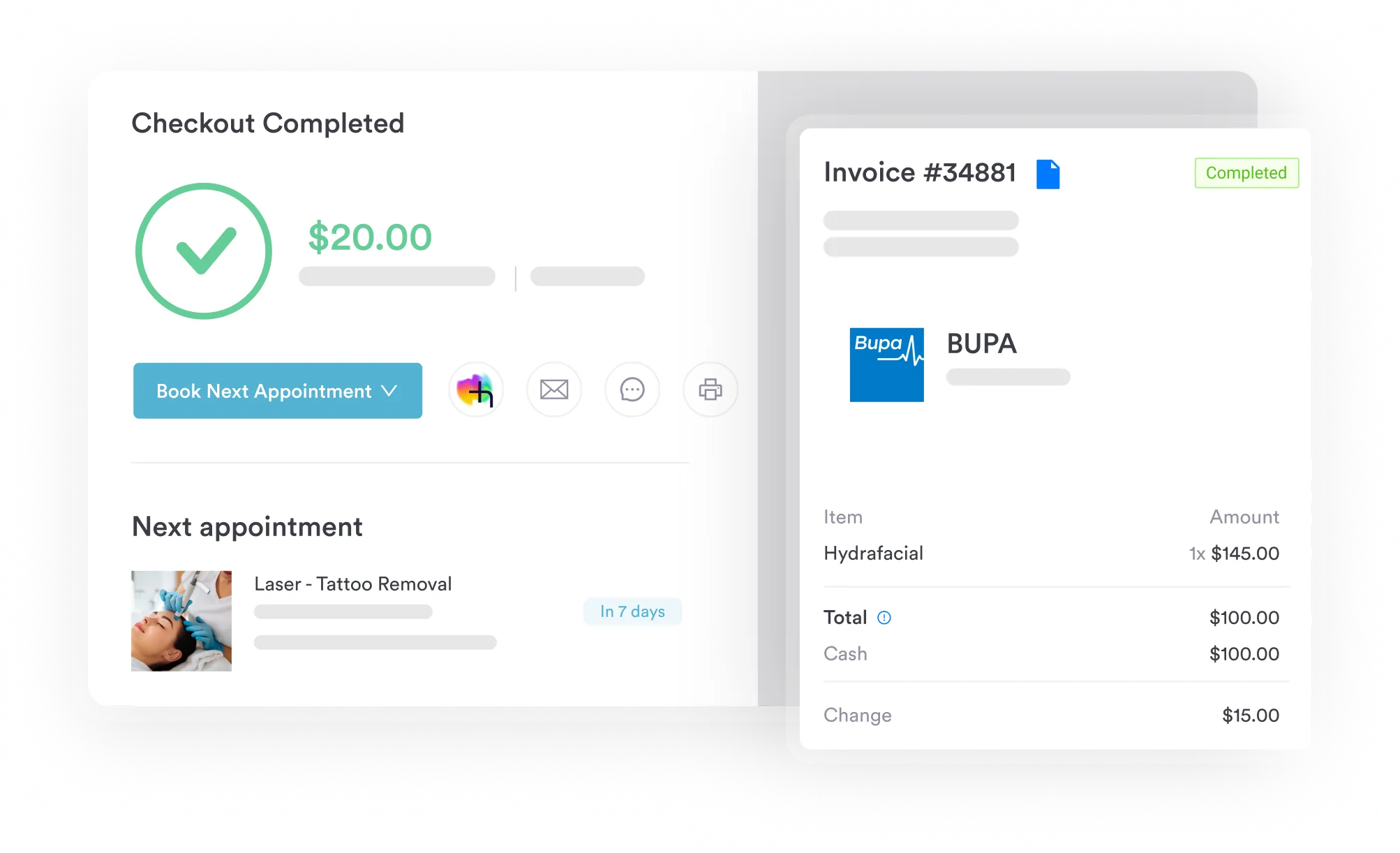
Pabau’s claims management software validates the details insurers require before a claim is submitted, such as membership and authorization numbers. Claims go out with the administrative side already checked, so fewer come back for correction.
Documentation is where the clinical side pulls its weight. Treatment note templates carry structured fields for wound diameter, anatomical site, and donor site. The measurement reaches the operative note as the surgeon works, rather than sitting only in a nursing assessment.
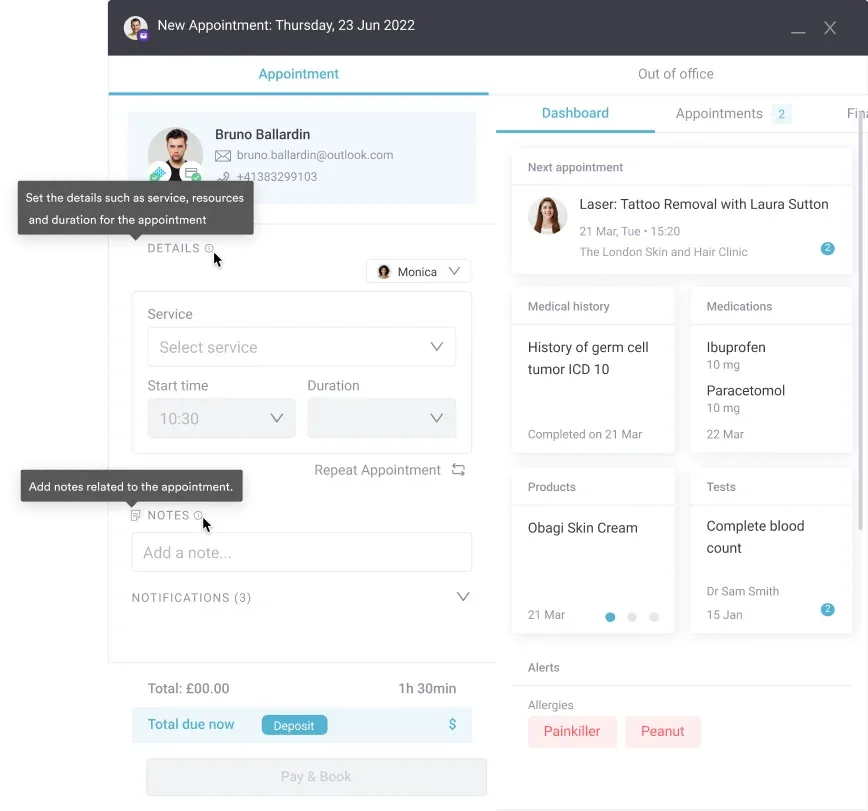
The 090 global period is the other thing worth keeping on screen. Book the graft and the 90-day window has a visible end date on the calendar. Your front desk can tell whether a follow-up falls inside it before anyone tries to bill that visit.
Coding judgment stays with your team, where it belongs. What the software takes away is the administrative rework around it. A missing field or a forgotten follow-up stops turning into a denial three weeks later.

Pabau checks the details insurers ask for before a claim goes out, and automates the reminders and tasks around follow-up care. Billing teams spend less time on corrections and more time on patients.

Treat CPT code 15050 as major surgery, because that is how Medicare pays it. The 090 global period decides which modifier fits a same-day visit, and it folds three months of follow-up into a single payment. Practices that bill routine graft checks inside that window will watch them bounce.
The rest comes down to one number in one place. Write the wound diameter into the surgeon’s operative note, in centimeters, every time. It decides whether 15050 is the correct code at all, and it is the first thing a reviewer looks for.
Get those two habits right and pinch graft claims stop generating rework. Book a demo to see how Pabau supports claim accuracy and clinical documentation for dermatology and plastic surgery teams.

Billing hand procedures alongside wound care? CPT code 20527 covers enzyme injection for Dupuytren’s contracture, including the documentation payers expect.
Coding a late-onset Alzheimer’s diagnosis? ICD-10 code for late-onset Alzheimer’s It explains the required secondary F02 manifestation code and the sequencing payers expect on the claim.
Filing a claim for unspecified Alzheimer’s disease? ICD-10 code for unspecified Alzheimer’s It walks through the mandatory pairing rules that keep G30.9 claims from being denied.
Coding a headache that defies a specific diagnosis? ICD-10 code for other headache syndrome It explains when the G44.89 residual code applies and why payers scrutinize its use closely.
Billing the debridement that bundles with a graft? CPT code 97597 sets out when active wound care management can be reported on its own.
CPT code 15050 covers a pinch graft, single or multiple. It applies to a small ulcer, a digit tip, or another minimal open area outside the face. The defect must measure up to 2 cm in diameter. The code sits in the Autografts/Tissue Cultured category and requires autologous graft material taken from the patient.
The 2026 national average Medicare non-facility rate for CPT code 15050 is approximately $605.89, and the facility rate is approximately $428.53. Those figures reflect 18.14 non-facility RVUs and 12.83 facility RVUs at the 2026 conversion factor of $33.4009. Rates vary by locality and MAC, so confirm them with the CMS Physician Fee Schedule lookup tool before billing.
CPT code 15050 carries a 090 global period. Medicare treats it as major surgery, so the payment covers one preoperative day and 90 days of routine postoperative care. Related follow-up visits inside that window are not separately billable. An office visit that leads to the decision to graft takes modifier -57.
Modifier -57 applies to the visit where the decision to graft was made, because 15050 is major surgery. Modifier -24 covers an unrelated visit inside the 90-day global period. Modifiers -51, -59, -LT, -RT, -50, and -58 apply for multiple procedures, distinct services, laterality, bilateral grafts, and staged procedures.
Frequently paired codes include L97.919 and L97.929 for non-pressure chronic ulcers of the right and left lower leg. L89 codes cover pressure ulcers by site and stage. S61.001A covers an open wound of the thumb, and I83.009 covers varicose veins with ulceration. Use the most specific code available, and match its laterality to the operative note.
CPT code 15050 covers pinch grafts for defects up to 2 cm in diameter at non-facial sites. CPT 15100 covers split-thickness autografts for larger defects on the trunk, arms, or legs, up to the first 100 sq cm. It uses a sheet-graft technique rather than small punch-harvested pinch grafts. When the wound exceeds 2 cm, 15100 is usually the correct code.
Yes. CMS NCCI edits bundle debridement codes 97597 and 97598 with CPT code 15050. The edits apply when both services happen at the same wound site on the same date. Billing both without modifier -59, plus documentation of a distinct site or separate clinical purpose, will result in denial or recoupment.
The operative note must record the anatomical site, confirmed as non-facial, and the wound diameter in centimeters. It also needs medical necessity supporting why conservative treatment failed. Record the autologous graft source, the donor site location, and a procedure narrative covering prep, harvest, and graft application.