CPT Code 90480: COVID-19 vaccine administration, single dose
CPT code 90480: Official descriptor and quick reference CPT code 90480 is the ad...

Last Updated: Oct 2, 2026

CPT code 99222 reports initial hospital inpatient or observation care requiring moderate medical decision-making (MDM), per day.
Documentation must support moderate MDM or a qualifying time threshold (typically around 55 minutes on the date of admission).
Common billing errors include selecting 99222 when documentation only supports 99221, and missing the Modifier AI for the principal physician of record.
Pabau’s claims management software helps practices structure inpatient E/M documentation and reduce claim errors at the point of care.
CPT code 99222 is a billable code for initial hospital inpatient or observation care, per day, that requires a medically appropriate history and/or examination and a moderate level of medical decision-making (MDM). It is the middle of the three initial hospital care codes (99221-99223) and is reported once per patient per calendar day.
Also searched as CPT 99222, procedure code 99222, or medical code 99222, it applies to the first day of care in both inpatient and observation settings following the 2023 consolidation of inpatient evaluation and management coding.
This guide covers the full billing picture: the official descriptor and clinical criteria, moderate MDM requirements, time thresholds, place-of-service and patient-status rules, modifier guidance, RVU values, and the documentation errors that most often lead to denied or downcoded 99222 claims.
The middle position of 99222 in the initial hospital care series is exactly where coders most often over-code or under-code, so each section ties the rule back to what the note must show.
The American Medical Association (AMA) defines CPT code 99222 as: Initial hospital inpatient or observation care, per day, for the evaluation and management of a patient, which requires a medically appropriate history and/or examination and moderate level of medical decision-making.
Before 2023, inpatient and observation care were billed under separate code families. The AMA and CMS consolidated them under 99221-99223, meaning CPT code 99222 now covers both settings when the stay is the first day of care. This is distinct from outpatient office-visit codes such as 99205 or 99211, which apply outside the hospital setting.
CPT code 99222 is the second of three initial hospital care levels. Use it when the clinical picture requires moderate complexity, not the straightforward reasoning appropriate for 99221 or the high-complexity reasoning that 99223 demands.
The per-day billing structure means only one provider bills 99222 per calendar day for a given patient encounter, whether that provider works in general practice.
Time thresholds are published annually by the AMA and may vary by code year. Always verify against the current year’s CPT guidelines. The per-day rule applies to all three codes: each calendar day is billed independently, and the code selected must reflect the complexity of care rendered on that day.
Moderate MDM under the 2021 AMA E/M guidelines (applied to inpatient codes from 2023) requires meeting at least two of three elements at the moderate threshold:
The MDM table is the primary tool for code selection. Payers and CMS auditors assess all three columns when reviewing claims for CPT code 99222. Documentation that supports only one column at the moderate level will not sustain the code.
Accurate clinical documentation at the time of admission is critical. Notes written retrospectively often fail to capture the reasoning that supported moderate complexity in the moment. Strong practices build MDM documentation into the admission note template itself, prompting clinicians to address each of the three elements explicitly.
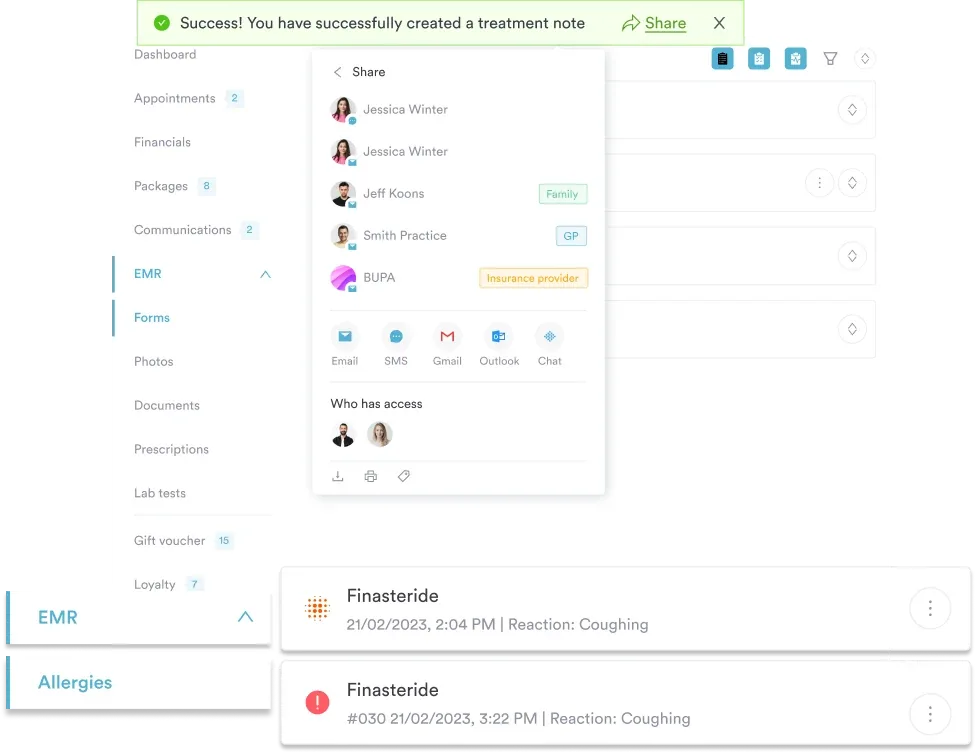
Document MDM elements in real time, not after the encounter. For each hospitalized patient, note the specific problem category (e.g. ‘new acute illness with systemic symptoms’), the data reviewed (e.g. ‘reviewed outside radiology report, independently interpreted’), and the management risk (e.g. ‘prescription drug management initiated’). This three-part structure directly maps to the MDM table and protects 99222 claims from audit downcode.
Time is an equally valid alternative to MDM for selecting CPT code 99222. The American Academy of Family Physicians (AAFP) confirms that initial hospital inpatient or observation care codes 99221-99223 apply when a patient receives such services for fewer than eight hours.
When time is the basis for code selection, total time on the calendar date of the encounter is counted, not just face-to-face time.
Activities counted toward total time include reviewing records before the encounter, performing the examination, ordering and reviewing tests, counseling the patient or family, and completing documentation. Time spent by clinical staff acting under the physician’s direct supervision generally does not count unless the billing provider was present.
For practices with solid HIPAA compliance and structured documentation workflows, time-based billing can be a cleaner path when MDM documentation is thin. But the total time must be recorded in the note, specifying the total minutes spent and that the time was on the date of the encounter.
E/M levels depend on what the chart supports, which is why a well-chosen primary care EHR matters.
CPT code 99222 is reported with Place of Service (POS) code 21 for inpatient hospital and POS 22 for on-campus outpatient hospital (observation). Since the 2023 consolidation, both settings use the same initial care code series. Verify your POS assignment against the patient’s actual hospital status, since payers audit POS codes alongside the E/M level.
The place-of-service code follows the patient’s formal status, and that status is where most 99222 denials begin. Choosing inpatient versus observation is a documented admission decision, not a billing preference, and for Medicare it turns on the expected length of stay under the two-midnight rule.
If the admitting order says observation but the claim carries POS 21 for inpatient, the payer reads a code-status mismatch and reviews or denies the claim before it ever weighs whether the note supported moderate MDM.
Using proper claims management software helps practices catch POS mismatches before submission. A claim submitted with POS 21 for a patient formally placed in observation status, for example, will likely trigger a review or denial.
Modifier AI is the one most frequently missed on 99222 claims. Consulting physicians do not append AI. Only the admitting (principal) physician does. When two physicians bill initial hospital care on the same date, the absence of AI on one claim signals to the payer that the provider is a consultant, not the principal physician.

Pabau helps physician practices and hospital-based providers structure documentation, manage claims, and reduce inpatient billing errors across CPT 99221-99223. See how it works for your practice.

Medicare reimbursement for CPT code 99222 is calculated using Relative Value Units (RVUs) multiplied by the Medicare Conversion Factor and a Geographic Practice Cost Index (GPCI) adjustment. National rates are published annually in the CMS Physician Fee Schedule and vary by locality.
The 99222 RVU is composed of three components: Work RVU (wRVU), Practice Expense RVU (PE RVU), and Malpractice RVU (MP RVU). The Work RVU reflects physician time and intensity. Use the CMS Physician Fee Schedule lookup tool referenced above to pull current national and locality-specific values for CPT code 99222 before setting your fee schedule.
Because geographic adjustments can shift total reimbursement by 20-40% depending on location, a practice in Manhattan will receive a materially different payment than one in rural Tennessee for the same 99222 claim. Practices using standard medical forms and structured billing workflows are better positioned to consistently capture the documentation that supports maximum allowable reimbursement. Eligibility, referral status and time thresholds all sit inside the Medicare Benefits Schedule descriptor rather than the code itself.
Check your Medicare Administrative Contractor (MAC) website before billing 99222 for the first time. CGS Medicare, Novitas Solutions, and Palmetto GBA each publish specific guidance on inpatient E/M documentation standards. MAC articles often include examples of compliant and non-compliant notes, which is more practical than the AMA guidelines alone.
Reviewing denied and audited 99222 claims reveals a consistent set of the following errors:
Practices that build practice management software features into their inpatient workflow, including structured note templates and automated claim scrubbing, catch the majority of these errors before the claim leaves the practice.
Understanding where 99222 sits within the broader family of hospital CPT codes prevents coding cascades, where the wrong code is carried through subsequent hospital days. The initial care codes (99221-99223) lead into subsequent care (99231-99233), discharge day management (99238-99239), and the same-day admit/discharge series (99234-99236).
When the patient moves from observation to inpatient status on the same calendar day as admission, use the initial hospital care code (99221-99223) rather than the same-day admit/discharge series.
When transitioning from initial to subsequent care, the subsequent hospital care codes 99231-99233 apply from day two onward. Practices with solid EHR integration can automate this code transition logic based on admission date.
CPT code 99222 requires a linked ICD-10-CM diagnosis code that establishes medical necessity. Common pairings include acute conditions requiring hospitalization: pneumonia, sepsis, heart failure exacerbation, acute kidney injury, new-onset atrial fibrillation.
The diagnosis must be consistent with the moderate MDM level selected. A diagnosis of uncomplicated upper respiratory infection paired with 99222 will draw scrutiny. Our initial hospital inpatient billing guide works through these diagnosis pairings in more depth, and you can also review AAPC Codify for crosswalk guidance when selecting diagnosis codes for specific inpatient presentations.
A 99222 admission for a postpartum patient can carry ICD-10 code O92.4 alongside the condition chiefly responsible for the stay. That code carries an age and sex edit for female patients aged 12 to 55, so an out-of-range claim trips it regardless of documentation.
Using digital intake forms that capture presenting diagnosis at the point of registration helps ensure that the ICD-10 code selected at billing matches the clinical documentation from the start of the encounter, reducing the risk of a mismatch between the problem list and the code.
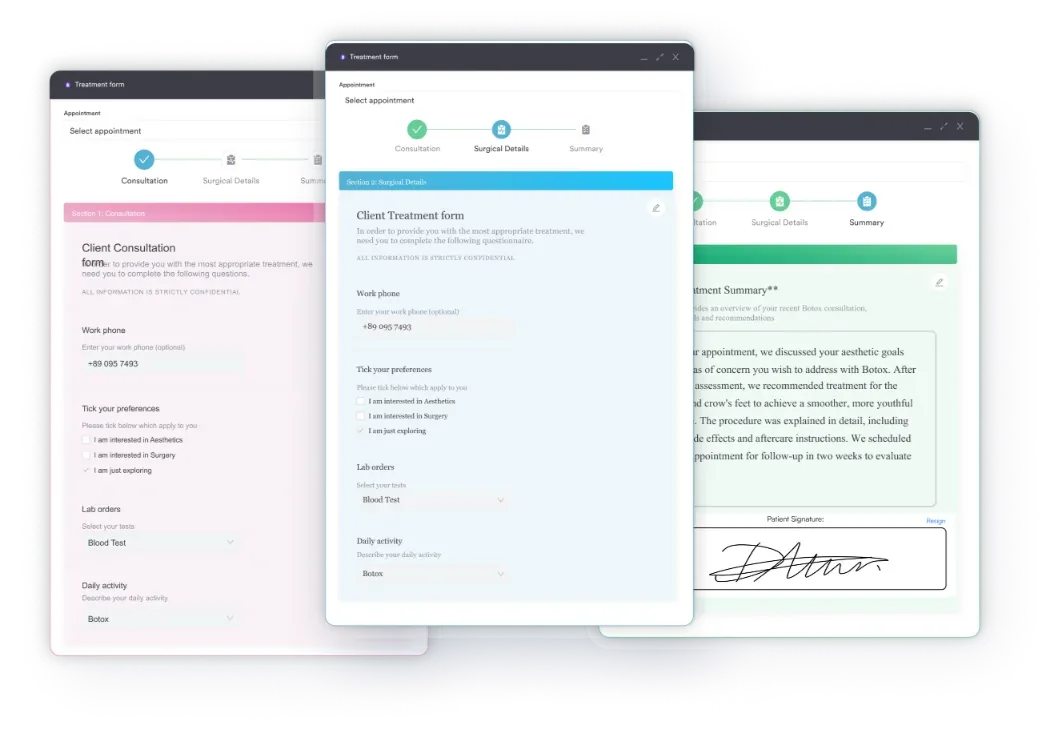
Inpatient billing errors rarely originate in the billing team. They start at the documentation stage, when the clinical note doesn’t capture the MDM elements in a structured way.
Pabau’s claims management software helps practices build documentation workflows that mirror the MDM table, prompting clinicians to record problem complexity, data reviewed, and risk at the time of the encounter rather than reconstructing it later.
For practices that manage both outpatient and inpatient billing, Pabau provides a unified platform that links the patient record, note, and claim. This reduces the split between clinical documentation and billing teams that causes the most common 99222 errors. Explore how medical practice management software can support your inpatient and outpatient billing in a single workflow.
CPT code 99222 claims most often fail because what the clinician believes they documented does not match what an auditor can confirm in the note. Moderate MDM requires two of three elements at the moderate threshold.
Time-based billing is a valid alternative, but it demands precise, contemporaneous documentation. Modifier AI, POS code accuracy, and correct use of the same-day admit/discharge series are the operational details that determine whether a 99222 claim pays on first submission.
Pabau’s integrated documentation and billing tools help hospital-based and outpatient practices connect clinical notes directly to clean claims. See how Pabau handles inpatient E/M documentation by booking a demo with the team.

Billing for the days after admission? 99231 covers subsequent hospital inpatient or observation care once the initial visit is billed.
Need to bill a same-day admission and discharge? 99234 explains the requirements when a patient is admitted and discharged within the same calendar day.
Handling the discharge side of a stay? 99239 covers hospital discharge day management for visits over 30 minutes.
CPT code 99222 is used to bill the first day of hospital inpatient or observation care when the encounter requires moderate medical decision-making. It is the middle level of the 99221-99223 initial hospital care series, applying when the patient’s clinical complexity is more than straightforward but does not reach the high-complexity threshold of 99223.
Both report the first day of hospital inpatient or observation care, but they differ by complexity. CPT 99222 requires moderate MDM, while 99223 requires high MDM. On time, 99222 sits around 55 minutes on the date of the encounter and 99223 around 75 minutes. Move up to 99223 only when the documentation shows high-complexity problems, extensive data review, or high risk, not because the admission simply felt busy.
CPT 99221 covers a straightforward or low-complexity initial hospital admission (around 40 minutes), while 99222 covers moderate complexity (around 55 minutes). The most common mistake is billing 99222 when the note only supports 99221. Moderate MDM needs at least two of the three elements (problems, data, and risk) at the moderate level, so a single stable problem with no meaningful data review or risk belongs at 99221.
Modifier AI is required when the billing physician is the principal physician of record (the admitting physician) on Medicare claims. It is not required for every payer, but Medicare Administrative Contractors look for it to tell principal physicians apart from consultants. Other modifiers such as 25, 57, and GC apply in specific circumstances described above.
Yes. Since the 2023 AMA and CMS consolidation, CPT code 99222 covers both formal inpatient admissions and observation care, which is an outpatient hospital status. The place-of-service code distinguishes the setting: POS 21 for inpatient hospital and POS 22 for on-campus outpatient hospital (observation). The MDM and time requirements are the same in either setting.
Medicare reimbursement for CPT code 99222 varies by geographic location and is updated annually. Payment is calculated from Work RVUs, Practice Expense RVUs, and Malpractice RVUs, multiplied by the annual conversion factor and a locality GPCI adjustment. Use the CMS Physician Fee Schedule lookup to find current rates for your locality.
When a patient is admitted and discharged on the same calendar day, CPT codes 99234-99236 replace 99222, provided the patient was in the facility at least 8 hours that day. If the same-day stay is under 8 hours, 99221-99223 (including 99222) is still used and no discharge code is billed separately.