



CCSD code G5100: Bypass of duodenum billing guide
CCSD code G5100 bills a bypass that leaves the duodenum in place CCSD code G5100...

Last Updated: Oct 16, 2026

CPT code 99222 reports initial hospital inpatient or observation care requiring moderate medical decision making (MDM), per day.
Billing may be based on MDM complexity or total time – 55 minutes of total time on the encounter date qualifies for 99222.
Common audit risks include insufficient MDM documentation and upcoding to 99223 without evidence of high-complexity decision making.
Pabau’s claims management software helps hospitalists and billers capture the documentation required for 99222 compliance and clean claim submission.
CPT code 99222 covers initial hospital inpatient or observation care, per day, for a patient who needs a medically appropriate history and/or examination and moderate medical decision making (MDM). It is the middle code in the 99221-99223 initial hospital care series, and its description matters because moderate MDM is where coders and auditors most often disagree.
Per the American Medical Association (AMA) CPT code set, CPT code 99222 is defined as: “Initial hospital inpatient or observation care, per day, for the evaluation and management of a patient, which requires a medically appropriate history and/or examination and moderate level of medical decision making.”
This definition was updated as part of the 2023 E/M revisions, which merged what were previously separate inpatient and observation codes into a unified series. The code applies to both new and established patients on the first day of a hospital inpatient or observation admission.
CPT code 99222 is the second of three codes in the initial hospital care series. It sits above 99221 (straightforward or low-complexity MDM) and below 99223 (high-complexity MDM). In plain terms, 99222 means the first-day hospital or observation visit for a moderately complex admission, which is what the 99222 CPT code description captures. Selecting the right code depends on either meeting the MDM criteria or documenting total time on the encounter date, as explained below. Billing compliance asks a narrower question than coding accuracy: can the practice defend this claim on review. Keeping a code lookup current matters more than keeping it comprehensive.
Place of service: 99222 is reported with Place of Service (POS) code 21 for inpatient hospital or POS 22 for outpatient hospital/observation settings. The 2023 unification of inpatient and observation codes means the same code now covers both care settings, which simplifies billing for patients admitted under observation status.
The three initial hospital inpatient or observation care codes differ by MDM complexity and time threshold. Selecting the wrong level is the most frequent source of RAC audit targets in inpatient E/M billing. The chart below summarizes the key differentiators across the 99221-99223 series, based on AAPC Codify and current AMA CPT guidelines.
Note: Time thresholds reflect total time spent on the date of the encounter, not face-to-face time alone. This includes time spent reviewing records, coordinating care, and documenting the visit. For reference to similar E/M code comparisons in other specialties.
Claim denials for CPT code 99222 almost always trace back to one of two documentation failures: missing evidence of moderate MDM, or incomplete history and physical (H&P) notes. The 2023 AMA E/M guidelines eliminated the counting of history and examination elements as the primary driver of code level, but a medically appropriate H&P is still required as the foundation of the encounter note.
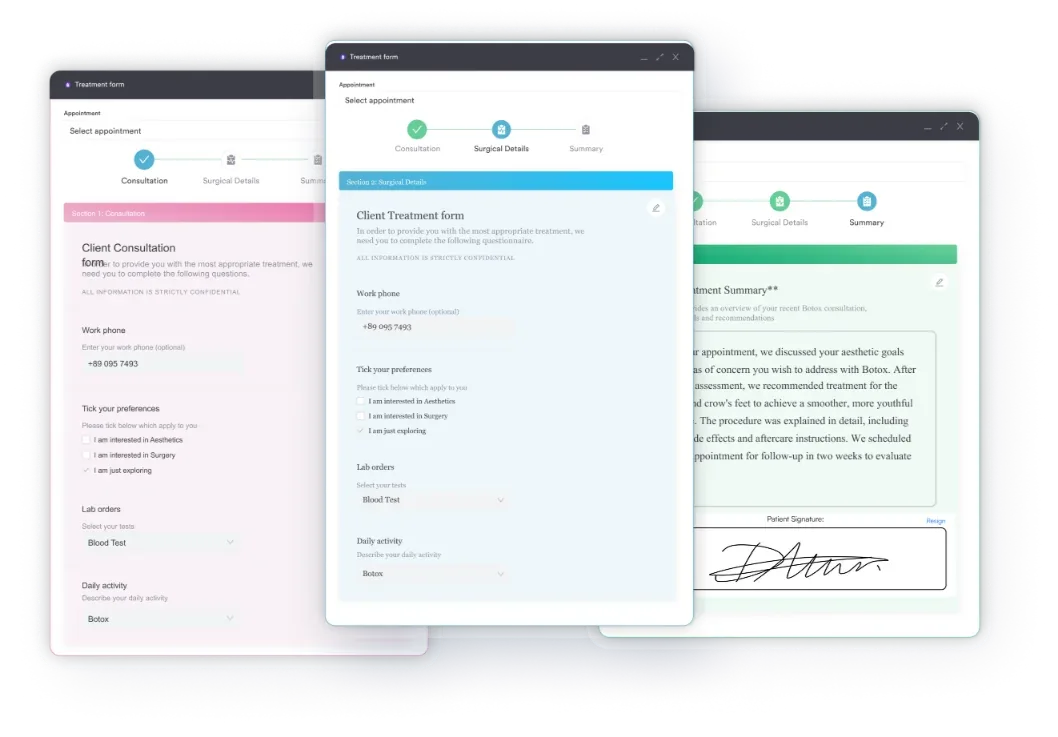
Practices using digital intake forms can build structured H&P templates that prompt physicians to document the elements required for moderate MDM at admission, reducing the risk of incomplete notes that trigger downcoding on audit.
Moderate risk includes prescription drug management (initiating, continuing, or discontinuing a prescription medication), a diagnosis or treatment significantly limited by social determinants of health, or a procedure with risk of complications such as a minor surgical procedure.
Most inpatient admissions involving medication changes or new prescriptions will satisfy this element. The documentation must specifically note the prescription drug decision, not simply list current medications.
Document your prescription drug management decisions explicitly in the assessment and plan. A note that states ‘adjusted metoprolol dose due to heart rate response’ is billable evidence of moderate risk. A medication list alone is not.
Medicare reimbursement for CPT code 99222 is calculated using the Medicare Physician Fee Schedule (MPFS), which assigns Relative Value Units (RVUs) to each code and applies a conversion factor to determine the dollar payment. RVU values are updated annually by CMS. Always verify current rates using the CMS Physician Fee Schedule lookup tool, as figures change each calendar year.
Use the FastRVU 2026 RVU lookup tool to calculate current Medicare reimbursement for 99222 by geographic location. The MPFS conversion factor and geographic practice cost index (GPCI) both affect the final payment amount, so national averages will differ from what a specific practice actually receives. Commercial payer rates typically exceed Medicare rates but vary significantly by contract.
Practices managing high volumes of inpatient admissions benefit from tracking 99222 reimbursement trends over time. Pabau’s claims management software allows billing teams to monitor claim status, payment rates, and denial patterns at the code level, making it easier to identify when 99222 reimbursement dips below expected rates or when a specific payer is systematically downcoding admission claims.
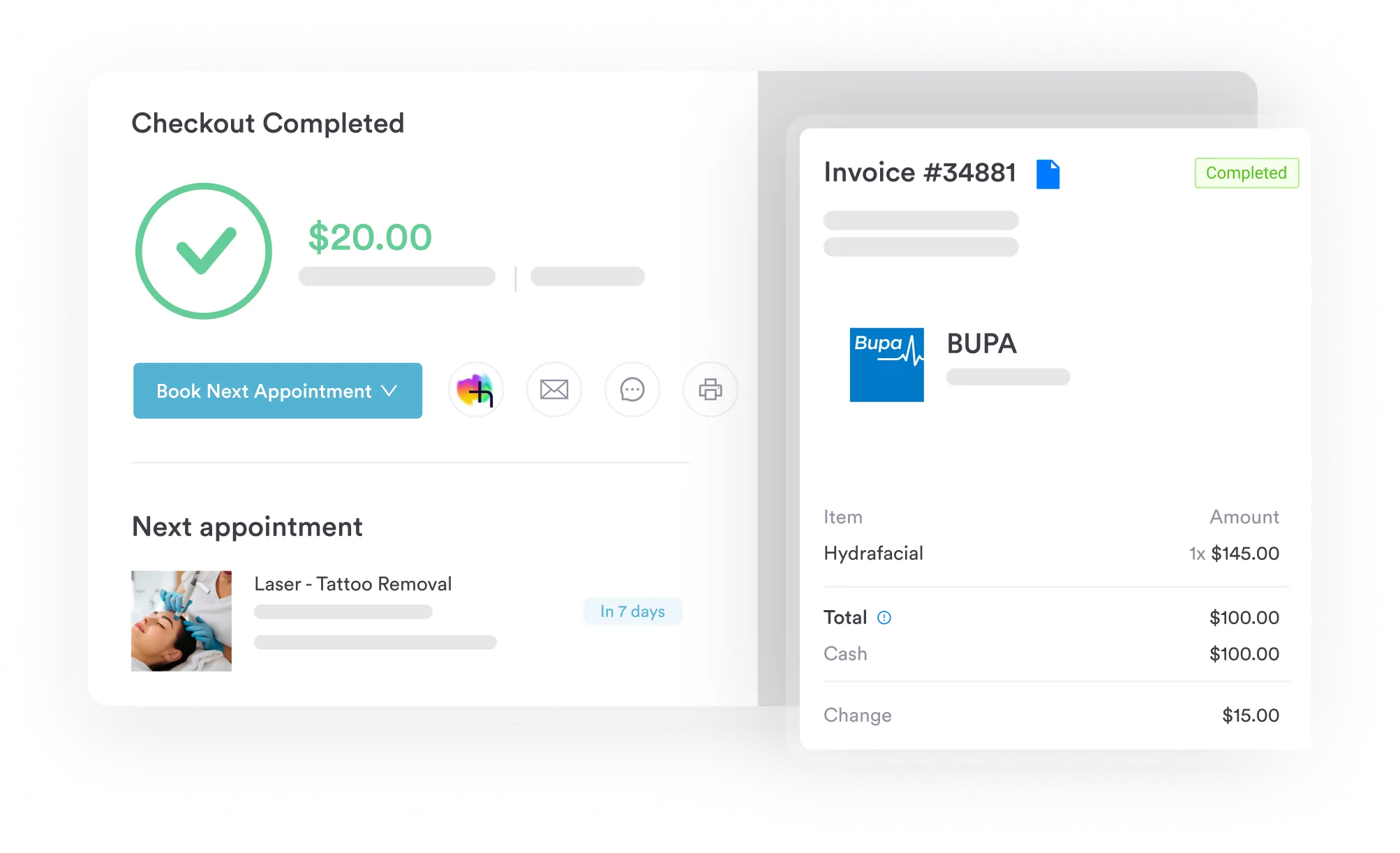

Pabau helps hospitalists and billing teams capture the clinical documentation needed for accurate CPT code 99222 claims, from structured H&P templates to integrated claims management.

CPT code 99222 can be reported with several modifiers depending on the clinical and practice context. Using the wrong modifier, or omitting a required one, is a frequent source of claim rejection and audit exposure. Here are the most common scenarios.
When a physician is the principal physician of record for an inpatient admission, Modifier -AI is appended to 99222. This modifier tells Medicare that this physician is primarily responsible for the patient’s overall care during the admission. Other physicians providing consultative or specialty services during the same admission report their services with a separate E/M code but do not use the -AI modifier.
For a Medicare patient, that separate code comes from the 99221-99223 series by documented MDM level, rather than the inpatient consultation code 99252. Many commercial payers still accept the 99252-99255 consultation family.
In teaching hospital settings, attending physicians must be physically present for the key portion of the service to bill under their own NPI. Modifier -GC indicates the service was performed in part by a resident under teaching physician supervision. Modifier -GE applies when the teaching physician is in a primary care exception program. Failing to append the correct modifier in a teaching setting creates significant audit exposure for the institution.
Modifier -25 is used when a separately identifiable E/M service is performed on the same day as a procedure. For CPT code 99222 at initial hospital admission, this scenario is uncommon but can arise when a procedure is performed on the day of admission. The E/M note must stand independently as a billable service and not simply document pre- or post-procedure care.
Maintaining accurate patient records and linking each encounter note to the correct modifier is easier with structured clinical documentation tools that timestamp entries, capture physician attestation, and flag missing modifier assignments before claim submission. See also how IVF CPT codes require similar modifier precision in complex care settings.

Audit your 99222 claims quarterly against the 99221 and 99223 distribution in your practice. A ratio skewed heavily toward 99222 relative to 99221 may signal upcoding patterns that attract RAC attention. A balanced distribution across the three codes is a sign of accurate coding.
Recovery Audit Contractors (RACs) actively target initial hospital inpatient E/M claims. CPT code 99222 sits at the intersection of high billing volume and moderate claim value, making it a common focus for pre- and post-payment audits. Understanding where practices consistently fail helps avoid the patterns that trigger review.
Practices investing in structured billing workflows reduce their exposure to these errors. A HIPAA compliance checklist for primary care and similar audit-preparedness tools help ensure that documentation habits align with what payers actually require, not just what feels clinically complete.
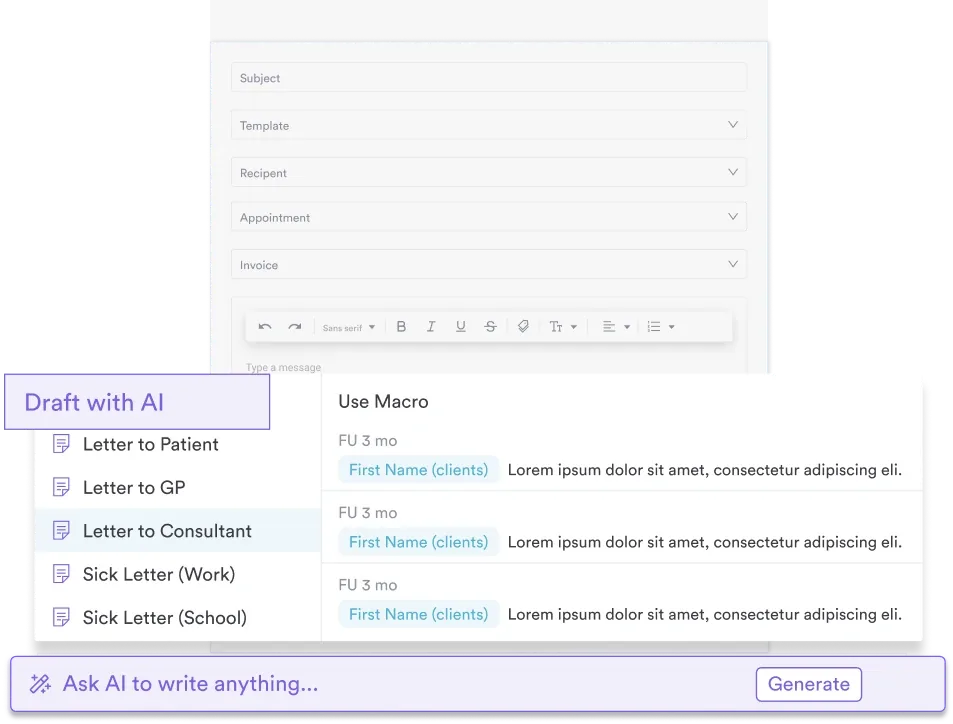
For practices handling high-volume inpatient admissions, building a review step into the billing workflow where documentation is checked against MDM criteria before submission prevents the bulk of preventable denials. The AI-powered clinical documentation in Pabau can assist physicians in capturing structured notes that map directly to MDM elements, reducing the incomplete notes that trigger downcoding.
Not every code on an inpatient claim comes from the CPT set. Braces and orthotic devices are reported with HCPCS Level II codes instead. HCPCS code L1120 reports an addition to a scoliosis brace, which sits outside the E/M code family.
Getting CPT code 99222 right is a documentation discipline before it is a billing decision. The code is straightforward in principle: moderate MDM at the initial inpatient or observation encounter. In practice, the denials and audits pile up because the clinical note does not say what the physician actually did.
Pabau’s claims management software gives hospitalist teams and billing departments a structured workflow for capturing and submitting 99222 claims accurately, from H&P templates that prompt MDM documentation to claim-level tracking that surfaces denial patterns before they compound. To see how it works for your practice, book a demo.

Need to understand inpatient billing across specialties? Coaching CPT codes covers how E/M level selection applies in non-traditional care settings.
Coding nausea in pregnancy instead? O21.9 pregnancy vomiting coding covers when this code applies versus the four other O21 codes for hyperemesis and late vomiting.
Managing a GP or primary care practice alongside inpatient admissions? GP clinic software shows how Pabau supports multi-setting clinical documentation and billing.
CPT code 99222 is used to report the initial hospital inpatient or observation care service for a new or established patient on the day of admission, when the encounter requires a medically appropriate history and/or examination and moderate medical decision making. It is the second level of three initial hospital care codes (99221-99223), sitting between the straightforward/low-complexity code 99221 and the high-complexity code 99223.
99221 requires straightforward or low-complexity MDM (or 40 minutes of total time), 99222 requires moderate-complexity MDM (or 55 minutes), and 99223 requires high-complexity MDM (or 75 minutes). The key clinical distinction is the number and acuity of problems addressed, the complexity of data reviewed, and the risk of treatment decisions made during the encounter.
CPT code 99222 requires 55 minutes of total time on the date of the encounter when billing by time rather than MDM complexity. Total time includes all time the physician spends on the encounter date: reviewing records, documenting, coordinating care, and the face-to-face visit itself. The total time must be recorded explicitly in the note.
Modifier -AI is required when the billing physician is the principal physician of record for the inpatient admission. Teaching physicians in academic settings must append -GC or -GE depending on the supervision arrangement. Modifier -25 applies if a separately identifiable E/M service is performed on the same day as a procedure. Not all 99222 claims require a modifier, but missing one when it is required will result in claim denial.
Medicare reimbursement for CPT code 99222 varies by geographic location and the annual conversion factor set by CMS. The total RVU for 99222 is approximately 3.18, but the dollar amount depends on your GPCI (geographic practice cost index). Use the CMS Physician Fee Schedule lookup or FastRVU to find the current rate for your locality. Commercial payers typically negotiate rates above Medicare, but these vary by contract.
Yes. Since the 2023 E/M revisions, CPT codes 99221-99223 cover both hospital inpatient and outpatient observation care on the initial day. Use POS code 22 for observation settings and POS 21 for inpatient hospital. The MDM and time requirements are identical regardless of the care setting designation.
CPT code 99222 reports initial hospital inpatient or observation care on the admission date, while 99232 reports subsequent hospital care on a later day of the same stay. Both describe moderate-complexity encounters, but 99222 is billed once for the first-day admission and 99232 covers the daily follow-up visits after it.



