Sample treatment plan
A sample treatment plan is a structured clinical document that sets out a patien...

3
Last Updated: Oct 12, 2026

Preventative Botox, microfillers, and natural-looking enhancements are turning younger clients into long-term, recurring bookings.
Combined treatment packages, personalized plans, and longer-lasting formulations let you raise price points while clients need fewer visits.
Male aesthetics, skin boosters, and bio-stimulatory fillers are fast-growing categories most med spas still under-serve.
Being upfront about Botox and filler side effects builds the trust that keeps clients coming back as you add new trends.
Aesthetic clients in 2026 are more informed and more specific about what they want, and less willing to settle for standard procedures. If your practice is expanding its treatment menu to match that demand, our ranking of the top med spa software compares charting and scheduling tools.
Fast-moving advances in minimally invasive treatments like Botox and fillers have made these procedures a routine part of self-care for many clients.
But clients don’t just want your standard menu. They’re informed, they follow the latest botox trends and lip filler trends on TikTok, and they want the most effective options you can offer.
Knowing what’s hot in botox and filler treatments lets you offer up-to-date services, differentiate your business, and attract more clients.
Here are the 14 trending Botox and filler treatments every med spa should know in 2026.
Preventative Botox, the “prejuvenation” trend your younger clients keep asking about, means using small doses of neuromodulator to soften a muscle before it etches a permanent line into the skin.
Botulinum toxin was the most popular minimally invasive procedure in the US in 2023, and the 20-to-29 and 30-to-39 age groups were among the fastest-growing, each up more than 8% year over year, according to the American Society of Plastic Surgeons. It still leads the most common cosmetic procedures, at nearly 9.9 million neuromodulator treatments a year.
For your practice, that’s the most valuable client you can sign. Someone who starts baby Botox in their late twenties and returns two or three times a year is a decade of recurring revenue, not a one-off booking.
Where clinics get this wrong:
Client preference has shifted decisively toward subtlety, and the overfilled look has given way to demand for natural, graduated results. That is where microfillers come in.
Studies show microcannulas lower the risk of vascular occlusion by 77.1% compared to traditional needles.
This technique improves comfort, reduces bruising, and pairs perfectly with accurate filler face mapping to enhance precision and ensure great results. Who may inject with a cannula varies by jurisdiction, so check the state med spa laws before training your team.
Clients don’t necessarily want anyone to know they’ve had work done.
There’s been a 28% increase in consumer spending on aesthetic ‘tweakments’ over the past two years, showing a consumer demand for subtle enhancements.
Aging hits on two fronts at once: muscle movement etches lines, while volume loss hollows the face.
Botox handles the first, filler the second, so treating them together simply reads better than either one alone. In one full-face clinical study pairing botulinum toxin with hyaluronic acid filler, about 93% of patients were still satisfied six months on.
The commercial case is strong for three reasons:
A personalized treatment plan is the difference between a client who books once and one who stays for years. No two faces age the same way, so a one-size menu leaves results and revenue on the table.
Here is a simple structure that works:
Standard Botox lasts three to four months, while Daxxify, a newer neuromodulator, can hold for up to six. On the filler side, hyaluronic acid options like Juvederm and Restylane last 6 to 18 months depending on the area, and collagen-stimulating fillers stretch results further still.
So how do you make longevity pay?
The male aesthetic market is set to reach $19.5 billion by 2032, up from $12.9 billion in 2025.
This could be a huge untapped growth opportunity for med spas. Staying ahead means staying in the loop with key opinion leaders in the industry who can help you refine the services you offer for this growing demographic. Some practices even turn to dedicated men’s health clinic software to manage that side of the business separately.
Clients want visible results without the downtime, pain, or price tag of surgery, and that gap only keeps widening. For med spas, that is a clear signal to lead with non-invasive and minimally invasive options. The treatments worth stocking in 2026 span both:
The common thread is minimal recovery. Position each one around what the client gets to skip, and you are speaking to exactly why the numbers above keep climbing.
Many med spas pair these services with broader wellness offerings, using wellness clinic software to keep the expanded menu organized.
Unlike traditional dermal fillers, which mainly add volume, bio-stimulatory fillers work by stimulating your body’s own collagen and elastin production. For example, the two most requested are Radiesse filler (calcium hydroxylapatite) and Sculptra (poly-L-lactic acid).
Lip flip or lip filler? It is the question clients ask most at the front desk, so knowing the answer cold makes you look like the expert you are.
A lip flip uses just a few units of Botox to relax the muscle along the upper lip, so the lip rolls gently outward and shows more of its natural edge. It is a positional change rather than added volume, which is exactly why it suits the client who wants subtle, not bigger.
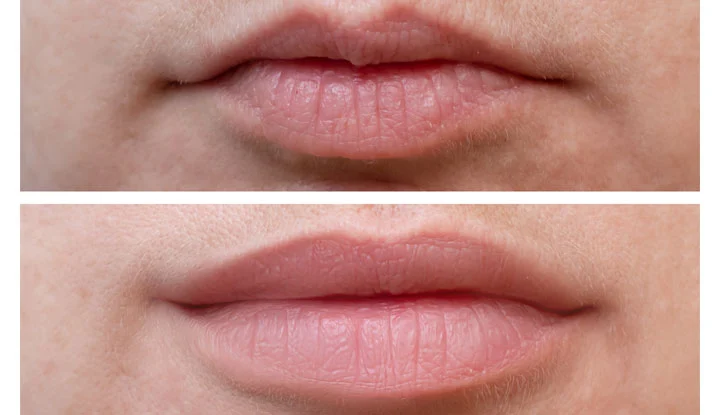
So when do you recommend which?
In the last decade, facial rejuvenation treatments have been a global trend in dermatological procedures, focusing on restoring the lost face volume.

Skin boosters are having a moment. Injectables like Profhilo spread hyaluronic acid across the skin to improve hydration, texture, and glow, rather than adding volume the way a traditional dermal filler does.
Off-label uses for Botox that clients now request include masseter or jaw slimming Botox, the Nefertiti neck lift, a subtle brow lift, trapezius “Barbie Botox,” and sweat treatment beyond the FDA-approved underarms, such as the palms or scalp. The lip flip in trend 11 is part of the same shift.
Chasing trends only works if clients trust you to keep them safe, and being upfront about Botox side effects is a big part of that.
Most Botox side effects are mild and temporary: redness, minor bruising, swelling at the injection site, or a short-lived headache. Fillers carry similar risks, plus the rare but serious risk of vascular occlusion that the micro-cannula technique in trend 3 helps reduce.
Why this matters for your med spa:
A new treatment only earns money if your team can legally deliver it. Med spa rules are set state by state, covering who can own the business, who supervises treatment, and which license each role needs. Check your own state before you put a trend on the menu.
New treatments only pay off if the rest of your practice can keep up with them.
Every extra booking, record, and client message a busier menu creates still has to be handled somewhere, ideally without piling more routine admin onto your team.
Want to see Pabau in action? Book a demo to see how it supports a growing med spa in 2026.

Want cleaner injection records? Injection plotting maps every unit against a digital face chart.
Tracking client history by hand? Digital client records keep consent forms and treatment notes in one place.
Want smoother intake? Patient intake software collects consent and medical history before clients arrive.
Need better touch-up reminders? Pre- and post-care software automates the follow-ups that bring clients back.
Planning a “For Him” campaign? Email and SMS campaigns promote new treatments to the right client segments.
Thinking about a second location? Med spa franchising covers when the model is worth it.
Botox is a botulinum toxin that relaxes the muscles behind dynamic wrinkles like frown lines and crow’s feet. Dermal fillers, by contrast, add volume to restore areas that have lost fullness, such as cheeks, lips, and under-eye hollows. Many clients combine Botox treatments and fillers for full-face results.
Botox typically lasts three to four months before a touch-up is needed. Dermal fillers last longer, usually 6 to 18 months depending on the product and area, and newer longer-lasting formulations like Daxxify can hold results for up to six months. Timing varies by client, so build a maintenance schedule into their treatment plan.
The biggest trends are preventative Botox among younger clients, natural-looking results from microdosing and microfillers, bio-stimulatory fillers and skin boosters that improve skin quality, longer-lasting formulations, rising demand from male clients, and a wider menu of off-label Botox uses. As a result, med spas that offer these can attract and retain more clients.
The newest neuromodulator is Letybo (letibotulinumtoxinA), which the FDA approved for frown lines in 2024. In fact, it joins Botox, Dysport, Xeomin, Jeuveau, and Daxxify as the six FDA-approved botulinum toxin brands in the US. Daxxify stands out for longevity, lasting up to six months, while Letybo competes on price. Offering a newer toxin can help your med spa stand out.
In the US, Botox usually runs about $10 to $20 per unit, or roughly $300 to $600 per session. Dermal fillers, meanwhile, are priced per syringe and typically cost $500 to $1,500, averaging around $700 to $750, depending on the brand, treatment area, and location. Being upfront about pricing during the consultation builds trust with clients.
Both are considered safe when performed by a trained, qualified injector. In most cases, side effects are mild and temporary, such as redness, minor bruising, swelling, or a short-lived headache. Fillers also carry a rare risk of vascular occlusion, and hyaluronic acid fillers can be dissolved with hyaluronidase if a client isn’t happy. Clear consultations and thorough record-keeping keep treatments safe.
Clients who want a break from traditional Botox are turning to skin boosters like Profhilo for hydration and glow, along with microneedling, chemical peels, and bio-stimulatory fillers that build collagen over time. Many also embrace “prejuvenation,” starting lighter treatments earlier to delay visible aging. Ultimately, offering these alongside Botox widens the range of clients you can treat.