Sample treatment plan
A sample treatment plan is a structured clinical document that sets out a patien...

3
Last Updated: Oct 12, 2026
Blog / The patient journey in aesthetics: 7 stages and how to improve each one

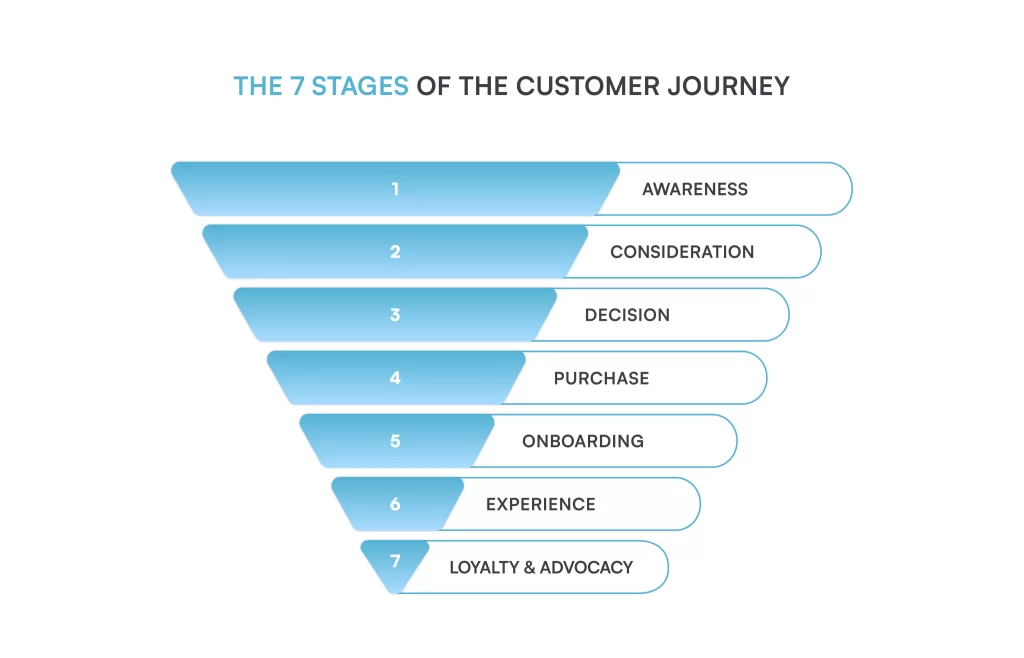
The patient journey in aesthetics runs through seven stages: awareness, consideration, decision, purchase, onboarding, experience, and loyalty and advocacy.
The consultation is the stage where interest either turns into a booking or quietly goes cold.
Every stage has a number you can compute from your own records, such as consultation-to-booking rate or rebooking rate.
Aesthetics sits between medicine and retail, so patient journey, client journey and customer journey all describe the same sequence.
Practice management software like Pabau ties booking, consent, treatment notes and recall to one patient record, so no stage runs on memory.
The patient journey in aesthetics is the sequence a person moves through with your practice, from first hearing about you to referring a friend. It runs across seven stages: awareness, consideration, decision, purchase, onboarding, experience, and loyalty and advocacy.
Each stage has a predictable point where people drop out. Someone reads two reviews and books elsewhere. Someone leaves a consultation saying they will think about it. Someone gets a great result and never comes back. Winning that patient back takes retention tools, which our comparison of med spa software reviews across eight platforms.
This guide walks the aesthetic journey stage by stage. For each one you get what the patient wants, where practices lose them, and the number to watch. The same sequence applies to a single-room injectables studio and to a group of med spas.
None of those numbers come from an industry benchmark. Every one is something you can work out this afternoon from your own booking and treatment records.
The patient journey in aesthetics is every interaction a person has with your practice, from the first ad they see to the follow-up after treatment. It covers marketing, the consultation, the treatment itself, aftercare and the decision to rebook.
It is wider than the buyer’s journey. The buyer’s journey ends at the purchase. The patient journey carries on through the treatment, the aftercare, the rebooking and the recommendation someone makes to a friend.
Aesthetics sits between medicine and retail, so three words compete for the same idea. You will see patient journey, client journey and customer journey used for the identical set of steps.
The word you pick carries different baggage. Patient brings consent, medical records, duty of care and a clinical standard of aftercare. Client and customer bring choice, price comparison and the freedom to walk.
Both readings are accurate here. A filler patient signs a medical questionnaire and a consent form like any other patient. The same person compares your prices against two competitors on Instagram that evening.
So use patient language in your notes, consent forms and aftercare, where the obligations are medical. Use customer journey stages language when you are looking at marketing, because that is what your analytics tools call it.
Retention is why the distinction earns its keep. A practice that reads the journey as retail optimizes the booking funnel and stops at the payment. A practice that reads it as care keeps working after the money lands, which is where repeat revenue comes from.
Churn in aesthetics is quiet. Nobody cancels a subscription. They simply do not book the next appointment, and you find out six months later when you run the numbers.
These seven stages are the standard customer journey stages, mapped onto how an aesthetics practice runs day to day. Descriptions of the 7 stages of customer journey are easy to find anywhere online.
The table adds the two columns a practice owner can act on: the point where people drop out, and the number that measures it. Read across it before you read down the page.
| Stage | What the patient wants | Where practices lose them | What to measure |
|---|---|---|---|
| 1. Awareness | To find someone who treats the thing bothering them | No local search presence, so the shortlist forms without you | Monthly calls and website visits from your Google Business Profile |
| 2. Consideration | Proof you are qualified, safe and worth the price | Thin practitioner bios, no before-and-afters, no prices published | Consultation requests divided by website visitors |
| 3. Decision | A treatment plan and a price they believe | The reply arrives hours later, after they booked elsewhere | Median time from inquiry to your first reply |
| 4. Purchase | A booking that takes two minutes to make | Phone-only booking, no deposit, no confirmation message | Share of bookings made online, and no-show rate with and without a deposit |
| 5. Onboarding | To know exactly what to do before arriving | Consent and medical forms handed over on the day | Forms completed before arrival, divided by appointments |
| 6. Experience | The result discussed at consultation, with no surprises | Rushed appointments and aftercare given verbally at the door | Share of patients who get written aftercare within 48 hours |
| 7. Loyalty and advocacy | A reason to come back before the result fades | Nobody asks for the rebooking, and no recall goes out | Rebooking rate inside the treatment’s natural repeat window |
Awareness is the stage where someone decides they want a treatment and starts looking for a practitioner. The aesthetic journey usually begins with one specific annoyance, such as hooded eyes, deep ‘11s’ or skin that looks tired in photographs.
From there the search goes public. People type ‘best med spa for Botox in Austin’, scroll Instagram, and ask the friend whose lips they liked. Your social media and local listings are doing the work at this point, not your sales skills.
Where practices lose them: you are invisible in local search, so the shortlist forms without you on it.
What to measure: calls and website visits attributed to your Google Business Profile each month, watched as a trend rather than a single figure.
The fix is unglamorous. Claim the profile, post treatment photos every week, and reply to every review you get.
Consideration is the stage where a person weighs you against two or three other practices. They read reviews, open your price list, check who is holding the needle, and study your before-and-afters.
Educational content does most of the selling here. A short post explaining how long filler lasts answers the question that was quietly stopping someone from booking.
Qualifications are set state by state, and readers do check. Michigan cosmetology licensing and Nevada cosmetology licensing ask for different hours and exams.
Where practices lose them: a website with no practitioner credentials and no prices. Uncertainty pushes people toward the practice that published both.
What to measure: consultation requests divided by website visitors, tracked month over month.
Decision is the moment a person picks your practice and asks for a time. It usually turns on one thing, which is a personalized treatment plan with a price attached.
Where practices lose them: the inquiry sits in an inbox until the evening. Someone who messaged three practices books with whoever answered first.
What to measure: median time between an inquiry arriving and your first reply. Count it in minutes, not days.
Name the product, the number of sessions, the total cost and what the result should look like at week four. A decision is much easier to make when it is written down.
Purchase is where the booking and the payment happen, and it is the right moment to take a deposit. A deposit protects the slot and commits the patient to a decision they have already made.
Where practices lose them: booking by phone only, during the same hours the patient is at work.
What to measure: the share of bookings made online without a call, and your no-show rate for deposit bookings against non-deposit bookings.
Three habits make this stage feel effortless:
Onboarding covers the days between booking and arrival, and it decides how the appointment starts. Send the confirmation straight away, then pre-treatment prep instructions written for that specific service.
Consent belongs in this stage as well. A medical questionnaire and consent form completed at home gives the patient time to read them, which is the entire point of consent.
Where practices lose them: paperwork handed over on arrival. The appointment opens with admin and runs late for the rest of the day.
What to measure: the percentage of appointments where forms were completed before the patient walked in.
Experience is the treatment itself and the hour around it, and this is where you deliver what the consultation promised. Staff interactions carry more weight than practitioners expect, because the front desk sets the tone before anyone sits in your chair.
From the moment they walk in, three details decide how the visit feels:
Where practices lose them: a rushed appointment, followed by aftercare given verbally at the door and forgotten before they reach the car.
What to measure: the share of patients who receive written aftercare within 48 hours of treatment.
Loyalty and advocacy is the stage where a patient rebooks and starts recommending you. It is the only stage that pays for the previous six. Around 59% of US consumers say that once they are loyal to a brand, they stay loyal for life.
Membership plans and loyalty rewards give people a reason to book the next appointment before they leave the building. Referrals are worth tracking by name, so ask every new patient who sent them and record the answer.
Where practices lose them: nobody asks for the rebooking at checkout, and no recall goes out when the result starts to fade.
What to measure: rebooking rate inside the treatment’s natural repeat window, which is roughly three to four months for botulinum toxin.
A consultation at a luxury aesthetic practice runs in three parts. There is a structured conversation about goals, a facial assessment, and a written treatment plan with prices on it. Budget 45 minutes for one rather than squeezing it between treatments.
The work starts before the patient arrives. Send the medical questionnaire in advance, along with one open question about what they want to change. Read the answer before you meet them.
In the room, the job is to map their options against their goal and their budget. That includes naming the option of doing nothing, and saying plainly when a treatment will not achieve what they are describing.
Consent and photography sit inside the consultation, not after it. Standardized before photographs need written permission covering how they will be stored and whether they can appear in marketing.
Pricing is easier when it comes last and in full. Give the total for the plan, not a per-unit figure the patient has to do arithmetic on, and say what a review appointment costs.
A premium consultation follows the same run-sheet every time:
What turns a consultation into a booking is almost always that written plan. A patient who leaves with a price and a date can say yes at home, where the decision is easier to make.
What to measure: consultation-to-booking rate, which is bookings divided by consultations held over the same period.
Patient journey mapping means writing down every touchpoint a person passes through, in order, and marking who owns each one. A usable patient journey map takes an afternoon and a spreadsheet.
Work through it in eight steps:
The blanks matter as much as the numbers. A step you cannot measure is usually a step running on memory, like a rebooking prompt that only happens when reception thinks of it.
Your website analytics and scheduling tools already hold most of the data. Patient feedback supplies the rest, and it is the only source that tells you why somebody hesitated.
The seven tactics below sit on the customer journey touchpoints mapped above. Each one targets a stage where patients drop out, so pick the ones matching your weakest numbers.
Local visibility decides whether you make the shortlist at all. A Google Business Profile is free and puts your practice in map results, which is where local searches usually land.
Use it to:
Offline channels reach people who never search at all. Local magazines, direct mail and an open evening at the practice all work, particularly for higher-value treatments.
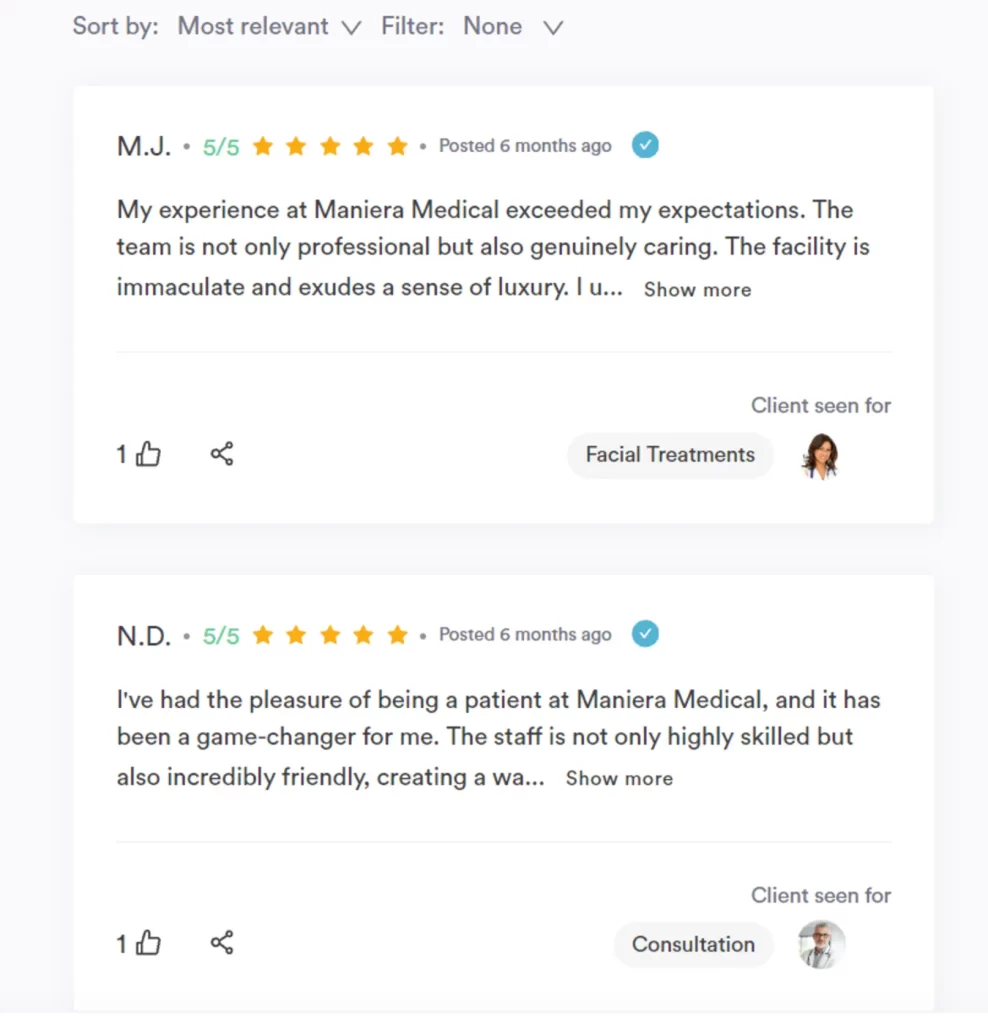
Reviews do the persuading during consideration, when you are not in the room. In fact, 89% of global consumers say checking online reviews is part of their buying journey.
Put your strongest testimonials on the treatment pages they relate to, not only on a reviews page nobody visits. Pair them with before-and-after photographs from the same treatment.
Credentials belong beside them. If a doctor or nurse prescriber runs your injectables, say so on the page, because patients are checking exactly that.
A free consultation lowers the cost of finding out, which is what holds a lot of first-time patients back. Run it on the same run-sheet as any other consultation, using the process set out earlier in this guide.
If you offer injectables, our walkthrough on conducting a Botox consultation shows how to structure that conversation. Never rush one, because people came to ask questions.
Online scheduling removes the most common reason a decided patient does not book. Your phone line is open only while they are at work.
Let patients see live availability, pick a slot and pay a deposit in one sitting. Automated confirmations and reminders then cut the no-shows that phone bookings quietly produce.
For a wider view of the systems that do this, here is our guide to the best aesthetic clinic software available.
Every message should reflect the treatment the patient booked. If a patient books a Botox appointment, send prep and aftercare written for botulinum toxin, not a generic template.
The same applies to marketing. Someone who had filler six months ago wants a recall, not a promotion for a treatment they have never had.
Personalization is mostly a data problem. When treatment history sits on the patient record, the right message is a filter rather than a guess.
Patients judge the customer service aesthetic practices deliver at the front desk long before they judge the injecting. Reception is the first touchpoint, the one that books the appointment and the one that fields the worried call afterwards.
Train the team on the questions patients ask most, on time management, and on what they must not answer themselves. Confident, consistent answers build trust. Guesses destroy it.
Training also has to fit what your state lets each role do. Texas med spa rules cover supervision, while Ohio cosmetology hours set the training an esthetician needs.
Loyalty programs give patients a reason to return on a schedule rather than when they remember. In fact, 85% of customers say loyalty programs make them more likely to keep buying from a brand.
Keep the reward tied to the behavior you want. Money off the next appointment when it is booked on the day encourages rebooking far more than points that expire unnoticed.
Every stage above depends on somebody remembering to do something. Practice management software like Pabau takes the remembering out by tying each stage to the same patient record.
Online booking and deposits handle the purchase stage, so patients book at 10pm and the slot is protected. Digital forms and consent handle onboarding, arriving signed and filed before the patient does.
Pabau’s Care Pathways guide patients to complete forms, sign consents and upload before photos ahead of their visit. What they submit flows onto their patient record automatically, showing up as a checklist for the practitioner in Pabau GO, our iOS app for practitioners.
After treatment, pre- and aftercare emails go out against the specific service booked. Recall reminders fire when the result is due to fade, which is the rebooking prompt the loyalty stage needs.
Reporting closes the loop. You can pull rebooking rates, no-show rates and consultation conversion from the same system that took the bookings. Every Pabau subscription includes every feature, so none of this sits behind a higher tier.

Pabau brings online booking, digital consent, treatment notes, automated aftercare and recall together against a single patient record. Every stage of the journey becomes trackable.

The stages are not the hard part. Your practice already has all seven, whether or not anyone has written them down. Patients are already dropping out of them at predictable points.
What changes the numbers is picking one stage and measuring it for a quarter. For many practices that is the step between consultation and booking. It is the only stage where someone has spoken to you and still walked away.
The trade-off is worth naming. Measuring a stage properly takes a month of discipline before the number means much, and the temptation is to attack all seven at once. Pick one.
Book a demo to see how Pabau tracks each stage of the patient journey, from first inquiry to the recall that brings a patient back.

Turning consultations into bookings? Converting consultations into surgical bookings shows how to follow up when someone says they need to think about it.
Losing slots to no-shows? How to calculate and reduce your patient no-show rate covers reminders, deposits and the numbers worth tracking.
Need something to run consultations from? Client consultation form gives you a ready-made template for the assessment stage.
Want follow-ups that feel personal? Engaging med spa email templates has wording you can adapt for pre-care, aftercare and recall.
Building repeat revenue? How to build a profitable med spa membership program walks through pricing and structuring a plan.
They are awareness, consideration, decision, purchase, onboarding, experience, and loyalty and advocacy. Awareness decides whether a person finds you. Consideration decides whether they trust you. Decision and purchase decide whether they book. Onboarding and experience decide whether the appointment goes well. Loyalty and advocacy decides whether they come back and bring someone with them. Those customer journey stages hold for any aesthetics practice, whatever the treatment menu.
No single practice holds that title, and you can judge it before you book. Strong post-treatment support sends written aftercare within hours, rather than saying it at the door. It names the product used and describes what is normal at day one, day three and week two. It gives a direct contact for concerns and checks in without being asked. Aftercare is one of the last customer journey touchpoints, and it is the one people remember.
Nothing in sequence, and a great deal in obligation. Both describe the same seven stages. The medical reading adds consent, records, duty of care and clinical aftercare to every stage. The retail reading, which is where client journey wording comes from, frames the same steps as a buying decision you can influence. An aesthetics practice needs both, because a filler appointment is a medical procedure and a discretionary purchase at once.
It has no fixed end, which is the point of measuring it. The stretch from first seeing a practice to booking often runs weeks or months, because people research injectables slowly. Treatment day is a single appointment. After that the aesthetic journey repeats on the treatment's own cycle, roughly three to four months for botulinum toxin and longer for most fillers. Measure the first part as time from inquiry to booking, and the second as rebooking rate.
Between the consultation and the booking, and between one treatment and the next. The first is a consultation that ends without a written plan and a date. The second is a happy patient who never gets a prompt to return. The table earlier in this guide gives the signal and the metric for all seven stages. Start with whichever of those two you can measure this week.