Fertility clinic marketing: Strategies that attract & convert patients
Fertility clinic marketing is how a fertility practice attracts, educates, and c...

Last Updated: Oct 14, 2026

A healthcare marketing plan is a strategic document that outlines goals, target audiences, marketing channels, budget, and KPIs specific to your practice’s growth needs.
The template walks you through seven sections, from SMART goals and a SWOT analysis to channels, content, budget, and KPIs.
HIPAA compliance is non-negotiable, since email marketing, social media ads, testimonials, and retargeting all need explicit patient authorization and data safeguards.
Practice management software like Pabau automates patient reminders, online booking, and Google review requests, supporting your plan’s acquisition and retention tactics without extra tools.
A fillable healthcare marketing plan covering SMART goals, a SWOT analysis, patient personas, channels, budget, HIPAA safeguards, and KPIs. Built for practice owners and marketing managers who want a plan they can complete this quarter, not next year.
Download templateMost practices market by instinct. A boosted social post here, a referral push there, whatever feels urgent that week. That approach burns budget without building the steady stream of new patients a growing practice needs.
A written healthcare marketing plan fixes that by turning scattered activity into one system your whole team can follow. The template above gives you a fillable version, built specifically for healthcare rather than a generic small-business framework.
A healthcare marketing plan is a written document that maps out how your practice attracts, engages, and keeps patients. Unlike a generic small-business plan, it has to balance patient acquisition with HIPAA’s privacy and data protection rules.
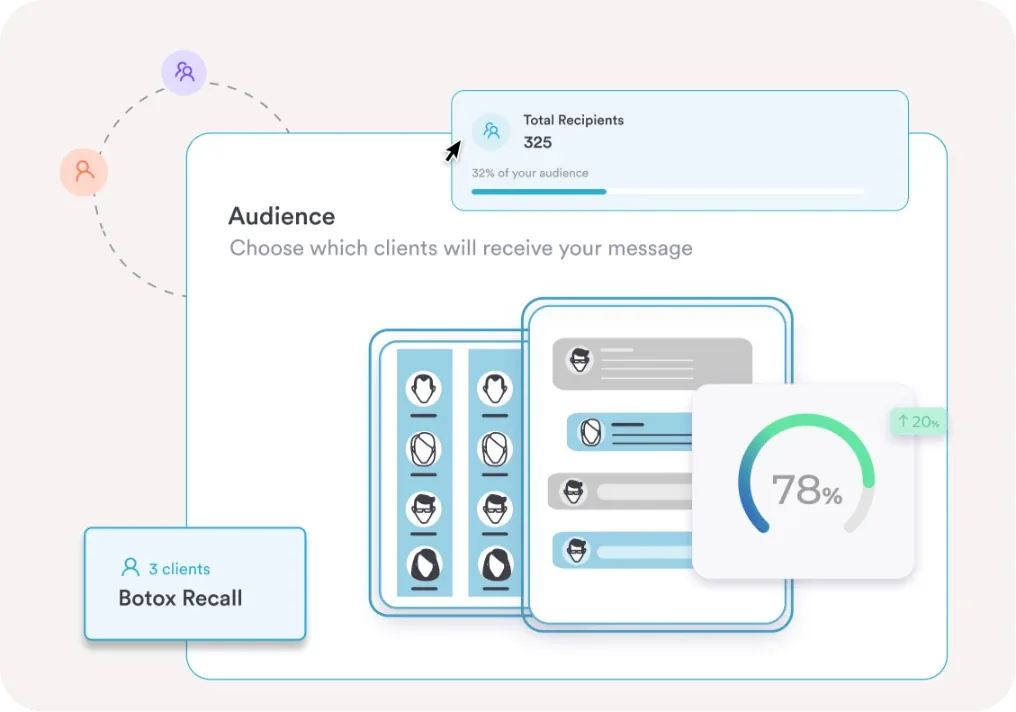
The template breaks the plan into seven parts, covering goals, situation analysis, audience, channels, content, budget, and results. Each part depends on the one before, so your channel choices should follow from your audience, and your budget should follow from your goals.
Practice owners and marketing managers can customize every field for their specialty, patient demographics, and local market.
Without a documented plan, practice marketing turns reactive. You end up responding to a competitor’s move or a slow month instead of pursuing steady, measurable growth. A structured plan delivers four concrete advantages once it’s in place.
The template breaks into seven sections, each covering one piece of a complete strategy.
Start with SMART goals, which stands for Specific, Measurable, Achievable, Relevant, and Time-bound. Rather than “increase patient bookings,” define “gain 15 new patients per month in dermatology services within Q3.” The template provides fields for revenue goals, patient volume targets, brand awareness metrics, and referral growth targets.
Assess your practice’s internal strengths, such as reputation, clinical expertise, and technology, and weaknesses like limited budget or thin staffing. Then look outward, at opportunities like underserved patient demographics or emerging treatments, and threats like competitor expansion or reimbursement changes. This grounds your strategy in facts, not guesswork.
Define two to three ideal patient profiles, covering demographics, health concerns, preferred communication channels, and treatment preferences. A med spa might segment patients into “busy professionals seeking preventive anti-aging” and “postpartum women seeking body contouring.”
A general practice might instead segment into “new parents needing pediatric referrals” and “adults overdue for a wellness visit.” Each persona then gets its own tailored messaging and channel strategy.
Med spas, physical therapy practices, and similar wellness businesses have a well-worn channel mix to start from. Our guide to health and wellness marketing names the four channels that do most of the work.
Weigh each of these channel options against your budget and audience:
Offline events need their own plan, since an open day or patient workshop runs to a single date. Our event marketing plan template sets the goals, budget, timeline, and follow-up for that one date.
For each channel, note your audience fit, expected reach, and compliance needs. Confirm the requirement before you commit budget:
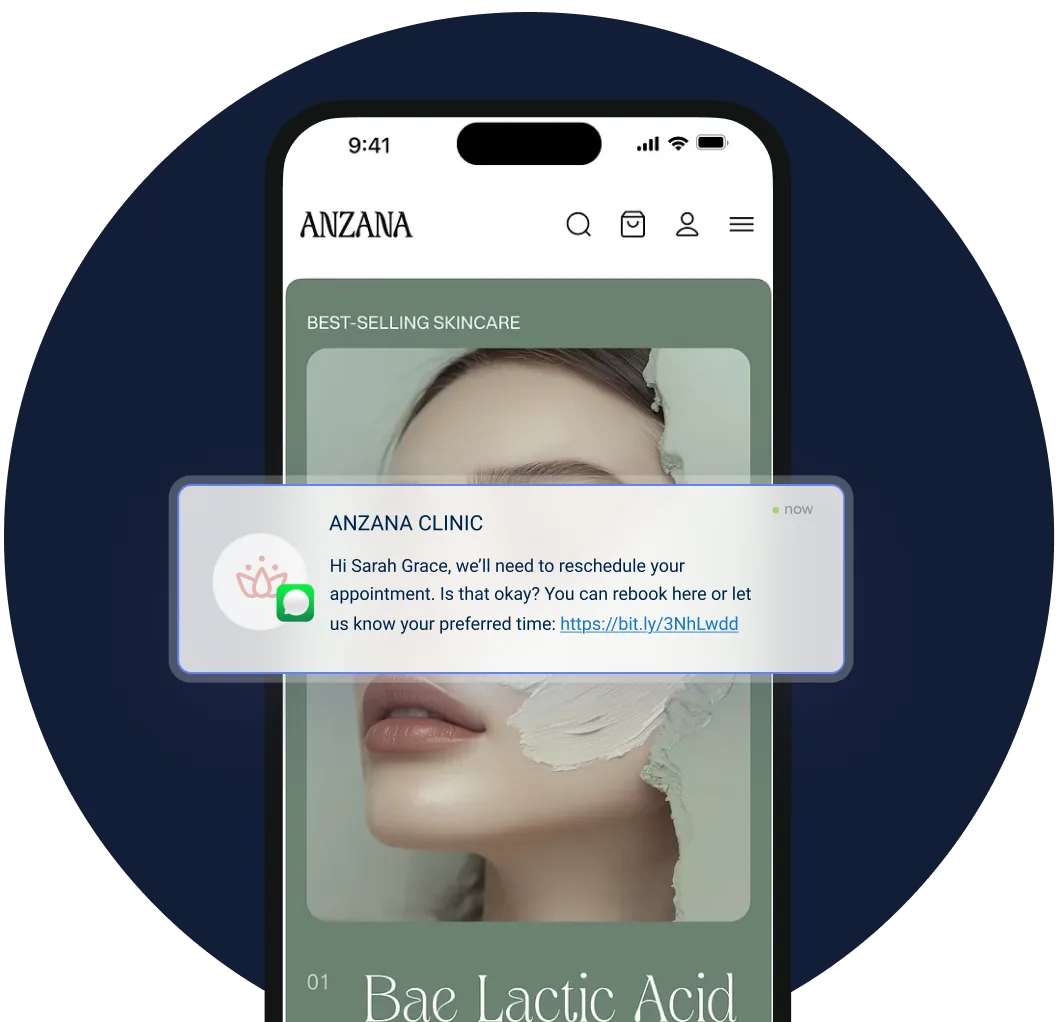
Plan content pillars such as educational blog posts, procedure explainers, patient FAQs, before-and-after galleries, and video testimonials. Then schedule how often you publish and on which platforms. Every piece needs to be clinically accurate, free of unproven claims, and within your scope of practice.
Assign spend across channels. Industry benchmarks suggest 5 to 10% of gross revenue for healthcare marketing, though the right number depends on your practice’s size and growth stage. The template also includes a spend allocation table and a cost-per-acquisition tracker for ongoing optimization.
Define the key performance indicators you’ll track, from new patient bookings and cost per lead to website traffic, conversion rate, review score, and patient retention. Monthly tracking shows which channels earn their keep and which need a rethink.
Clear paperwork supports a well-run team; staff management software handles rotas, permissions, and performance in one place.
HIPAA shapes every section of your marketing plan, from your email list to your review requests. Its privacy rule limits how you collect, use, and disclose patient health information for marketing purposes. Violations can carry fines up to $2,190,294 per violation category per year, under HHS’s 2026 penalty adjustment.
Download the template and follow this workflow to complete it for your practice:
Revisit the plan every quarter, and shift budget toward whatever channel is already proving itself. A plan you keep updating beats a static one sitting in a drawer.
These pitfalls undermine even well-intentioned marketing plans:
Most practices juggle three or four separate tools to run their marketing. A booking widget, an email platform, a review requester, and a spreadsheet to track it all.
Pabau replaces that stack with one system. Online booking, automated reminders.
It also means a cleaner data trail in Insights Plus, Pabau’s add-on for deeper reporting, covering every KPI from cost per lead to retention rate.

Online booking, automated reminders, Google review requests, and Insights Plus reporting, the tools your plan depends on, all in one dashboard.

A written plan turns healthcare marketing from a list of guesses into a system you can defend with numbers. Start with the template above, fill in one section at a time, and resist the urge to launch every channel at once.
The practices that stick with a plan for a full quarter are the ones who find out which channel earns its keep. Once the plan is running, book a demo to see how Pabau handles the booking, reminders, and reporting your plan depends on.

Ready to turn your marketing plan into bookings? Strategies to get more patients covers the acquisition strategies that fix invisible listings, hard booking, and slow follow-up.
Building your marketing plan from scratch? Marketing plan for private practice walks private practices through building a marketing plan instead of leaving it to referrals alone.
Curious what Pabau’s Marketing Plus upgrade adds? Marketing Plus upgrade in Pabau lists what the upgrade adds for practices juggling marketing alongside other daily tasks.
Looking to strengthen your referral channel? Patient referral program walks through how to structure incentives that keep referrals coming.
Want more tactics for the acquisition side? Patient acquisition strategies covers additional channels to test once this plan is running.
A marketing strategy is the long-term reasoning behind your growth goals, your positioning, and your ideal patient. A marketing plan turns that reasoning into scheduled, budgeted actions, like which channels run in which month. Most practices need both, but the plan is what keeps the strategy from staying theoretical.
Solo and small practices often get more value from a specialized agency. Building in-house expertise across SEO, ads, and content usually takes months to hire and ramp up. Larger, multi-location practices can justify an internal marketing lead paired with agency support for execution. Match the model to your budget and the hours your team can realistically give it.
HIPAA’s Privacy Rule limits how you use patient information for marketing. Patient email lists need opt-in consent, testimonials need written authorization, and social ads cannot target health conditions. Violations can carry fines up to $2,190,294 per violation category, under HHS’s 2026 penalty adjustment.
Paid channels like Google Ads can bring bookings within weeks of launch. Organic channels, such as SEO and referral programs, typically take three to six months to gain momentum. Treat the first quarter as a data-gathering phase, then double down on whichever channel is already proving itself.