EHR ROI: How to calculate and maximize your return
EHR ROI is the financial return a practice earns on its electronic health record...

Last Updated: Oct 15, 2026

A patient engagement program is a structured system that helps clinics keep patients informed, involved, and actively participating in their own care between visits.
Engaged patients are significantly more likely to follow treatment plans, attend follow-ups, and report higher satisfaction scores, according to peer-reviewed research from Johns Hopkins.
The biggest missed opportunity for private practices is automation: most clinics rely on manual follow-up when software can handle recalls, reminders, and post-visit check-ins automatically.
Pabau’s automated workflows, digital forms, client portal, and SMS campaigns give private practices and med spas the infrastructure to run a patient engagement program without extra headcount.
Research from the Johns Hopkins Patient Engagement Program (PubMed, 2022) confirms that structured engagement significantly improves both patient outcomes and adherence to care plans. For private practices and clinics, that translates directly to better retention, fewer no-shows, and a more predictable revenue base.
This guide covers what a patient engagement program includes, why it matters at the clinic level, and how to build one using the tools most practices already have or could easily adopt. Whether you run a med spa, a GP clinic, or a physiotherapy practice, the core framework applies. For tactics focused on improving patient engagement specifically, the principles here provide the strategic foundation.
A patient engagement program is a coordinated set of processes, communications, and tools designed to keep patients actively involved in their healthcare between appointments. It is not a single feature or a one-time campaign. It is a system: built around structured touchpoints, personalised communication, and feedback loops that reinforce the patient-provider relationship over time.
The FDA’s Patient Engagement Collaborative (PEC) describes patient engagement as a critical component of modern healthcare delivery, supporting informed decision-making and meaningful participation in care. At the practice level, this translates into concrete outcomes: patients who understand their treatment plan and feel supported between visits are more likely to show up, comply with post-visit instructions, and refer others.
For independent clinics and private practices, there is an additional commercial dimension. Strong patient care management underpins retention, and retention is far less expensive than new patient acquisition. The problem is that most practices build engagement reactively: they respond when patients contact them, rather than proactively reaching out to keep patients on track.
A well-designed patient engagement program covers five functional areas. Each one addresses a specific point in the patient journey where disengagement commonly occurs.
Implementing all five consistently is what separates a patient engagement program from ad hoc communication. The NACHC Patient Engagement Action Guide notes that programs combining team engagement with patient feedback loops outperform those relying on a single tactic alone. Program messages and patient replies share one inbox, so no thread depends on who is on the desk.
Knowing the components is one thing. Implementing them in a clinic environment that runs on a tight schedule with limited administrative staff is another. These patient engagement strategies are designed for operational reality, not theoretical ideals.
Most clinics lose patients to inertia: the patient means to rebook but forgets, and the clinic does not follow up. Automated recall workflows solve this without adding to the front desk workload. Our guide to automating patient engagement covers how to sequence these touchpoints across the full patient journey.
Set up a trigger-based sequence: after a treatment is completed, the system automatically sends a follow-up message at a defined interval (say, four or eight weeks), with a direct booking link. This creates a continuous re-engagement loop that runs without staff intervention.
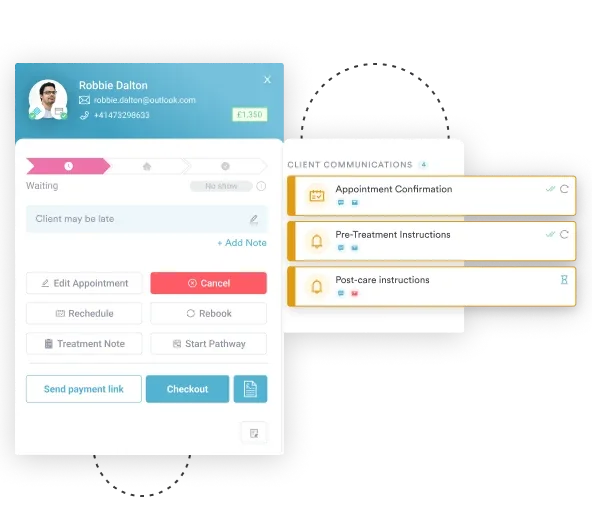
The same logic applies to post-visit aftercare. Rather than printing instructions that get lost, automated pre- and aftercare emails can be triggered the moment an appointment is completed, ensuring every patient receives consistent, timely information tied to their specific treatment.
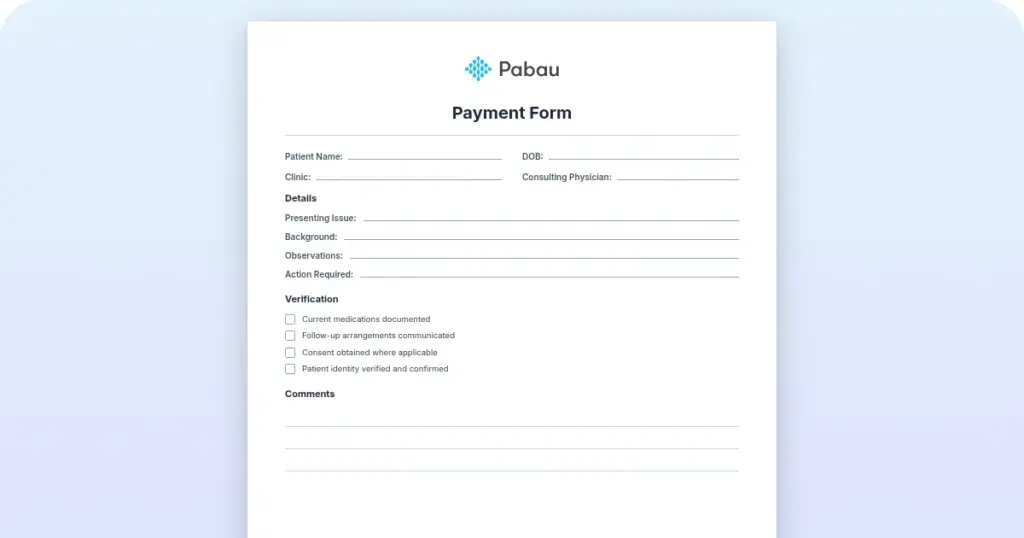
A patient who arrives having already completed a health history form, signed a consent document, and read pre-treatment preparation notes is a fundamentally more engaged patient. Digital intake forms sent ahead of the appointment do more than save reception time. They begin the engagement process before the patient enters the clinic, establishing a collaborative tone and reducing the anxiety that accompanies first visits.
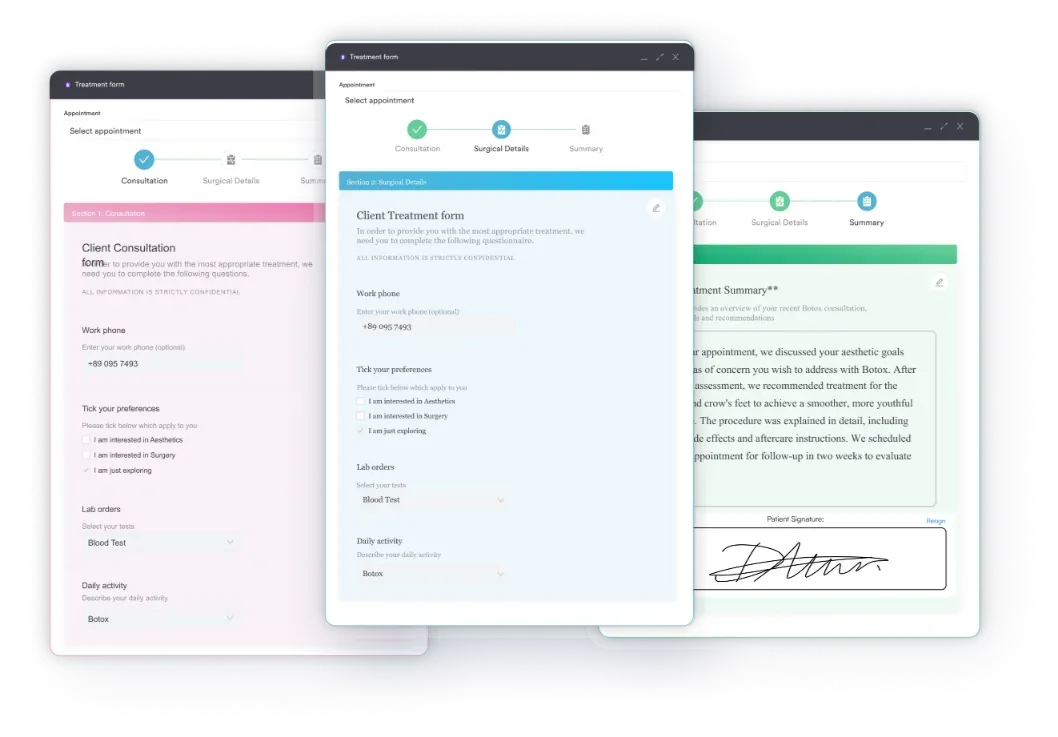
Clinics using digital intake consistently report faster consultation flows and fewer delays caused by incomplete paperwork. More importantly, patients who engage with their intake forms tend to arrive with better-formed questions, which makes consultations more productive for both parties.
A patient engagement program is not just about the appointment cycle. Between visits, consistent communication keeps your clinic front of mind. SMS and email campaigns can deliver educational content, seasonal treatment reminders, and re-engagement messages to patients who have not booked in a defined period.
According to WebMD Ignite, automated SMS-based outreach within a patient’s health journey is one of the most effective mechanisms for sustaining engagement between clinical touchpoints.
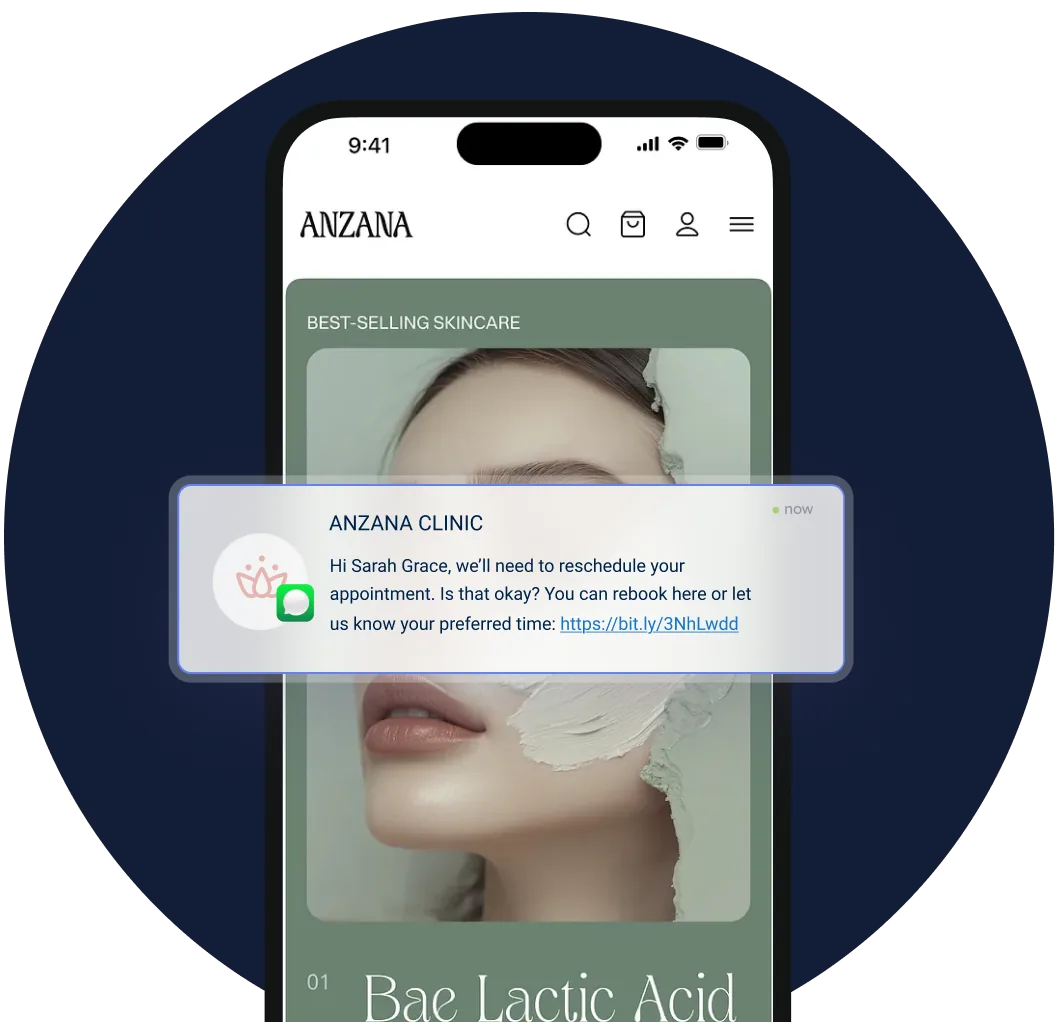
The key is segmentation. Sending the same message to every patient on your list is less effective than targeting by treatment history, visit frequency, or condition. A patient who had anti-wrinkle treatments six months ago responds better to a message specifically addressing their treatment cycle than a generic clinic newsletter.
The clinical effectiveness of any treatment depends partly on what happens after the appointment. Patient compliance and adherence to post-treatment protocols, medication schedules, or lifestyle recommendations varies significantly based on how well patients understand and feel supported in their care plan.
Clear written instructions, accessible records, and proactive check-ins all raise adherence rates. The payoff is commercial as well as clinical. In aesthetic and wellness clinics, patients who follow post-treatment care instructions achieve better results, and better results drive word-of-mouth referrals.

Automated recalls, digital forms, client portal, and post-visit follow-ups built into one platform. See how Pabau helps clinics run a complete patient engagement program without extra headcount.

Patient engagement technology has moved well beyond appointment reminder texts. Modern practice management platforms integrate every touchpoint in the patient journey into a single system, making it possible for even small clinics to run a sophisticated patient engagement program without a dedicated engagement team.
A client portal gives patients 24/7 access to their records, upcoming appointments, treatment history, and documents. The patient portal benefits extend beyond convenience: patients who can view their own records and track their treatment progress report higher satisfaction and feel more involved in their care decisions. This aligns directly with the patient-centered care model that underpins every effective engagement program.
Self-service booking through a portal also reduces the booking friction that causes patients to defer rather than rebook. When the next appointment is one click away from the patient’s record, rebooking rates increase measurably. A dedicated patient engagement portal turns these self-service touchpoints into a retention channel in its own right.
Video consultations allow clinics to offer follow-up appointments, post-treatment reviews, and initial consultations without requiring patients to travel. For patients managing chronic conditions or those in follow-up phases of a treatment plan, telehealth is a powerful engagement tool. It lowers the barrier to contact and keeps the patient-provider relationship active in situations where an in-person visit is not warranted but some clinical oversight is still needed.
Capturing patient feedback through post-visit surveys closes the loop on the engagement cycle. When patients see that their feedback is acknowledged and acted upon, their sense of partnership with the clinic deepens. Automated review requests sent after appointments also build the clinic’s online reputation, which in turn attracts new patients who are engaged before they even contact you.
The CMS person-centered care framework explicitly identifies patient feedback loops as a core mechanism for quality improvement, reinforcing what high-performing clinics already know in practice.
Audit your current patient touchpoints before implementing new tools. Map out every point of contact from inquiry to post-visit follow-up and identify where patients typically disengage or where communication goes silent. That audit tells you exactly where to focus your patient engagement program first.
A patient engagement program without measurement is just activity. These are the metrics that tell you whether your program is actually working.
| Metric | What it measures | Target benchmark |
|---|---|---|
| Recall response rate | Percentage of patients who rebook following an automated recall message | 25-40% for aesthetics/wellness |
| No-show rate | Appointments missed without cancellation | Below 10% |
| Patient retention rate | Percentage of patients who return within 12 months | 60-70% for private practice |
| Digital form completion rate | Percentage of patients completing pre-visit digital forms | Above 80% |
| Post-visit survey response rate | Percentage of patients responding to satisfaction surveys | 20-35% |
| Portal login rate | Percentage of registered patients actively using the portal | Above 50% for active patients |
Track these metrics monthly. A drop in recall response rate, for example, signals that your messaging needs refreshing or that your recall interval is too long. A low digital form completion rate usually points to a friction problem in how the form is delivered (email link vs. automated SMS at booking confirmation, for instance).
Consistent measuring of patient satisfaction through survey tools lets you spot dissatisfaction before it becomes a cancellation or a negative review.
Most clinics do not need to build from scratch. They need to formalize what they already do and automate the manual steps in between. Here is a practical sequence for establishing a functioning patient engagement program.
This is not a six-month transformation project. Most clinics can implement steps one through four within a week using their existing software. The discipline lies in reviewing the metrics and iterating based on what the data shows, rather than assuming the initial setup is optimal.
For clinics focused on growth alongside retention, pairing a patient engagement program with broader patient acquisition strategies creates a compounding effect: more new patients coming in, and a higher percentage of existing patients staying active.
The difference between a clinic that retains patients and one that constantly chases new ones comes down to how structured the communication is between appointments. A patient engagement program is the operational framework that turns single visits into long-term patient relationships, and an independent practice can run one just as well as a large health system.
Pabau’s automated workflows, digital forms, recall sequences, and client portal give private practices and clinics everything they need to run a complete patient engagement program from a single platform, without hiring a dedicated communications team. Clinic automations built for revenue growth show how these tools connect to measurable business outcomes. To see how it works for your specific clinic type, book a demo and we will walk you through the setup relevant to your practice. Online booking that reads the live calendar avoids the double-booking a separate form creates.

Want to understand the broader patient relationship system? Patient care management covers how clinics structure ongoing care delivery across the full patient lifecycle.
Ready to turn engagement into retention? Patient retention strategies covers automated recall, no-show reminders, frictionless booking, and loyalty programs that cut churn.
Ready to automate your clinic’s recall and re-engagement sequences? Automated workflows software shows how trigger-based automations work across the patient journey.
A patient engagement program is a structured system of communications, workflows, and tools designed to keep patients actively involved in their care between clinical appointments. It typically includes appointment reminders, automated recall sequences, digital intake forms, post-visit follow-up messages, and feedback mechanisms, all working together to maintain a consistent patient-provider relationship outside of the clinic visit itself.
The five core components are pre-visit preparation (digital forms and consent documents), appointment communication (reminders and confirmations), clinical documentation access (via a patient portal), post-visit follow-up (automated aftercare and recall messages), and feedback collection (post-visit surveys). An effective program addresses all five rather than relying on a single tactic.
Peer-reviewed research from the Johns Hopkins Patient Engagement Program found that patients who receive structured engagement support are more likely to follow their treatment plans and attend follow-up appointments, which directly improves clinical outcomes. The mechanism is straightforward: patients who understand their care plan and feel supported between visits comply at higher rates, and higher compliance produces better results.
Practice management software with built-in automation, digital forms, patient portals, and SMS/email campaign tools is the most practical foundation for a patient engagement program at the clinic level. Telehealth platforms extend engagement beyond in-person visits, and post-visit survey tools create the feedback loop needed to measure and improve program performance over time.
The most reliable metrics are recall response rate, no-show rate, patient retention rate (12-month return percentage), digital form completion rate, post-visit survey response rate, and patient portal login activity. Track these monthly and compare against the benchmarks in this guide. A sustained improvement in recall response rate and retention is the clearest indicator that the program is working.
Frameworks describe the stages in different ways, but in a clinic the engagement cycle runs through five practical touchpoints: pre-visit preparation, in-visit communication, clinical record access, post-visit follow-up, and feedback. Each stage is a moment where a patient either stays involved or drops off, so a program should cover all five rather than leaning on reminders alone.