Healthcare workforce planning: a practical guide for practice leaders
Healthcare workforce planning is the structured process of matching clinical cap...

Last Updated: Oct 13, 2026

A negotiation worksheet is a private planning form you fill in before you sit down to discuss fees, contracts, or employment terms.
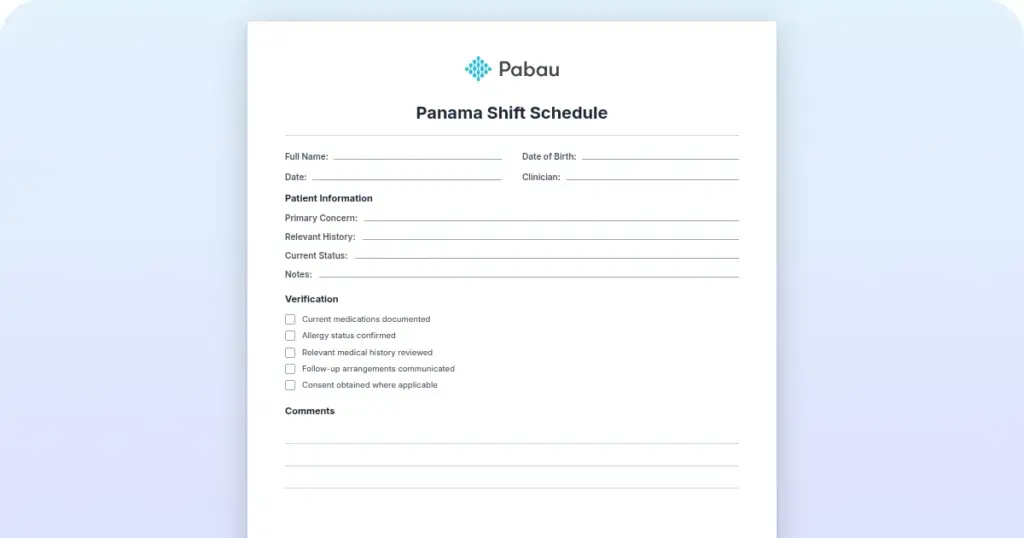
Our free worksheet is two pages of open prompts, running from identifying your goals to reflecting on how the conversation went.
The prompts stay deliberately general, so the same form works for a supplier quote, a pay review, or a fee split.
Terms like BATNA and ZOPA are not printed on the form, but you can write them into the goals, options, and strategy boxes.
Practice management software like Pabau keeps the signed outcome and the numbers behind it on record once the negotiation ends.
A two-page printable worksheet with open prompts for your goals, the other party’s perspective, the information to gather, and the options on the table. Later prompts cover your strategy, communication plan, likely responses, final terms, follow-up plan, and reflection.
Download templateMuch of a negotiation is settled before anyone sits down. If you know what you want, what the other side needs, and where you can flex, the conversation gets far easier.
First, this guide walks through what our free negotiation worksheet asks you to think about, prompt by prompt. In addition, it works for employment terms, practitioner fee splits, supplier quotes, and service contracts.
Also, the form itself is deliberately plain. It gives you open boxes rather than a rigid theory framework, so you bring your own detail to each one.
A negotiation worksheet is a structured form you complete privately before a negotiation. It is a planning document rather than a contract, and you never hand it to the other side.
In fact, writing your position down forces you to answer the questions that decide the outcome. So, what do you actually want? What will you accept? What does the other party need from this deal?
Harvard’s Program on Negotiation recommends working through a preparation worksheet before you sit down. Indeed, preparation is the one part of a negotiation you fully control, and it costs nothing but time.
In short, the worksheet runs to two pages. It opens with a client name and a date, then gives you 11 open prompts to work through in order.
The prompts stay in plain language and skip the jargon. If you want to work with terms like BATNA or ZOPA, write them into the goals, options, and strategy boxes yourself.
Start with the goals box, then settle your walk-away point before you fill in anything else. As a result, everything further down the sheet depends on those two answers.
In fact, that alternative has a name in negotiation research. It is your BATNA, or best alternative to a negotiated agreement. The worksheet has no BATNA box, so record it under identify goals or develop strategy.
Example: you are setting a fee split with a new associate. In this case, your goals are a split that tracks productivity, room for a slow first quarter, and pay that stays competitive locally. Meanwhile, your alternative is keeping the current staffing arrangement.
In fact, these two prompts deserve most of your preparation time. Answer them well, so you stop guessing at what the other side will accept.
So, ask open questions to fill these boxes in. For example, two that work well are “what matters most to you here?” and “what does a good outcome look like from your side?”
Then list your evidence under gather information. For instance, market rate data, your current pricing, last year’s invoices, and utilization reports all belong there. Mark the ones you would be willing to show.
In short, the options box is where you find room to trade. Instead, write down every settlement that would work for you, not only your preferred one.
For each issue, map the range you can accept against the range you think they can accept. Where the two overlap, a deal exists. In other words, negotiators call that overlap the zone of possible agreement, or ZOPA.
Where there is no overlap, trade across issues instead of digging in. For example, you might accept the single day at home in exchange for the extra vacation days you wanted.
Next, copy your conclusions into the develop strategy box. Note your opening position, the concessions you are prepared to make, and the order you will make them in.
The next two prompts prepare you for the room itself. The communication plan covers how you will present your case and how you will listen to theirs.
Under anticipate responses, first list the objections you expect and write one line of reply for each. Rehearsed answers keep you steady when the pushback lands.
Fill in the finalize agreement box before anyone leaves the room. Then, write down the terms, the concessions made on both sides, and the dates involved.
Then read it back out loud. Confirming the wording there and then catches the misunderstandings that would otherwise surface weeks later.
Next, the follow-up plan box turns that agreement into actions. Name who owns each step, when the first review happens, and how you will measure whether the terms are working.
Finish with the reflection box while it is all fresh. What worked, what you would change, and what to carry into the next negotiation.
In this case, employment negotiations use the same prompts, with healthcare-specific detail under goals and information. When hiring a medical director or negotiating an employment contract, cover these points:
If the package includes a continuing education budget or professional memberships, agree on how the hire claims those costs back. A shared expense claim form keeps reimbursements consistent from the first month.
Healthcare contracts also carry items nobody in the room can move. Licensing, malpractice minimums, and supervision rules are set elsewhere, so note them under anticipate responses. Contractual time off is separate from statutory leave, which runs on its own family medical leave form and its own deadlines.
In short, the worksheet suits anyone who negotiates on behalf of a practice, or on their own behalf inside one. It assumes no training in negotiation theory, so it works as well in a wellness practice as it does in a therapy practice.
It also works as a coaching tool. Ask a manager to complete it before a renewal, then review their goals and evidence together beforehand.
The sheet has a client name field, so a completed copy can hold identifying details. Instead, treat it as a confidential business document, not a note left on the front desk.
Signed contracts, pay agreements, and supplier terms belong in your practice records rather than in one person’s inbox. That is what makes the follow-up plan enforceable six months later.
Of course, preparation gets you to an agreement. The harder part is proving, months later, that the terms are still being honored.
As a result, practice management software like Pabau keeps the paperwork with the record it belongs to. Signed forms and documents sit on the client record alongside appointments, invoices, and treatment notes.
Likewise, the numbers matter just as much. Pabau’s Pabau’s reporting shows what you charged, treated, and paid out, so the next fee conversation starts from your own figures instead of a guess.
That is the difference when a deal depends on volume or revenue share. With the schedule, the invoices, and the reports in one system, checking an agreement takes minutes rather than an afternoon.

Pabau brings client records, scheduling, invoicing, and reporting together, so the figures behind your next fee or contract conversation take minutes to pull.

However, the worksheet will not make you a better negotiator on its own. It makes you a prepared one, and preparation is usually what decides how the conversation lands.
First, print it, fill it in a day or two ahead, and keep it to yourself in the room. Come back to the reflection box afterward, because that is what makes the next negotiation easier.
Once the terms are agreed, the job becomes record-keeping. Book a demo to see how Pabau keeps client records, invoices, and reporting together for your practice.

Negotiating from a clear sense of purpose? Personal mission statement worksheet gives five steps to write a statement you can use in hiring and pricing decisions.
Planning the business behind the deal? Medical practice business plan template gives you the financial projections that show what you can afford to agree to.
Noticing burnout on your team? Burnout in healthcare covers the causes and warning signs, including the CDC’s 46% burnout figure for 2022.
Negotiating a director-level hire? Nurse practitioner as medical director explains how state law, not clinical skill, decides who can hold that title.
Running the practice day to day? Medical practice operations guide shows where agreed terms turn into schedules, budgets, and reviews.
First, the worksheet opens with a client name and a date. It then gives you 11 open prompts: identify goals, understand perspectives, gather information, and evaluate options. Finally, the remaining prompts cover strategy, communication plan, anticipated responses, final agreement, follow-up plan, reflection, and notes.
No. Instead, the prompts stay in plain language and do not name negotiation-theory terms. Write your best alternative under identify goals or develop strategy, and map your zone of possible agreement under evaluate options.
In short, BATNA stands for best alternative to a negotiated agreement. It is what you do if this deal fails, and it sets your walk-away point. If staying in your current role pays $58,000, any offer below that is a bad deal.
Fill in the worksheet a day or two before you meet. Then, set your goals, research the other party, gather your evidence, and decide your opening position and walk-away point. Finally, review the sheet again on the morning of the meeting.
Yes. In fact, the worksheet at the top of this page is a free PDF, and you can use it for any negotiation. Print it and fill it in by hand before your next fee, contract, or salary conversation.
No. It is a private planning document. Your goals, your walk-away point, and your concession plan stay with you, while only your positions and questions go into the room.