HIPAA compliant texting: What you can send patients & how to communicate securely
HIPAA compliant texting is possible when a text holds no protected health inform...

Last Updated: Oct 16, 2026

Digital patient engagement covers every digital touchpoint between a practice and its patients, from online booking to automated follow-ups.
Practices using digital engagement tools see measurable gains in appointment adherence, patient satisfaction, and repeat bookings.
The biggest pitfall is over-automating without personalization, which erodes trust rather than building it.
Pabau’s client portal, automated workflows, and digital forms bring all engagement touchpoints into one platform for private practices.
Most practices lose patients between appointments, not during them. A patient leaves satisfied, forgets to rebook, never sees the follow-up email buried in their inbox, and books with a competitor six months later. Improve patient engagement across digital channels and that cycle breaks. Digital patient engagement is what fills the gap between visits.
According to athenahealth’s 2025 research, digital patient engagement across apps, portals, text, and email improves adherence to wellness plans and strengthens the patient-provider relationship. For private practices, aesthetic clinics, and multi-specialty settings, that finding translates directly into retention, rebooking, and revenue.
Digital patient engagement is not a single product. It is a category of connected tools and workflows that keep patients informed, involved, and returning throughout their care journey. For a private practice, that journey starts before the first appointment and continues long after treatment ends.
The ONC Health IT Playbook frames digital patient engagement around EHR patient portals as the starting point, but the practical scope is broader. It now includes:
Each of these touchpoints is an opportunity to deepen the patient relationship, or lose it. A practice that handles all of them well feels organized, attentive, and trustworthy. One that handles none of them pushes every query through a single phone line.
Hospital-based and health-system practices can rely on referral pathways and established service areas. Private practices cannot. Every returning patient is a deliberate choice. That is why the customer journey in aesthetics leans so heavily on post-treatment experience rather than clinical outcome alone.
A medically identical treatment at two different practices will produce two very different retention rates if one sends a 48-hour aftercare check-in and the other goes silent. Digital engagement is the mechanism that makes the difference visible.
The business case for digital patient engagement in private practice comes down to four operational outcomes.
| Outcome | How digital engagement drives it |
|---|---|
| Fewer no-shows | Automated reminders via SMS and email, plus easy online rescheduling, reduce the friction of cancellations and give practices advance notice |
| Higher rebooking rates | Post-treatment follow-ups prompt patients to book their next appointment while the experience is still fresh |
| Reduced admin load | Self-service booking, digital forms, and automated communications free front-desk staff from repetitive inbound queries |
| Better clinical outcomes | Patients who receive aftercare instructions digitally and can message their clinician directly are more likely to follow treatment plans |
The ScienceDirect peer-reviewed research on orthopedic surgery (2024) found that patient engagement platforms bridge communication gaps between patients and healthcare teams as care shifts to the outpatient setting, while also reducing the burden on practice staff. That dynamic applies equally to a busy aesthetic clinic managing 80 appointments a week.
For measuring patient satisfaction, digital channels give practices real-time feedback loops that paper forms and post-visit phone calls cannot match. Satisfaction scores are only half the picture — measuring patient engagement through portal logins, reply rates, and rebooking shows whether the system actually works.
A patient portal is not a nice-to-have. The benefits of patient portals include giving patients visibility over their own records, treatment history, and upcoming appointments, which reduces anxiety, cuts inbound inquiry volume, and keeps patients tethered to a single practice rather than scattered across multiple providers.
For practices running multi-stage treatment plans, such as a course of laser resurfacing or an ongoing weight loss program, portal access to progress photos, notes, and next-session prep instructions dramatically improves adherence.
Strategy in digital engagement comes down to timing, personalization, and channel selection. A generic email blast sent two days after every appointment is not a strategy. These patterns consistently outperform default approaches in private practice settings.
Most practices automate appointment confirmations and stop there. The practices with the strongest retention rates automate the full arc: pre-appointment prep instructions, day-of reminders, 24-hour post-treatment check-ins, and 6-week rebooking prompts. Each touchpoint uses the patient’s name, treatment type, and clinician, not generic copy. A full automated patient engagement setup covers every one of these touchpoints without adding admin work.
Pabau’s automated workflows let practices build these sequences once and run them indefinitely, triggered by appointment type rather than manual scheduling. A Botox patient gets a different sequence than a facial patient, automatically.
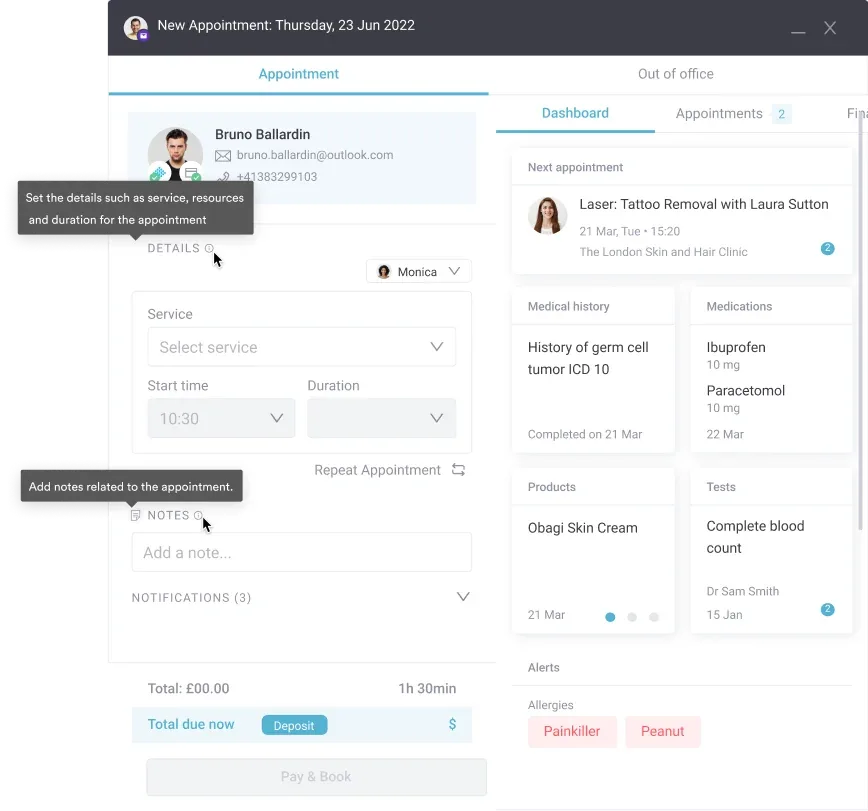
Handing a patient a clipboard the moment they arrive is a friction point that signals your practice has not modernized. Digital forms sent 24-48 hours before the appointment let patients complete consent and medical history at home, reduce chair time, and give clinicians a chance to review relevant information before the consultation starts.
For aesthetic clinics and medical spa software users, this is especially valuable for treatments with significant contraindication lists. A pre-filled digital form catches red flags before the patient is already in the treatment room.
Patients who have not visited in 90 days need a different message than those who visited last week. Email and SMS campaigns segmented by last visit date, treatment type, or membership status perform significantly better than blanket communications because they feel relevant.
A Hydrafacial patient receiving a reminder that their skin typically needs a follow-up within eight weeks will rebook. The same patient receiving a generic “we miss you” email probably will not.
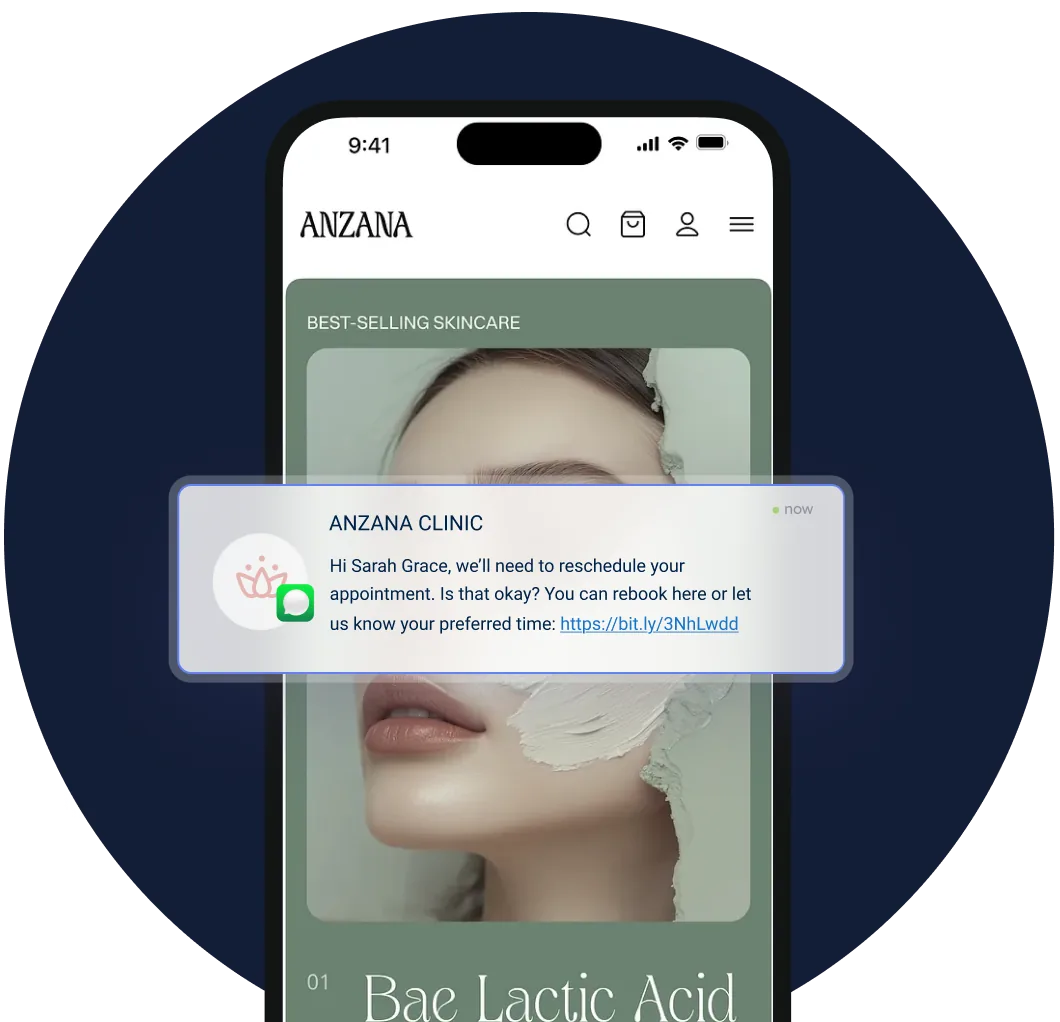
The NCQA’s 2025 insights on digital patient engagement best practices warn against over-automating and risking alienating patients: the goal is relevance, not volume. Frequency without personalization is noise.
A client portal that patients ignore provides no engagement value. The ones that get used consistently share three characteristics: they are accessible from the patient’s preferred device without requiring a separate app download, they show information patients want (upcoming appointments, past treatment photos, invoices), and they allow two-way messaging.
For patient care management in multi-stage treatment plans, a functioning portal replaces the six-email thread that typically accompanies every aesthetic course and reduces the burden on both the patient and the practice team.
Pre- and post-treatment instructions sent digitally, via the patient’s preferred channel, directly address the most common driver of treatment complications: patients not knowing what to do or avoid. Automated pre- and aftercare emails remove the reliance on a clinician remembering to send a PDF link during a busy day at the practice.
They also serve a compliance function. A time-stamped digital record showing the patient received and opened aftercare instructions is valuable documentation if a complaint arises.

From automated pre-care emails to post-treatment follow-ups, Pabau connects every patient touchpoint in one platform built for private clinics.

Digital engagement does not fail because the technology is poor. It fails because of how practices implement it. These are the patterns that undermine otherwise solid digital engagement programs.
Not every patient demographic uses the same digital channels with the same comfort level. A 70-year-old attending a primary care practice may need a phone call to confirm their appointment, while a 32-year-old attending the same practice expects an SMS link.
The RevSpring analysis of digital-first healthcare strategies frames this well: the goal is gradual replacement of legacy channels, not an overnight forced migration. Meeting patients where they are, rather than where you want them to be, is the practical starting point.
A patient who receives five automated messages before their appointment, none of which contains information specific to their treatment, quickly learns to ignore all communications from your practice. That is worse than no digital engagement at all. Patient compliance with care instructions drops when patients stop trusting the channel those instructions come through.
The fix is specificity: trigger communications by treatment type, appointment stage, and patient history rather than by a blanket schedule. A patient returning for their third appointment needs different content than a first-time visitor.
Patient engagement data is protected health information. In the US, that means HIPAA compliance for any digital communication channel that carries patient identifiers. In the UK and EU, GDPR and ICO guidance govern how patient data is stored, transmitted, and retained. Practices running digital engagement outside a compliant platform, such as using a personal email account for follow-ups, create significant liability exposure.
The QLIQSoft research on digital patient engagement notes that patients share information more freely when they trust the channel. Compliance is not just a legal obligation; it is a trust signal that directly affects engagement rates.
Audit your current patient communications for any touchpoints running outside your core practice management platform. A follow-up email sent from a personal Gmail account, or a WhatsApp message containing a patient name and appointment detail, may already be a compliance breach. Centralize all patient communications through a single HIPAA or GDPR-aligned platform before scaling any engagement program.
Most digital patient engagement platforms are built for health systems and hospital networks. They assume an IT department, a dedicated patient success team, and a six-figure implementation budget. Private practices need the same functionality without the enterprise overhead.
Pabau brings online booking, digital forms, automated follow-up sequences, client portal access, and secure patient communication into a single platform designed for practices running 1 to 50 practitioners. Unlike bolt-on engagement tools that sit separately from the clinical record, Pabau’s engagement features are triggered by what happens inside the patient record itself. Calls, texts, emails, and web chat arrive in one patient inbox, so no channel needs its own login.
When a practitioner completes a Botox treatment note in Pabau, that can automatically trigger a 48-hour aftercare message, a 12-week rebooking prompt, and a review request, all without any manual action from the front desk. The role of AI in patient experience within Pabau extends this further: Pabau’s Scribe generates clinical notes from spoken consultations, reducing documentation time so clinicians spend more time engaging with the patient in the room.
For practices concerned about compliance, Pabau’s platform is built with HIPAA and GDPR alignment in mind, so every digital communication runs through an auditable, secure channel rather than a personal email account or messaging app.
Skin clinics, medical spas, physiotherapy practices, and primary care offices all use the same underlying platform, which means multi-specialty practices do not need separate engagement tools for each service line. See how Pabau handles this for skin clinic software users specifically.
The gap between a practice patients return to and one they drift away from is almost always a digital engagement gap. Patients who receive timely, relevant, personalized communications before and after their appointments book more frequently, follow care instructions more reliably, and refer more consistently than those who hear nothing between visits.
Pabau’s pre- and post-care features, automated workflows, client portal, and digital forms give private practices the full engagement stack without the enterprise implementation cost. To see exactly how it works in a practice like yours, book a demo.

Want to improve how you talk to patients? Patient communication covers the skills and systems that reduce no-shows and keep patients coming back.
Making sure patients retain aftercare instructions? Patient education covers strategies, materials, and tools that help information stick after patients leave.
Building a structured engagement program? Patient engagement program covers what a program includes and why it improves retention, no-shows, and revenue.
Digital patient engagement is the use of technology-based tools and workflows to connect patients with their healthcare providers between and around clinical appointments, including online booking, automated reminders, patient portals, digital forms, and secure messaging. It moves patient communication from reactive phone calls to proactive, automated touchpoints across the full care journey.
Private practices using digital patient engagement tools consistently report fewer no-shows (through automated reminders), higher rebooking rates (through post-treatment follow-up sequences), reduced front-desk workload (through self-service booking and digital forms), and stronger patient retention driven by consistent, relevant communication.
Patient portals improve engagement by giving patients direct, secure access to their own records, treatment history, upcoming appointments, and care instructions, which reduces inbound calls and builds trust. Patients who can self-manage routine administrative tasks are more likely to stay with a practice long-term rather than seeking care elsewhere.
The most effective practices automate the full patient journey rather than just appointment reminders, personalize all communications by treatment type and patient history, send digital intake and consent forms before arrival, and use segmented SMS and email campaigns for recalls. Critically, they avoid over-automating: every message should feel relevant to the specific patient and treatment, not generic.
Digital patient engagement can be fully compliant with HIPAA (in the US) and GDPR (in the UK and EU) when all patient communications run through a secure, auditable platform rather than personal email or consumer messaging apps. Practices should confirm their patient engagement software explicitly addresses PHI protection under HIPAA and data retention requirements under GDPR before deploying any automated communication workflows.