HCPCS code G0143: Thin-layer Pap screening with rescreening
HCPCS code G0143 means two manual reads of one liquid-based slide HCPCS code G01...

Last Updated: Oct 19, 2026

The TLC medical certification form proves to the New York City Taxi and Limousine Commission that a driver is medically fit.
Only a licensed physician, an MD or DO, may complete, sign, and stamp the form. No other form is accepted.
Most TLC drivers renew their medical certification every two years. Drivers with diabetes or cardiovascular disease renew annually.
The exam date cannot be more than 90 days before the driver submits the TLC application, or the application is denied.
Practices with high TLC volume can use practice management software like Pabau to book slots, capture intake forms, and track expiry dates.
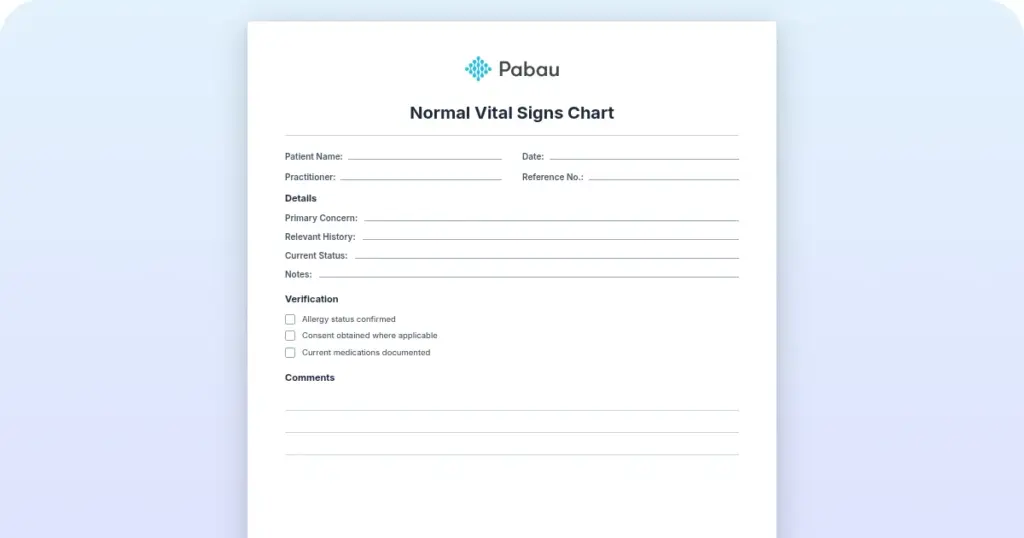
A print-ready copy of the one-page NYC form. It captures the applicant name, the exam date, the fit or not-fit determination, and the physician’s signature, license number, and contact details.
Download templateThe TLC medical certification form is the document the New York City Taxi and Limousine Commission uses to confirm a driver is medically fit. Every applicant for a for-hire vehicle license needs one, and so does every driver renewing. Without it, the application does not move forward.
Two details cause most rejected submissions. Only a licensed physician can sign the form, and the exam date has to fall within 90 days of the application. This guide covers both, plus what the exam checks, how renewals work, and how a busy practice keeps the paperwork straight.
The TLC medical certification form is the New York City Taxi and Limousine Commission’s medical clearance document for for-hire vehicle drivers. Only a licensed physician, an MD or DO, can complete, sign, and stamp it. The form itself says no other form can be used or will be accepted.
That rules out nurse practitioners and physician assistants, even in states where they sign other fitness-for-duty paperwork. A driver who comes back with a form signed by anyone else has to book a second exam.
What the physician attests to is narrow. They are confirming that the driver meets TLC medical standards and can safely operate a licensed vehicle. The NYC TLC forms page hosts the current version and the other documents a license application needs.
The form is narrow by design in another way too. It confirms fitness to drive commercially and nothing more, so it does not double as a general physical. Once the certification expires, the driver needs a fresh exam and a newly signed form.
Two groups need one. First-time applicants take the exam before they apply, and existing drivers repeat it when their certification runs out.
That annual cycle changes the practice’s rhythm. A driver managing diabetes becomes a yearly appointment rather than a biennial one. Practices that also run diabetes self-management training bill it under G0108, and those patients tend to be the same annual returners.
The form applies to every for-hire driver in the city, whether they drive a yellow cab, a green cab, or for an app-based service. Digital intake forms let a practice collect the driver’s details and history before they arrive, which keeps the exam itself short.
The exam is short and focused on fitness to drive. Physicians typically check:
Laboratory work is not part of the exam unless the physician suspects something underneath. Most appointments run 15 to 30 minutes. If breathing sounds off, that becomes a separate workup, and a pulmonary function chart keeps those readings comparable between visits.
Practices with steady TLC volume can use appointment scheduling software to hold consistent slots. That stops driver exams spilling into time set aside for longer appointments.
The form is one page and takes a few minutes. It asks for the applicant name, the date of the exam, a fitness determination, and the physician’s details.
The form gives the physician a binary choice, which is unusual. Where a driver needs conditions or context recorded, that belongs in a separate letter from the physician, not on the TLC form.
Exam findings themselves do not go on this form. Vision numbers, blood pressure, and history belong in the practice’s own record, which is where an auditor or a follow-up physician will look.
A structured patient record keeps the exam note, the signed copy, and the expiry date together. Nobody has to dig through a filing cabinet on renewal day.
Drivers who arrive prepared get out faster. Ask them to bring:
A written medication schedule saves time, because the physician needs doses rather than brand names from memory. Sending that list through a patient portal before the visit keeps the appointment on schedule.
Most TLC drivers repeat the medical exam every two years. Drivers with diabetes or cardiovascular disease repeat it annually. An expired certification cannot be reused, so a renewal always means a fresh exam and a newly signed form.
The 90-day window is what catches people out. An exam dated more than 90 days before the application is submitted will not count, and the application is denied. Booking too early costs a driver as much as booking too late.
The useful window opens about three months before the driver plans to file. Automated appointment reminders by email or text let a practice reach drivers inside that window rather than after it closes.
For urgent care centers, primary care practices, and occupational health providers, TLC exams are steady and predictable revenue. Running them well comes down to a repeatable process.
The workflow travels. Practices that already run pre-participation physicals, including sports medicine practices, use the same room, the same vitals check, and the same short slot. Travel clinics follow a similar pattern of one visit, one document, and no follow-up care.
Compliance-focused practice management gives you an audit trail for every exam the practice signs off. That matters most when a driver disputes a not-fit determination months later.

The driver submits the signed form to the TLC alongside their license application or renewal. Three routes are open:
Most drivers upload it online. Tell them to keep their own copy of the signed form, because a lost original usually means another trip to the physician.
Batch TLC exams onto set days, for example Tuesday and Thursday mornings, so the front desk knows when volume arrives. One physician can then cover the whole block, which cuts context-switching and keeps the signing and stamping consistent.
Most practices track TLC certifications in two places at once. The signed forms sit in a folder, and the renewal dates live in someone’s head or a spreadsheet tab.
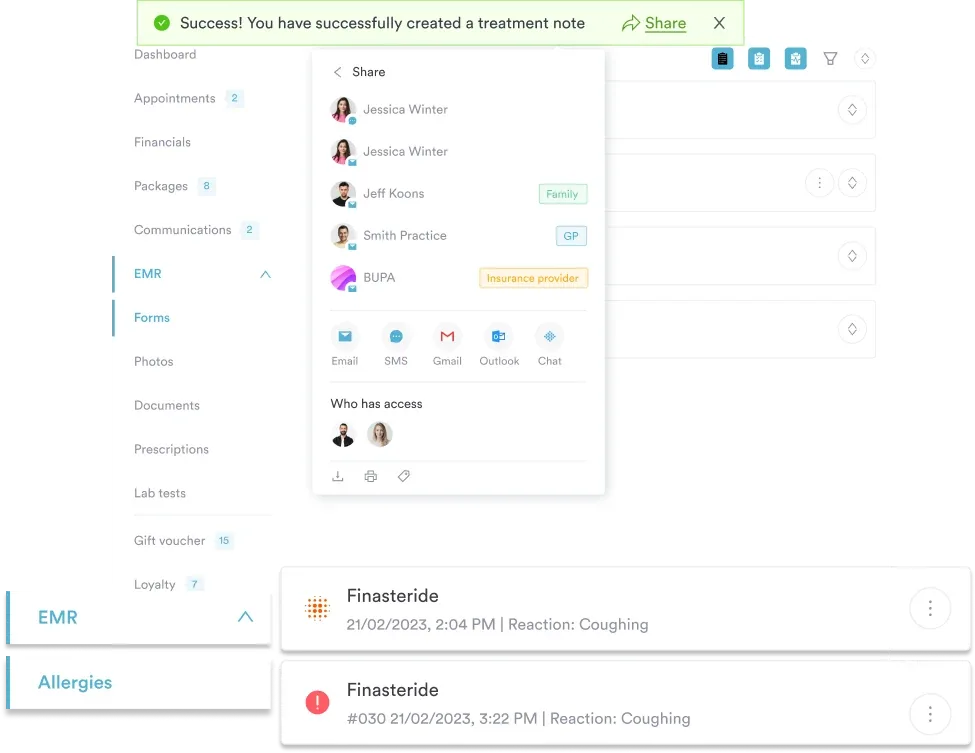
Practice management software like Pabau keeps both in the client record. The driver completes the intake form online, the physician’s note attaches to the appointment, and the signed PDF stores against the same file.
Renewal dates then become a working list rather than a memory test. Pabau can text or email drivers as their two-year mark approaches, so they book inside the 90-day window and you keep the repeat visit.
Every Pabau subscription includes the scheduling, forms, records, and messaging this workflow needs. There is no higher tier to unlock first.

Pabau books the exam, collects the driver’s intake form, and files the signed certification in one client record. Renewal reminders go out automatically, so drivers return before their certification lapses.

The form asks very little, which is exactly why applications get rejected. A missing stamp, a nurse practitioner’s signature, or an exam dated 100 days ago all cost the driver another appointment.
For a practice, the trade-off is worth naming. TLC exams are quick and repeatable, but they only pay off if the signed form and the renewal date stay findable two years later.
Get the filing right once and the second visit books itself. Book a demo to see how Pabau tracks TLC certifications, renewal dates, and signed forms in one place.

Screening a child’s development milestones? Denver Developmental Screening Test evaluates children from birth to six years across four developmental domains.
Filling out a DMV medical form? DMV medical evaluation form covers patient history, neurological status, vision, and physician certification for driving fitness.
Reading an echocardiography report fast? Echocardiography report template covers LVEF bands, sex-specific reference ranges, and valve grading in one guide.
Tracking cardiovascular risk between exams? Sleeping heart rate chart gives patients a simple way to log overnight readings.
It is the one-page document a licensed physician signs to confirm a driver is medically fit to operate a TLC-licensed vehicle in New York City. The form records the applicant name, the exam date, the fitness determination, and the physician’s signature, stamp, and license details.
Only a licensed physician, meaning an MD or DO, can complete, sign, and stamp it. Nurse practitioners and physician assistants cannot sign this form, and the form itself states that no other form will be accepted.
Most drivers renew every two years, in line with the TLC license cycle. Drivers with diabetes or cardiovascular disease renew every year instead, so their recall dates need tracking separately.
The exam date cannot be more than 90 days before the driver submits the TLC application. An older exam date leads to a denied application and a second visit to the physician.
Uncontrolled seizures, unexplained loss of consciousness, severe psychiatric illness, and substance use disorders can all lead to a not-fit determination. The examining physician makes that judgment, and the TLC holds final authority over the license.
TLC certification covers for-hire drivers inside New York City, while Department of Transportation certification covers interstate commercial drivers. The two use different forms and different medical standards, so one never substitutes for the other.
No. A renewal needs a current certification, so the driver takes a fresh exam and submits a newly signed form. Booking that exam about a month before the current one expires leaves room for processing.