Healthcare workforce planning: a practical guide for practice leaders
Healthcare workforce planning is the structured process of matching clinical cap...

Last Updated: Oct 13, 2026

An AI-powered healthcare platform automates booking, treatment notes, prescribing safety checks, and review replies in one system.
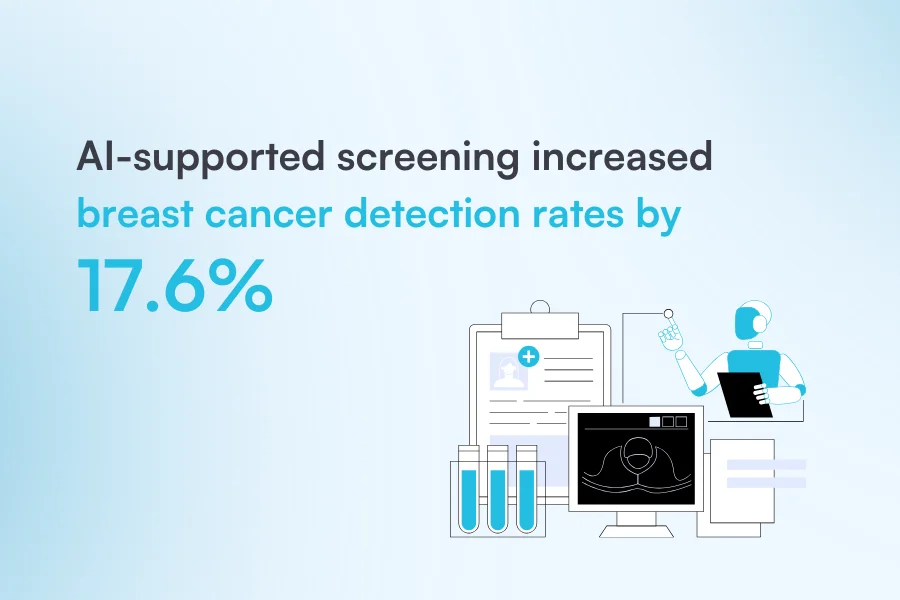
AI-supported breast cancer screening found 17.6% more cases, and a Harvard Medical School model reached 94% accuracy.
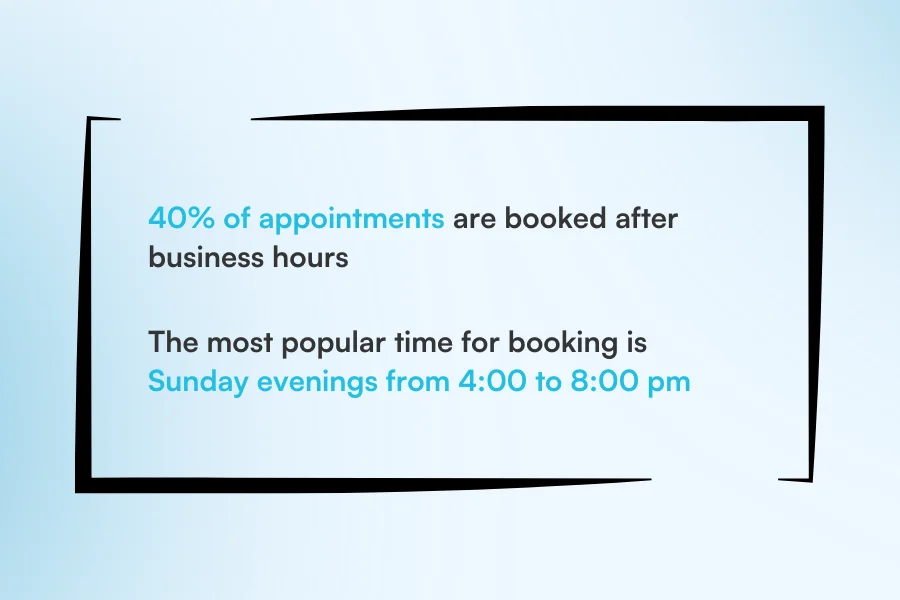
Around 40% of healthcare appointments get booked outside business hours, so an always-on booking assistant protects revenue.
Voice recognition and AI summaries cut physician note-writing from 13 minutes per patient to 4.8 minutes.
Aesthetics practitioner Dr. Harry Singh treats AI-summarized consultation recordings as medico-legal cover if a patient complains later.
An AI-powered healthcare platform is practice software with artificial intelligence built into the workflows you already use. It earns its place in four spots in your week:
Most coverage of AI in healthcare is written for hospital systems, population health teams, and boards. The picture looks different in a six-room med spa or a two-physician practice.
So how can AI improve healthcare at the scale you work at? Mostly by taking the admin out from between you and the patient, and by catching what a tired eye misses.
The evidence for AI for patient care is stronger than the hype around it suggests. AI-supported screening found 17.6% more breast cancers. Note-writing dropped from 13 minutes per patient to 4.8.
Below is what changes at each touchpoint: the numbers, the limits, and one aesthetics practitioner’s reason for recording every consultation he runs. It all feeds the same goal, which is better patient care with fewer hours lost to paperwork.
Every figure below comes from a published study or an industry survey, not a vendor claim. They are the five numbers worth quoting when someone asks whether AI is hype.
| Metric | Result | Source |
|---|---|---|
| Breast cancer detection with AI-supported screening | 17.6% more cases found, with no rise in false positives | The Guardian |
| Accuracy of a cancer-detection AI model | Up to 94% across multiple cancer types | Harvard Medical School |
| Note-writing time per patient | 13 minutes typing, 4.8 minutes with voice recognition | National documentation study |
| Appointments booked outside business hours | 40%, peaking Sunday 4:00 to 8:00 PM | Physical therapy scheduling research |
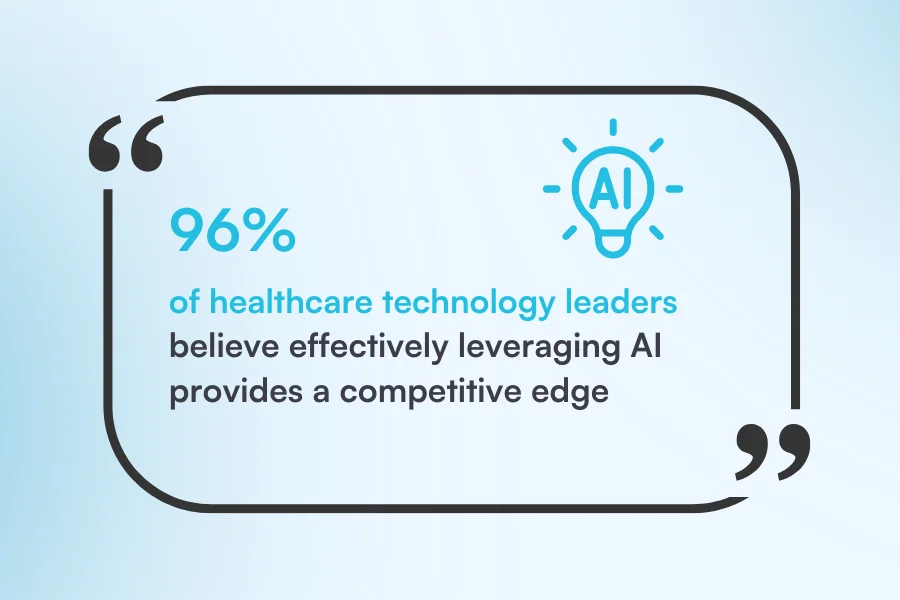
| Health tech leaders who see a competitive edge in AI | 96% | Arcadia survey |
Two patterns sit inside that table. The clinical wins come from pattern detection at a volume no human can match. The operational wins are measured in hours, not accuracy.
Artificial intelligence in patient care does two jobs. It reads clinical data faster than any person can, and it strips admin out of the appointment.
Traditional healthcare systems and EHRs often lag behind the experience modern patients now expect. That shows up as slow replies, repeated forms, and care that feels administrative rather than personal.
AI changes that in four places:
No. AI supports clinical decisions and clears admin, but a licensed practitioner still makes and signs off every care decision.
That distinction matters legally as well as clinically. AI for doctors is decision support, so the clinical accountability stays with the practitioner rather than the model or the vendor.
It also matters statistically. A model that reaches 94% accuracy is still wrong six times in a hundred. Those six cases are the ones a clinician has to catch.
So the split is straightforward. Let AI narrow the field and draft the paperwork. Keep the judgment, the consent conversation, and the sign-off with a human.
AI helps healthcare providers and aesthetic professionals, and it arrives with trade-offs worth knowing. Four benefits show up again and again, and they build on each other.
Healthcare runs on data: patient records, clinical trials, medical imaging, lab results. Consolidating and reading all of it is more than any clinician has time for.
This is where AI models earn their keep. They find patterns across that data that go unnoticed by humans, which means faster and more accurate diagnoses.
💡 Predictive analytics uses existing data to forecast future outcomes. Applied to a patient record, it flags the risk of a disease developing before symptoms appear.
An AI model developed by Harvard Medical School demonstrated up to 94% accuracy in detecting various cancer types. That lets providers act before a cancer progresses, which improves outcomes and lowers the cost of care.
The same pattern-recognition approach helps pediatric practices flag early signs of autism and speech delay before a formal evaluation.
Every patient arrives with a different history, and matching the treatment to that history drives the outcome. Doing it by hand across hundreds of patients is not realistic.
AI reads the treatment history, medical history, and notes already sitting in the patient record. From that it builds a plan shaped around one person rather than a protocol.
The payoff is practical. Care works better, patient compliance improves, and unwanted side effects from the wrong treatment choice get rarer.
Automated healthcare takes the repetitive admin off your team. Appointment reminders, recalls, follow-ups, patient communication, and treatment notes all run without anyone typing them out. Those threads stay in the same patient inbox, so a handover from the AI to a person loses nothing.
Hospitals get most of the coverage on this. The same pattern runs through a hospital ward and a three-room practice, and only the scale changes. The admin hours saved land in the same place, which is patient time.
AI also assists clinical decisions. It scans images and test results in seconds, which makes it valuable when a decision cannot wait.
For example, AI algorithms can rapidly analyze CT scans of stroke patients to detect brain blockages or bleeding. That speeds up the treatment decision in the window where it matters most.
Automating the admin and assisting the clinical calls frees providers to focus on patients. That matters because burnout and chronic work overload remain the industry’s biggest staffing problem.
The clearest advantage of AI in healthcare right now is speed of response. Patients judge a practice on how quickly it answers, books, and follows up.
They already get same-minute service from retailers and food delivery apps. They bring that expectation to healthcare and aesthetic medicine without adjusting it downward.
AI helps a small team meet that expectation through:
Practices that skip all three end up competing on availability they cannot offer. According to one survey, 96% of healthcare technology leaders believe leveraging AI well provides a competitive edge.
AI automation in healthcare shows up at six points in the patient journey, from the first booking request to the review afterward. Each one is a task somebody on your team is doing manually today.
Bookings and inquiries that land after hours are the biggest quiet leak in a practice. Unanswered, they usually take both the patient and the appointment with them.
Research on physical therapy practices found that 40% of healthcare appointments are booked after business hours. Sunday evenings from 4:00 to 8:00 PM are the busiest window for online scheduling.
The same pattern holds in med spas and private practices, where after-hours capture is basic patient acquisition. AI voice agent tools handle calls and messages across channels, take bookings, send reminders, and answer routine questions. These fit inside a wider AI patient engagement strategy that keeps communication consistent across every channel.
During opening hours they take the same load off the front desk. Scheduling, service questions, and payment prompts stop eating the receptionist’s morning.
Train the model on your own services, treatments, and policies and it answers the repetitive 80% accurately. Anything more complex it routes to the right staff member instead of guessing.
Writing descriptions that make someone book is the job that never reaches the top of the list. Treating patients, managing the schedule, and running the team come first.
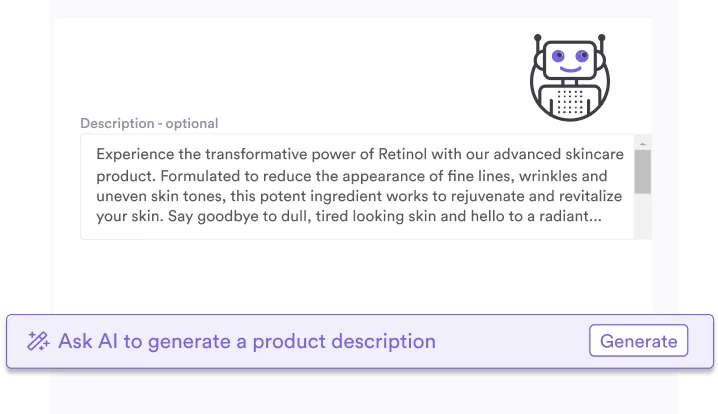
Generative AI takes that job on. It is the branch of artificial intelligence built to create text rather than automate a process, and you have probably already used it in ChatGPT.
What separates a generic chatbot from a tool built into your practice software is the record it writes from. ChatGPT knows nothing about your price list, your treatment names, or your consent wording.
Practice management software like Pabau includes an AI content tool that drafts from your own service list instead. The description arrives already using your treatment names.
Before prescribing you have to check allergies, conditions, and current medications. Asking the patient works until the patient forgets something.
AI models add a layer of safety and accuracy at that point, flagging contraindications before the prescription leaves your hands.
AI processing of the whole record is what makes the check reliable. It reads allergies, past and current conditions, and every active medication, then flags likely interactions.
Two conditions make that safe to rely on. The patient has consented to their data being processed for care. And the tool keeps that data inside your own system rather than feeding a public model.
Get either wrong and a safety feature turns into a data protection problem. Ask any vendor where patient data is processed and stored before you switch the feature on.
Here is a setup small enough to copy this week. Dr. Harry Singh, founder and CEO of the Botulinum Toxin Club, records his consultations and has AI summarize them.
Time saved is the secondary benefit here. His main reason is medico-legal. The recording leaves a word-for-word account of what was discussed, with the AI summary sitting on top.
You can go back to the patient and say, ‘Actually, we did discuss this,’ if they make a complaint later on.
Dr. Harry Singh, founder and CEO of the Botulinum Toxin Club.
That is the trust case for AI in patient-facing work, made by someone carrying the medico-legal risk himself. It costs nothing extra once the recording is already running.
The clinical upside is the same one every practitioner notices. You keep eye contact through the consultation instead of writing while the patient talks.
The time saving follows. A national study found physicians who typed or copy-pasted notes spent about 13 minutes per patient. Those using transcription or voice recognition cut that to 4.8 minutes.
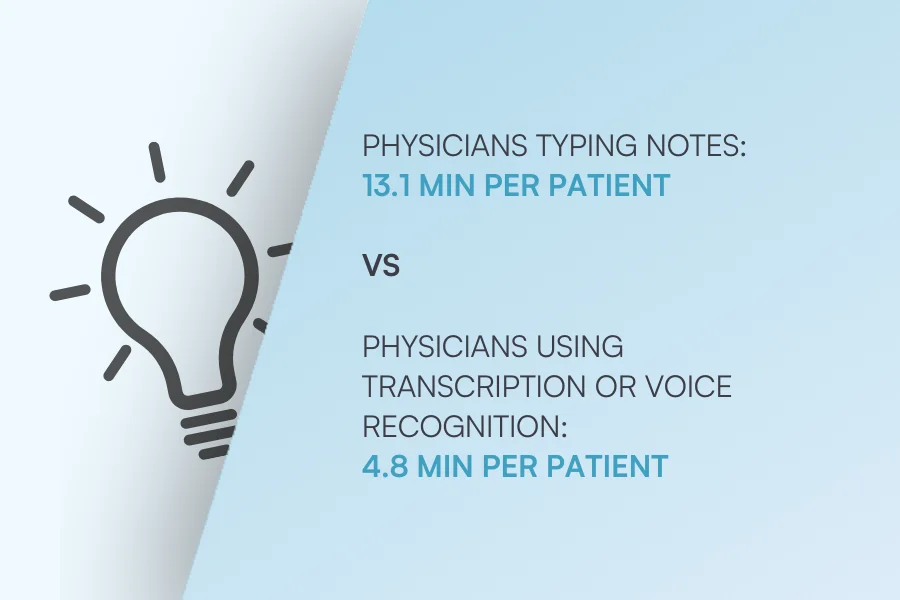
On a 20-patient day that difference adds up to more than two and a half hours. Nothing else on this list buys back that much time for that little change in behavior.
Telehealth suits patients who live further away, work irregular hours, or simply prefer a video appointment. It also widens who you can treat without adding a room.
The trade-off is documentation. Without the patient in front of you, you are working from sound and a screen, so note-taking takes more of your attention.
AI-powered tools capture the consultation and turn it into structured notes with the right medical terminology. In mental health practices the notes carry most of the clinical record, so accurate capture matters even more.
With Pabau Scribe, our AI scribe, you stay present with the patient while the system records and summarizes the session.
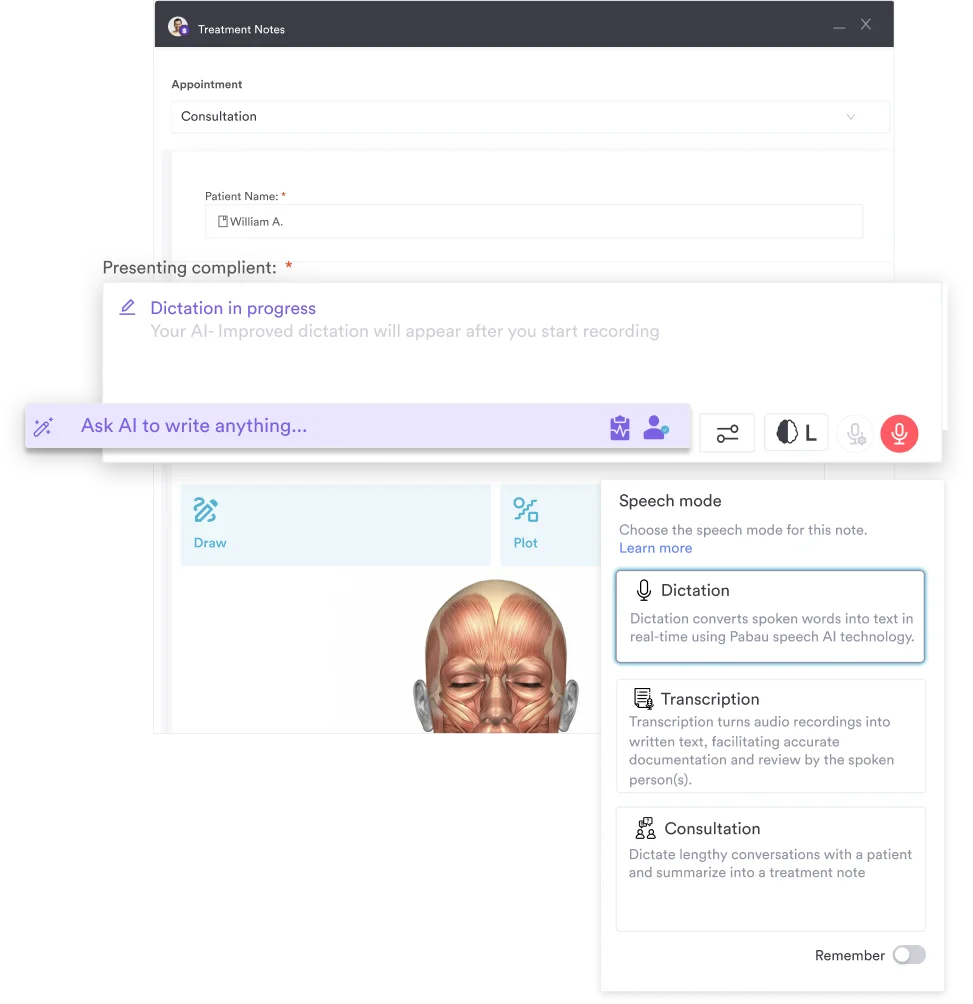
Reviews decide whether a stranger picks you or the practice two streets away. Replying to every one of them is the task that slips first.
AI drafts the reply from the review itself, in your tone, and flags anything that needs a considered human answer rather than a thank you.
You read it, edit a line, and post. A job that used to fill an evening fits between two patients.
AI-powered healthcare only pays off when the tools write into the same patient record. Six separate AI subscriptions create six more places your team has to check.
These tools work best inside the system your team already opens every morning. That is the point of building them into practice management software rather than bolting them on.
Pabau runs that admin end to end, so AI stops being a separate project on your list:
Every Pabau subscription includes the full platform, so none of the above sits behind a higher tier. Setup runs through structured onboarding with a dedicated coordinator.
The outcome is a shorter admin day. Notes finished before you leave, bookings taken while you sleep, and no evening spent writing review replies.

Pabau brings AI treatment note summaries, prescribing safety checks, after-hours booking, and review replies into one patient record. Your team stops re-typing the same information across separate tools.

AI only earns its place where you can name the workflow it changes. Everything above happens at a specific point in your week, or it does not happen at all.
One trade-off stays put. AI shifts where the work happens, and the clinical responsibility still sits with the practitioner who signs the record.
So start with the single task that eats your evenings. For most practices that is treatment notes, and it is also the easiest to prove or disprove in two weeks.
Book a demo to see how Pabau handles notes, prescribing checks, and after-hours bookings inside one patient record.

Comparing platforms rather than concepts? AI healthcare software: What it does and how to choose it walks through the features that actually differentiate one system from another.
Worried about where patient data goes? AI in healthcare compliance covers consent, data handling, and the questions to ask a vendor before you switch a feature on.
Want the admin detail behind the automation? AI in practice management shows how the same tools change scheduling, records, and follow-up day to day.
Are notes taking your evenings? Benefits of an AI scribe for physicians breaks down what changes in the consultation itself once recording replaces typing.
Want the downsides as well? Pros and cons of AI in healthcare sets out the accuracy, bias, and oversight limits worth knowing before you commit.
AI is used for diagnostics, treatment personalization, and administrative work. In practice, AI automation in healthcare covers booking, treatment note summaries, prescribing safety checks, patient messaging, and review replies. Diagnostic AI reads images and records to flag findings a human reader might miss.
Hospitals use AI mainly in imaging, triage, and documentation. Typical hospital workflows include AI reading CT scans for stroke, predicting which patients are at risk of deterioration, and transcribing clinical notes. The same tools scale down to a single-site practice, where they mostly handle notes and booking.
AI has improved healthcare most measurably in detection and documentation. AI-supported breast cancer screening found 17.6% more cases without raising false positives. A Harvard Medical School model reached up to 94% accuracy across cancer types. Voice recognition and AI summaries cut physician note time from 13 minutes per patient to 4.8 minutes.