Maja Popovska
What state has the most plastic surgery per capita? America’s cosmetic map in 20 numbers
What state has the most plastic surgery per capita? Florida is America’s p...

Last Updated: Oct 16, 2026
Free PDF 2 pages, print-ready Clinician-reviewed
AlloDerm is an acellular dermal matrix (ADM) made from donated human skin, used to support tissue reconstruction in breast, periodontal, and soft tissue procedures. An AlloDerm consent form documents patient screening, contraindication review, and informed agreement before the graft is placed.
This guide covers what each section of an AlloDerm consent form should capture, and how to run that workflow in practice management software like Pabau.
A ready-to-use consent form covering patient demographics, absolute and relative contraindications, informed consent declarations for AlloDerm grafts, tissue bank sourcing, and post-operative care instructions.
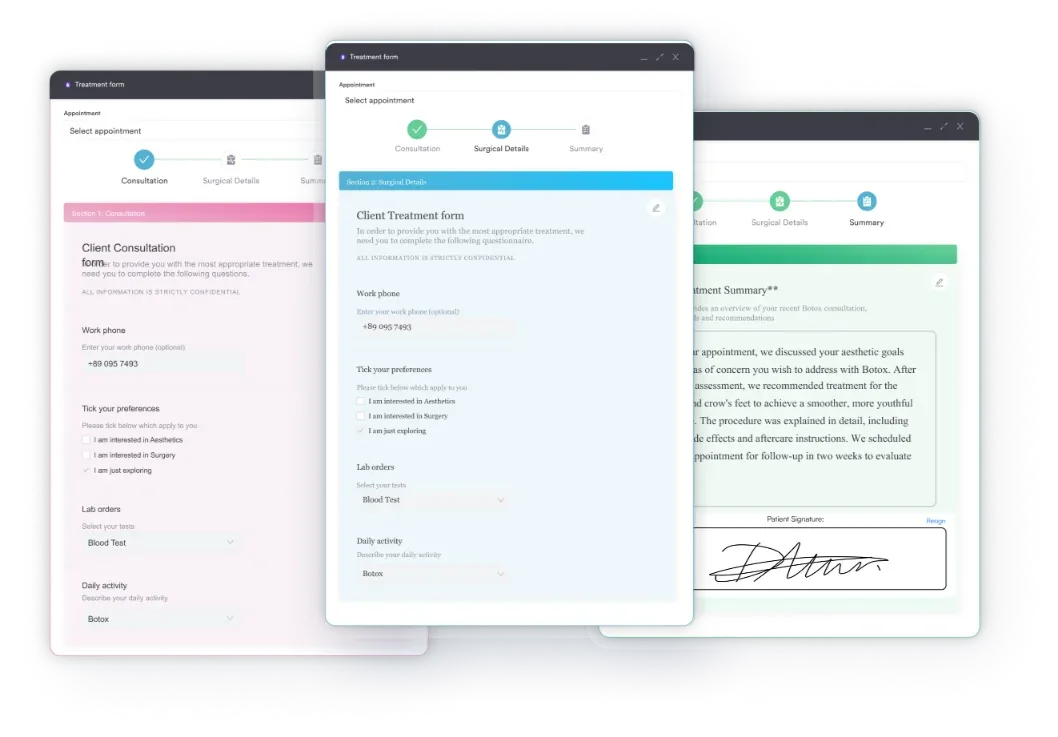
Upload this PDF, or any form you already use, and Pabau's AI Form rebuilds it with tick boxes, text fields and a signature. Attach it to the treatment once, and every patient gets it on time.
AI Form rebuilds the consent, history and aftercare forms you already use. You review each one, then publish.
Patients complete forms on their phone before they arrive, so the front desk stops retyping paper.
Every signed form is versioned and attached to the treatment record, ready when you need it.
Set how long a consent stays valid. Returning patients skip forms they have already signed.
Supports HIPAA and GDPR compliance AES-256 encryption 4.8 on G2 4.7 on Capterra Trusted by 4,000+ practices worldwide

AlloDerm is a processed acellular dermal matrix (ADM) derived from donated human skin tissue, used to support tissue reconstruction in surgical procedures.
A comprehensive AlloDerm consent form documents patient eligibility, contraindications (absolute and relative), informed consent declarations, and post-operative care expectations.
Proper AlloDerm documentation reduces liability, ensures regulatory compliance, and supports accurate procedural billing and clinical outcomes tracking.
Practice management software like Pabau lets practices capture, store, and manage AlloDerm consent and procedural documentation securely in one system, linked to the patient record.
AlloDerm is an acellular dermal matrix (ADM) derived from donated human cadaveric skin. It undergoes a proprietary processing technique that removes all cellular components while preserving the extracellular matrix structure of collagen, elastin, and other biologic scaffolding.
The result is an allograft that integrates into recipient tissues during reconstruction. The original freeze-dried AlloDerm is aseptically processed, while the ready-to-use version (AlloDerm SELECT/RTM) is terminally sterilized to a Sterility Assurance Level (SAL) of 10⁻³.
AlloDerm was first used for burn wound coverage in the early 1990s and expanded into periodontal and plastic surgery applications soon after, where it became a widely adopted alternative to free autogenous grafts. Unlike donor-site grafting, it removes the need for a second surgical site, reducing patient morbidity and operative time.
AlloDerm was originally developed by LifeCell Corporation and is now part of Allergan Aesthetics, an AbbVie company, with the dental version distributed by BioHorizons.
The AlloDerm consent form template guides clinicians through five core operational steps to ensure comprehensive patient screening and informed decision-making before the procedure.
Once completed. This integrated approach ensures comprehensive audit trails and streamlines compliance reporting.
The AlloDerm template is designed for multiple healthcare specialties that incorporate tissue grafting into their scope:
Any plastic surgery practice or specialty practice using AlloDerm must maintain standardized, comprehensive consent documentation. This template accelerates the process while ensuring legal defensibility and clinical rigor.
Practices building out a full consent and aftercare library often pair this template with others covering adjacent procedures, such as a botulinum toxin consent form for injectables.
Knowing how practice management software works helps you decide which forms to digitize first.
Regulatory and legal compliance: A structured consent form demonstrates informed patient decision-making and adherence to standard-of-care documentation requirements. It reduces liability exposure in disputes or adverse outcome scenarios by creating a contemporaneous written record of patient education and acknowledgment.
Clinical workflow efficiency: A template eliminates repetitive handwriting or ad-hoc form creation. Staff can capture patient information, contraindication screening. This increases throughput during busy surgical schedules without sacrificing accuracy.
Standardized patient communication: Identical consent language across all AlloDerm procedures ensures consistent patient education and reduces variability in informed consent quality. Patients receive the same core information regardless of which clinician obtains the consent.
Documentation clarity for billing and coding: A completed AlloDerm consent form provides clear evidence of the procedural intent (tissue reconstruction or augmentation), which supports accurate CPT coding (for example, CPT 15002 for surgical preparation of the recipient site and CPT 15272 for skin substitute graft application) and HCPCS coding (for example.
It documents the specific graft material used (AlloDerm, autogenous, or another ADM), which is essential for claim submission and payer audits.
Audit and compliance readiness: Organized, signed consent forms streamline internal audits, regulatory inspections (CMS, state health boards), and insurance credentialing reviews. A centralized digital archive ensures rapid retrieval during compliance inquiries.
When integrated with a dermatology or surgical practice management system, the AlloDerm template becomes part of a unified clinical workflow that links consent, clinical notes, imaging, operative reports, and follow-up assessments in one record.
Successful AlloDerm documentation begins with clinical documentation best practices. Assign one staff member to oversee template implementation and ensure all clinicians understand the contraindication criteria and consent language before launch.
Train intake staff to screen absolute contraindications during the initial consultation. For patients with relative contraindications, document the clinical decision rationale (e.g.. This demonstrates thorough patient assessment and informed decision-making.
Capture the completed form in your patient portal or electronic record system so that operative staff can verify consent before the procedure begins. Link the consent form to the operative note and post-operative instructions for a complete audit trail. Regular template audits (quarterly or semi-annually) ensure ongoing compliance and identify any missing documentation patterns.
AlloDerm is regulated by the FDA as a human-cell tissue product (HCT/P) under 21 CFR 1271 and approved for repair or replacement of damaged or inadequate integumental tissue. The manufacturing process includes viral and bacterial screening of donor tissue and terminal sterilization to achieve a SAL of 10⁻³, making transmission of infectious disease extremely unlikely.
The American Association of Tissue Banks (AATB) sets standards for tissue collection, processing, and quality assurance. When selecting an AlloDerm supplier, verify AATB accreditation and review donor screening protocols. This reinforces patient safety messaging in your consent form.
Absolute contraindications include known hypersensitivity, active infection at the graft site, pregnancy (context-dependent), and severely compromised tissue beds. Relative contraindications require clinician judgment and may alter technique or post-operative management.
Post-operative complications are rare but may include graft non-integration, infection, or delayed healing in immunocompromised patients. Documentation of relative contraindications and modified post-operative protocols for at-risk patients demonstrates standard-of-care compliance.
Your AlloDerm consent form should explicitly address FDA-approved indications: repair or replacement of damaged or inadequate integumental (skin or skin-like) tissue. Avoid language implying regeneration or “replacement with living tissue.” AlloDerm is supportive, not restorative of original function.
Use clear, patient-friendly language explaining that AlloDerm provides a scaffold and that the patient’s own healing processes integrate it over weeks to months.
Include a section documenting tissue bank sourcing (e.g., “Your AlloDerm graft comes from LifeCell Corporation, which sources donor tissue from screened, consented cadaveric donors and processes it according to FDA regulations and AATB standards”). This transparency builds patient confidence and demonstrates regulatory awareness.
For reimbursement, ensure the consent form specifies the CPT code being billed for the procedure (e.g., CPT 15777 for acellular dermal matrix implantation in breast/trunk reconstruction, or the applicable dental D-code for periodontal grafting) and note any pre-authorization requirements.
Some payers deny AlloDerm as non-medically necessary for elective reconstruction; a documented informed consent explaining patient choice and clinical rationale supports appeal submissions if needed.
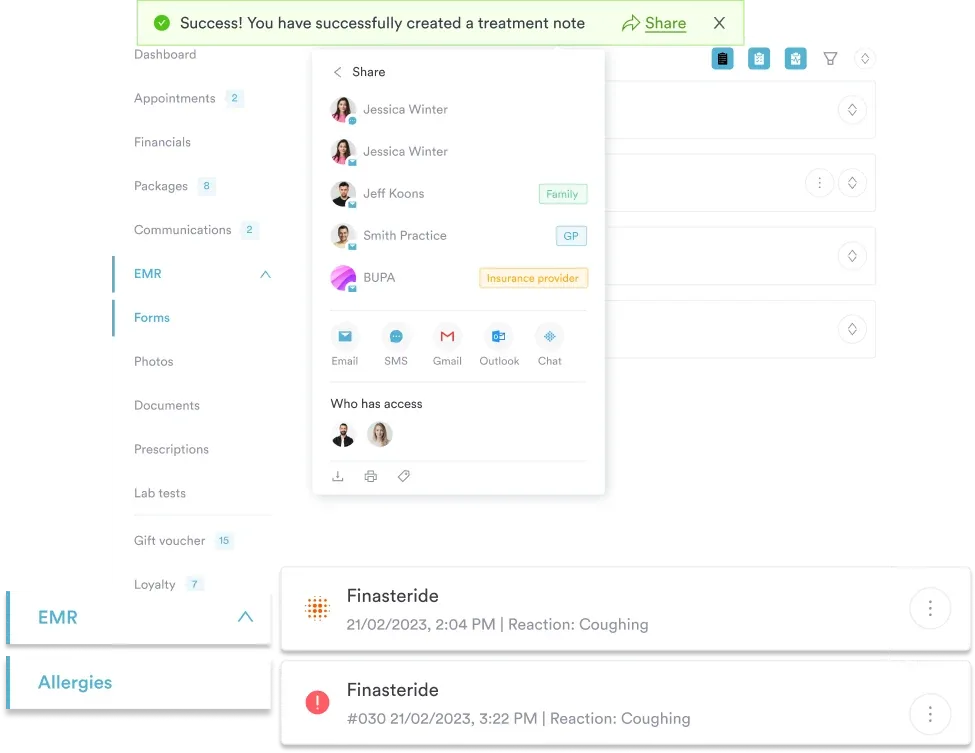
When you move from paper to a regenerative medicine documentation system, your AlloDerm template workflow runs without duplicate data entry. Capture consent during the pre-operative visit, auto-populate patient demographics, and flag relative contraindications for clinician review. Store signed forms in the patient chart, linked to pre- and post-operative instructions.
Use your system’s task and reminder features to schedule post-operative follow-ups documented in the consent form. Audit trails automatically track who completed the form, when, and any subsequent modifications, which is critical for compliance audits and liability defense. For a broader comparison of platforms that support this kind of automation.
This integrated approach combines clinical documentation, consent capture, and post-operative tracking in one system. It reduces administrative overhead, keeps documentation consistent across your team, and protects your revenue.
A standardized AlloDerm consent form protects patients and practices alike: it documents contraindication screening, sets realistic expectations for integration and outcomes, and creates the paper trail regulators and payers expect. Building this template into your intake and clinical documentation workflow reduces liability exposure, speeds up busy surgical schedules, and keeps consent, procedural notes, and billing codes aligned in one record.

Reconstructing after mastectomy or implant revision? Our breast augmentation consent form covers implant-specific disclosures that pair with AlloDerm-supported reconstruction cases.
Building out a full consent library? The dermal filler consent form template shows how consent structure adapts for minimally invasive aesthetic treatments.
Planning to add AlloDerm procedures to a cosmetic surgery practice? See our guide on opening a cosmetic surgery practice for compliant setup and documentation steps.
AlloDerm is an acellular dermal matrix derived from donated human cadaveric skin. The cellular components are removed through proprietary processing, leaving behind the extracellular matrix scaffold composed of collagen, elastin, proteoglycans, and other biologic components that support tissue integration and healing.
Yes. AlloDerm is regulated by the FDA as a human-cell tissue product (HCT/P) under 21 CFR 1271 and is approved for repair or replacement of damaged or inadequate integumental tissue. It meets sterility and safety standards set by the American Association of Tissue Banks (AATB).
Absolute contraindications include known hypersensitivity to human tissue or processing agents, active systemic or local infection at the graft site, pregnancy (in certain applications), and severely compromised or non-viable tissue recipients. Patients with these contraindications are ineligible for AlloDerm grafting.
AlloDerm typically integrates over 4-12 weeks depending on the anatomic site, vascular supply, and patient factors. Gingival grafts may integrate faster (4-8 weeks) than reconstructive breast applications (8-12 weeks). Full mechanical strength develops gradually as the patient’s own cells repopulate the matrix.
Post-operative care varies by location and procedure. General principles include immobilization (typically 10-14 days), gentle wound care, activity restriction during early healing, regular follow-up appointments, and monitoring for signs of non-integration or infection. Your consent form should specify these expectations based on the specific procedure planned.
AlloDerm may be used in these patients, but it is classified as a relative contraindication requiring careful clinical judgment. Uncontrolled diabetes or significant immunosuppression may delay healing or integration. Your consent form should document the clinical decision rationale and any modified post-operative protocols used to support outcomes in at-risk patients.
Document the specific procedure (e.g., skin grafting, gingival augmentation, reconstruction) using the appropriate CPT code, and specify AlloDerm as the graft material in the operative note and billing documentation. Your consent form should note the CPT code being billed to ensure patient awareness and support pre-authorization submissions to payers.