Massage Gift Card Template
A massage gift card template is a fill-in-the-blank certificate you customize wi...

23
Last Updated: Sep 11, 2026

Electronic medical records software cost ranges from $149/month for solo practitioners to $700+/month per provider for enterprise systems, plus significant one-time setup fees.
Hidden costs including data migration ($20,000-$50,000), training, and add-on modules often double the apparent sticker price – always calculate total cost of ownership.
Aesthetic, wellness, and specialty clinics need EMR features general-practice tools lack; choosing a wrong-fit system means paying twice.
Pabau bundles scheduling, clinical records, consent forms, automated workflows, and marketing into one transparent per-location subscription – no per-provider fees.
Most clinic owners focus on the monthly subscription when evaluating EMR software. That number is rarely what they end up paying. When you factor in setup fees, data migration, training, add-on modules, and annual price increases, the real electronic medical records software cost is often two to three times higher than the headline figure, and those extras rarely surface until after you’ve signed.
This guide breaks down every cost component, compares pricing models, and shows what specialty clinics – aesthetic practices, med spas, allied health, and wellness centers – should actually be budgeting. If you’re weighing up EHR options for private practice, the numbers here will help you build an honest total cost of ownership before committing.
The cost of EMR software breaks into two buckets: upfront costs and ongoing costs. Most vendors emphasize the second and obscure the first.
| Cost component | Typical range | One-time or recurring? |
|---|---|---|
| Software subscription | $149-$700+/month per provider | Recurring (monthly/annual) |
| Implementation/setup | $1,500-$5,000 (small practice) | One-time |
| Data migration | $20,000-$50,000 | One-time |
| Training | $500-$3,000+ | One-time (plus ongoing) |
| Add-on modules | $50-$300/month each | Recurring |
| Annual maintenance/support | $1,500-$8,500/provider/year | Recurring |
A small two-provider practice could spend $3,000-$25,000 in year one, according to HIPAA Journal, then $2,000-$15,000 in each subsequent year. The first-year spike comes from setup, migration, and training costs that disappear from the invoice once the system is running – but not from your bank account.
Understanding the difference between a practice management system vs EMR matters here. Some vendors sell them as separate products. Others bundle them. The bundled route is usually cheaper in practice, but the per-product pricing can obscure that until you run the numbers yourself.
Who actually manages electronic health records day to day, front-desk staff, billing coordinators, or clinicians, often determines which pricing tier and support level a practice really needs. See our breakdown of EHR roles and responsibilities for a fuller picture.
Two pricing structures dominate electronic medical records pricing. Knowing which one a vendor uses changes how you project five-year costs.
You pay a monthly or annual fee. The vendor hosts the software, manages updates, and handles security patching. Subscriptions typically run $200-$700 per provider per month for full-featured systems, though solo practitioners can find entry-level options starting around $149/month.
Advantages: Lower upfront cost, automatic updates, no server hardware, accessible from any device. Watch for: annual price escalation clauses, per-user fees that compound as your team grows, and core features locked behind premium tiers.
You buy the software outright. Costs vary considerably by practice size, but implementation alone can run $200,000-$5,000,000 for custom enterprise solutions. You also own the maintenance burden: server costs, IT staff, security updates, and eventual version upgrades.
For clinics with fewer than ten providers, perpetual licensing rarely makes financial sense. The upfront capital requirement and ongoing IT overhead almost always exceed what a well-chosen SaaS subscription costs over five years.
Considering EHR integration requirements before committing to a pricing model is worth doing early. Systems that need heavy API work to connect with your lab, billing, or telehealth tools can add $5,000-$20,000 to an implementation budget that looked clean on the vendor’s demo.
Several factors push the real cost of an EMR well above the listed subscription price. EMR implementation costs – migration, training, and integrations – are where budgets slip most often.
Transferring patient records, treatment histories, and billing data from your old system to a new one is expensive and time-consuming. Industry estimates place data migration at $20,000-$50,000, according to RXNT’s 2026 EHR cost guide – though some vendors include basic migration at no extra charge. Ask specifically what “data migration” covers: structured records often transfer cleanly, while scanned documents, images, and legacy formats rarely do without manual work.
Across the Australian skin clinic software market, appointment and payment histories export cleanly while consent forms, before-and-after photos and gift-card balances often do not. Request a sample export from your current vendor before you sign, and check the photos still carry their original dates.
Vendor training is often quoted as a flat fee but expands quickly. Initial onboarding covers the basics. Specialty-specific workflows, front-desk training, and clinical staff sessions each add hours – and most vendors charge by the session. Budget $500-$3,000 for initial training on a small practice system, and assume two to four weeks of reduced productivity while your team climbs the learning curve.
Core EMR subscriptions rarely include everything a clinic needs. Common add-ons include:
For medical spa EMR software specifically, this module fragmentation is a recurring pain point. A general-purpose EMR may need five separate integrations to match what a specialty-built system includes out of the box. Each integration adds monthly cost and creates a potential failure point.
Many vendors sell tiered support. The base tier gives you a ticketing system and a knowledge base. Phone support, a dedicated account manager, or priority response times often sit behind premium support packages costing $200-$500/month extra.
Before signing any EMR contract, ask vendors three specific questions: What is NOT included in the base subscription? What does data migration cost, and what file formats are excluded? What support tier is included, and what does the next tier up cost? These three questions surface the hidden fees before they hit your invoices.
Practice size shapes electronic medical records software cost in two ways: the absolute spend, and the cost structure that makes most sense. AHRQ research found initial EHR costs averaged $44,000 per full-time equivalent provider for small practices, with ongoing costs averaging $8,500 per provider per year. A Commonwealth Fund study put average purchase and implementation costs at $32,606 per FTE physician, with $1,500/month in ongoing maintenance – though these figures reflect older data and current SaaS pricing has changed the landscape considerably.
| Practice size | Typical year-one cost | Ongoing annual cost | Best pricing model |
|---|---|---|---|
| Solo practitioner | $1,800-$8,000 | $1,800-$5,000 | SaaS subscription |
| Small group (2-5 providers) | $5,000-$25,000 | $4,000-$15,000 | SaaS subscription |
| Mid-size (6-20 providers) | $20,000-$75,000 | $15,000-$50,000 | SaaS or negotiated enterprise |
| Multi-location / franchise | $50,000-$200,000+ | $30,000-$100,000+ | Per-location or enterprise |
For direct primary care EHR models, subscription costs matter more than implementation complexity. DPC practices typically see lower volumes of insurance billing complexity, which means they can often use leaner systems at the lower end of the per-provider cost range.
Most vendors don’t publish prices, so the average cost of an EMR system stays hidden until you request a quote. Published electronic medical records software prices give you ballpark ranges, and they show how far apart per-provider vendors sit.
| EMR system | Pricing model | Typical cost |
|---|---|---|
| Low-cost / entry-level EMRs | Per provider, cloud | $80-$100/provider/month |
| eClinicalWorks | Per provider, cloud | From ~$500/provider/month |
| AdvancedMD | Per provider, cloud | From ~$729/provider/month |
| athenahealth | Percentage of collections | ~3-7% of monthly collections |
| Epic | Enterprise deployment | Millions, hospital-scale |
These figures come from Software Finder’s EMR pricing guide and exclude setup and training. The pattern is consistent: per-provider EMR system cost climbs with every clinician you add, and the cost of Epic EMR reflects a whole hospital deployment rather than a monthly seat. For a growing aesthetic or wellness practice, that scaling is exactly what makes a per-location model worth running the numbers on.

Pabau combines clinical records, consent forms, scheduling, automated recalls, and marketing tools in a single per-location subscription. No per-provider fees, no module add-ons. Book a demo to see the full feature set and transparent pricing.

General-purpose EMR systems are built for primary care and insurance-heavy billing environments. Aesthetic clinics, med spas, IV therapy centers, and allied health practices have fundamentally different workflow requirements – and the cost implications follow.
A dermatology practice needs before-and-after photo management. A med spa needs treatment plotting, consent form automation, and product retail tracking. A physiotherapy clinic needs outcome measurement tools and SOAP note templates. Balance assessments like the Modified Romberg test need a structured field too, not a free-text note, if outcomes are tracked over time. When a general EMR doesn’t include these, clinics pay for workarounds: separate apps, manual processes, or expensive custom development.
The hidden cost of a wrong-fit system goes well beyond the subscription. Staff time lost to manual workarounds, patient-experience friction from disconnected tools, and the switching cost you eventually pay when the system stops scaling all stack up on top of it.
Specialty-built platforms address this by including the features most commonly needed for a given clinic type in the base subscription. For aesthetic EMR software, that means consent forms, injection mapping, and before-and-after photo storage are standard – not line items on a quote.
Consider what claims management looks like inside your chosen system. For clinics that do any insurance billing alongside private pay, the difference between a system with built-in claims workflows and one that requires a separate RCM tool can be $300-$600/month in added subscription costs.
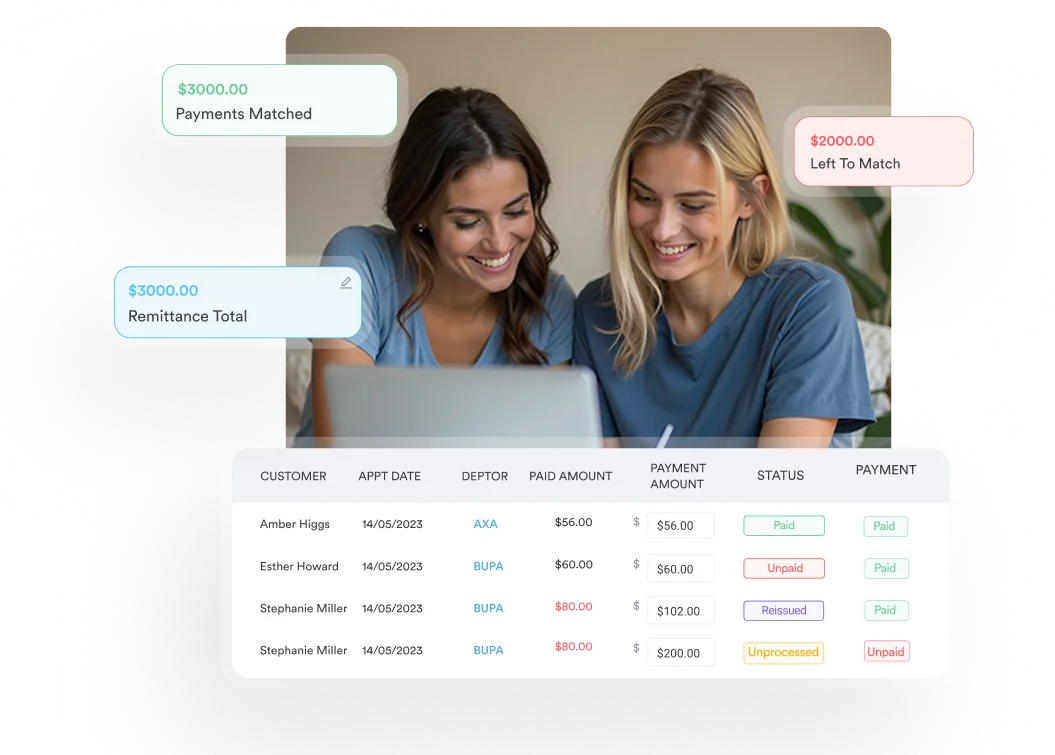
Total cost of ownership (TCO) gives you a five-year view of what an EMR actually costs. The calculation looks at subscription, setup, training, migration, add-ons, and the cost of time your team spends on workarounds the system doesn’t handle natively.
The features that save private practices time most often aren’t the most-marketed ones. Automated recall messages, pre-built clinical note templates, and digital consent form workflows each recover 30-90 minutes per practitioner per day in admin time – time that has a real cost in either staff wages or clinician hours spent on paperwork instead of patients.
Run the ‘per-provider math’ before every vendor comparison. Take the monthly subscription, multiply by your current provider count, then by 12. Add setup and migration costs divided over five years. Compare that number across vendors – not the headline monthly price. A $200/month-cheaper subscription can cost $30,000 more over five years once migration and per-provider scaling are factored in.
Pabau is all-in-one practice management software built for aesthetic, wellness, and specialty clinics. Its pricing model is structured per location rather than per provider, which changes the cost equation significantly for multi-clinician practices.
Where most EMR systems charge $200-$700 per provider per month and then add modules for consent forms, marketing automation, and patient recalls, Pabau includes all of these in the base subscription. A four-clinician aesthetic clinic that would pay $1,600-$2,800/month in per-provider fees on a traditional EMR pays a single location-based fee with Pabau, starting from $104/month. The all-in-one practice management platform model removes the incentive vendors have to fragment features into paid add-ons.
Pabau also includes structured onboarding rather than a demo-and-go approach. Because clinics have a dedicated onboarding process, the training and setup costs that add thousands to general EMR budgets are absorbed into the product experience rather than billed separately. For a full breakdown, the medical spa software page covers what’s included at each tier.
The real electronic medical records software cost is almost never what’s on the pricing page. Setup, migration, training, add-on modules, and per-provider scaling combine to make the total outlay two to three times the monthly subscription figure. Specialty clinics face an additional risk: general EMR systems that miss the features they need, leading to expensive workarounds or a costly switch down the line.
Building a total cost of ownership model before signing any contract is the single highest-value step a clinic can take in the evaluation process. If you want to see how Pabau’s per-location pricing and bundled feature set compares to per-provider alternatives, book a demo and we’ll walk through the numbers specific to your clinic size and specialty.

Hit a growth ceiling with manual systems? How to grow your private practice shows how outdated scheduling and invoicing can cap a practice’s growth.
Electronic medical records (EMR) software is a digital system that stores and manages patient health information within a single practice, including clinical notes, treatment histories, prescriptions, and diagnostic data. Unlike EHR systems, EMRs are typically practice-specific and not designed for cross-provider data sharing. Most modern “EMR” products are actually full EHR or practice management platforms that include scheduling, billing, and patient communication tools alongside the core clinical record.
A small practice typically spends $3,000-$25,000 in year one, covering subscription, setup, and training costs. Ongoing annual costs then run $2,000-$15,000 depending on provider count and which add-on modules the practice uses. Solo practitioners using entry-level SaaS systems can reduce year-one costs to $1,800-$5,000 if minimal data migration is required.
The most common hidden fees are data migration ($20,000-$50,000 for complex records), add-on modules for features like ePrescribing, patient portal, or telehealth, tiered support upgrades, per-provider pricing that compounds as teams grow, and annual price escalation clauses of 3-8%. Always request an itemized quote that breaks out each of these components before comparing vendor pricing.
EMR and EHR software costs are similar in structure, but EHR systems certified by the Office of the National Coordinator for Health Information Technology (ONC) and designed for interoperability tend to carry higher subscription and implementation costs due to more rigorous compliance and data-sharing requirements. For small private practices not billing Medicare or Medicaid, a full ONC-certified EHR is often unnecessary and an uncertified EMR platform provides the same operational value at a lower price point.
Start with a total cost of ownership model: list your base subscription, setup fee, data migration, training, and every add-on module you’ll use, then project those costs over five years. Include a switching cost contingency of $5,000-$15,000 if you expect to outgrow the system within that period. Build in 10-15% for unexpected integration work, and factor in two to four weeks of reduced staff productivity during the transition period.
There’s no single average cost of an EMR system, because pricing depends on the model and your provider count. Cloud systems typically run $149-$700 per provider per month, entry-level options start near $80-$100, and enterprise platforms are priced by deployment rather than per seat. To get a figure you can budget against, multiply the monthly EMR system cost by your provider count, then add one-time setup and data migration.
A private practice usually spends $1,800-$25,000 in year one depending on size, then $2,000-$15,000 each year after that. Solo and small private practices keep the cost of EMR software down by choosing a cloud subscription with light data migration and skipping add-on modules they won’t use every week.
Epic is built for hospitals and large health systems, so it’s priced as an enterprise deployment rather than a monthly per-provider fee. Implementation can run into the millions once licensing, training, and maintenance are counted, which is why the cost of Epic EMR rarely fits a small or specialty practice budget.
Yes, a handful of free EMR systems exist, but free rarely stays free once you run the numbers. Open-source and ad-supported platforms often charge for support, e-prescribing, data migration, or claims processing, and many cap the features a growing practice actually needs. For most clinics, a low-cost EMR subscription with predictable pricing works out cheaper than stitching a free tool together with paid add-ons.